Loading...
Leopold Sedar Senghor vs Saddam Hussein
Leopold Sedar Senghor leads by 8.5 pts · 2 figures compared
…

Leopold Sedar Senghor
Politician · Modern
58.2Total
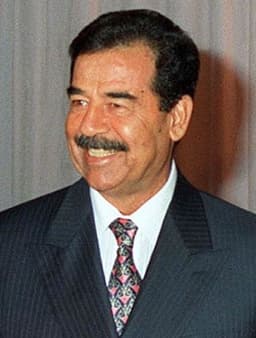
Saddam Hussein
Politician · Modern
49.7Total
Basic Information
Born
1906
1937
Died
2001
—
Era
Modern
Modern
Nationality
Senegal
Iraq
Occupation
Politician
Politician
Civilization
Other
Middle Eastern
Score Comparison
Military (10%)
38.4
52.5
Political (20%)
55.0
43.7
Influence (20%)
68.0
58.0
Legacy (20%)
52.0
47.5
Leadership (15%)
78.0
40.0
Strategy (15%)
43.8
55.0
TOTAL
58.2
49.7
Leopold Sedar Senghor — Complete Timeline
1945 AD
Election to French National AssemblyPolitical Action◆ Major
Senghor was elected as a deputy for Senegal to the French Constituent Assembly. He became one of the first African intellectuals to hold high political office in France, advocating for African rights.
French PoliticsColonial RepresentationIntellectual
Impact: nationalconstructive
Publication of 'Chants d'Ombre'Cultural◆ Major
Senghor published his first major poetry collection 'Chants d'Ombre' (Shadow Songs), which established him as a leading figure in the Negritude literary movement. The poems celebrated African culture and identity.
NegritudePoetryAfrican Literature
Impact: globalconstructive
1960 AD
Independence of SenegalPolitical Action
Senghor became the first President of independent Senegal after the dissolution of the Mali Federation. He led the country through a peaceful transition from French colonial rule to self-governance.
IndependenceDecolonizationPresidency
Impact: nationalconstructive
1976 AD
Introduction of Multi-Party SystemReform◆ Major
Senghor amended the constitution to allow a limited multi-party system, though with restrictions. This was a gradual move toward political liberalization in Senegal, distinguishing it from many one-party African states.
Political ReformDemocratizationMulti-Party
Impact: nationalconstructive
1980 AD
Voluntary Resignation from PresidencyPolitical Action
Senghor voluntarily resigned from the presidency, handing power to his prime minister Abdou Diouf. This was a rare peaceful transfer of power in Africa, setting a precedent for democratic succession.
ResignationPeaceful TransitionDemocracy
Impact: regionalconstructive
1983 AD
Election to Académie FrançaiseCultural◆ Major
Senghor was elected to the Acad
Académie FrançaiseLiterary RecognitionFrancophonie
Impact: globalconstructive
Saddam Hussein — Complete Timeline
1979 AD
Became President of IraqPolitical Action
Saddam Hussein forced President Ahmed Hassan al-Bakr to resign on July 16, 1979, and assumed the presidency. He immediately purged the Ba'ath Party, executing 68 senior members in a televised purge. This consolidated his absolute control over Iraq's government and security apparatus.
Power ConsolidationPurgeBa'ath Party
Impact: nationaldestructive
1980 AD
Invaded IranWar
Saddam launched a full-scale invasion of Iran on September 22, 1980, aiming to seize the oil-rich Khuzestan province and overthrow the new Islamic regime. The war lasted eight years, resulting in hundreds of thousands of casualties and massive economic destruction for both countries, ending in a stalemate.
Iran-Iraq WarInvasionStalemate
Impact: regionaldestructive
1988 AD
Used chemical weapons against Kurds at HalabjaWar◆ Major
During the Anfal campaign, Iraqi forces under Saddam's orders attacked the Kurdish town of Halabja with mustard gas and nerve agents on March 16, 1988. An estimated 5,000 civilians were killed instantly. The attack is considered one of the worst chemical weapons attacks against a civilian population.
Chemical WeaponsWar CrimeKurds
Impact: nationaldestructive
1990 AD
Invaded KuwaitWar
Saddam ordered the invasion and annexation of Kuwait on August 2, 1990, claiming it was historically part of Iraq. The invasion was condemned internationally and led to the Gulf War. A US-led coalition expelled Iraqi forces in February 1991, and Iraq faced severe UN sanctions.
Gulf WarInvasionSanctions
Impact: globaldestructive
2003 AD
Captured by US forces and executedPolitical Action
After the US-led invasion of Iraq in March 2003, Saddam went into hiding. He was captured by US forces on December 13, 2003, near Tikrit. Tried by the Iraqi Special Tribunal for crimes against humanity, he was sentenced to death and executed by hanging on December 30, 2006.
CaptureTrialExecution
Impact: globaltragic
Expert Analysis
Origins
Leopold Sedar Senghor was born on October 9, 1906, in Joal, Senegal, then part of French West Africa. His father was a prosperous Catholic merchant. Senghor attended missionary schools and later the Lycee Louis-le-Grand in Paris, becoming the first African to earn an agregation in grammar. He developed the Negritude movement with Aime Cesaire and Leon Damas, celebrating black culture.
Saddam Hussein was born on April 28, 1937, in Al-Awja, Iraq, into a poor Sunni Arab family. His father died before his birth, and he was raised by his mother and stepfather. He moved to Baghdad in 1955, joining the Ba'ath Party in 1957. He participated in the failed 1959 assassination attempt on Prime Minister Qasim, fleeing to Egypt.
Rise to Power
Senghor's political rise began in 1945 when he was elected as a deputy for Senegal to the French Constituent Assembly. He became the first African to serve on the French National Assembly. He advocated for African self-rule within a French federation. When the Mali Federation dissolved in 1960, Senghor became the first President of independent Senegal on September 5, 1960. He maintained close ties with France.
Saddam rose through the Ba'ath Party. After the 1968 Ba'athist coup, he became vice president under Ahmed Hassan al-Bakr. He consolidated power by building security forces and a cult of personality. On July 16, 1979, he forced al-Bakr to resign and immediately purged the party, executing 68 members on live television. He became absolute ruler.
Leadership & Governance
Senghor governed Senegal as a single-party state for most of his tenure, but he was a moderate. He introduced a limited multi-party system in 1976, allowing three parties representing different ideologies. He promoted African socialism, emphasizing cultural development and Negritude. His economic policies favored agriculture and infrastructure. He voluntarily resigned in 1980, handing power to his prime minister Abdou Diouf, a rare peaceful transfer in Africa.
Saddam ruled Iraq through fear, patronage, and repression. He used oil revenues to build a welfare state, improving literacy and healthcare, but also created a massive security apparatus. He initiated the Iran-Iraq War (1980-1988), costing hundreds of thousands of lives. He used chemical weapons against Iran and against Iraqi Kurds at Halabja in 1988. He invaded Kuwait in 1990, leading to the Gulf War and devastating sanctions. His leadership score of 40.0 reflects his authoritarian and aggressive style.
Triumph & Tragedy
Senghor's greatest success was presiding over Senegal's peaceful independence and stability. He fostered a sense of national identity through Negritude. His voluntary resignation set a precedent. His failure was the slow pace of democratization; his party remained dominant even after multi-party reforms. Economically, Senegal struggled under his policies.
Saddam's triumphs include modernizing Iraq's infrastructure and building a strong military. He survived the Iran-Iraq War and the 1991 Gulf War. However, his tragedies are immense: the Iran-Iraq War death toll (500,000+), the Halabja massacre (5,000 killed), the brutal suppression of Shia and Kurdish uprisings, and the invasion of Kuwait that led to his downfall. He was captured by US forces in 2003 and executed in 2006.
Character & Destiny
Senghor was an intellectual and poet, valuing culture and diplomacy. His character was reflective and conciliatory. He chose to step down rather than cling to power, securing his legacy as a statesman.
Saddam was paranoid, ruthless, and ambitious. He eliminated rivals without hesitation. His aggression led to international isolation and catastrophe. His total leadership score is 40.0, contrasting with Senghor's 78.0.
Legacy
Senghor is remembered as a founding father of Senegal, a champion of African culture, and a poet. His Negritude movement influenced postcolonial thought. Senegal remains a stable democracy, partly due to his foundations. His influence score is 68.0.
Saddam's legacy is one of war, repression, and dictatorship. He destabilized the region and left Iraq shattered by conflict. His legacy score is 47.5. The Iran-Iraq War and Gulf Wars have long-term consequences.
Conclusion
Leopold Sedar Senghor had a greater positive impact than Saddam Hussein. Senghor's political score of 55.0 and leadership of 78.0 reflect his constructive governance. Saddam's military score of 52.5 and strategy of 55.0 indicate tactical skill but catastrophic outcomes. Senghor built a nation; Saddam destroyed one. The total score difference of 8.5 points supports this. Senghor's legacy of peace and culture outweighs Saddam's war and tyranny.
Rankings
🥇
Leopold Sedar SenghorLeader
Mil: 38.4Pol: 55.0Inf: 68.0
58.2
🥈
Saddam Hussein
Mil: 52.5Pol: 43.7Inf: 58.0
49.7
+8.5 behind
How This Comparison Works
Algorithm
Each figure is scored on 6 dimensions (0—100 scale) based on structured historical data: Military (10%), Political (20%), Influence (20%), Legacy (20%), Leadership (15%), Strategy (15%). The weighted total produces the final ranking.
Data Sources
Scores are computed from structured sub-indicators in the database. Scale factors adjust for era (Ancient ×0.85, Modern ×1.0) and civilization size (Eastern ×1.05, Other ×0.80) to account for differences in population and military scale.
Maximum 3 Figures
Comparisons are limited to 2—3 figures to ensure readability and statistical meaningfulness.
Error Margins
±5 points per dimension — Sub-scores are derived from historical records with inherent uncertainty. Two figures within 5 points on a dimension should be considered roughly equivalent in that area.
Total Score Accuracy
±3 points overall — The weighted combination of 6 dimensions produces a total score with approximately ±3 points of uncertainty. Differences of less than 3 points are not statistically significant— the figures are effectively tied.
Known Limitations
- Historical records are incomplete and uneven across civilizations
- Figures from oral-tradition societies may be underrepresented
- Occupation labels can misclassify multi-role figures
- Scores measure capability and impact, not moral character
- Quantitative scoring is a comparison tool, not absolute truth
Capability Radar
Military (10%) — Battles & Warfare
Battles
20
65
Win Rate
27
40
Expansion
26
60
Political (20%) — Governance & Reform
Reform
65
40
Diplomacy
75
35
Economy
60
30
Influence (20%) — Cultural & Global Reach
Cultural
75
30
Global
70
50
Legacy (20%) — Historical Impact
Historical
70
55
Longevity
65
20
Leadership (15%) — Power & Stability
Tenure
70
75
Stability
70
20
Strategy (15%) — Tactics & Innovation
Strategy
30
50
Tactics
32
55
Reform
35
45
Similar Comparisons
Comments & Discussion
No comments yet. Be the first to share your thoughts!