Loading...
Lech Walesa vs Vladimir Lenin
Vladimir Lenin leads by 18.8 pts · 2 figures compared
…

Lech Walesa
Revolutionary · Modern
52.4Total
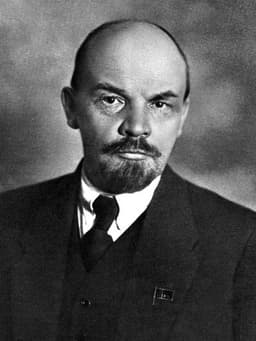
Vladimir Lenin
Revolutionary · Modern
71.2Total
Basic Information
Born
1943
1870
Died
—
1924
Era
Modern
Modern
Nationality
Poland
Russia
Occupation
Revolutionary
Revolutionary
Civilization
Western
Western
Score Comparison
Military (10%)
14.2
30.0
Political (20%)
72.0
78.0
Influence (20%)
62.0
82.0
Legacy (20%)
56.0
72.0
Leadership (15%)
48.8
80.0
Strategy (15%)
33.6
60.0
TOTAL
52.4
71.2
Lech Walesa — Complete Timeline
1980 AD
Founding of SolidarityPolitical Action
Walesa co-founded the Solidarity trade union in August 1980 after leading the Gda
SolidarityLabor Movement
Impact: globalprogressive
1981 AD
Martial Law and ImprisonmentPolitical Action◆ Major
Walesa was arrested and interned on December 13, 1981, when General Jaruzelski imposed martial law in Poland. He was held for 11 months, while Solidarity was banned and its leaders suppressed.
Martial LawRepression
Impact: nationaltragic
1983 AD
Nobel Peace PrizeCultural◆ Major
Walesa was awarded the Nobel Peace Prize on December 10, 1983, for his nonviolent struggle for workers' rights and democracy. He was unable to collect it in person due to travel restrictions.
Nobel PrizePeace
Impact: globalconstructive
1989 AD
Round Table TalksPolitical Action
Walesa led Solidarity in the Round Table Talks with the communist government from February to April 1989. The agreements led to partially free elections, which Solidarity won, ending communist rule in Poland.
TransitionDemocracy
Impact: globalconstructive
1990 AD
President of PolandPolitical Action◆ Major
Walesa was elected President of Poland on December 22, 1990, in the first direct presidential election. His presidency focused on economic reform and NATO integration, but was marked by political conflicts and declining popularity.
PresidencyDemocracy
Impact: national
Vladimir Lenin — Complete Timeline
1903 AD
Founding of the Bolshevik PartyPolitical Action
At the Second Congress of the Russian Social Democratic Labour Party in London, Lenin led a split that created the Bolshevik faction. The Bolsheviks advocated for a disciplined vanguard party of professional revolutionaries, a key element of Lenin's political strategy.
Political PartyRevolutionIdeology
Impact: global
1917 AD
April ThesesPolitical Action◆ Major
Lenin returned to Russia from exile and published the April Theses, calling for the overthrow of the Provisional Government, transfer of power to the soviets, and an end to World War I. This document set the Bolshevik agenda for the coming revolution.
RevolutionIdeologyPolitical Strategy
Impact: national
October RevolutionPolitical Action
Lenin led the Bolshevik seizure of power in Petrograd, capturing key government buildings and the Winter Palace. The revolution overthrew the Provisional Government and established the world's first socialist state, the Russian Soviet Federative Socialist Republic.
RevolutionCoupCommunism
Impact: global
1918 AD
Treaty of Brest-LitovskPolitical Action◆ Major
Lenin signed a separate peace treaty with the Central Powers, ceding vast territories including Ukraine, Belarus, and the Baltic states. The treaty ended Russia's involvement in World War I but caused significant territorial losses and internal opposition.
TreatyWorld War ITerritorial Loss
Impact: globaldestructive
1921 AD
New Economic Policy (NEP)Reform◆ Major
Lenin introduced the NEP, allowing limited private enterprise and market mechanisms to revive the war-torn Soviet economy. The policy replaced War Communism, permitting small-scale capitalism while the state retained control of major industries.
Economic ReformPolicyRecovery
Impact: nationalconstructive
1922 AD
Establishment of the Soviet UnionPolitical Action
Lenin oversaw the creation of the Union of Soviet Socialist Republics (USSR), a federation of Soviet republics. The new state consolidated Bolshevik control over much of the former Russian Empire and became a model for communist states worldwide.
State FormationCommunismFederation
Impact: global
Expert Analysis
Vladimir Lenin vs Lech Walesa
# The Revolutionary’s Mirror: Lenin and Walesa
In the winter of 1924, as Lenin lay dying in Gorki, his embalmed body would soon become a sacred relic in a mausoleum on Red Square, a monument to a revolution that promised to remake the world. Sixty-five years later, in the spring of 1989, Lech Walesa sat across a table in Warsaw from the very men who ruled Poland in communism’s name, negotiating its peaceful end. One man built a system that would enslave half of Europe; the other tore it down. What makes one revolutionary create a prison and another a doorway to freedom?
Origins
Vladimir Ilyich Ulyanov was born in 1870 into the Russian intelligentsia, his father a school inspector, his family steeped in the liberal traditions of the Enlightenment. But when his elder brother Alexander was hanged in 1887 for plotting to assassinate the Tsar, the seventeen-year-old Lenin absorbed a brutal lesson: reform was impossible, only destruction would suffice. He devoured Marx, exiled himself to Siberia and Switzerland, and forged a mind of cold, theoretical certainty. Russia was a peasant empire, backward and brutal, and Lenin believed that only a disciplined vanguard of professional revolutionaries could drag it into the future by force.
Lech Walesa was born in 1943 in Nazi-occupied Poland, the son of a carpenter. He grew up in a village without electricity, under Stalinist rule that promised equality but delivered poverty. Where Lenin was shaped by books and exile, Walesa was shaped by the shipyard: the clang of steel, the camaraderie of workers, the daily humiliations of a system that paid men in lies. He was electrician number 1117 at the Gdańsk Shipyard, a man with a mustache and a gift for speaking plain truths. He had no theory, only a gut conviction that workers deserved dignity.
Rise to Power
Lenin’s path was clandestine and conspiratorial. In 1903, at the Second Congress of the Russian Social Democratic Labour Party in London, he engineered a split, creating the Bolshevik faction—the “majority” that was in fact a minority, but disciplined and ruthless. For fourteen years he waited, pamphleteering from Zurich, watching the Great War destroy Europe’s old order. In April 1917, the Germans, hoping to destabilize Russia, put him on a sealed train. He arrived at the Finland Station in Petrograd and issued the April Theses: no support for the Provisional Government, all power to the Soviets. His genius was timing—he sensed the exhaustion of the masses before anyone else.
Walesa’s rise was public, electric, and democratic. In August 1980, when the Gdańsk Shipyard workers went on strike over the firing of Anna Walentynowicz, Walesa climbed over the fence and took the lead. He was not a theorist but a negotiator, a man who could speak to the workers in one sentence and to the cameras in another. The founding of Solidarity was not a coup but a movement—ten million Poles joined, a nation rising against its rulers. Walesa’s power came not from secrecy but from solidarity itself.
Leadership & Governance
Lenin ruled through the vanguard. After the October Revolution of 1917, he dissolved the Constituent Assembly, banned opposition parties, and unleashed the Red Terror. The Cheka, his secret police, executed tens of thousands. He believed that the ends justified any means, and the end was a classless society. When the Civil War ravaged Russia, he introduced War Communism—forced grain requisitions that caused famine. But Lenin could also adapt: in 1921, facing economic collapse, he pivoted to the New Economic Policy, allowing small-scale capitalism to revive the economy. He was a pragmatist within the iron cage of ideology.
Walesa governed through persuasion. As president of Poland from 1990 to 1995, he was less a statesman than a tribune—combative, impulsive, suspicious of the intellectuals who had helped him. He lacked Lenin’s systematic ruthlessness but also his vision. Walesa’s Poland lurched through “shock therapy” economics, with unemployment and inequality rising. He was a better revolutionary than president, a man who could tear down walls but struggled to build institutions.
Triumph & Tragedy
Lenin’s triumph was the creation of the Soviet Union in 1922, a state that would become a superpower. His tragedy was the totalitarianism he unleashed—the Gulag, the famines, the millions dead. He died in 1924, before the worst came, his body preserved in a mausoleum that became a shrine to a lie.
Walesa’s triumph was the Round Table Talks of 1989, which led to semi-free elections and the peaceful collapse of communism in Poland. He won the Nobel Peace Prize in 1983, a symbol of nonviolent resistance. His tragedy was the presidency itself—a man of the shipyard lost in the palace, his legacy tarnished by petty squabbles and allegations of collaboration with the secret police, never proven but never forgotten.
Character & Destiny
Lenin was a man of iron will and icy intellect. He could not tolerate dissent; even his closest comrades feared him. His personality demanded absolute control, and history delivered a system of absolute control. Walesa was a man of charisma and contradiction—vain, shrewd, impulsive, but fundamentally democratic. He could not impose a dictatorship because he believed in the people, even when they disappointed him.
Legacy
Lenin’s legacy is the Soviet Union and its collapse—a revolution that consumed its children, a dream that became a nightmare. He is remembered as a monster or a prophet, never as a man. Walesa’s legacy is the peaceful end of communism in Eastern Europe, a revolution that opened doors instead of closing them. He is remembered as a hero, flawed but real, an electrician who changed the world.
Conclusion
Two revolutionaries, two centuries, one continent. Lenin believed that freedom had to be forced upon people; Walesa believed that people would find freedom if given the chance. One built a system that lasted seventy years and ended in rubble; the other tore down a system that had lasted forty years and ended in hope. In the end, the difference is simple: Lenin trusted only himself, while Walesa trusted the workers. That trust—or its absence—is the difference between a tomb and a shipyard, between a mausoleum and a round table.
Rankings
🥇
Vladimir LeninLeader
Mil: 30.0Pol: 78.0Inf: 82.0
71.2
🥈
Lech Walesa
Mil: 14.2Pol: 72.0Inf: 62.0
52.4
+18.8 behind
How This Comparison Works
Algorithm
Each figure is scored on 6 dimensions (0—100 scale) based on structured historical data: Military (10%), Political (20%), Influence (20%), Legacy (20%), Leadership (15%), Strategy (15%). The weighted total produces the final ranking.
Data Sources
Scores are computed from structured sub-indicators in the database. Scale factors adjust for era (Ancient ×0.85, Modern ×1.0) and civilization size (Eastern ×1.05, Other ×0.80) to account for differences in population and military scale.
Maximum 3 Figures
Comparisons are limited to 2—3 figures to ensure readability and statistical meaningfulness.
Error Margins
±5 points per dimension — Sub-scores are derived from historical records with inherent uncertainty. Two figures within 5 points on a dimension should be considered roughly equivalent in that area.
Total Score Accuracy
±3 points overall — The weighted combination of 6 dimensions produces a total score with approximately ±3 points of uncertainty. Differences of less than 3 points are not statistically significant— the figures are effectively tied.
Known Limitations
- Historical records are incomplete and uneven across civilizations
- Figures from oral-tradition societies may be underrepresented
- Occupation labels can misclassify multi-role figures
- Scores measure capability and impact, not moral character
- Quantitative scoring is a comparison tool, not absolute truth
Capability Radar
Military (10%) — Battles & Warfare
Battles
9
20
Win Rate
14
35
Expansion
17
70
Political (20%) — Governance & Reform
Reform
85
95
Diplomacy
80
75
Economy
55
60
Influence (20%) — Cultural & Global Reach
Cultural
70
80
Global
70
90
Legacy (20%) — Historical Impact
Historical
75
95
Longevity
65
85
Leadership (15%) — Power & Stability
Tenure
65
55
Stability
60
40
Strategy (15%) — Tactics & Innovation
Strategy
21
55
Tactics
24
30
Reform
27
85
Similar Comparisons
Comments & Discussion
🧊 Lenin's Icebox6/16/2026
As a military historian, I have to call out the obvious: Lenin won a civil war and built an army; Walesa led strikes. Apples and nuclear warheads. Lenin's strategic use of terror—the Red Terror alone killed an estimated 140,000—forged a state that could withstand Nazi invasion. Walesa couldn't even stop martial law. The Nobel Peace Prize is nice, but give me a revolutionary who can actually hold territory.
👑 Solidarity's Crown6/16/2026
Look, I'm a data skeptic, so let's talk numbers. Lenin's Russia had 80% illiteracy; by 1939, it was 90% literacy. Walesa's Poland? The economy was a basket case—inflation hit 600% in 1989. The Pope gave Walesa cover, and the KGB was already collapsing. If you strip the romantic narrative, Walesa was lucky and Lenin was effective. Freedom tastes great, but bread and books matter more.
📜 Exile's Irony6/16/2026
As a classics scholar, I see a tragic mirror: both men were outsiders who remade their nations. Lenin in Siberian exile crafted a philosophy that would kill millions; Walesa in shipyard internment becomed a symbol that would free millions. The difference is humility. Lenin thought he alone understood history; Walesa knelt before the Pope. One built a tomb for himself; the other built a future for his people. Revolution without humility is just tyranny.
🧰 Hammer vs. Wrench6/16/2026
作为一个历史爱好者,我讨厌这种"英雄vs恶棍"的简化叙事。列宁把俄国从沙皇烂泥里拖出来,工业化、教育、医疗——这些东西不是从天上掉下来的。瓦文萨?他只会罢工和谈判,最后弄出个寡头资本主义波兰,工人比社会主义时期还穷。真正的赢家是什么?是格但斯克造船厂,现在基本倒闭了。历史从来不讲浪漫故事。
🚩 Red Pope's Shadow6/16/2026
我是持修正主义立场的。说瓦文萨是"自由英雄"?别忘了,他是靠教会和西方资助上位的。列宁的敌人是沙皇和整个旧世界;瓦文萨的敌人是已经腐朽、连自己都养不活的官僚体制。真要比较,列宁造了一个大坝,瓦文萨只是凿了个洞。大坝倒了是灾难,但凿洞的人千万别吹自己比建坝的聪明。