Loading...
Lech Walesa vs Pushpa Kamal Dahal
Lech Walesa leads by 2.4 pts · 2 figures compared
…

Lech Walesa
Revolutionary · Modern
52.4Total
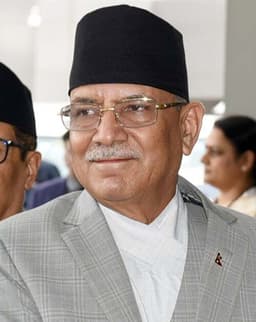
Pushpa Kamal Dahal
Revolutionary · Modern
50.0Total
Basic Information
Born
1943
1954
Died
—
—
Era
Modern
Modern
Nationality
Poland
Nepal
Occupation
Revolutionary
Revolutionary
Civilization
Western
Indian
Score Comparison
Military (10%)
14.2
35.0
Political (20%)
72.0
54.7
Influence (20%)
62.0
51.0
Legacy (20%)
56.0
40.8
Leadership (15%)
48.8
62.0
Strategy (15%)
33.6
60.0
TOTAL
52.4
50.0
Lech Walesa — Complete Timeline
1980 AD
Founding of SolidarityPolitical Action
Walesa co-founded the Solidarity trade union in August 1980 after leading the Gda
SolidarityLabor Movement
Impact: globalprogressive
1981 AD
Martial Law and ImprisonmentPolitical Action◆ Major
Walesa was arrested and interned on December 13, 1981, when General Jaruzelski imposed martial law in Poland. He was held for 11 months, while Solidarity was banned and its leaders suppressed.
Martial LawRepression
Impact: nationaltragic
1983 AD
Nobel Peace PrizeCultural◆ Major
Walesa was awarded the Nobel Peace Prize on December 10, 1983, for his nonviolent struggle for workers' rights and democracy. He was unable to collect it in person due to travel restrictions.
Nobel PrizePeace
Impact: globalconstructive
1989 AD
Round Table TalksPolitical Action
Walesa led Solidarity in the Round Table Talks with the communist government from February to April 1989. The agreements led to partially free elections, which Solidarity won, ending communist rule in Poland.
TransitionDemocracy
Impact: globalconstructive
1990 AD
President of PolandPolitical Action◆ Major
Walesa was elected President of Poland on December 22, 1990, in the first direct presidential election. His presidency focused on economic reform and NATO integration, but was marked by political conflicts and declining popularity.
PresidencyDemocracy
Impact: national
Pushpa Kamal Dahal — Complete Timeline
1996 AD
Launch of People's WarWar
Prachanda, as leader of the Communist Party of Nepal (Maoist), initiated a armed insurgency against the Nepalese state. The People's War began with attacks on police posts and government offices, escalating into a decade-long civil war.
InsurgencyCivil WarMaoist
Impact: nationaldestructive
2006 AD
Signing of Comprehensive Peace AccordPolitical Action◆ Major
Prachanda signed the Comprehensive Peace Accord with Prime Minister Girija Prasad Koirala, ending the civil war. The agreement committed the Maoists to lay down arms and join mainstream politics in exchange for integration into state institutions.
Peace TreatyCivil WarNepal
Impact: nationalconstructive
2008 AD
Election as Prime MinisterPolitical Action◆ Major
Following the Maoist victory in the Constituent Assembly elections, Prachanda became the first prime minister of the Federal Democratic Republic of Nepal. His tenure focused on integrating former Maoist combatants into the national army.
ElectionGovernmentRepublic
Impact: national
2009 AD
Resignation as Prime MinisterPolitical Action
Prachanda resigned as prime minister after a dispute with President Ram Baran Yadav over the dismissal of the army chief. The crisis highlighted tensions between the Maoists and the established political order.
ResignationPoliticsCrisis
Impact: national
Expert Analysis
Pushpa Kamal Dahal vs Lech Walesa
### The Shipyard Worker and the Schoolteacher: Two Paths from Revolution to Power
On a gray December morning in 1981, Lech Walesa was bundled into a car by Polish security police and driven to a remote government villa, where he would spend the next eleven months under house arrest. A decade and a half later, in the steep hills of western Nepal, a former schoolteacher named Pushpa Kamal Dahal—known to the world as Prachanda—was slipping through a jungle with a Kalashnikov, directing a guerrilla war that would eventually bring down a 240-year-old monarchy. Both men were revolutionaries. Both led mass movements that reshaped their nations. But the world they made—and the world that made them—could not have been more different.
### Origins
Lech Walesa was born in 1943 in the Polish village of Popowo, the son of a carpenter who had been forced into a Nazi labor camp. Poland had been carved up by Hitler and Stalin, then handed to the Soviet Union as a satellite state. Walesa grew up in a country where the Church was the only refuge from lies, and where workers in the state-owned shipyards knew that their labor built nothing they owned. He left school at sixteen to become an electrician at the Gdańsk Shipyard—a practical trade, a working-class life. His world was concrete, salt air, and the grinding rhythm of industrial communism.
Pushpa Kamal Dahal was born in 1954 in a village in the hills of western Nepal, into a Brahmin family that had once held land but was sliding into poverty. Nepal was a feudal monarchy, closed to the outside world, where a handful of families controlled nearly everything and a peasant could spend a lifetime bent over a rice paddy. Dahal studied agriculture at a campus in Chitwan, then taught in a local school. But he read Mao, Marx, and the history of peasant revolts. His world was rice terraces, caste hierarchies, and the slow-burning fury of the landless.
The difference in their origins is not merely geographic. Walesa grew up in an industrial society where workers could organize, strike, and bargain—even under a communist regime. Dahal grew up in an agrarian society where the only language of power was violence, and where the state had never known a peaceful transfer of authority. Their revolutions would reflect these foundations.
### Rise to Power
Walesa’s rise was a matter of moments and mass politics. In August 1980, when the Gdańsk Shipyard workers went on strike, a young electrician with a mustache climbed over a fence and joined them. Within days, he was their leader. The strike spread to hundreds of factories. The government, fearing a general uprising, signed the Gdańsk Agreement, legalizing the first independent trade union in the Soviet bloc. Solidarity was born. Walesa was its face—a man who could speak to workers and bishops alike, who could negotiate with the prime minister and then lead a crowd in prayer.
Prachanda’s rise was slower, more secretive, and more violent. In the 1980s, he joined a faction of the Nepali communist movement that believed in armed struggle. He climbed the ranks of an underground party, hiding in safe houses, printing pamphlets, building a network of cadres. In 1996, he launched the “People’s War”—a guerrilla insurgency from the hills. The government responded with repression, burning villages and killing suspected rebels. But each atrocity drove more peasants into the Maoist ranks. By 2001, the Maoists controlled much of rural Nepal. Prachanda was no longer an underground organizer; he was the commander of an army.
### Leadership & Governance
Walesa’s leadership was charismatic, instinctive, and deeply democratic. He had no ideology beyond freedom—freedom to speak, to pray, to organize. He used the Church as a moral shield and the strike as a weapon. When martial law was imposed in 1981, he refused to call for armed resistance. “We will not spill Polish blood,” he said. He spent the next eight years as a symbol, shuttling between prison and house arrest, while Solidarity went underground. When the Round Table Talks began in 1989, he negotiated with the communists, accepting a slow transition that preserved stability. In 1990, he was elected president of Poland—the first free election in the Eastern bloc.
Prachanda’s leadership was disciplined, ruthless, and ideological. He commanded a guerrilla army that used land mines, ambushes, and political indoctrination. He believed that only violence could break the feudal state. When the civil war ended in 2006 with the Comprehensive Peace Accord, he agreed to disarm his fighters and join mainstream politics. In 2008, he became prime minister after the Maoists won the most seats in the Constituent Assembly. But he could not govern. He resigned in 2009 after a dispute with the president over the army chief—a sign that his skills were those of a revolutionary, not an administrator.
### Triumph & Tragedy
Walesa’s greatest triumph was the peaceful collapse of Polish communism in 1989—a domino that toppled the entire Soviet empire. His tragedy was his presidency. The electrician who had united a nation could not govern it. He was abrasive, suspicious of advisers, and unable to manage the economic shock of capitalism. He lost re-election in 1995, a bitter end for a man who had once been the world’s most admired Pole.
Prachanda’s greatest triumph was ending a 240-year-old monarchy and declaring Nepal a federal republic in 2008. His tragedy is that the peace he won has not delivered prosperity. Nepal remains one of Asia’s poorest countries, wracked by political instability. Prachanda has been prime minister three times, but each term has been short and chaotic. The schoolteacher who dreamed of a new Nepal has become a familiar face in a broken system.
### Character & Destiny
Walesa’s character was shaped by the Catholic Church and the Polish tradition of nonviolent resistance. He believed in the power of the cross, the strike, and the vote. His destiny was to be the catalyst of a peaceful revolution—a role that required patience, faith, and a willingness to compromise. Prachanda’s character was shaped by the Maoist doctrine of protracted war and the Nepali tradition of rebellion. He believed in the power of the gun, the cell, and the secret plan. His destiny was to be the commander of a violent uprising—a role that required ruthlessness, discipline, and a willingness to kill.
### Legacy
Walesa is remembered as the man who brought down the Iron Curtain without firing a shot. His legacy is Solidarity, the Nobel Peace Prize, and a Poland that is free, democratic, and part of Europe. His flaws are acknowledged but forgiven; history has been kind to him.
Prachanda is remembered as the man who ended the monarchy and brought the Maoists into the mainstream. But his legacy is ambiguous. The civil war killed over 17,000 people. The peace has not brought justice or development. He is admired by some as a revolutionary hero, reviled by others as a warlord who traded his ideals for power.
### Conclusion
Walesa and Prachanda both led revolutions that succeeded. But success in revolution is not the same as success in governance. Walesa’s revolution was a liberation from an alien empire; Prachanda’s was a seizure of state power. One built on the foundation of a civil society that had existed for centuries; the other on the rubble of a feudal order that had never known democracy. The shipyard worker became a symbol of hope. The schoolteacher became a symbol of struggle. Both changed history. But history, as always, judges not by intentions, but by outcomes.
Rankings
🥇
Lech WalesaLeader
Mil: 14.2Pol: 72.0Inf: 62.0
52.4
🥈
Pushpa Kamal Dahal
Mil: 35.0Pol: 54.7Inf: 51.0
50.0
+2.4 behind
How This Comparison Works
Algorithm
Each figure is scored on 6 dimensions (0—100 scale) based on structured historical data: Military (10%), Political (20%), Influence (20%), Legacy (20%), Leadership (15%), Strategy (15%). The weighted total produces the final ranking.
Data Sources
Scores are computed from structured sub-indicators in the database. Scale factors adjust for era (Ancient ×0.85, Modern ×1.0) and civilization size (Eastern ×1.05, Other ×0.80) to account for differences in population and military scale.
Maximum 3 Figures
Comparisons are limited to 2—3 figures to ensure readability and statistical meaningfulness.
Error Margins
±5 points per dimension — Sub-scores are derived from historical records with inherent uncertainty. Two figures within 5 points on a dimension should be considered roughly equivalent in that area.
Total Score Accuracy
±3 points overall — The weighted combination of 6 dimensions produces a total score with approximately ±3 points of uncertainty. Differences of less than 3 points are not statistically significant— the figures are effectively tied.
Known Limitations
- Historical records are incomplete and uneven across civilizations
- Figures from oral-tradition societies may be underrepresented
- Occupation labels can misclassify multi-role figures
- Scores measure capability and impact, not moral character
- Quantitative scoring is a comparison tool, not absolute truth
Capability Radar
Military (10%) — Battles & Warfare
Battles
9
35
Win Rate
14
40
Expansion
17
25
Political (20%) — Governance & Reform
Reform
85
40
Diplomacy
80
50
Economy
55
35
Influence (20%) — Cultural & Global Reach
Cultural
70
40
Global
70
35
Legacy (20%) — Historical Impact
Historical
75
45
Longevity
65
30
Leadership (15%) — Power & Stability
Tenure
65
55
Stability
60
30
Strategy (15%) — Tactics & Innovation
Strategy
21
50
Tactics
24
45
Reform
27
30
Similar Comparisons
Comments & Discussion
GDAŃSK SPARKY6/16/2026
Walesa wins hands down on legacy. He actually built a functioning democracy. Prachanda? The guy went from Maoist revolutionary to cozying up with the very elites he fought. Look at Nepal today—still a mess, still corrupt. Walesa’s Solidarity movement had moral clarity; Prachanda’s People’s War just swapped one set of thugs for another. Facts don’t lie. One man liberated a nation; the other just shuffled the deck.
数据拆解者6/16/2026
数据不会骗人——瓦文萨当总统是1989年,波兰GDP人均从1800美元飙到如今近两万。尼泊尔?普拉昌达掌权十年,人均GDP不到1400美元,连印度一半都没有。革命不能当饭吃。再说,瓦文萨背后有教会、西方、工人三大支柱,普拉昌达靠的是游击队和农民。数量级差距摆在那里,硬要比就是侮辱统计学。
CLASSICS COMPARATIST6/16/2026
Both men are echoes of ancient revolutionary types. Walesa is the Cincinnatus—reluctant power, returns to plough. Prachanda is the Marius—peasant general who reforms the state by breaking it first. Walesa’s humility was real: he went back to the shipyard after his presidency. Prachanda? He’s still circling power like a vulture over a dying monarchy. One mirrors republican virtue; the other mirrors late Republican crisis. The classics teach us which model endures.
江湖野史人6/16/2026
讲个冷门八卦:瓦文萨早年因为组织罢工,被波兰当局关过十一次。普拉昌达呢?他老婆据说是加德满都富商女儿,婚后用娘家钱资助游击队。这个细节说明一切——一个靠工人血汗坚持,一个靠资本曲线革命。当然,两人都够狠。但瓦文萨的狠是咬牙撑下去,普拉昌达的狠是笑着把对手送进尸坑。革命底色不同,人性就不同。
REVISIONIST SCOURGE6/16/2026
Spare me the saintly Walesa myth. The man was a CIA asset, plain and simple. Solidarity was propped up by Vatican money and Western intelligence to destabilize the Soviet bloc. Compare that to Prachanda, who actually led a genuine anti-colonial, anti-feudal insurgency without foreign funding. Walesa ended up a neoliberal trophy; Prachanda at least kept the land reform rhetoric. One was a tool, the other was a tactician. Context matters—and the context says Walesa’s revolution was imported.