Loading...
This comparison has not been analyzed yet.
One-time AI generation (~1 minute). Scores and timeline are already available below.
Kyansittha vs Philip III of France
Philip III of France leads by 1.9 pts · 2 figures compared
…
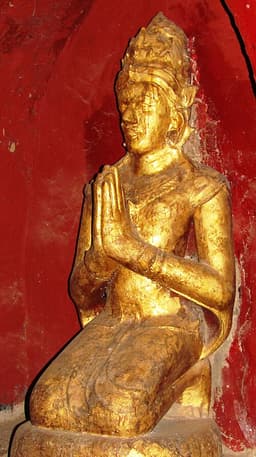
Kyansittha
Emperor · Medieval
54.6Total
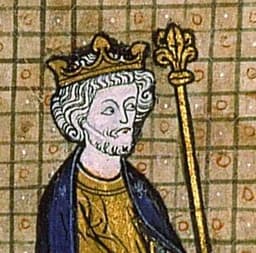
Philip III of France
Emperor · Medieval
56.5Total
Basic Information
Born
1030
1245
Died
1112
1285
Era
Medieval
Medieval
Nationality
Myanmar
France
Occupation
Emperor
Emperor
Civilization
Eastern
Western
Score Comparison
Military (10%)
45.0
72.5
Political (20%)
48.0
48.0
Influence (20%)
59.0
54.1
Legacy (20%)
54.0
45.8
Leadership (15%)
72.0
74.0
Strategy (15%)
38.3
60.0
TOTAL
54.6
56.5
Kyansittha — Complete Timeline
1084 AD
Kyansittha's consolidation of the Pagan EmpirePolitical Action◆ Major
After succeeding King Sawlu, Kyansittha suppressed a Mon rebellion and stabilized the Pagan Empire. He implemented administrative reforms, promoted Theravada Buddhism, and fostered cultural exchange with the Mon people, strengthening the empire's unity and laying the foundation for its golden age.
ConsolidationReformMon Integration
Impact: regionalconstructive
Kyansittha's patronage of Theravada BuddhismCultural◆ Major
Kyansittha actively promoted Theravada Buddhism as the state religion, building numerous monasteries and stupas. He invited Buddhist monks from Sri Lanka and the Mon region to spread the faith, which became a unifying force in the Pagan Empire and shaped Burmese religious identity.
BuddhismPatronageReligion
Impact: regionalconstructive
1105 AD
Construction of the Ananda TempleCultural◆ Major
King Kyansittha commissioned the construction of the Ananda Temple in Bagan, one of the finest examples of Mon-style Buddhist architecture. The temple, completed around 1105, features four standing Buddha statues and intricate carvings, and remains a major pilgrimage site and symbol of Pagan's cultural achievement.
TempleBuddhismArchitecture
Impact: regionalconstructive
Philip III of France — Complete Timeline
1258 AD
Treaty of CorbeilPolitical Action
Philip III's father, Louis IX, signed the Treaty of Corbeil, which renounced French claims to Catalonia and Roussillon in exchange for Aragonese renunciation of claims to Provence and Languedoc. Philip III inherited this settlement.
TreatyDiplomacyCapetian
Impact: regional
1274 AD
Invasion of NavarreWar◆ Major
Philip III invaded Navarre to enforce his claim as regent for his niece, Joan I of Navarre. He secured control of the kingdom, which later passed to his son Philip IV through marriage, expanding French influence in the Pyrenees.
InvasionTerritorial ExpansionCapetian
Impact: regional
1285 AD
Aragonese CrusadeWar◆ Major
Philip III led the Aragonese Crusade, a papal-sanctioned invasion of Aragon to depose King Peter III. The French army was defeated at the Battle of the Col de Panissars and forced to retreat, suffering heavy losses. Philip III died during the retreat.
CrusadeDefeatCapetian
Impact: regionaltragic
This comparison has not been analyzed yet.
One-time AI generation (~1 minute). Scores and timeline are already available below.
Rankings
🥇
Philip III of FranceLeader
Mil: 72.5Pol: 48.0Inf: 54.1
56.5
🥈
Kyansittha
Mil: 45.0Pol: 48.0Inf: 59.0
54.6
+1.9 behind
How This Comparison Works
Algorithm
Each figure is scored on 6 dimensions (0—100 scale) based on structured historical data: Military (10%), Political (20%), Influence (20%), Legacy (20%), Leadership (15%), Strategy (15%). The weighted total produces the final ranking.
Data Sources
Scores are computed from structured sub-indicators in the database. Scale factors adjust for era (Ancient ×0.85, Modern ×1.0) and civilization size (Eastern ×1.05, Other ×0.80) to account for differences in population and military scale.
Maximum 3 Figures
Comparisons are limited to 2—3 figures to ensure readability and statistical meaningfulness.
Error Margins
±5 points per dimension — Sub-scores are derived from historical records with inherent uncertainty. Two figures within 5 points on a dimension should be considered roughly equivalent in that area.
Total Score Accuracy
±3 points overall — The weighted combination of 6 dimensions produces a total score with approximately ±3 points of uncertainty. Differences of less than 3 points are not statistically significant— the figures are effectively tied.
Known Limitations
- Historical records are incomplete and uneven across civilizations
- Figures from oral-tradition societies may be underrepresented
- Occupation labels can misclassify multi-role figures
- Scores measure capability and impact, not moral character
- Quantitative scoring is a comparison tool, not absolute truth
Capability Radar
Military (10%) — Battles & Warfare
Battles
25
55
Win Rate
30
60
Expansion
30
65
Political (20%) — Governance & Reform
Reform
40
40
Diplomacy
50
50
Economy
45
45
Influence (20%) — Cultural & Global Reach
Cultural
65
30
Global
30
25
Legacy (20%) — Historical Impact
Historical
60
40
Longevity
55
35
Leadership (15%) — Power & Stability
Tenure
70
55
Stability
60
50
Strategy (15%) — Tactics & Innovation
Strategy
25
50
Tactics
20
45
Reform
20
30
Similar Comparisons
Comments & Discussion
No comments yet. Be the first to share your thoughts!