Loading...
Guyuk Khan vs Philip III of France
Philip III of France leads by 16.7 pts · 2 figures compared
…
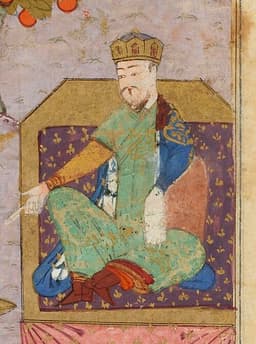
Guyuk Khan
Emperor · Medieval
39.8Total
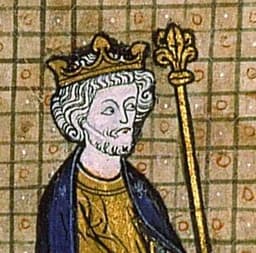
Philip III of France
Emperor · Medieval
56.5Total
Basic Information
Born
1206
1245
Died
1248
1285
Era
Medieval
Medieval
Nationality
Mongol Empire
France
Occupation
Emperor
Emperor
Civilization
Eastern
Western
Score Comparison
Military (10%)
50.0
72.5
Political (20%)
29.3
48.0
Influence (20%)
48.6
54.1
Legacy (20%)
37.5
45.8
Leadership (15%)
39.0
74.0
Strategy (15%)
30.3
60.0
TOTAL
39.8
56.5
Guyuk Khan — Complete Timeline
1246 AD
Election as Great KhanPolitical Action
Güyük was elected as the third Great Khan of the Mongol Empire at a kurultai near the Mongol capital Karakorum. His election was supported by his mother Töregene, who had served as regent, but was opposed by Batu, leading to tensions.
SuccessionMongol EmpireKurultai
Impact: global
Reception of Papal Envoy John of Plano CarpiniCultural
Güyük received the Franciscan envoy John of Plano Carpini at his court, who delivered a letter from Pope Innocent IV demanding the Mongols cease their invasions. Güyük's reply demanded the Pope's submission to Mongol authority, reflecting Mongol imperial ideology.
DiplomacyPapacyMongol Empire
Impact: regional
1247 AD
Conflict with Batu KhanPolitical Action◆ Major
Güyük planned a military campaign against his cousin Batu, ruler of the Golden Horde, due to Batu's refusal to recognize his authority. The conflict was averted when Güyük died in 1248, but it deepened the rift between the Toluid and Jochid lines.
Mongol Civil WarSuccessionGolden Horde
Impact: regionaldestructive
1248 AD
Death and Succession CrisisPolitical Action◆ Major
Güyük died suddenly in 1248 while marching west to confront Batu, possibly poisoned. His death left the empire without a clear successor, leading to a regency by his widow Oghul Qaimish and eventually the election of Möngke in 1251.
DeathSuccessionMongol Empire
Impact: globaltragic
Philip III of France — Complete Timeline
1258 AD
Treaty of CorbeilPolitical Action
Philip III's father, Louis IX, signed the Treaty of Corbeil, which renounced French claims to Catalonia and Roussillon in exchange for Aragonese renunciation of claims to Provence and Languedoc. Philip III inherited this settlement.
TreatyDiplomacyCapetian
Impact: regional
1274 AD
Invasion of NavarreWar◆ Major
Philip III invaded Navarre to enforce his claim as regent for his niece, Joan I of Navarre. He secured control of the kingdom, which later passed to his son Philip IV through marriage, expanding French influence in the Pyrenees.
InvasionTerritorial ExpansionCapetian
Impact: regional
1285 AD
Aragonese CrusadeWar◆ Major
Philip III led the Aragonese Crusade, a papal-sanctioned invasion of Aragon to depose King Peter III. The French army was defeated at the Battle of the Col de Panissars and forced to retreat, suffering heavy losses. Philip III died during the retreat.
CrusadeDefeatCapetian
Impact: regionaltragic
Expert Analysis
Origins
Guyuk Khan was born around 1206 as the eldest son of Ogedei Khan, the second Great Khan of the Mongol Empire, and his principal wife Toregene. His grandfather was Genghis Khan, founder of the empire. Guyuk grew up in the Mongol steppe culture, learning warfare and administration. His early life was marked by the constant expansion of the Mongol Empire under his father's rule. In contrast, Philip III of France was born on April 1, 1245, in Poissy, France, the second son of King Louis IX (Saint Louis) and Margaret of Provence. He was not initially expected to become king, but the death of his older brother Louis in 1260 made him heir. Philip received a traditional Capetian education focused on chivalry, governance, and piety, heavily influenced by his father's devout Christianity.
Rise to Power
Guyuk's rise was contested. After Ogedei's death in 1241, his mother Toregene served as regent for five years, maneuvering to secure Guyuk's election as Great Khan in 1246 at a kurultai near Karakorum. His election was opposed by Batu, a cousin and ruler of the Golden Horde, who refused to attend. Guyuk's reign began with consolidation of power, but his authority was never fully accepted by all Mongol factions. Philip III became king upon his father's death on August 25, 1270, during the Eighth Crusade in Tunis. He was 25 years old and had to manage the return of the French army to France. His coronation took place at Reims in 1271. Philip relied heavily on his father's legacy and the counsel of experienced advisors, such as his uncle Charles of Anjou and chamberlain Pierre de la Broce.
Leadership & Governance
Guyuk Khan's leadership was characterized by an attempt to assert central authority over the fractious Mongol Empire. He sought to reduce the power of regional khans, particularly Batu. In governance, he continued the Mongol administrative system using local officials and maintained the Yam (postal relay system). However, his reign was too short to implement lasting reforms. Philip III's leadership style was more conventional for a medieval French king. He expanded royal administration and continued his father's policies of justice and piety. He oversaw the Treaty of Corbeil (1279) with Aragon, which secured French borders. However, his dependence on advisors led to political instability, especially after the execution of Pierre de la Broce in 1278. Philip's military leadership scored 72.5 compared to Guyuk's 50.0, reflecting his active campaigns.
Triumph & Tragedy
Guyuk's greatest triumph was his election as Great Khan, symbolizing continuity of the Mongol dynasty. He also received the Papal envoy John of Plano Carpini, asserting Mongol supremacy. His tragedy was his sudden death in 1248 while marching against Batu, possibly poisoned, which plunged the empire into a succession crisis. His reign lasted less than two years. Philip III's triumph was the successful invasion of Navarre in 1274, securing the kingdom for his nephew. He also expanded French influence into the Mediterranean. His tragedy was the Aragonese Crusade (1284-1285), a disastrous invasion of Aragon that ended in defeat at the Battle of the Col de Panissars and the loss of many lives. Philip himself died of dysentery during the retreat in October 1285. The crusade drained royal finances and damaged French prestige.
Character & Destiny
Guyuk was described as stern and ambitious, but also as a heavy drinker, which may have contributed to his early death. His conflict with Batu revealed his inability to unite the empire. His character shaped his destiny: his aggressive stance led to isolation and possible assassination. Philip III, known as "the Bold," was pious and brave but indecisive and easily influenced. His reliance on flawed advisors led to the Aragonese disaster. His character—loyal to his father's crusading ideals but lacking strategic acumen—led to overreach. Historical assessments note that Philip was a well-meaning king who lacked the political and military skills of his father or son.
Legacy
Guyuk's legacy is minimal due to his short reign. He is remembered as a transitional figure whose death led to the rise of Möngke Khan and the empire's peak. His conflict with Batu foreshadowed the eventual fragmentation of the Mongol Empire. Philip III's legacy is more substantial. He expanded French territory through the inheritance of Navarre and parts of Languedoc. His reign consolidated the Capetian dynasty's control over France. However, the Aragonese Crusade's failure set limits on French expansion. Philip's son, Philip IV, would learn from his father's mistakes and become a more effective ruler. In terms of scores, Philip III's total of 56.5 surpasses Guyuk's 39.8, indicating greater overall impact.
Conclusion
While Guyuk Khan was a significant figure in Mongol history, his brief reign and lack of major achievements limit his impact. Philip III, despite his failures, had a longer reign and made lasting territorial gains for France. Philip's military score of 72.5 dwarfs Guyuk's 50.0, and his political and leadership scores are also higher. Therefore, Philip III of France had a greater historical impact than Guyuk Khan.
Rankings
🥇
Philip III of FranceLeader
Mil: 72.5Pol: 48.0Inf: 54.1
56.5
🥈
Guyuk Khan
Mil: 50.0Pol: 29.3Inf: 48.6
39.8
+16.7 behind
How This Comparison Works
Algorithm
Each figure is scored on 6 dimensions (0—100 scale) based on structured historical data: Military (10%), Political (20%), Influence (20%), Legacy (20%), Leadership (15%), Strategy (15%). The weighted total produces the final ranking.
Data Sources
Scores are computed from structured sub-indicators in the database. Scale factors adjust for era (Ancient ×0.85, Modern ×1.0) and civilization size (Eastern ×1.05, Other ×0.80) to account for differences in population and military scale.
Maximum 3 Figures
Comparisons are limited to 2—3 figures to ensure readability and statistical meaningfulness.
Error Margins
±5 points per dimension — Sub-scores are derived from historical records with inherent uncertainty. Two figures within 5 points on a dimension should be considered roughly equivalent in that area.
Total Score Accuracy
±3 points overall — The weighted combination of 6 dimensions produces a total score with approximately ±3 points of uncertainty. Differences of less than 3 points are not statistically significant— the figures are effectively tied.
Known Limitations
- Historical records are incomplete and uneven across civilizations
- Figures from oral-tradition societies may be underrepresented
- Occupation labels can misclassify multi-role figures
- Scores measure capability and impact, not moral character
- Quantitative scoring is a comparison tool, not absolute truth
Capability Radar
Military (10%) — Battles & Warfare
Battles
20
55
Win Rate
20
60
Expansion
10
65
Political (20%) — Governance & Reform
Reform
10
40
Diplomacy
20
50
Economy
10
45
Influence (20%) — Cultural & Global Reach
Cultural
10
30
Global
10
25
Legacy (20%) — Historical Impact
Historical
15
40
Longevity
10
35
Leadership (15%) — Power & Stability
Tenure
15
55
Stability
10
50
Strategy (15%) — Tactics & Innovation
Strategy
15
50
Tactics
15
45
Reform
10
30
Similar Comparisons
Comments & Discussion
No comments yet. Be the first to share your thoughts!