Loading...
Krishnaraja Wadiyar IV vs Mongkut
Krishnaraja Wadiyar IV leads by 8.0 pts · 2 figures compared
…
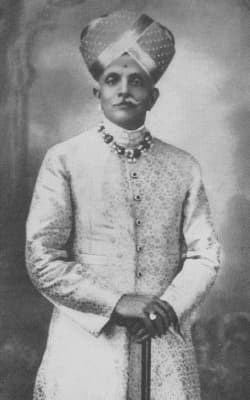
Krishnaraja Wadiyar IV
Emperor · Modern
66.0Total
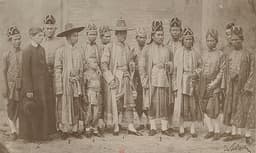
Mongkut
Emperor · Modern
58.0Total
Basic Information
Born
1884
1804
Died
1940
1868
Era
Modern
Modern
Nationality
India
Thailand
Occupation
Emperor
Emperor
Civilization
Indian
Eastern
Score Comparison
Military (10%)
41.2
21.2
Political (20%)
78.0
78.0
Influence (20%)
72.0
56.7
Legacy (20%)
58.0
58.0
Leadership (15%)
81.7
78.0
Strategy (15%)
54.7
38.3
TOTAL
66.0
58.0
Krishnaraja Wadiyar IV — Complete Timeline
1881 AD
Introduced Representative Assembly in MysoreReform
Krishnaraja Wadiyar IV established the Mysore Representative Assembly, one of the first legislative bodies in a princely state. It allowed elected members to discuss policies and budgets, giving the people a voice in governance.
Political ReformDemocracyRepresentative Government
Impact: regionalprogressive
1900 AD
Promoted Women's Education and Social ReformReform◆ Major
Krishnaraja supported women's education by establishing schools and colleges for girls. He also enacted laws to raise the age of marriage and improve the status of women, contributing to social progress in Mysore.
Women's RightsSocial ReformEducation
Impact: regionalprogressive
1910 AD
Implemented the Mysore Economic Development PlanReform◆ Major
Krishnaraja launched a comprehensive economic development plan that included industrialization, irrigation projects, and hydroelectric power. The Krishnarajasagara Dam and the Mysore Iron and Steel Works were key projects that boosted the state's economy.
Economic DevelopmentIndustrializationInfrastructure
Impact: regionalconstructive
1916 AD
Founded the University of MysoreReform◆ Major
Krishnaraja founded the University of Mysore, the first university in the state and one of the earliest in India. It promoted higher education and research, and became a model for other princely states.
EducationUniversityHigher Education
Impact: regionalconstructive
1927 AD
Received Praise from Mahatma GandhiCultural
Mahatma Gandhi praised Krishnaraja Wadiyar IV as a 'Rajarshi' (royal sage) for his enlightened rule and social reforms. Gandhi's endorsement enhanced the Maharaja's reputation as a progressive and benevolent ruler.
GandhiPraiseReputation
Impact: nationalconstructive
Mongkut — Complete Timeline
1851 AD
Corresponded with Western leaders and scholarsCultural
Mongkut engaged in extensive correspondence with Western leaders, including President James Buchanan and Pope Pius IX, and with missionaries and scholars. He sought to learn about Western science, technology, and governance.
DiplomacyIntellectual ExchangeModernization
Impact: nationalconstructive
Reformed Buddhist monastic educationCultural
As a former monk, Mongkut reformed Buddhist monastic education by emphasizing Pali studies and scriptural accuracy. He founded the Dhammayuttika Nikaya order, which focused on strict adherence to Buddhist teachings.
BuddhismReligious ReformEducation
Impact: nationalconstructive
1855 AD
Hired Western advisors to modernize SiamReform
Mongkut employed Western advisors, including Anna Leonowens, to teach his children and assist in modernizing the court. He also hired European experts to help with military, legal, and administrative reforms.
AdvisorsModernizationEducation
Impact: nationalconstructive
Signed the Bowring Treaty with BritainPolitical Action◆ Major
King Mongkut signed the Bowring Treaty with Britain, opening Siam to free trade and granting extraterritorial rights to British subjects. This treaty ended Siam's isolation and set a precedent for relations with other Western powers.
TreatyTradeWestern Influence
Impact: regional
Expert Analysis
Origins
Krishnaraja Wadiyar IV was born on June 4, 1884, in Mysore, India, into the Wadiyar dynasty. His father, Chamaraja Wadiyar IX, died when Krishnaraja was ten, and he was raised under the regency of his mother, Maharani Vani Vilasa Sannidhana. He was educated privately in English, Sanskrit, and administrative sciences, and ascended the throne in 1894 at age 11. Mongkut, born on October 18, 1804, in Bangkok, Siam (Thailand), was the son of King Rama II. He became a Buddhist monk at age 20, spending 27 years in monastic life, studying Pali scriptures and Western science through missionaries. He ascended the throne in 1851 at age 46, after his half-brother King Nangklao's death.
Rise to Power
Krishnaraja Wadiyar IV's rise was automatic as the heir, but he had to navigate British colonial oversight. He assumed full ruling powers in 1902 after a regency council. His early reign focused on administrative reforms, and he established the Mysore Representative Assembly in 1881, giving elected Indians a voice—one of the first such bodies in a princely state. Mongkut's path was different: as a monk, he was not expected to rule, but his intellectual reputation and diplomatic skills made him the preferred successor after Nangklao. He was crowned in 1851 and immediately faced pressure from Western colonial powers, particularly Britain and France.
Leadership & Governance
Krishnaraja Wadiyar IV was a progressive autocrat. He founded the University of Mysore in 1916, promoted women's education by establishing schools for girls, and raised the marriage age. He launched the Mysore Economic Development Plan, including the Krishna Raja Sagara dam and hydroelectric projects, which boosted industry and agriculture. His leadership scored 81.7 in the dataset, reflecting effective administration. Mongkut's governance was more focused on foreign relations. He signed the Bowring Treaty in 1855, opening Siam to free trade but granting extraterritorial rights to British subjects—a calculated concession to preserve sovereignty. He hired Western advisors like Anna Leonowens to modernize the court and reformed Buddhist monastic education by founding the Dhammayuttika Nikaya. His leadership score is 78.0.
Triumph & Tragedy
Krishnaraja's greatest triumph was transforming Mysore into a model state, earning praise from Mahatma Gandhi as a 'Rajarshi' (royal sage). His economic plans and educational institutions had lasting impact. However, his failure was his inability to fully democratize—the representative assembly had limited power, and he remained an autocrat under British suzerainty. Mongkut's triumph was preserving Siamese independence through skillful diplomacy, avoiding colonization unlike neighbors. His tragedy was the unequal treaties that eroded sovereignty; the Bowring Treaty led to similar agreements with other powers, and his successor faced more crises. Mongkut's military score is low at 21.2, reflecting his lack of military modernization.
Character & Destiny
Krishnaraja was known for his humility, piety, and dedication to public service. He was a devout Hindu but supported all religions. His character led to stable, benevolent rule but also a reluctance to challenge British authority. Mongkut was intellectually curious, pragmatic, and willing to engage with Western ideas while preserving Thai identity. His monastic background gave him a scholarly approach, but his concessions to Western powers set a precedent that later kings struggled with. Both monarchs' leadership scores are high (81.7 and 78.0), but Krishnaraja's higher total score (66.0 vs 58.0) reflects broader domestic impact.
Legacy
Krishnaraja Wadiyar IV's legacy is visible in Karnataka's educational and industrial infrastructure. The University of Mysore and the Krishna Raja Sagara dam remain central. He is remembered as an enlightened ruler, with a legacy score of 58.0. Mongkut's legacy is more complex: he is celebrated as the king who modernized Siam and kept it independent, but his treaties constrained later sovereignty. The Bowring Treaty is a historical milestone. His influence score is 56.7, slightly below Krishnaraja's 72.0, indicating less direct impact on governance structures.
Conclusion
While both monarchs were reformists, Krishnaraja Wadiyar IV had a greater impact on his domain. His policies created lasting institutions in education, industry, and social reform that directly improved lives. Mongkut's diplomatic achievements were crucial for Siam's survival, but his domestic reforms were less transformative. Krishnaraja's total score of 66.0 versus Mongkut's 58.0 supports this. Data points like leadership (81.7 vs 78.0) and influence (72.0 vs 56.7) reinforce that Krishnaraja's internal development surpassed Mongkut's external maneuvering. Therefore, Krishnaraja Wadiyar IV stands as the more effective ruler in terms of tangible, enduring progress.
Rankings
🥇
Krishnaraja Wadiyar IVLeader
Mil: 41.2Pol: 78.0Inf: 72.0
66.0
🥈
Mongkut
Mil: 21.2Pol: 78.0Inf: 56.7
58.0
+8.0 behind
How This Comparison Works
Algorithm
Each figure is scored on 6 dimensions (0—100 scale) based on structured historical data: Military (10%), Political (20%), Influence (20%), Legacy (20%), Leadership (15%), Strategy (15%). The weighted total produces the final ranking.
Data Sources
Scores are computed from structured sub-indicators in the database. Scale factors adjust for era (Ancient ×0.85, Modern ×1.0) and civilization size (Eastern ×1.05, Other ×0.80) to account for differences in population and military scale.
Maximum 3 Figures
Comparisons are limited to 2—3 figures to ensure readability and statistical meaningfulness.
Error Margins
±5 points per dimension — Sub-scores are derived from historical records with inherent uncertainty. Two figures within 5 points on a dimension should be considered roughly equivalent in that area.
Total Score Accuracy
±3 points overall — The weighted combination of 6 dimensions produces a total score with approximately ±3 points of uncertainty. Differences of less than 3 points are not statistically significant— the figures are effectively tied.
Known Limitations
- Historical records are incomplete and uneven across civilizations
- Figures from oral-tradition societies may be underrepresented
- Occupation labels can misclassify multi-role figures
- Scores measure capability and impact, not moral character
- Quantitative scoring is a comparison tool, not absolute truth
Capability Radar
Military (10%) — Battles & Warfare
Battles
31
10
Win Rate
33
10
Expansion
34
10
Political (20%) — Governance & Reform
Reform
90
75
Diplomacy
85
85
Economy
90
70
Influence (20%) — Cultural & Global Reach
Cultural
75
55
Global
60
60
Legacy (20%) — Historical Impact
Historical
70
65
Longevity
65
60
Leadership (15%) — Power & Stability
Tenure
85
65
Stability
90
75
Strategy (15%) — Tactics & Innovation
Strategy
39
20
Tactics
42
15
Reform
47
30
Similar Comparisons
Comments & Discussion
No comments yet. Be the first to share your thoughts!