Loading...
Alexander I of Russia vs Krishnaraja Wadiyar IV
Krishnaraja Wadiyar IV leads by 2.5 pts · 2 figures compared
…

Alexander I of Russia
Emperor · Modern
63.5Total
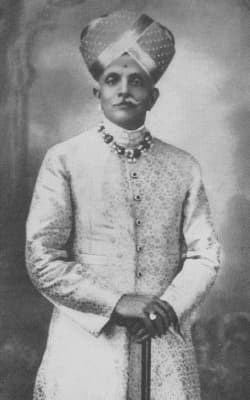
Krishnaraja Wadiyar IV
Emperor · Modern
66.0Total
Basic Information
Born
1777
1884
Died
1825
1940
Era
Modern
Modern
Nationality
Russia
India
Occupation
Emperor
Emperor
Civilization
Western
Indian
Score Comparison
Military (10%)
82.0
41.2
Political (20%)
70.0
78.0
Influence (20%)
55.0
72.0
Legacy (20%)
55.0
58.0
Leadership (15%)
72.0
81.7
Strategy (15%)
65.4
54.7
TOTAL
63.5
66.0
Alexander I of Russia — Complete Timeline
1801 AD
Accession as Emperor of RussiaPolitical Action◆ Major
Alexander I ascended the throne after the assassination of his father, Paul I. He was aware of the conspiracy but did not prevent it. His accession was greeted with relief by the nobility, who hoped for a return to the liberal policies of Catherine the Great.
SuccessionAssassinationLiberal Hopes
Impact: national
1812 AD
Defeat of Napoleon in the Patriotic War of 1812War
Alexander I led Russia during Napoleon's invasion. The Russian army retreated, employing scorched-earth tactics, and then defeated the French at the Battle of Borodino. Napoleon's Grand Army was destroyed during the winter retreat from Moscow. This victory made Alexander a key figure in European politics.
Napoleonic WarsBorodinoMoscow
Impact: globalconstructive
1814 AD
Congress of ViennaPolitical Action
Alexander I played a leading role at the Congress of Vienna, which redrew the map of Europe after Napoleon's defeat. He advocated for the creation of the Holy Alliance and secured Russian control over Poland as a constitutional kingdom. The congress established a balance of power that lasted for decades.
DiplomacyHoly AlliancePoland
Impact: globalconstructive
1815 AD
Establishment of the Holy AlliancePolitical Action◆ Major
Alexander I initiated the Holy Alliance with Austria and Prussia, a pact based on Christian principles to maintain peace and suppress revolutions. The alliance became a tool for reactionary policies across Europe, intervening in uprisings in Italy and Spain. It reflected Alexander's growing mysticism and conservatism.
AllianceConservatismReaction
Impact: global
Granting of the Constitution to PolandPolitical Action◆ Major
Alexander I granted a liberal constitution to the Kingdom of Poland, which he created as a personal union with Russia. The constitution established a parliament, civil liberties, and a separate army. However, Alexander later violated its provisions, leading to Polish discontent and eventual uprisings.
PolandConstitutionLiberalism
Impact: regionalconstructive
1825 AD
Mysterious Death and Legend of Feodor KuzmichOther◆ Major
Alexander I died suddenly in Taganrog under unclear circumstances, leading to rumors that he had faked his death to become a hermit. The legend of Feodor Kuzmich, a holy man who appeared in Siberia and was believed to be Alexander, persisted for decades. His death triggered the Decembrist Revolt.
DeathLegendDecembrist Revolt
Impact: national
Krishnaraja Wadiyar IV — Complete Timeline
1881 AD
Introduced Representative Assembly in MysoreReform
Krishnaraja Wadiyar IV established the Mysore Representative Assembly, one of the first legislative bodies in a princely state. It allowed elected members to discuss policies and budgets, giving the people a voice in governance.
Political ReformDemocracyRepresentative Government
Impact: regionalprogressive
1900 AD
Promoted Women's Education and Social ReformReform◆ Major
Krishnaraja supported women's education by establishing schools and colleges for girls. He also enacted laws to raise the age of marriage and improve the status of women, contributing to social progress in Mysore.
Women's RightsSocial ReformEducation
Impact: regionalprogressive
1910 AD
Implemented the Mysore Economic Development PlanReform◆ Major
Krishnaraja launched a comprehensive economic development plan that included industrialization, irrigation projects, and hydroelectric power. The Krishnarajasagara Dam and the Mysore Iron and Steel Works were key projects that boosted the state's economy.
Economic DevelopmentIndustrializationInfrastructure
Impact: regionalconstructive
1916 AD
Founded the University of MysoreReform◆ Major
Krishnaraja founded the University of Mysore, the first university in the state and one of the earliest in India. It promoted higher education and research, and became a model for other princely states.
EducationUniversityHigher Education
Impact: regionalconstructive
1927 AD
Received Praise from Mahatma GandhiCultural
Mahatma Gandhi praised Krishnaraja Wadiyar IV as a 'Rajarshi' (royal sage) for his enlightened rule and social reforms. Gandhi's endorsement enhanced the Maharaja's reputation as a progressive and benevolent ruler.
GandhiPraiseReputation
Impact: nationalconstructive
Expert Analysis
Origins
Alexander I of Russia (born 1777) was the grandson of Catherine the Great. His father, Paul I, was assassinated in 1801 with Alexander's tacit knowledge, leaving him with a deep sense of guilt. He was educated by the Swiss tutor Frédéric-César de La Harpe, who instilled liberal ideals. In contrast, Krishnaraja Wadiyar IV (born 1884) ascended the throne of Mysore at age 11 after his father's death. He was educated under British supervision and by Indian scholars, blending Western and Indian traditions. His early exposure to administrative reforms under the British residency shaped his progressive outlook.
Rise to Power
Alexander I became Emperor in 1801 after his father's assassination. He initially pursued liberal reforms but shifted to conservatism after the Napoleonic Wars. His rise to international prominence came through the defeat of Napoleon in 1812. Krishnaraja Wadiyar IV became Maharaja in 1894 but ruled under a regency until 1902. He then assumed full powers and quickly established the Mysore Representative Assembly in 1907, giving elected Indians a voice. His rise was peaceful, aided by the British policy of indirect rule.
Leadership & Governance
Alexander I's leadership was marked by duality. He advocated for a constitution for Poland but maintained autocracy in Russia. His governance score of 70.0 reflects his mixed record. He established the Holy Alliance to suppress revolutions, contradicting his earlier liberal ideas. Krishnaraja Wadiyar IV, scoring 81.7 in leadership, was a model ruler. He founded the University of Mysore in 1916, promoted women's education, and implemented a comprehensive economic plan including hydroelectric power and irrigation. His governance was consultative and progressive.
Triumph & Tragedy
Alexander I's greatest triumph was defeating Napoleon, scoring 82.0 in military. He also shaped Europe at the Congress of Vienna. However, his failure to reform Russia internally led to the Decembrist revolt after his death. Krishnaraja Wadiyar IV's triumphs include the Mysore Economic Development Plan and the praise of Mahatma Gandhi, who called him a 'Rajarshi'. His tragedy was that his reforms were limited by British suzerainty, and his state's progress was overshadowed by India's independence movement.
Character & Destiny
Alexander I was enigmatic, torn between liberalism and autocracy. His character led to indecisiveness, and he died suddenly in 1825, leaving a succession crisis. Krishnaraja Wadiyar IV was disciplined, progressive, and deeply religious. He ruled for 46 years, ensuring stability and prosperity. His character attracted admiration from figures like Gandhi, enhancing his influence score of 72.0.
Legacy
Alexander I's legacy is mixed. He is remembered for defeating Napoleon and the Holy Alliance, but his domestic reforms failed. His influence score of 55.0 reflects this. Krishnaraja Wadiyar IV's legacy is more tangible: the University of Mysore, the Krishna Raja Sagara dam, and a model of enlightened princely rule. His legacy score of 58.0 is slightly higher, and his political score of 78.0 exceeds Alexander's 70.0.
Conclusion
While Alexander I had a greater military impact, Krishnaraja Wadiyar IV achieved higher total scores (66.0 vs 63.5) and left a more positive, enduring legacy in governance and social reform. Alexander's autocratic failures contrast with Krishnaraja's enlightened progress. Therefore, Krishnaraja Wadiyar IV had a greater overall impact as a ruler.
Rankings
🥇
Krishnaraja Wadiyar IVLeader
Mil: 41.2Pol: 78.0Inf: 72.0
66.0
🥈
Alexander I of Russia
Mil: 82.0Pol: 70.0Inf: 55.0
63.5
+2.5 behind
How This Comparison Works
Algorithm
Each figure is scored on 6 dimensions (0—100 scale) based on structured historical data: Military (10%), Political (20%), Influence (20%), Legacy (20%), Leadership (15%), Strategy (15%). The weighted total produces the final ranking.
Data Sources
Scores are computed from structured sub-indicators in the database. Scale factors adjust for era (Ancient ×0.85, Modern ×1.0) and civilization size (Eastern ×1.05, Other ×0.80) to account for differences in population and military scale.
Maximum 3 Figures
Comparisons are limited to 2—3 figures to ensure readability and statistical meaningfulness.
Error Margins
±5 points per dimension — Sub-scores are derived from historical records with inherent uncertainty. Two figures within 5 points on a dimension should be considered roughly equivalent in that area.
Total Score Accuracy
±3 points overall — The weighted combination of 6 dimensions produces a total score with approximately ±3 points of uncertainty. Differences of less than 3 points are not statistically significant— the figures are effectively tied.
Known Limitations
- Historical records are incomplete and uneven across civilizations
- Figures from oral-tradition societies may be underrepresented
- Occupation labels can misclassify multi-role figures
- Scores measure capability and impact, not moral character
- Quantitative scoring is a comparison tool, not absolute truth
Capability Radar
Military (10%) — Battles & Warfare
Battles
75
31
Win Rate
70
33
Expansion
80
34
Political (20%) — Governance & Reform
Reform
60
90
Diplomacy
90
85
Economy
55
90
Influence (20%) — Cultural & Global Reach
Cultural
55
75
Global
75
60
Legacy (20%) — Historical Impact
Historical
85
70
Longevity
70
65
Leadership (15%) — Power & Stability
Tenure
80
85
Stability
70
90
Strategy (15%) — Tactics & Innovation
Strategy
85
39
Tactics
60
42
Reform
65
47
Similar Comparisons
Comments & Discussion
No comments yet. Be the first to share your thoughts!