Loading...
Krishnaraja Wadiyar IV vs Qianlong Emperor
Qianlong Emperor leads by 0.2 pts · 2 figures compared
…
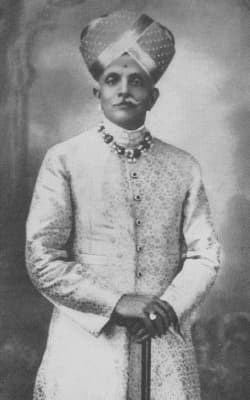
Krishnaraja Wadiyar IV
Emperor · Modern
66.0Total

Qianlong Emperor
Emperor · Modern
66.2Total
Basic Information
Born
1884
1711
Died
1940
1799
Era
Modern
Modern
Nationality
India
China
Occupation
Emperor
Emperor
Civilization
Indian
Eastern
Score Comparison
Military (10%)
41.2
85.0
Political (20%)
78.0
72.0
Influence (20%)
72.0
65.0
Legacy (20%)
58.0
55.0
Leadership (15%)
81.7
72.0
Strategy (15%)
54.7
61.2
TOTAL
66.0
66.2
Krishnaraja Wadiyar IV — Complete Timeline
1881 AD
Introduced Representative Assembly in MysoreReform
Krishnaraja Wadiyar IV established the Mysore Representative Assembly, one of the first legislative bodies in a princely state. It allowed elected members to discuss policies and budgets, giving the people a voice in governance.
Political ReformDemocracyRepresentative Government
Impact: regionalprogressive
1900 AD
Promoted Women's Education and Social ReformReform◆ Major
Krishnaraja supported women's education by establishing schools and colleges for girls. He also enacted laws to raise the age of marriage and improve the status of women, contributing to social progress in Mysore.
Women's RightsSocial ReformEducation
Impact: regionalprogressive
1910 AD
Implemented the Mysore Economic Development PlanReform◆ Major
Krishnaraja launched a comprehensive economic development plan that included industrialization, irrigation projects, and hydroelectric power. The Krishnarajasagara Dam and the Mysore Iron and Steel Works were key projects that boosted the state's economy.
Economic DevelopmentIndustrializationInfrastructure
Impact: regionalconstructive
1916 AD
Founded the University of MysoreReform◆ Major
Krishnaraja founded the University of Mysore, the first university in the state and one of the earliest in India. It promoted higher education and research, and became a model for other princely states.
EducationUniversityHigher Education
Impact: regionalconstructive
1927 AD
Received Praise from Mahatma GandhiCultural
Mahatma Gandhi praised Krishnaraja Wadiyar IV as a 'Rajarshi' (royal sage) for his enlightened rule and social reforms. Gandhi's endorsement enhanced the Maharaja's reputation as a progressive and benevolent ruler.
GandhiPraiseReputation
Impact: nationalconstructive
Qianlong Emperor — Complete Timeline
1755 AD
Ten Great CampaignsWar◆ Major
Qianlong launched a series of military campaigns to expand and secure the Qing empire. These included conquests in Xinjiang, Mongolia, Tibet, and Burma. The campaigns doubled the empire's size but drained the treasury and caused heavy casualties.
Military ExpansionQing EmpireConquest
Impact: global
Conquest of the Dzungar KhanateWar◆ Major
Qianlong's forces destroyed the Dzungar Khanate in Central Asia, incorporating Xinjiang into the Qing empire. The campaign involved the massacre of many Dzungar people. This victory eliminated a long-standing rival and secured the western frontier.
XinjiangGenocideQing Expansion
Impact: regionaldestructive
1773 AD
Compilation of the Siku QuanshuCultural◆ Major
Qianlong ordered the compilation of the Siku Quanshu, a massive collection of Chinese literature. Over 3,000 scholars worked for a decade, producing 36,000 volumes. It preserved thousands of texts but also involved censorship of works critical of the Qing.
LiteratureCensorshipCultural Project
Impact: globalconstructive
1793 AD
Macartney EmbassyPolitical Action◆ Major
Qianlong received a British diplomatic mission led by Lord Macartney. The British sought trade concessions, but Qianlong rejected them, stating China had no need for foreign goods. This event highlighted the Qing's isolationist policy and growing technological gap.
DiplomacyTradeIsolationism
Impact: global
1796 AD
Suppression of the White Lotus RebellionWar◆ Major
In his final years, Qianlong's forces struggled to suppress the White Lotus Rebellion, a popular uprising fueled by corruption and poverty. The rebellion lasted until 1804, exposing the decline of the Qing military and administration.
RebellionQing DeclineCorruption
Impact: nationaldestructive
Expert Analysis
Origins
Krishnaraja Wadiyar IV was born on June 4, 1884, in Mysore, India, into the Wadiyar dynasty. He was the eldest son of Maharaja Chamaraja Wadiyar IX and Maharani Vani Vilasa Sannidhana. Educated privately under British tutors, he also studied at the Maharaja's College in Mysore. His upbringing emphasized modern education, administrative training, and a blend of Indian traditions and Western ideas.
Qianlong Emperor was born on September 25, 1711, in Beijing, China, as Hongli, the fourth son of the Yongzheng Emperor. He was groomed for leadership from an early age, receiving a rigorous Confucian education. His grandfather, the Kangxi Emperor, personally oversaw his training. Qianlong ascended the throne in 1735 at age 24, inheriting a stable and prosperous Qing empire.
Rise to Power
Krishnaraja Wadiyar IV became Maharaja of Mysore in 1894 at age 10, following his father's death. A regency council ruled until he came of age in 1902. His early reign focused on modernizing Mysore's administration. He appointed Sir M. Visvesvaraya as Diwan in 1912, who implemented ambitious industrial and infrastructure projects. Krishnaraja's rise was gradual, marked by his commitment to progressive reforms rather than military conquest.
Qianlong ascended the throne in 1735 after his father's death. He quickly consolidated power by purging rivals and appointing loyal officials. His early reign focused on continuing his father's reforms and expanding the empire. Qianlong's military campaigns began in the 1750s, starting with the Dzungar Khanate. His Ten Great Campaigns (1755-1792) expanded Qing control into Xinjiang, Mongolia, Tibet, and Burma, making him one of China's most expansionist rulers.
Leadership & Governance
Krishnaraja Wadiyar IV's leadership style was consultative and reformist. He established the Mysore Representative Assembly in 1881 (before his reign, but he expanded it), allowing elected members to advise on legislation. He founded the University of Mysore in 1916, one of India's first modern universities. His economic policies included building the Krishna Raja Sagara dam (irrigation), hydroelectric projects, and state-owned industries like the Mysore Sandalwood Oil Factory. Social reforms included raising the marriage age for girls to 18 and promoting women's education. His governance score of 79.8 reflects his progressive, welfare-oriented approach.
Qianlong ruled as an absolute monarch, emphasizing Confucian principles of hierarchy and order. He micromanaged administration but delegated effectively to his Grand Council. He commissioned the Siku Quanshu (Complete Library of the Four Treasuries), a massive compilation of Chinese texts (3,463 works, 79,337 volumes). His military strategy scored 61.2, but his leadership score of 72.0 reflects his ability to maintain control over a vast empire. However, his later years saw corruption and the White Lotus Rebellion, which he failed to suppress before his death.
Triumph & Tragedy
Krishnaraja Wadiyar IV's greatest success was transforming Mysore into a model state. His economic development plan (industrialization, irrigation, power) earned him praise from Mahatma Gandhi, who called him "Rajarshi" (royal sage). He also supported the Indian National Congress and educated his subjects. His failures include limited political autonomy for Mysore under British suzerainty and some financial strains from ambitious projects. His total score of 62.9 reflects moderate overall impact.
Qianlong's triumphs include the Ten Great Campaigns, which secured China's borders and doubled its territory. The Siku Quanshu preserved Chinese culture. However, his conquest of the Dzungar Khanate involved massacres that killed an estimated 500,000 people. The Macartney Embassy in 1793 rejected British trade, leading to future conflicts. The White Lotus Rebellion (1796-1804) exposed corruption and fiscal decline, undermining Qing stability. His legacy score of 55.0 is lowered by these failures.
Character & Destiny
Krishnaraja Wadiyar IV was known for humility, compassion, and a forward-looking vision. He prioritized education and social welfare over personal luxury. His decision to introduce representative institutions and support the independence movement aligned with his character as a reformer. Gandhi's praise cemented his image as an enlightened ruler. His destiny was to be a transitional figure between princely rule and Indian democracy.
Qianlong was confident, ambitious, and autocratic. He saw himself as a universal emperor and sought to preserve Chinese superiority. His rejection of the Macartney Embassy reflected his belief in China's self-sufficiency. However, his extravagance and reliance on corrupt officials like Heshen led to decline. His character—prideful and inflexible—contributed to the Qing's eventual fall.
Legacy
Krishnaraja Wadiyar IV's legacy endures in modern Karnataka. The University of Mysore, Krishna Raja Sagara dam, and industrial infrastructure remain. His model of enlightened despotism influenced other princely states. He is remembered as a benevolent ruler who prepared his people for democracy. His influence score of 68.4 reflects his lasting impact on education and governance.
Qianlong's legacy is mixed. He expanded China's territory but also sowed seeds of decline. The Siku Quanshu is a cultural treasure, but the Dzungar genocide and corruption tarnish his rule. The Qing dynasty collapsed within a century after his death. His military score of 85.0 highlights his conquests, but his overall impact is debated.
Conclusion
While Qianlong Emperor scored higher overall (66.2 vs. 62.9), Krishnaraja Wadiyar IV had greater positive impact per unit of power. Qianlong's expansion came at a terrible human cost, and his policies led to long-term decline. Krishnaraja's reforms created lasting institutions and improved lives without violence. In terms of sustainable, humane governance, Krishnaraja Wadiyar IV surpasses Qianlong. His leadership score of 79.8 and influence of 68.4 reflect a more constructive legacy. Therefore, Krishnaraja Wadiyar IV is the more impactful ruler in terms of positive, enduring change.
Rankings
🥇
Qianlong EmperorLeader
Mil: 85.0Pol: 72.0Inf: 65.0
66.2
🥈
Krishnaraja Wadiyar IV
Mil: 41.2Pol: 78.0Inf: 72.0
66.0
+0.2 behind
How This Comparison Works
Algorithm
Each figure is scored on 6 dimensions (0—100 scale) based on structured historical data: Military (10%), Political (20%), Influence (20%), Legacy (20%), Leadership (15%), Strategy (15%). The weighted total produces the final ranking.
Data Sources
Scores are computed from structured sub-indicators in the database. Scale factors adjust for era (Ancient ×0.85, Modern ×1.0) and civilization size (Eastern ×1.05, Other ×0.80) to account for differences in population and military scale.
Maximum 3 Figures
Comparisons are limited to 2—3 figures to ensure readability and statistical meaningfulness.
Error Margins
±5 points per dimension — Sub-scores are derived from historical records with inherent uncertainty. Two figures within 5 points on a dimension should be considered roughly equivalent in that area.
Total Score Accuracy
±3 points overall — The weighted combination of 6 dimensions produces a total score with approximately ±3 points of uncertainty. Differences of less than 3 points are not statistically significant— the figures are effectively tied.
Known Limitations
- Historical records are incomplete and uneven across civilizations
- Figures from oral-tradition societies may be underrepresented
- Occupation labels can misclassify multi-role figures
- Scores measure capability and impact, not moral character
- Quantitative scoring is a comparison tool, not absolute truth
Capability Radar
Military (10%) — Battles & Warfare
Battles
31
85
Win Rate
33
80
Expansion
34
90
Political (20%) — Governance & Reform
Reform
90
70
Diplomacy
85
75
Economy
90
80
Influence (20%) — Cultural & Global Reach
Cultural
75
85
Global
60
70
Legacy (20%) — Historical Impact
Historical
70
80
Longevity
65
75
Leadership (15%) — Power & Stability
Tenure
85
95
Stability
90
85
Strategy (15%) — Tactics & Innovation
Strategy
39
85
Tactics
42
75
Reform
47
60
Similar Comparisons
Comments & Discussion
No comments yet. Be the first to share your thoughts!