Loading...
King Hyojong of Joseon vs Mongkut
Mongkut leads by 9.7 pts · 2 figures compared
…

King Hyojong of Joseon
Emperor · Modern
48.3Total
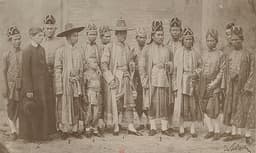
Mongkut
Emperor · Modern
58.0Total
Basic Information
Born
1619
1804
Died
1659
1868
Era
Modern
Modern
Nationality
Korea
Thailand
Occupation
Emperor
Emperor
Civilization
Eastern
Eastern
Score Comparison
Military (10%)
45.0
21.2
Political (20%)
46.6
78.0
Influence (20%)
48.6
56.7
Legacy (20%)
40.0
58.0
Leadership (15%)
74.0
78.0
Strategy (15%)
35.7
38.3
TOTAL
48.3
58.0
King Hyojong of Joseon — Complete Timeline
1650 AD
Planned Northern Expedition against QingPolitical Action◆ Major
King Hyojong initiated a plan to launch a military campaign against the Qing dynasty to avenge the fall of the Ming and Joseon's subjugation. He expanded the army and fortified northern defenses, but the expedition was never carried out due to his death and lack of support.
Military PlanningQing-Joseon RelationsUnfulfilled Ambition
Impact: national
Reign during Factional StrifePolitical Action
Hyojong's reign was marked by ongoing factional struggles between the Westerners and Southerners factions at court. These conflicts hindered his ability to implement reforms and pursue his northern expedition plans, contributing to political instability.
FactionalismCourt PoliticsJoseon Dynasty
Impact: national
Mongkut — Complete Timeline
1851 AD
Corresponded with Western leaders and scholarsCultural
Mongkut engaged in extensive correspondence with Western leaders, including President James Buchanan and Pope Pius IX, and with missionaries and scholars. He sought to learn about Western science, technology, and governance.
DiplomacyIntellectual ExchangeModernization
Impact: nationalconstructive
Reformed Buddhist monastic educationCultural
As a former monk, Mongkut reformed Buddhist monastic education by emphasizing Pali studies and scriptural accuracy. He founded the Dhammayuttika Nikaya order, which focused on strict adherence to Buddhist teachings.
BuddhismReligious ReformEducation
Impact: nationalconstructive
1855 AD
Hired Western advisors to modernize SiamReform
Mongkut employed Western advisors, including Anna Leonowens, to teach his children and assist in modernizing the court. He also hired European experts to help with military, legal, and administrative reforms.
AdvisorsModernizationEducation
Impact: nationalconstructive
Signed the Bowring Treaty with BritainPolitical Action◆ Major
King Mongkut signed the Bowring Treaty with Britain, opening Siam to free trade and granting extraterritorial rights to British subjects. This treaty ended Siam's isolation and set a precedent for relations with other Western powers.
TreatyTradeWestern Influence
Impact: regional
Expert Analysis
Origins
King Hyojong of Joseon (born 1619) was the second son of King Injo, thrust into power after his older brother's death. His early life was shaped by the Manchu invasions of 1627 and 1636, during which he was taken hostage by the Qing dynasty. This experience instilled in him a deep resentment toward the Qing and a desire for revenge. Hyojong received a Confucian education and was influenced by the Ming loyalist faction at court.
Mongkut (born 1804) was the son of King Rama II of Siam. As a prince, he was ordained as a Buddhist monk at age 20, a common practice for Thai royalty. He spent 27 years as a monk, during which he studied Pali scriptures, astronomy, and Western languages with missionaries. This monastic background gave him a unique perspective on reform and diplomacy, distinct from typical monarchs.
Rise to Power
Hyojong became king in 1649 after his brother's death, inheriting a kingdom subjugated by the Qing. His rise was marked by factional politics: the Westerners faction supported him, while the Southerners opposed. He immediately began planning the Northern Expedition, a military campaign to attack the Qing and restore Joseon's independence. However, his efforts were hampered by court infighting and lack of resources.
Mongkut ascended the throne in 1851 as King Rama IV, after his half-brother King Nangklao died. His monastic life had kept him away from court intrigues, but his reputation as a scholar and reformer made him a compromise candidate. He quickly moved to open Siam to Western trade, signing the Bowring Treaty with Britain in 1855, which reduced tariffs and granted extraterritorial rights.
Leadership & Governance
Hyojong's leadership focused on military preparation. He expanded the army, introduced new weapons like matchlocks, and fortified borders. However, his governance was paralyzed by factionalism. He scored 46.6 in Politics, reflecting his inability to unite the court. His approach was centralized but reactive, often deferring to Confucian advisors.
Mongkut scored 78.0 in Politics, showing adept governance. He balanced Western influence with tradition, hiring European advisors while preserving Buddhist institutions. He reformed monastic education, emphasizing scriptural accuracy, and promoted science. His correspondence with Western leaders (e.g., President Buchanan) showcased diplomatic skill. He avoided colonization by playing European powers against each other.
Triumph & Tragedy
Hyojong's greatest triumph was his unwavering plan for the Northern Expedition, which symbolically restored Joseon pride. However, his tragedy was that the expedition never launched. By his death in 1659, no attack had occurred due to financial constraints, Qing deterrence, and court opposition. His military score of 45.0 reflects the gap between ambition and execution.
Mongkut's triumph was the Bowring Treaty, which opened Siam to trade without losing sovereignty. His tragedy was the unequal terms: extraterritoriality for British subjects undermined Thai legal authority. He also faced criticism for Westernizing too quickly. His legacy score of 58.0 shows moderate long-term impact.
Character & Destiny
Hyojong was driven by revenge, a trait that defined his reign. His decision-making was stubborn; he refused to accept Qing supremacy, leading to isolation. His character score in Leadership (74.0) reflects determination, but his Strategy (35.7) shows poor planning. Historians view him as a tragic figure whose vision exceeded his means.
Mongkut was pragmatic and intellectually curious. His monastic training gave him patience and a global perspective. He scored 78.0 in Leadership, demonstrating adaptability. His strategy (38.3) was less aggressive, focusing on survival rather than expansion. He is remembered as the "Father of Science" in Thailand.
Legacy
Hyojong's legacy is mixed: he inspired later Korean nationalism but failed to achieve his goal. The Northern Expedition was abandoned, and Joseon remained a Qing tributary until 1895. His military score of 45.0 underscores his limited impact. Today, he is a symbol of resistance but not effective reform.
Mongkut's legacy is more tangible: Siam modernized and remained independent in the colonial era. His reforms influenced his son, King Chulalongkorn, who continued modernization. The Bowring Treaty set a precedent for later treaties with other powers. His influence score of 56.7 reflects his role in shaping modern Thailand.
Conclusion
Mongkut had greater impact. With a total score of 58.0 vs Hyojong's 48.3, Mongkut's political acumen and diplomatic reforms preserved Siam's sovereignty, while Hyojong's military obsession achieved nothing. Hyojong's leadership (74.0) was strong but misdirected; Mongkut's pragmatic governance (78.0) produced lasting results. In the modern era, survival through adaptation trumps unfulfilled ambition.
Rankings
🥇
MongkutLeader
Mil: 21.2Pol: 78.0Inf: 56.7
58.0
🥈
King Hyojong of Joseon
Mil: 45.0Pol: 46.6Inf: 48.6
48.3
+9.7 behind
How This Comparison Works
Algorithm
Each figure is scored on 6 dimensions (0—100 scale) based on structured historical data: Military (10%), Political (20%), Influence (20%), Legacy (20%), Leadership (15%), Strategy (15%). The weighted total produces the final ranking.
Data Sources
Scores are computed from structured sub-indicators in the database. Scale factors adjust for era (Ancient ×0.85, Modern ×1.0) and civilization size (Eastern ×1.05, Other ×0.80) to account for differences in population and military scale.
Maximum 3 Figures
Comparisons are limited to 2—3 figures to ensure readability and statistical meaningfulness.
Error Margins
±5 points per dimension — Sub-scores are derived from historical records with inherent uncertainty. Two figures within 5 points on a dimension should be considered roughly equivalent in that area.
Total Score Accuracy
±3 points overall — The weighted combination of 6 dimensions produces a total score with approximately ±3 points of uncertainty. Differences of less than 3 points are not statistically significant— the figures are effectively tied.
Known Limitations
- Historical records are incomplete and uneven across civilizations
- Figures from oral-tradition societies may be underrepresented
- Occupation labels can misclassify multi-role figures
- Scores measure capability and impact, not moral character
- Quantitative scoring is a comparison tool, not absolute truth
Capability Radar
Military (10%) — Battles & Warfare
Battles
0
10
Win Rate
0
10
Expansion
0
10
Political (20%) — Governance & Reform
Reform
40
75
Diplomacy
30
85
Economy
30
70
Influence (20%) — Cultural & Global Reach
Cultural
20
55
Global
10
60
Legacy (20%) — Historical Impact
Historical
30
65
Longevity
20
60
Leadership (15%) — Power & Stability
Tenure
50
65
Stability
40
75
Strategy (15%) — Tactics & Innovation
Strategy
20
20
Tactics
10
15
Reform
30
30
Similar Comparisons
Comments & Discussion
No comments yet. Be the first to share your thoughts!