Loading...
Kenneth Kaunda vs Romulo Gallegos
Kenneth Kaunda leads by 10.4 pts · 2 figures compared
…
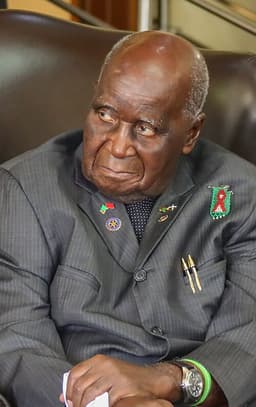
Kenneth Kaunda
Politician · Modern
56.9Total
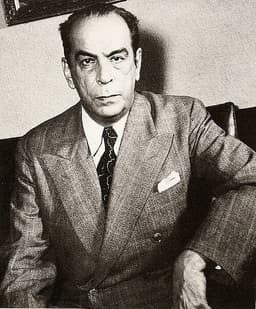
Romulo Gallegos
Politician · Modern
46.5Total
Basic Information
Born
1924
1884
Died
—
1969
Era
Modern
Modern
Nationality
Zambia
Venezuela
Occupation
Politician
Politician
Civilization
Other
Western
Score Comparison
Military (10%)
50.0
48.5
Political (20%)
68.0
32.2
Influence (20%)
58.0
62.0
Legacy (20%)
46.7
48.3
Leadership (15%)
74.0
34.6
Strategy (15%)
43.9
40.3
TOTAL
56.9
46.5
Kenneth Kaunda — Complete Timeline
1964 AD
Led Zambia to independencePolitical Action
Kaunda, as leader of the United National Independence Party, negotiated with Britain for Zambia's independence from colonial rule. He became the first president of the Republic of Zambia on October 24, 1964, ending 73 years of British control.
IndependenceDecolonizationFounding President
Impact: nationalconstructive
1972 AD
Introduced one-party statePolitical Action◆ Major
Kaunda's government enacted a constitutional amendment making the United National Independence Party the sole legal political party in Zambia. This move centralized power under his control and suppressed political opposition, remaining in effect until 1990.
AuthoritarianismConstitutional ChangeOne-Party Rule
Impact: nationaldestructive
1975 AD
Hosted frontline states against apartheidPolitical Action◆ Major
Kaunda became a key leader of the Frontline States, a coalition of southern African nations opposing apartheid in South Africa and white minority rule in Rhodesia. Zambia provided bases and support for liberation movements like ZAPU and ANC, incurring economic costs from retaliatory attacks.
Anti-ApartheidDiplomacyLiberation Movements
Impact: regionalconstructive
1991 AD
Lost multi-party elections and stepped downPolitical Action
Under domestic and international pressure, Kaunda legalized opposition parties. In the 1991 presidential election, he was defeated by Frederick Chiluba of the Movement for Multi-Party Democracy. Kaunda peacefully transferred power, a rare event in post-independence Africa.
DemocratizationPeaceful TransitionElectoral Defeat
Impact: nationalconstructive
Romulo Gallegos — Complete Timeline
1929 AD
Publication of Doña BárbaraCultural◆ Major
Gallegos published his novel Do
LiteratureNovelLatin American Literature
Impact: globalconstructive
1947 AD
Election as presidentPolitical Action
Gallegos won the 1947 presidential election as the candidate of Acci
ElectionDemocracyPresidency
Impact: nationalconstructive
1948 AD
Overthrow in 1948 coupPolitical Action
Gallegos was overthrown by a military coup led by Marcos P
CoupDictatorshipEnd of Democracy
Impact: nationaltragic
Exile and returnPolitical Action
After the coup, Gallegos went into exile in Mexico and Cuba. He returned to Venezuela in 1958 after the fall of P
ExileReturnLiterature
Impact: national
Expert Analysis
Origins
Kenneth Kaunda was born on April 28, 1924, in Lubwa, Northern Rhodesia (now Zambia), to a Church of Scotland missionary teacher. He was the eighth of nine children and was raised in a strict Christian household. Kaunda attended Munali Secondary School and later became a teacher, but his involvement in African nationalism grew as he witnessed colonial injustices. He joined the Northern Rhodesian African National Congress in the 1950s and became a key figure in the independence movement.
Rómulo Gallegos was born on August 2, 1884, in Caracas, Venezuela, into a middle-class family. He studied law at the Central University of Venezuela but abandoned it to pursue literature. Gallegos became a teacher and writer, gaining fame with his novel *Doña Bárbara* (1929), which critiqued rural caudillismo. His literary success led to involvement in politics, joining Acción Democrática, a party advocating for democratic reforms.
Rise to Power
Kaunda rose to prominence as a leader of the United National Independence Party (UNIP), which he formed in 1959 after breaking away from the African National Congress. He organized mass protests and civil disobedience against British colonial rule. In 1962, UNIP won elections, and Kaunda became Minister of Local Government. He led Zambia to independence on October 24, 1964, becoming its first president. His political score of 68.0 reflects his success in navigating the transition to independence.
Gallegos's rise was rooted in his literary fame. He joined Acción Democrática in the 1930s and became a senator after the 1945 coup that ousted President Isaías Medina Angarita. In 1947, he won the presidency in Venezuela's first democratic elections under universal suffrage, taking office on February 15, 1948. His political score of 32.2 indicates his limited political experience and short tenure.
Leadership & Governance
Kaunda governed Zambia for 27 years, initially pursuing a socialist agenda with nationalization of key industries. He implemented the Mulungushi Reforms in 1968, taking control of foreign-owned companies. However, his governance turned authoritarian: in 1972, he introduced a one-party state, banning opposition parties. He maintained stability but suppressed dissent, with political score 68.0 and leadership score 74.0.
Gallegos served only nine months as president. He attempted to implement democratic reforms, including land redistribution and social programs, but faced opposition from the military and conservative elites. His leadership score of 34.6 reflects his short tenure and inability to consolidate power. He was overthrown in a coup on November 24, 1948, by Marcos Pérez Jiménez.
Triumph & Tragedy
Kaunda's greatest triumph was leading Zambia to independence and playing a key role in the anti-apartheid movement as chair of the Frontline States. He hosted liberation movements from South Africa, Namibia, and Zimbabwe. His tragedy was the decline of Zambia's economy due to falling copper prices and his authoritarian turn, leading to poverty and repression. He lost the 1991 elections and stepped down peacefully.
Gallegos's triumph was his literary legacy: *Doña Bárbara* remains a classic of Latin American literature, influencing generations. His tragedy was his failed presidency; his democratic experiment was crushed by a military coup, and he spent a decade in exile. His influence score of 62.0 is partly due to his literary impact.
Character & Destiny
Kaunda was known as a charismatic and principled leader, but his stubbornness and belief in one-party rule led to his political downfall. He was a moral voice against apartheid but failed to adapt to democratic pressures. His destiny was to be a founding father who outlived his welcome.
Gallegos was an intellectual idealist, more comfortable with writing than politics. He lacked the ruthlessness needed to survive in Venezuela's volatile political landscape. His character made him a respected novelist but a weak president, destined for a short political career.
Legacy
Kaunda's legacy is mixed: he is celebrated as a founding father and anti-apartheid icon, but criticized for economic mismanagement and authoritarianism. Zambia remains a democracy, but his one-party state left a legacy of centralized power. His legacy score of 46.7 reflects this ambiguity.
Gallegos's legacy is primarily literary. He is remembered as a great novelist, and his presidency is a footnote in Venezuelan history. His democratic ideals were realized later, but his brief rule is seen as a lost opportunity. His legacy score of 48.3 is slightly higher than Kaunda's due to his cultural impact.
Conclusion
Kenneth Kaunda had a greater impact on history than Rómulo Gallegos. His total score of 56.9 surpasses Gallegos's 46.5 by 10.4 points. Kaunda's political leadership (68.0) and governance (74.0) shaped a nation for decades, while Gallegos's influence was largely cultural. Kaunda's role in the anti-apartheid struggle and the independence of Zambia outweighs Gallegos's brief presidency. Though both had flaws, Kaunda's tangible political achievements give him the edge.
Rankings
🥇
Kenneth KaundaLeader
Mil: 50.0Pol: 68.0Inf: 58.0
56.9
🥈
Romulo Gallegos
Mil: 48.5Pol: 32.2Inf: 62.0
46.5
+10.4 behind
How This Comparison Works
Algorithm
Each figure is scored on 6 dimensions (0—100 scale) based on structured historical data: Military (10%), Political (20%), Influence (20%), Legacy (20%), Leadership (15%), Strategy (15%). The weighted total produces the final ranking.
Data Sources
Scores are computed from structured sub-indicators in the database. Scale factors adjust for era (Ancient ×0.85, Modern ×1.0) and civilization size (Eastern ×1.05, Other ×0.80) to account for differences in population and military scale.
Maximum 3 Figures
Comparisons are limited to 2—3 figures to ensure readability and statistical meaningfulness.
Error Margins
±5 points per dimension — Sub-scores are derived from historical records with inherent uncertainty. Two figures within 5 points on a dimension should be considered roughly equivalent in that area.
Total Score Accuracy
±3 points overall — The weighted combination of 6 dimensions produces a total score with approximately ±3 points of uncertainty. Differences of less than 3 points are not statistically significant— the figures are effectively tied.
Known Limitations
- Historical records are incomplete and uneven across civilizations
- Figures from oral-tradition societies may be underrepresented
- Occupation labels can misclassify multi-role figures
- Scores measure capability and impact, not moral character
- Quantitative scoring is a comparison tool, not absolute truth
Capability Radar
Military (10%) — Battles & Warfare
Battles
20
29
Win Rate
27
33
Expansion
29
36
Political (20%) — Governance & Reform
Reform
55
30
Diplomacy
55
20
Economy
30
15
Influence (20%) — Cultural & Global Reach
Cultural
40
60
Global
40
40
Legacy (20%) — Historical Impact
Historical
50
50
Longevity
30
40
Leadership (15%) — Power & Stability
Tenure
60
10
Stability
25
10
Strategy (15%) — Tactics & Innovation
Strategy
29
35
Tactics
32
39
Reform
36
42
Similar Comparisons
Comments & Discussion
No comments yet. Be the first to share your thoughts!