Loading...
Alejandro Toledo vs Kenneth Kaunda
Kenneth Kaunda leads by 4.3 pts · 2 figures compared
…
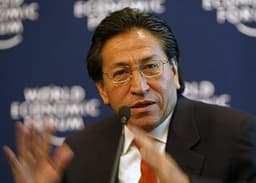
Alejandro Toledo
Politician · Modern
52.6Total
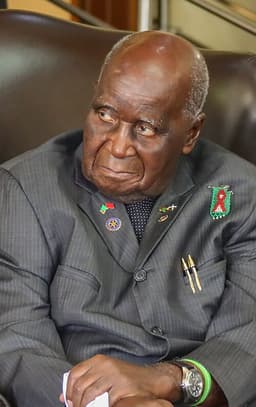
Kenneth Kaunda
Politician · Modern
56.9Total
Basic Information
Born
1946
1924
Died
—
—
Era
Modern
Modern
Nationality
Peru
Zambia
Occupation
Politician
Politician
Civilization
Western
Other
Score Comparison
Military (10%)
27.7
50.0
Political (20%)
61.3
68.0
Influence (20%)
57.2
58.0
Legacy (20%)
44.2
46.7
Leadership (15%)
62.2
74.0
Strategy (15%)
60.0
43.9
TOTAL
52.6
56.9
Alejandro Toledo — Complete Timeline
2001 AD
Presidency and Economic Recovery (2001-2006)Political Action◆ Major
Alejandro Toledo assumed the presidency of Peru, becoming the first democratically elected president of indigenous Quechua descent. His administration focused on macroeconomic stability, attracting foreign investment, and reducing poverty. He oversaw a period of steady economic growth following the Fujimori era.
First Indigenous PresidentEconomic StabilityDemocracy
Impact: nationalconstructive
2019 AD
Corruption Conviction and Extradition (2019-2023)Political Action◆ Major
Toledo was arrested in the United States on extradition charges related to the Odebrecht scandal. He was accused of accepting $20 million in bribes from the Brazilian construction company in exchange for contracts during his presidency. In 2023, he was extradited to Peru to face trial.
CorruptionOdebrechtExtradition
Impact: nationaldestructive
Kenneth Kaunda — Complete Timeline
1964 AD
Led Zambia to independencePolitical Action
Kaunda, as leader of the United National Independence Party, negotiated with Britain for Zambia's independence from colonial rule. He became the first president of the Republic of Zambia on October 24, 1964, ending 73 years of British control.
IndependenceDecolonizationFounding President
Impact: nationalconstructive
1972 AD
Introduced one-party statePolitical Action◆ Major
Kaunda's government enacted a constitutional amendment making the United National Independence Party the sole legal political party in Zambia. This move centralized power under his control and suppressed political opposition, remaining in effect until 1990.
AuthoritarianismConstitutional ChangeOne-Party Rule
Impact: nationaldestructive
1975 AD
Hosted frontline states against apartheidPolitical Action◆ Major
Kaunda became a key leader of the Frontline States, a coalition of southern African nations opposing apartheid in South Africa and white minority rule in Rhodesia. Zambia provided bases and support for liberation movements like ZAPU and ANC, incurring economic costs from retaliatory attacks.
Anti-ApartheidDiplomacyLiberation Movements
Impact: regionalconstructive
1991 AD
Lost multi-party elections and stepped downPolitical Action
Under domestic and international pressure, Kaunda legalized opposition parties. In the 1991 presidential election, he was defeated by Frederick Chiluba of the Movement for Multi-Party Democracy. Kaunda peacefully transferred power, a rare event in post-independence Africa.
DemocratizationPeaceful TransitionElectoral Defeat
Impact: nationalconstructive
Expert Analysis
Origins
Alejandro Toledo was born on March 28, 1946, in the small Andean village of Cabana, Peru, into a poor Quechua-speaking family. He was one of 16 children, and his father was a bricklayer. Toledo worked as a shoeshine boy and later earned scholarships to study at the University of San Francisco and Stanford University, where he obtained a PhD in economics. His background as an indigenous Peruvian shaped his political identity.
Kenneth Kaunda was born on April 28, 1924, in Lubwa, Northern Rhodesia (now Zambia), to a missionary teacher and one of the first African teachers in the region. He attended Munali Secondary School and later became a teacher. Kaunda's early involvement in the African National Congress (ANC) and his role in organizing protests against colonial rule set him on a path to independence leadership.
Rise to Power
Toledo first gained national attention in the 2000 presidential election, where he ran against incumbent Alberto Fujimori. After allegations of fraud, Toledo withdrew and called for democratic reforms. In the 2001 election, he won with 53.1% of the vote, becoming Peru's first democratically elected indigenous president. His rise was fueled by his anti-corruption platform and his humble origins, which resonated with Peru's marginalized indigenous population.
Kaunda led the United National Independence Party (UNIP) in the struggle for Zambian independence. He was a key figure in negotiations with Britain, resulting in Zambia's independence on October 24, 1964. Kaunda became the first president, winning the 1968 election with 82% of the vote. His leadership in the independence movement and his role as a pan-Africanist elevated him to national and international prominence.
Leadership & Governance
Toledo's presidency (2001-2006) focused on economic recovery, attracting foreign investment, and reducing poverty. He implemented fiscal discipline, privatized state enterprises, and promoted free trade agreements, including a free trade deal with the United States. Peru's GDP grew at an average of 5.5% annually under his tenure. However, his government faced corruption allegations, and he struggled to maintain political stability, with frequent cabinet reshuffles.
Kaunda's governance style was more authoritarian. In 1972, he introduced a one-party state under UNIP, suppressing political opposition. He pursued a socialist economic policy, nationalizing key industries and implementing price controls. Zambia's economy initially grew but later suffered due to falling copper prices and mismanagement. Kaunda's human rights record was mixed; he detained political opponents but also maintained relative stability and avoided ethnic conflict.
Triumph & Tragedy
Toledo's greatest success was his economic management, which brought Peru out of recession and reduced inflation from 11.1% in 2000 to 1.5% in 2006. He also expanded social programs, increasing access to education and healthcare. His tragedy was his corruption conviction: in 2019, he was arrested in the U.S. for allegedly accepting $20 million in bribes from Odebrecht. He was extradited to Peru in 2023, tarnishing his legacy.
Kaunda's triumph was leading Zambia to independence and his role in the anti-apartheid struggle. He hosted frontline states and supported liberation movements, earning international respect. His tragedy was the economic decline under his rule; by 1991, Zambia was one of the poorest countries in Africa. His one-party state also stifled democracy. He lost the 1991 election to Frederick Chiluba and accepted defeat peacefully, a rare act in Africa.
Character & Destiny
Toledo was charismatic and ambitious, using his rags-to-riches story to connect with voters. However, his decision-making was often flawed; he appointed controversial figures and failed to distance himself from corruption. His character led to a fall from grace, as his presidency ended with approval ratings below 10%.
Kaunda was idealistic and determined, genuinely committed to African liberation and unity. His authoritarian turn reflected a belief that strong central control was necessary for development. His character allowed him to maintain power for 27 years, but also led to economic stagnation. He ultimately accepted democratic defeat, showing humility.
Legacy
Toledo's legacy is mixed: he is remembered as Peru's first indigenous president and a symbol of democratic restoration, but also as a convicted corrupt politician. His economic reforms set the stage for Peru's later growth, but his personal downfall overshadows his achievements.
Kaunda's legacy is more positive: he is revered as Zambia's founding father and a champion of African liberation. The one-party state is criticized, but his peaceful transition of power in 1991 is praised. He remains a respected elder statesman.
Conclusion
Kenneth Kaunda had a greater impact than Alejandro Toledo. Kaunda's total score of 56.9 exceeds Toledo's 52.6, with higher marks in military (50.0 vs 27.7), political (68.0 vs 61.3), and leadership (74.0 vs 62.2). While Toledo's economic achievements were notable, Kaunda's role in independence and anti-apartheid efforts had a lasting effect on southern Africa. Toledo's corruption conviction severely damaged his legacy, whereas Kaunda, despite his authoritarianism, is remembered as a key figure in African decolonization.
Rankings
🥇
Kenneth KaundaLeader
Mil: 50.0Pol: 68.0Inf: 58.0
56.9
🥈
Alejandro Toledo
Mil: 27.7Pol: 61.3Inf: 57.2
52.6
+4.3 behind
How This Comparison Works
Algorithm
Each figure is scored on 6 dimensions (0—100 scale) based on structured historical data: Military (10%), Political (20%), Influence (20%), Legacy (20%), Leadership (15%), Strategy (15%). The weighted total produces the final ranking.
Data Sources
Scores are computed from structured sub-indicators in the database. Scale factors adjust for era (Ancient ×0.85, Modern ×1.0) and civilization size (Eastern ×1.05, Other ×0.80) to account for differences in population and military scale.
Maximum 3 Figures
Comparisons are limited to 2—3 figures to ensure readability and statistical meaningfulness.
Error Margins
±5 points per dimension — Sub-scores are derived from historical records with inherent uncertainty. Two figures within 5 points on a dimension should be considered roughly equivalent in that area.
Total Score Accuracy
±3 points overall — The weighted combination of 6 dimensions produces a total score with approximately ±3 points of uncertainty. Differences of less than 3 points are not statistically significant— the figures are effectively tied.
Known Limitations
- Historical records are incomplete and uneven across civilizations
- Figures from oral-tradition societies may be underrepresented
- Occupation labels can misclassify multi-role figures
- Scores measure capability and impact, not moral character
- Quantitative scoring is a comparison tool, not absolute truth
Capability Radar
Military (10%) — Battles & Warfare
Battles
48
20
Win Rate
50
27
Expansion
56
29
Political (20%) — Governance & Reform
Reform
45
55
Diplomacy
50
55
Economy
35
30
Influence (20%) — Cultural & Global Reach
Cultural
55
40
Global
30
40
Legacy (20%) — Historical Impact
Historical
40
50
Longevity
25
30
Leadership (15%) — Power & Stability
Tenure
40
60
Stability
20
25
Strategy (15%) — Tactics & Innovation
Strategy
53
29
Tactics
59
32
Reform
64
36
Similar Comparisons
Comments & Discussion
No comments yet. Be the first to share your thoughts!