Loading...
Kamehameha V vs Wanyan Aguda
Wanyan Aguda leads by 18.4 pts · 2 figures compared
…
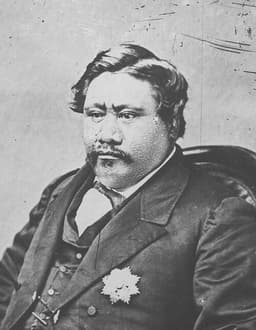
Kamehameha V
Emperor · Modern
45.0Total
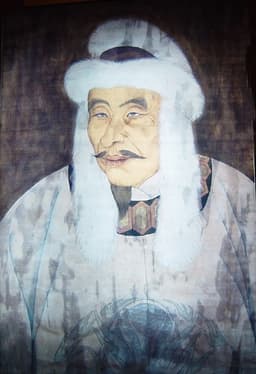
Wanyan Aguda
Emperor · Medieval
63.4Total
Basic Information
Born
1830
1068
Died
1872
1123
Era
Modern
Medieval
Nationality
Hawaii
China
Occupation
Emperor
Emperor
Civilization
Other
Eastern
Score Comparison
Military (10%)
11.3
82.0
Political (20%)
46.6
59.3
Influence (20%)
50.2
55.0
Legacy (20%)
42.5
52.0
Leadership (15%)
74.0
85.0
Strategy (15%)
26.5
68.0
TOTAL
45.0
63.4
Kamehameha V — Complete Timeline
1863 AD
Ascended to the Throne as Kamehameha VPolitical Action◆ Major
Lot Kapuāiwa became King Kamehameha V after the death of his brother Kamehameha IV. He was the last monarch of the Kamehameha dynasty.
Impact: national
1864 AD
Promulgated the 1864 ConstitutionReform◆ Major
Kamehameha V abrogated the 1852 constitution and promulgated a new one that increased royal power. The 1864 constitution abolished the office of kuhina nui (premier), gave the king veto power, and restricted suffrage to property owners.
Impact: national
1865 AD
Oversaw Economic Growth and Public WorksReform
Kamehameha V promoted economic development, including the expansion of the sugar industry, construction of roads and harbors, and the establishment of the Hawaiian Board of Health. His reign saw increased foreign investment and trade.
Impact: nationalconstructive
1867 AD
Refused to Sign the Reciprocity TreatyPolitical Action◆ Major
Kamehameha V refused to sign a reciprocity treaty with the United States that would have reduced tariffs on Hawaiian sugar. He believed the treaty would compromise Hawaiian sovereignty and lead to American domination.
Impact: national
1872 AD
Died Without an HeirOther◆ Major
Kamehameha V died without naming an heir, ending the Kamehameha dynasty. His death triggered a succession crisis that led to the election of Lunalilo as the next king.
Impact: nationaltragic
Wanyan Aguda — Complete Timeline
1114 AD
Battle of HubudagangWar◆ Major
Aguda's Jurchen forces defeated a Liao army at Hubudagang, marking the first major victory of the rebellion. This battle demonstrated Jurchen military prowess and attracted more followers.
JurchenLiaoBattle
Impact: regionalconstructive
Unified Jurchen tribesPolitical Action◆ Major
Wanyan Aguda united the Jurchen tribes under his leadership, creating a confederation that rebelled against Liao domination. He organized a disciplined army and began the Jurchen revolt.
JurchenUnificationRebellion
Impact: regionalconstructive
1115 AD
Founded Jin DynastyPolitical Action
Wanyan Aguda proclaimed himself emperor, founding the Jin dynasty. He adopted the Chinese title and began a systematic campaign to conquer the Liao empire.
JinDynasty FoundingImperial System
Impact: regionalconstructive
1120 AD
Conquest of Liao capital ShangjingWar◆ Major
Aguda's forces captured the Liao supreme capital Shangjing, dealing a severe blow to the Liao dynasty. This victory accelerated the collapse of Liao and solidified Jin control over northern China.
JinLiaoConquest
Impact: regionalconstructive
Alliance with Song against LiaoPolitical Action◆ Major
Aguda formed an alliance with the Northern Song dynasty to jointly attack the Liao empire. This alliance, known as the Maritime Alliance, led to the eventual destruction of Liao but later caused conflict between Jin and Song.
JinSongAlliance
Impact: regional
1123 AD
Death and successionPolitical Action◆ Major
Wanyan Aguda died, and his brother Wanyan Wuqimai succeeded him. Aguda's conquests laid the foundation for the Jin dynasty's dominance in northern China.
JinDeathSuccession
Impact: regional
Expert Analysis
Wanyan Aguda vs Kamehameha V
# The Iron Crown and the Gilded Throne
On a frozen plain in Manchuria in 1114, a Jurchen chieftain named Wanyan Aguda watched his ragged army of hunters and herdsmen charge into a disciplined Liao cavalry force. Seven centuries later, on a sun-drenched Pacific island, King Kamehameha V stood in his palace in Honolulu, refusing to sign a treaty that would have tied his kingdom’s sugar trade to the United States. Both men wore crowns. Both sought to preserve their people’s independence. But their worlds could not have been more different—and neither could their fates.
Origins
Wanyan Aguda was born in 1068 into the forests and rivers of what is now northeastern China, a land where the Jurchen tribes lived as semi-nomadic warriors under the thumb of the Liao dynasty. The Jurchen were considered barbarians by their Chinese and Khitan overlords, forced to pay tribute in horses, furs, and pearls. Aguda grew up in a world where survival meant fighting—not just enemies, but the cold, the hunger, and the constant humiliation of subjugation. By the time he reached manhood, he had learned that power came from the edge of a sword.
Kamehameha V, born Lot Kapuāiwa in 1830, entered a very different world. He was a prince of the Kamehameha dynasty, which had united the Hawaiian Islands under a single rule just a generation before his birth. His childhood was spent in the royal court of Honolulu, where he was educated by American missionaries and European tutors. He learned English, studied law, and traveled to the United States as a young man. Where Aguda’s education was the hunt and the battlefield, Kamehameha V’s was the constitution and the ledger book.
Rise to Power
Aguda’s rise was forged in rebellion. In 1114, he unified the Jurchen tribes under his leadership, creating a confederation that swore to throw off Liao domination. That same year, at the Battle of Hubudagang, his forces defeated a Liao army in a stunning upset—the first major victory of what would become a war of conquest. Aguda did not wait for legitimacy; he seized it. In 1115, he proclaimed himself emperor, founding the Jin dynasty and adopting Chinese imperial titles. He was a conqueror who built his throne on the bones of his enemies.
Kamehameha V ascended to the throne in 1863 after the death of his brother, Kamehameha IV. He inherited a kingdom already transformed by Western contact: a constitutional monarchy with a legislature, a growing sugar industry, and a population devastated by diseases introduced by foreigners. His rise was peaceful, legal, and orderly—a stark contrast to Aguda’s bloody ascent. But the challenges he faced were no less existential.
Leadership & Governance
Aguda ruled as a warrior-emperor. His military genius lay in speed and surprise: his Jurchen horsemen could strike faster than the Liao could respond, and he knew how to turn tribal loyalty into imperial discipline. In 1120, he captured the Liao supreme capital of Shangjing, a blow from which the Liao never recovered. That same year, he formed the Maritime Alliance with the Northern Song dynasty, agreeing to jointly attack the Liao. It was a masterstroke of political strategy—using one enemy to destroy another. But Aguda’s governance was simple: conquer, reward your followers, and keep moving. He had little time for bureaucracy or law codes.
Kamehameha V ruled as a constitutional monarch who wanted to be more than a figurehead. In 1864, he abrogated the liberal 1852 constitution and promulgated a new one that concentrated power in the crown. He restored the king’s authority to appoint judges, veto legislation, and control land policy. He promoted economic growth—roads, harbors, the sugar industry—but he also refused to sign a reciprocity treaty with the United States in 1867, fearing it would make Hawaii a commercial vassal. His leadership was defensive, conservative, and legalistic. He fought not with armies, but with clauses and vetoes.
Triumph & Tragedy
Aguda’s greatest triumph was the destruction of the Liao dynasty. By the time of his death in 1123, he had carved out an empire that stretched from the Amur River to the Yellow Sea. His Jin dynasty would go on to conquer northern China and capture the Song capital of Kaifeng. But his tragedy was that he died before seeing it completed—at just 55, likely from exhaustion or disease, leaving his brother Wuqimai to finish what he started. His conquests were brilliant, but they were also brutal, and the Jin dynasty would eventually fall to the Mongols.
Kamehameha V’s triumph was his defense of Hawaiian sovereignty. By strengthening the monarchy and refusing the reciprocity treaty, he kept Hawaii independent during his reign. But his tragedy was that he died in 1872 without naming an heir. The Kamehameha dynasty ended with him, and the succession crisis that followed paved the way for the eventual annexation of Hawaii by the United States in 1898. His careful preservation of power could not outlast his own mortality.
Character & Destiny
Aguda was a man of action, not reflection. He led from the front, shared the hardships of his soldiers, and demanded absolute loyalty. His personality was forged in the crucible of war: decisive, ruthless, and pragmatic. He did not question whether he deserved to be emperor—he simply took the title and made it true. His destiny was to destroy an old order and build a new one, even if that new order would not last.
Kamehameha V was a man of principle, not passion. He was known as a stern and reserved monarch, deeply conscious of his royal dignity. He believed that the monarchy was the only force that could protect Hawaii from being swallowed by foreign powers. His personality was shaped by the paradox of being a traditional king in a modernizing world: he wanted to preserve Hawaiian culture while using Western tools of governance. His destiny was to be the last of his line, a king who held the line but could not hold the future.
Legacy
Wanyan Aguda is remembered as the founder of the Jin dynasty, a warrior who united the Jurchen and shattered the Liao. His legacy is measured in territory conquered and dynasties toppled. In Chinese history, he is a barbarian who became an emperor—a figure of both admiration and caution. His influence score of 68.7 reflects his role as a regional conqueror, not a world-historical figure.
Kamehameha V is remembered as the last Kamehameha monarch, a king who tried to strengthen the crown in an age of imperial expansion. His legacy is more ambiguous: he is praised for his defense of Hawaiian sovereignty but criticized for his autocratic tendencies. His influence score of 66.1 is comparable to Aguda’s, but in a different register—not conquest, but resistance.
Conclusion
Aguda and Kamehameha V ruled worlds apart, but they shared a common dilemma: how to preserve independence in the face of overwhelming power. Aguda chose the sword and built an empire. Kamehameha V chose the law and built a fortress. One succeeded in his own time; the other failed after his death. But perhaps the deeper lesson is that neither strategy could withstand the relentless tide of history. The Jin dynasty fell to the Mongols. Hawaii fell to the Americans. In the end, the iron crown and the gilded throne both crumbled into dust.
Rankings
🥇
Wanyan AgudaLeader
Mil: 82.0Pol: 59.3Inf: 55.0
63.4
🥈
Kamehameha V
Mil: 11.3Pol: 46.6Inf: 50.2
45.0
+18.4 behind
How This Comparison Works
Algorithm
Each figure is scored on 6 dimensions (0—100 scale) based on structured historical data: Military (10%), Political (20%), Influence (20%), Legacy (20%), Leadership (15%), Strategy (15%). The weighted total produces the final ranking.
Data Sources
Scores are computed from structured sub-indicators in the database. Scale factors adjust for era (Ancient ×0.85, Modern ×1.0) and civilization size (Eastern ×1.05, Other ×0.80) to account for differences in population and military scale.
Maximum 3 Figures
Comparisons are limited to 2—3 figures to ensure readability and statistical meaningfulness.
Error Margins
±5 points per dimension — Sub-scores are derived from historical records with inherent uncertainty. Two figures within 5 points on a dimension should be considered roughly equivalent in that area.
Total Score Accuracy
±3 points overall — The weighted combination of 6 dimensions produces a total score with approximately ±3 points of uncertainty. Differences of less than 3 points are not statistically significant— the figures are effectively tied.
Known Limitations
- Historical records are incomplete and uneven across civilizations
- Figures from oral-tradition societies may be underrepresented
- Occupation labels can misclassify multi-role figures
- Scores measure capability and impact, not moral character
- Quantitative scoring is a comparison tool, not absolute truth
Capability Radar
Military (10%) — Battles & Warfare
Battles
4
85
Win Rate
9
90
Expansion
11
85
Political (20%) — Governance & Reform
Reform
20
75
Diplomacy
30
70
Economy
35
65
Influence (20%) — Cultural & Global Reach
Cultural
30
60
Global
10
50
Legacy (20%) — Historical Impact
Historical
35
70
Longevity
20
55
Leadership (15%) — Power & Stability
Tenure
40
70
Stability
25
60
Strategy (15%) — Tactics & Innovation
Strategy
15
85
Tactics
15
80
Reform
21
75
Similar Comparisons
Comments & Discussion
TheFireArrow6/16/2026
No contest. Aguda forged an empire from frozen mud with broken bows and sheer rage. In 1115, he crushed 700,000 Liao troops with maybe 20,000 Jurchen hunters—that’s not strategy, that’s collective madness. Kamehameha V just sat on his throne refusing to sign a treaty, preserving nothing but sugar profits for plantation owners. One man conquered against impossible odds; the other played diplomatic theater while his kingdom rotted from within.
碎刀客6/16/2026
说Aguda是野蛮人?放屁!宋朝史官写的《金史》里明明白白记着:完颜阿骨打用两千五百人起兵,三年灭了辽国。你们这些沉迷南洋暖风的,知道零下四十度拿着生锈铁刀冲锋是什么滋味吗?卡美哈梅哈五世?他在檀香山宫殿里学英文的时候,阿骨打的女儿已经在冰河里练兵了。别把雪山雄鹰和笼中金丝雀放一起比。