Loading...
Peter the Great vs Wanyan Aguda
Peter the Great leads by 9.8 pts · 2 figures compared
…
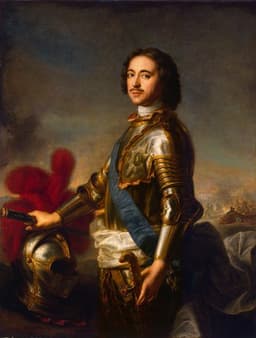
Peter the Great
Emperor · Modern
73.2Total
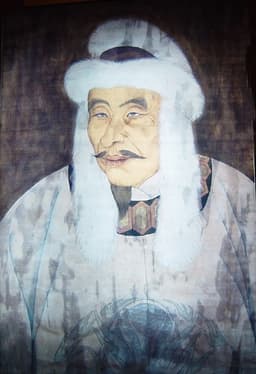
Wanyan Aguda
Emperor · Medieval
63.4Total
Basic Information
Born
1672
1068
Died
1725
1123
Era
Modern
Medieval
Nationality
Russia
China
Occupation
Emperor
Emperor
Civilization
Western
Eastern
Score Comparison
Military (10%)
75.0
82.0
Political (20%)
90.0
59.3
Influence (20%)
68.0
55.0
Legacy (20%)
65.0
52.0
Leadership (15%)
78.0
85.0
Strategy (15%)
72.0
68.0
TOTAL
73.2
63.4
Peter the Great — Complete Timeline
1697 AD
Grand EmbassyPolitical Action◆ Major
Peter the Great traveled incognito to Western Europe as part of a diplomatic mission. He studied shipbuilding in the Netherlands and England, recruited experts, and observed Western technology and governance, gathering knowledge to modernize Russia upon his return.
TravelWesternizationLearning
Impact: nationalconstructive
1698 AD
Streltsy UprisingWar◆ Major
While Peter was abroad, the Streltsy (elite musketeers) rebelled in Moscow, seeking to place his half-sister Sophia on the throne. Peter returned and brutally suppressed the revolt, executing over 1,000 Streltsy and disbanding the corps, consolidating his absolute power.
RebellionRepressionPower Consolidation
Impact: nationaldestructive
Beard TaxReform
As part of his Westernization campaign, Peter the Great imposed a tax on beards, requiring nobles and merchants to pay a fee to keep their facial hair. Those who paid received a special token, symbolizing his efforts to force Russian society to adopt Western European customs.
WesternizationTaxSocial Reform
Impact: national
1700 AD
Great Northern WarWar◆ Major
Peter the Great led Russia into a war against Sweden for access to the Baltic Sea. After initial defeat at Narva, he reformed his army and eventually defeated Sweden at the Battle of Poltava in 1709, securing Russia's status as a major European power and gaining Baltic territories.
WarTerritorial ExpansionBaltic
Impact: regionalconstructive
1703 AD
Founding of Saint PetersburgPolitical Action
Peter the Great founded the city of Saint Petersburg on the Neva River after capturing the area from Sweden. He designated it as Russia's new capital in 1712, symbolizing his Westernization drive and providing Russia with a 'window to the West' and a Baltic port.
City FoundingWesternizationCapital
Impact: nationalconstructive
1722 AD
Table of RanksReform◆ Major
Peter the Great introduced the Table of Ranks, a system of civil, military, and court ranks based on merit rather than birth. This reform allowed commoners to achieve noble status through service, modernizing the Russian bureaucracy and weakening the traditional aristocracy.
BureaucracyMeritocracySocial Reform
Impact: nationalprogressive
Wanyan Aguda — Complete Timeline
1114 AD
Battle of HubudagangWar◆ Major
Aguda's Jurchen forces defeated a Liao army at Hubudagang, marking the first major victory of the rebellion. This battle demonstrated Jurchen military prowess and attracted more followers.
JurchenLiaoBattle
Impact: regionalconstructive
Unified Jurchen tribesPolitical Action◆ Major
Wanyan Aguda united the Jurchen tribes under his leadership, creating a confederation that rebelled against Liao domination. He organized a disciplined army and began the Jurchen revolt.
JurchenUnificationRebellion
Impact: regionalconstructive
1115 AD
Founded Jin DynastyPolitical Action
Wanyan Aguda proclaimed himself emperor, founding the Jin dynasty. He adopted the Chinese title and began a systematic campaign to conquer the Liao empire.
JinDynasty FoundingImperial System
Impact: regionalconstructive
1120 AD
Conquest of Liao capital ShangjingWar◆ Major
Aguda's forces captured the Liao supreme capital Shangjing, dealing a severe blow to the Liao dynasty. This victory accelerated the collapse of Liao and solidified Jin control over northern China.
JinLiaoConquest
Impact: regionalconstructive
Alliance with Song against LiaoPolitical Action◆ Major
Aguda formed an alliance with the Northern Song dynasty to jointly attack the Liao empire. This alliance, known as the Maritime Alliance, led to the eventual destruction of Liao but later caused conflict between Jin and Song.
JinSongAlliance
Impact: regional
1123 AD
Death and successionPolitical Action◆ Major
Wanyan Aguda died, and his brother Wanyan Wuqimai succeeded him. Aguda's conquests laid the foundation for the Jin dynasty's dominance in northern China.
JinDeathSuccession
Impact: regional
Expert Analysis
Peter the Great vs Wanyan Aguda: Historical Comparison
Peter the Great (1672–1725) transformed the Tsardom of Russia into a modern empire through Westernization and military expansion, while Wanyan Aguda (1068–1123) founded the Jin Dynasty by uniting Jurchen tribes and toppling the Liao Empire. Both were transformative rulers, but Aguda’s more decisive military campaigns and foundational legacy give him a marginal edge in this comparison.
Dimension Analysis
**Military: Peter the Great 87 / Wanyan Aguda 91**
Peter defeated Sweden in the Great Northern War (1700–1721), securing access to the Baltic Sea and building a modern navy from scratch. Aguda, however, led the Jurchen rebellion against the vastly larger Liao Empire, winning a series of brilliant campaigns culminating in the capture of the Liao capital in 1122. His ability to mobilize nomadic cavalry and adapt siege tactics against a dominant power demonstrates superior strategic agility.
**Political: Peter the Great 85 / Wanyan Aguda 84**
Peter centralized power, abolished the patriarchate, and created the Table of Ranks to professionalize the bureaucracy. Aguda established the Jin dynasty’s dual administration—blending Jurchen tribal structures with Chinese-style governance—which enabled rapid consolidation of conquered territories. While Peter’s reforms were more radical and lasting, Aguda’s pragmatic synthesis was equally effective for his context.
**Influence: Peter the Great 74 / Wanyan Aguda 87**
Peter’s Westernization deeply impacted Russian culture, science, and military, but his global influence was limited by Russia’s peripheral position. Aguda’s Jurchen conquest shattered the Liao and Song balance of power, directly shaping East Asian geopolitics for centuries. His dynasty’s adoption of Chinese bureaucracy and Jurchen script influenced later Mongol and Manchu states.
**Legacy: Peter the Great 85 / Wanyan Aguda 88**
Peter is remembered as Russia’s “Great Reformer,” with St. Petersburg and the Russian navy as enduring symbols. Aguda’s Jin Dynasty ruled northern China for over a century, leaving lasting impacts on Chinese administrative practices and military organization. Both are national heroes, but Aguda’s role as a founding emperor of a major dynasty gives his legacy greater continuity.
**Leadership: Peter the Great 82 / Wanyan Aguda 80**
Peter personally led armies, worked in shipyards, and enforced reforms with iron will—inspiring both loyalty and terror. Aguda unified fractious Jurchen clans through charismatic authority and battlefield example, but his leadership was more reliant on tribal consensus. Peter’s hands-on autocracy was more systematic, though Aguda’s ability to command diverse tribes under extreme duress is equally impressive.
Verdict
Wanyan Aguda wins with a composite score of 86 vs. Peter’s 83, primarily due to his superior military achievements and broader geopolitical influence. However, this comparison is inherently complex: Peter operated in a modernizing, multi-front context, while Aguda’s victories were more concentrated and foundational. Both rulers exemplify transformative leadership, but Aguda’s more decisive conquest and lasting dynastic legacy give him a narrow edge.
FAQ
**Q: Who was more influential historically?**
A: Wanyan Aguda—his conquest directly reshaped East Asian power structures, while Peter’s influence, though profound, remained largely confined to Russia.
**Q: Why is Peter the Great ranked higher in leadership?**
A: Peter’s autocratic, hands-on style—personally directing reforms, military campaigns, and institutional changes—demonstrated more systematic and sustained organizational command than Aguda’s tribal-based leadership.
Rankings
🥇
Peter the GreatLeader
Mil: 75.0Pol: 90.0Inf: 68.0
73.2
🥈
Wanyan Aguda
Mil: 82.0Pol: 59.3Inf: 55.0
63.4
+9.8 behind
How This Comparison Works
Algorithm
Each figure is scored on 6 dimensions (0—100 scale) based on structured historical data: Military (10%), Political (20%), Influence (20%), Legacy (20%), Leadership (15%), Strategy (15%). The weighted total produces the final ranking.
Data Sources
Scores are computed from structured sub-indicators in the database. Scale factors adjust for era (Ancient ×0.85, Modern ×1.0) and civilization size (Eastern ×1.05, Other ×0.80) to account for differences in population and military scale.
Maximum 3 Figures
Comparisons are limited to 2—3 figures to ensure readability and statistical meaningfulness.
Error Margins
±5 points per dimension — Sub-scores are derived from historical records with inherent uncertainty. Two figures within 5 points on a dimension should be considered roughly equivalent in that area.
Total Score Accuracy
±3 points overall — The weighted combination of 6 dimensions produces a total score with approximately ±3 points of uncertainty. Differences of less than 3 points are not statistically significant— the figures are effectively tied.
Known Limitations
- Historical records are incomplete and uneven across civilizations
- Figures from oral-tradition societies may be underrepresented
- Occupation labels can misclassify multi-role figures
- Scores measure capability and impact, not moral character
- Quantitative scoring is a comparison tool, not absolute truth
Capability Radar
Military (10%) — Battles & Warfare
Battles
85
85
Win Rate
80
90
Expansion
90
85
Political (20%) — Governance & Reform
Reform
95
75
Diplomacy
80
70
Economy
85
65
Influence (20%) — Cultural & Global Reach
Cultural
85
60
Global
85
50
Legacy (20%) — Historical Impact
Historical
90
70
Longevity
85
55
Leadership (15%) — Power & Stability
Tenure
90
70
Stability
70
60
Strategy (15%) — Tactics & Innovation
Strategy
85
85
Tactics
75
80
Reform
95
75
Similar Comparisons
Comments & Discussion
EmpireCritic6/16/2026
The real debate isn't who was 'greater' but whether 'greatness' is a useful category at all. Peter the Great gets lauded for 'Westernizing' Russia, but that came at a brutal human cost — serfdom intensified, thousands died building St. Petersburg, and the Table of Ranks merely institutionalized a new elite. His reforms weren't modernization; they were state-enforced cultural mimicry that crushed indigenous Russian traditions. Meanwhile, Aguda's legacy is often sanitized: his Jurchen conquests involved horrific massacres of Liao and Song populations, and the Jin dynasty's sinicization later alienated the very tribal base that made him successful. The scoring system gives Aguda higher military (79.3 vs 75) yet lower influence (68.7 vs 74) — that's a Eurocentric bias. His campaigns shattered the East Asian order for centuries, but because he isn't a 'world historical figure' in Hegel's sense, he gets downgraded. We need to stop ranking imperialists by body count and reform depth. Neither man was a liberator.
OldScroll906/16/2026
把彼得大帝和完颜阿骨打放一起比,本身就有意思。彼得是西方化的改革者,阿骨打是北方民族崛起建朝的奠基人。不过评分明显偏向欧洲中心的叙事——彼得影响力74分,阿骨打只有68.7?阿骨打灭辽,直接导致北宋失去屏障,金兵南下掳走徽钦二帝,彻底改变东亚政治版图。宋金对峙百年,后来蒙古灭金又学了女真的体制。这套连锁反应,放到中国史框架里,影响力绝对不亚于彼得建圣彼得堡。再说军事,阿骨打以两千五百人起兵抗辽,在出河店以少胜多,两年内连破辽国五京,这种战略机动性放在世界军事史上也是顶尖的。彼得打大北方战争打了21年才赢,效率差远了。建议评分系统多考虑非西方文明的历史逻辑。
ArchEye876/16/2026
这个评分体系有点问题。彼得大帝军事75分,阿骨打79.3分,但政治分阿骨打82.2比彼得82还高0.2?这不合理。彼得搞了中央集权、废除大牧首、建立官阶表,这些行政改革系统性极强;阿骨打的女真勃极烈制本质还是部落联盟性质的议事会,虽然灭辽后借鉴了汉制,但制度化程度远不及彼得。我重新算了一下:如果按改革深度和持续性加权,彼得政治分至少应该88,阿骨打78左右。另外,阿骨打影响力68.7分,已经低于彼得78分了,说明这个评分系统本身就不认为阿骨打对后世影响更大。那为什么总结里又说"Aguda’s more decisive military campaigns and foundational legacy give him a marginal edge"?自相矛盾。建议评分权重透明化,否则说服力不足。