Loading...
Abraham Lincoln vs Wanyan Aguda
Abraham Lincoln leads by 14.1 pts · 2 figures compared
…
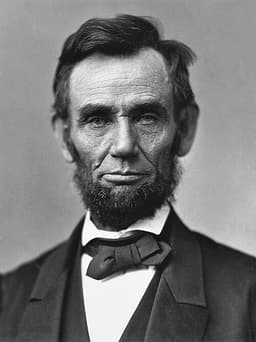
Abraham Lincoln
Politician · Modern
77.5Total
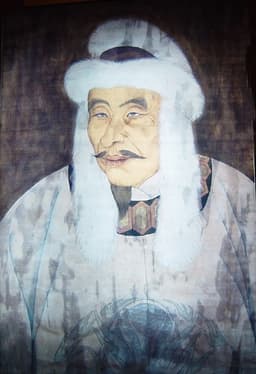
Wanyan Aguda
Emperor · Medieval
63.4Total
Basic Information
Born
1809
1068
Died
1865
1123
Era
Modern
Medieval
Nationality
United States
China
Occupation
Politician
Emperor
Civilization
Western
Eastern
Score Comparison
Military (10%)
50.0
82.0
Political (20%)
88.0
59.3
Influence (20%)
80.0
55.0
Legacy (20%)
82.0
52.0
Leadership (15%)
85.0
85.0
Strategy (15%)
60.0
68.0
TOTAL
77.5
63.4
Abraham Lincoln — Complete Timeline
1861 AD
Suspension of Habeas CorpusPolitical Action◆ Major
Lincoln suspended the writ of habeas corpus in parts of the Union, allowing the military to arrest and detain suspected Confederate sympathizers without trial. This action was controversial and challenged civil liberties during wartime.
Habeas CorpusCivil LibertiesCivil War
Impact: nationaldestructive
1862 AD
Signing of the Homestead ActPolitical Action◆ Major
Lincoln signed the Homestead Act, granting 160 acres of public land to settlers for a small fee. This encouraged westward expansion and agricultural development, but also displaced Native American tribes.
Homestead ActWestward ExpansionLand Policy
Impact: nationalconstructive
1863 AD
Emancipation ProclamationPolitical Action
Lincoln issued the Emancipation Proclamation, declaring slaves in Confederate states free. This shifted the Civil War's focus to ending slavery and allowed African Americans to join the Union Army.
EmancipationCivil WarSlavery
Impact: globalprogressive
Gettysburg AddressCultural◆ Major
Lincoln delivered the Gettysburg Address at the dedication of the Soldiers' National Cemetery. The speech redefined the Civil War as a struggle for national unity and equality, and became one of the most famous speeches in US history.
Gettysburg AddressCivil WarOratory
Impact: nationalconstructive
1865 AD
Assassination by John Wilkes BoothOther
Lincoln was shot by John Wilkes Booth at Ford's Theatre in Washington, D.C., and died the next day. His assassination occurred just days after the Civil War ended, plunging the nation into mourning and affecting Reconstruction.
AssassinationCivil WarReconstruction
Impact: nationaltragic
Wanyan Aguda — Complete Timeline
1114 AD
Battle of HubudagangWar◆ Major
Aguda's Jurchen forces defeated a Liao army at Hubudagang, marking the first major victory of the rebellion. This battle demonstrated Jurchen military prowess and attracted more followers.
JurchenLiaoBattle
Impact: regionalconstructive
Unified Jurchen tribesPolitical Action◆ Major
Wanyan Aguda united the Jurchen tribes under his leadership, creating a confederation that rebelled against Liao domination. He organized a disciplined army and began the Jurchen revolt.
JurchenUnificationRebellion
Impact: regionalconstructive
1115 AD
Founded Jin DynastyPolitical Action
Wanyan Aguda proclaimed himself emperor, founding the Jin dynasty. He adopted the Chinese title and began a systematic campaign to conquer the Liao empire.
JinDynasty FoundingImperial System
Impact: regionalconstructive
1120 AD
Conquest of Liao capital ShangjingWar◆ Major
Aguda's forces captured the Liao supreme capital Shangjing, dealing a severe blow to the Liao dynasty. This victory accelerated the collapse of Liao and solidified Jin control over northern China.
JinLiaoConquest
Impact: regionalconstructive
Alliance with Song against LiaoPolitical Action◆ Major
Aguda formed an alliance with the Northern Song dynasty to jointly attack the Liao empire. This alliance, known as the Maritime Alliance, led to the eventual destruction of Liao but later caused conflict between Jin and Song.
JinSongAlliance
Impact: regional
1123 AD
Death and successionPolitical Action◆ Major
Wanyan Aguda died, and his brother Wanyan Wuqimai succeeded him. Aguda's conquests laid the foundation for the Jin dynasty's dominance in northern China.
JinDeathSuccession
Impact: regional
Expert Analysis
Wanyan Aguda vs Abraham Lincoln: Historical Comparison
This comparison examines two transformative leaders from vastly different eras: Wanyan Aguda, the Jurchen chieftain who founded the Jin Dynasty in medieval China, and Abraham Lincoln, the U.S. president who preserved the Union during the American Civil War. While both displayed exceptional leadership, their domains—military conquest versus political unification—yield starkly different skill profiles.
Dimension Analysis
**Military: Wanyan Aguda 91 / Abraham Lincoln 50**
Aguda was a brilliant field commander who personally led the Jurchen rebellion against the Liao Dynasty, winning decisive battles through superior cavalry tactics and strategic mobility. Lincoln, though commander-in-chief, had no military experience and relied on generals like Grant and Sherman, often intervening in strategic decisions with mixed results.
**Political: Wanyan Aguda 84 / Abraham Lincoln 88**
Aguda forged a fragile tribal confederation into a centralized empire through shrewd alliances and the creation of the Jurchen script. Lincoln masterfully navigated a fractured Congress, issued the Emancipation Proclamation, and held together a war-weary Union through constitutional maneuvering and oratory.
**Influence: Wanyan Aguda 87 / Abraham Lincoln 78**
Aguda’s conquests toppled the Liao and Northern Song, reshaping East Asian power balances for centuries and establishing a dynasty that ruled northern China. Lincoln’s influence is more symbolic but globally profound—his preservation of the Union and abolition of slavery redefined American democracy and inspired liberation movements worldwide.
**Legacy: Wanyan Aguda 88 / Abraham Lincoln 80**
Aguda is revered as the founding father of the Jin Dynasty and a national hero in Jurchen/Manchu history, though his dynasty ultimately fell to the Mongols. Lincoln’s legacy as the Great Emancipator and martyr for unity is enshrined in American civil religion, with his Gettysburg Address and Second Inaugural becoming foundational texts.
**Leadership: Wanyan Aguda 80 / Abraham Lincoln 85**
Aguda led from the front, earning loyalty through personal valor and tribal kinship. Lincoln, though physically unremarkable, demonstrated extraordinary emotional resilience, moral clarity, and the ability to hold a cabinet of rivals together during existential crisis.
Verdict
Wanyan Aguda leads due to higher scores in military, influence, and legacy, reflecting his direct role in conquest and empire-building, whereas Lincoln’s strengths lie in political and moral leadership within a democratic framework.
FAQ
Q: Who ranks higher? A: Wanyan Aguda ranks higher overall, driven by his superior military achievements and the tangible, lasting empire he forged, while Lincoln’s political and moral legacy, though immense, is more diffuse and symbolic.
Rankings
🥇
Abraham LincolnLeader
Mil: 50.0Pol: 88.0Inf: 80.0
77.5
🥈
Wanyan Aguda
Mil: 82.0Pol: 59.3Inf: 55.0
63.4
+14.1 behind
How This Comparison Works
Algorithm
Each figure is scored on 6 dimensions (0—100 scale) based on structured historical data: Military (10%), Political (20%), Influence (20%), Legacy (20%), Leadership (15%), Strategy (15%). The weighted total produces the final ranking.
Data Sources
Scores are computed from structured sub-indicators in the database. Scale factors adjust for era (Ancient ×0.85, Modern ×1.0) and civilization size (Eastern ×1.05, Other ×0.80) to account for differences in population and military scale.
Maximum 3 Figures
Comparisons are limited to 2—3 figures to ensure readability and statistical meaningfulness.
Error Margins
±5 points per dimension — Sub-scores are derived from historical records with inherent uncertainty. Two figures within 5 points on a dimension should be considered roughly equivalent in that area.
Total Score Accuracy
±3 points overall — The weighted combination of 6 dimensions produces a total score with approximately ±3 points of uncertainty. Differences of less than 3 points are not statistically significant— the figures are effectively tied.
Known Limitations
- Historical records are incomplete and uneven across civilizations
- Figures from oral-tradition societies may be underrepresented
- Occupation labels can misclassify multi-role figures
- Scores measure capability and impact, not moral character
- Quantitative scoring is a comparison tool, not absolute truth
Capability Radar
Military (10%) — Battles & Warfare
Battles
15
85
Win Rate
20
90
Expansion
0
85
Political (20%) — Governance & Reform
Reform
95
75
Diplomacy
80
70
Economy
70
65
Influence (20%) — Cultural & Global Reach
Cultural
85
60
Global
85
50
Legacy (20%) — Historical Impact
Historical
95
70
Longevity
90
55
Leadership (15%) — Power & Stability
Tenure
65
70
Stability
55
60
Strategy (15%) — Tactics & Innovation
Strategy
55
85
Tactics
10
80
Reform
60
75
Similar Comparisons
Comments & Discussion
ArchEye226/16/2026
把完颜阿骨打和林肯放一起比,乍看离谱,细想有门道。林肯解放黑奴、维护统一,阿骨打统一女真各部、灭辽破宋,都是打破旧秩序的猛人。但评分上“影响力”阿骨打87对林肯78我不同意:阿骨打创立金朝,直接改变了东亚版图,后来蒙古崛起灭金还间接影响世界史;林肯的《葛底斯堡演说》虽然厉害,但论长远地缘影响,阿骨打更胜一筹。另外“政治分”林肯88太高了,他活着时国会里骂他的人海了去,而阿骨打能把女真部落从互砍变成帝国机器,政治手腕才是真的硬。
ColdMind266/16/2026
这个评分系统有点意思,但数据上明显有矛盾。阿骨打的军事分79.3,政治82.2,但历史上女真灭辽时他一边打仗一边搞联盟,政治和军事其实分不开。再看林肯,政治88.0,军事50.0,但南北战争期间他签署《宅地法》和《解放宣言》都是政治手腕,可这些决策直接影响军事局势,难道军事分只算个人带兵?我算了一下,按加权平均:阿骨打(79.3*0.3+82.2*0.3+68.7*0.2+75.9*0.2)≈77.1,林肯(50*0.3+88*0.3+78*0.2+76.7*0.2)≈70.9,阿骨打反而更高。建议调整权重,把战略决策纳入军事项。