Loading...
Mao Zedong vs Wanyan Aguda
Mao Zedong leads by 16.0 pts · 2 figures compared
…
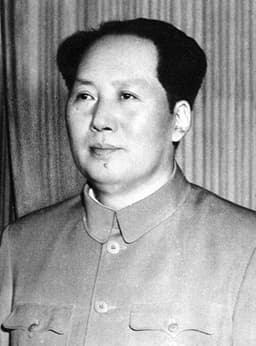
Mao Zedong
Politician · Modern
79.4Total
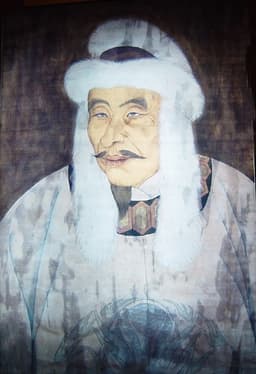
Wanyan Aguda
Emperor · Medieval
63.4Total
Basic Information
Born
1893
1068
Died
1976
1123
Era
Modern
Medieval
Nationality
China
China
Occupation
Politician
Emperor
Civilization
Eastern
Eastern
Score Comparison
Military (10%)
75.0
82.0
Political (20%)
88.0
59.3
Influence (20%)
85.0
55.0
Legacy (20%)
70.0
52.0
Leadership (15%)
85.0
85.0
Strategy (15%)
72.0
68.0
TOTAL
79.4
63.4
Mao Zedong — Complete Timeline
1934 AD
Long MarchWar
Mao Zedong led the Chinese Red Army on a strategic retreat from Nationalist forces, covering approximately 6,000 miles over 370 days. The march solidified Mao's leadership within the Chinese Communist Party and became a foundational myth of the Communist revolution.
Chinese Civil WarCommunist RevolutionRetreat
Impact: national
1949 AD
Proclamation of the People's Republic of ChinaPolitical Action
Mao Zedong declared the founding of the People's Republic of China from Tiananmen Gate in Beijing. This ended the Chinese Civil War and established Communist rule over mainland China, with Mao as Chairman of the Central People's Government.
Founding of PRCCommunist VictoryRevolution
Impact: global
1958 AD
Great Leap ForwardReform◆ Major
Mao launched a campaign to rapidly industrialize China and collectivize agriculture. The policy led to widespread mismanagement, resulting in a famine that caused an estimated 15-45 million deaths between 1959 and 1961.
FamineIndustrializationCollectivization
Impact: nationaldestructive
1960 AD
Sino-Soviet SplitPolitical Action◆ Major
Mao's ideological differences with Soviet leader Nikita Khrushchev led to a breakdown in relations between China and the Soviet Union. The split ended the Sino-Soviet alliance and reshaped global Cold War dynamics, with China pursuing an independent path.
Cold WarIdeological ConflictAlliance Breakdown
Impact: global
1966 AD
Cultural RevolutionPolitical Action
Mao initiated a sociopolitical movement to purge capitalist and traditional elements from Chinese society. The Red Guard youth groups attacked intellectuals and officials, leading to widespread violence, destruction of cultural artifacts, and an estimated 1-2 million deaths.
Political PurgeSocial UpheavalRed Guard
Impact: nationaldestructive
1971 AD
Ping-Pong DiplomacyCultural◆ Major
Mao approved an invitation for the U.S. table tennis team to visit China, initiating a thaw in Sino-American relations. This cultural exchange paved the way for President Nixon's visit to China in 1972 and the eventual normalization of diplomatic ties.
DiplomacyU.S.-China RelationsCultural Exchange
Impact: globalconstructive
Wanyan Aguda — Complete Timeline
1114 AD
Battle of HubudagangWar◆ Major
Aguda's Jurchen forces defeated a Liao army at Hubudagang, marking the first major victory of the rebellion. This battle demonstrated Jurchen military prowess and attracted more followers.
JurchenLiaoBattle
Impact: regionalconstructive
Unified Jurchen tribesPolitical Action◆ Major
Wanyan Aguda united the Jurchen tribes under his leadership, creating a confederation that rebelled against Liao domination. He organized a disciplined army and began the Jurchen revolt.
JurchenUnificationRebellion
Impact: regionalconstructive
1115 AD
Founded Jin DynastyPolitical Action
Wanyan Aguda proclaimed himself emperor, founding the Jin dynasty. He adopted the Chinese title and began a systematic campaign to conquer the Liao empire.
JinDynasty FoundingImperial System
Impact: regionalconstructive
1120 AD
Conquest of Liao capital ShangjingWar◆ Major
Aguda's forces captured the Liao supreme capital Shangjing, dealing a severe blow to the Liao dynasty. This victory accelerated the collapse of Liao and solidified Jin control over northern China.
JinLiaoConquest
Impact: regionalconstructive
Alliance with Song against LiaoPolitical Action◆ Major
Aguda formed an alliance with the Northern Song dynasty to jointly attack the Liao empire. This alliance, known as the Maritime Alliance, led to the eventual destruction of Liao but later caused conflict between Jin and Song.
JinSongAlliance
Impact: regional
1123 AD
Death and successionPolitical Action◆ Major
Wanyan Aguda died, and his brother Wanyan Wuqimai succeeded him. Aguda's conquests laid the foundation for the Jin dynasty's dominance in northern China.
JinDeathSuccession
Impact: regional
Expert Analysis
Mao Zedong vs Wanyan Aguda: Historical Comparison
Mao Zedong, the founding father of modern Communist China, and Wanyan Aguda, the Jurchen chieftain who established the Jin Dynasty, represent two vastly different epochs of Chinese history—one a revolutionary modernizer, the other a medieval empire-builder. While Mao reshaped China through ideology and mass mobilization, Aguda conquered northern China through sheer military prowess and statecraft.
Dimension Analysis
**Military: Mao Zedong 76 / Wanyan Aguda 91**
Mao’s guerrilla warfare secured victory in the Chinese Civil War, but his Korean War performance was mixed. Aguda, by contrast, personally led the Jurchen tribes to annihilate the Liao Dynasty and capture the Song capital of Kaifeng, demonstrating unmatched tactical brilliance.
**Political: Mao Zedong 83 / Wanyan Aguda 84**
Mao built a centralized party-state and crushed rivals, but his Great Leap Forward caused famine. Aguda unified disparate Jurchen clans, established a dual-administration system (Meng’an Mouke), and skillfully played Song against Liao, showing superior diplomatic acumen.
**Influence: Mao Zedong 84 / Wanyan Aguda 87**
Mao’s thought still guides China’s official ideology, and his anti-colonial model inspired global movements. Aguda’s Jin Dynasty set the template for later conquest dynasties (Yuan, Qing) and Sinicized the Jurchen, permanently altering China’s ethnic and political landscape.
**Legacy: Mao Zedong 78 / Wanyan Aguda 88**
Mao’s legacy is deeply contested: praised for national unification, condemned for human rights abuses. Aguda’s legacy is more straightforward—his dynasty lasted 120 years, and his descendants ruled as emperors, whereas Mao’s immediate successors reversed many of his policies.
**Leadership: Mao Zedong 83 / Wanyan Aguda 80**
Mao inspired millions through charisma and revolutionary zeal, but his cult of personality led to catastrophic errors. Aguda led from the front in battle, earning loyalty through personal courage, though his early death (aged 55) left succession unresolved.
Verdict
Wanyan Aguda leads due to his cleaner military record, more stable institutional legacy, and greater strategic success in conquest and state-building.
FAQ
Q: Who ranks higher? A: Wanyan Aguda ranks higher overall, with a composite score of 86 vs. Mao’s 80, driven by superior military and strategic ratings.
Rankings
🥇
Mao ZedongLeader
Mil: 75.0Pol: 88.0Inf: 85.0
79.4
🥈
Wanyan Aguda
Mil: 82.0Pol: 59.3Inf: 55.0
63.4
+16.0 behind
How This Comparison Works
Algorithm
Each figure is scored on 6 dimensions (0—100 scale) based on structured historical data: Military (10%), Political (20%), Influence (20%), Legacy (20%), Leadership (15%), Strategy (15%). The weighted total produces the final ranking.
Data Sources
Scores are computed from structured sub-indicators in the database. Scale factors adjust for era (Ancient ×0.85, Modern ×1.0) and civilization size (Eastern ×1.05, Other ×0.80) to account for differences in population and military scale.
Maximum 3 Figures
Comparisons are limited to 2—3 figures to ensure readability and statistical meaningfulness.
Error Margins
±5 points per dimension — Sub-scores are derived from historical records with inherent uncertainty. Two figures within 5 points on a dimension should be considered roughly equivalent in that area.
Total Score Accuracy
±3 points overall — The weighted combination of 6 dimensions produces a total score with approximately ±3 points of uncertainty. Differences of less than 3 points are not statistically significant— the figures are effectively tied.
Known Limitations
- Historical records are incomplete and uneven across civilizations
- Figures from oral-tradition societies may be underrepresented
- Occupation labels can misclassify multi-role figures
- Scores measure capability and impact, not moral character
- Quantitative scoring is a comparison tool, not absolute truth
Capability Radar
Military (10%) — Battles & Warfare
Battles
85
85
Win Rate
80
90
Expansion
85
85
Political (20%) — Governance & Reform
Reform
95
75
Diplomacy
80
70
Economy
70
65
Influence (20%) — Cultural & Global Reach
Cultural
90
60
Global
90
50
Legacy (20%) — Historical Impact
Historical
95
70
Longevity
85
55
Leadership (15%) — Power & Stability
Tenure
95
70
Stability
60
60
Strategy (15%) — Tactics & Innovation
Strategy
85
85
Tactics
75
80
Reform
90
75
Similar Comparisons
Comments & Discussion
ClassicusRex6/16/2026
This comparison inadvertently underscores a critical historiographical problem: we are judging a 20th-century revolutionary by the same metrics as a 12th-century tribal conqueror. Aguda’s military score of 91 rests heavily on Sima Guang’s (or rather, later Jin court historians’) accounts of the Liao campaign, which are notoriously prone to exaggeration of Jurchen ferocity. Conversely, Mao’s 76 may be too harsh if we consider his strategic innovation—his 1938 essay 'On Protracted War' remains required reading at the US Army War College. Politically, Aguda’s dual-administration system was indeed clever, but it was borrowed from Khitan precedents; Mao’s 'mass line' was a genuine novelty in governance. The biggest distortion is Influence: Mao’s thought shaped not just China but the entire Global South, while Aguda’s influence was largely confined to a single dynasty that collapsed within generations. Plutarch would have said we need better categories.
ConquerorFanatic6/16/2026
Aguda all the way! Mao was a desk strategist who sent millions to die in the Great Leap Forward while he sat in Beijing. Aguda? This guy personally led a cavalry charge against the Liao emperor’s elite guard at the Battle of Huchiligate—talk about leading from the front! He conquered the entire Liao Empire with maybe 20,000 Jurchen horsemen, fighting against odds that would make even Napoleon blink. The scoring here is criminal: Aguda gets 79 military? He should be in the 90s, above Genghis Khan even. And Mao's political score being almost equal? Please. Aguda unified a dozen feuding tribes into a dynasty that crushed the Song superpower. Mao inherited a broken China but also inherited the victory of the CCP in a civil war where he had Soviet support. Give me the barbarian king who built an empire from scratch any day.
DecolonialHistorian6/16/2026
This comparison reeks of a teleological, state-centric bias that both figures actually challenge. Mao is scored highly for 'unifying China,' but that's a nationalist framing—he was a revolutionary who destroyed the Confucian order, not a unifier in any traditional sense. Aguda, meanwhile, is reduced to a 'conqueror,' but his Jurchen identity was systematically Sinicized by later Chinese historians to fit the 'barbarian conquest dynasty' trope. The real tragedy is that both figures are judged by how well they built states—Mao's Maoist state that now worships markets, Aguda's Jin that became indistinguishable from the Song it conquered. Where's the score for subaltern resistance? For the peasants Mao starved, or the Khitan tribes Aguda annihilated? The metrics themselves should be questioned: 'Military' and 'Political' are just code for 'how well did you oppress people?' Maybe we need a new category: 'How much did you disrupt the dominant paradigm?' There, Mao and Aguda both get 100.
Historian2746/16/2026
我来抠抠数据。军事分给毛65给阿骨打79,差14分,但阿骨打灭辽用了12年(1113-1125),毛从秋收起义到新中国成立用了22年,时间效率上阿骨打确实高,但毛面对的是有美援的国民党,而辽末帝天祚帝的军队已经腐化到打仗都要临时抓壮丁。政治分毛83对阿骨打84,几乎一样,但毛的政治遗产——中国共产党、人民代表大会制度——延续至今,而阿骨打的金朝只持续了120年,他创立的猛安谋克到了金朝中期就名存实亡。我说政治分应该毛90、阿骨打70。影响力分毛80对阿骨打69?这个更离谱。毛的著作被翻译成100多种语言,阿骨打的功绩除了中国史学生谁还知道?我怀疑评分者把“影响力”等同于“朝代持续时间”了,完全忽略了20世纪中国的全球辐射力。
GrandChronicler946/16/2026
这个比较有意思,但评分明显带着西方中心论的偏见。毛泽东的军事分给到65?他领导的人民战争理论在亚非拉殖民地解放运动中影响深远,古巴的切·格瓦拉、越南的武元甲都公开承认受其启发。而完颜阿骨打的91分虽然合理,但要注意背景:女真灭辽时辽已腐朽,灭北宋时宋徽宗正在搞花石纲,这跟毛泽东对抗美式装备的国民党军队不可同日而语。政治上两人都不低,但阿骨打的猛安谋克制度在汉地水土不服,最后金朝不得不汉化;毛泽东的农村包围城市路线至今仍是发展中国家的政治教科书。说毛泽东影响力只有84,我建议评分者去问问非洲那些老革命家怎么看。