Loading...
Wanyan Aguda vs Winston Churchill
Winston Churchill leads by 8.4 pts · 2 figures compared
…
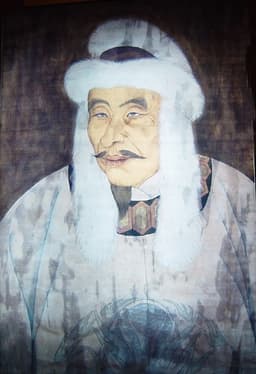
Wanyan Aguda
Emperor · Medieval
63.4Total
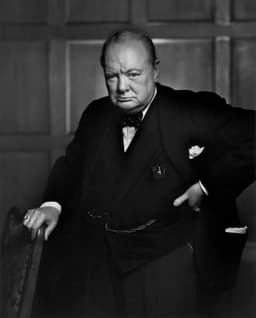
Winston Churchill
Politician · Modern
71.8Total
Basic Information
Born
1068
1874
Died
1123
1965
Era
Medieval
Modern
Nationality
China
United Kingdom
Occupation
Emperor
Politician
Civilization
Eastern
Western
Score Comparison
Military (10%)
82.0
55.0
Political (20%)
59.3
78.0
Influence (20%)
55.0
75.0
Legacy (20%)
52.0
68.0
Leadership (15%)
85.0
82.0
Strategy (15%)
68.0
65.0
TOTAL
63.4
71.8
Wanyan Aguda — Complete Timeline
1114 AD
Battle of HubudagangWar◆ Major
Aguda's Jurchen forces defeated a Liao army at Hubudagang, marking the first major victory of the rebellion. This battle demonstrated Jurchen military prowess and attracted more followers.
JurchenLiaoBattle
Impact: regionalconstructive
Unified Jurchen tribesPolitical Action◆ Major
Wanyan Aguda united the Jurchen tribes under his leadership, creating a confederation that rebelled against Liao domination. He organized a disciplined army and began the Jurchen revolt.
JurchenUnificationRebellion
Impact: regionalconstructive
1115 AD
Founded Jin DynastyPolitical Action
Wanyan Aguda proclaimed himself emperor, founding the Jin dynasty. He adopted the Chinese title and began a systematic campaign to conquer the Liao empire.
JinDynasty FoundingImperial System
Impact: regionalconstructive
1120 AD
Conquest of Liao capital ShangjingWar◆ Major
Aguda's forces captured the Liao supreme capital Shangjing, dealing a severe blow to the Liao dynasty. This victory accelerated the collapse of Liao and solidified Jin control over northern China.
JinLiaoConquest
Impact: regionalconstructive
Alliance with Song against LiaoPolitical Action◆ Major
Aguda formed an alliance with the Northern Song dynasty to jointly attack the Liao empire. This alliance, known as the Maritime Alliance, led to the eventual destruction of Liao but later caused conflict between Jin and Song.
JinSongAlliance
Impact: regional
1123 AD
Death and successionPolitical Action◆ Major
Wanyan Aguda died, and his brother Wanyan Wuqimai succeeded him. Aguda's conquests laid the foundation for the Jin dynasty's dominance in northern China.
JinDeathSuccession
Impact: regional
Winston Churchill — Complete Timeline
1940 AD
Appointed Prime Minister of the United KingdomPolitical Action◆ Major
On May 10, 1940, Winston Churchill became Prime Minister of the United Kingdom, replacing Neville Chamberlain. His appointment came as Nazi Germany invaded France and the Low Countries, and Churchill formed a coalition government to lead Britain through World War II.
World War IILeadershipCoalition Government
Impact: globalconstructive
Delivered the 'We Shall Fight on the Beaches' SpeechOther◆ Major
On June 4, 1940, Churchill delivered a speech to the House of Commons following the evacuation of British forces from Dunkirk. He declared that Britain would fight on the beaches, landing grounds, fields, streets, and hills, and never surrender, rallying British morale during the darkest days of World War II.
World War IIOratoryMorale
Impact: nationalconstructive
1941 AD
Signed the Atlantic CharterOther◆ Major
On August 14, 1941, Churchill and U.S. President Franklin D. Roosevelt signed the Atlantic Charter aboard HMS Prince of Wales. This joint declaration outlined post-war goals including self-determination, disarmament, and free trade, and became a foundational document for the Allied war aims and the United Nations.
World War IIAllied CooperationPost-war Planning
Impact: globalconstructive
1945 AD
Attended the Yalta ConferenceOther◆ Major
In February 1945, Churchill attended the Yalta Conference with Roosevelt and Stalin to discuss the post-war reorganization of Europe. The conference agreed on the division of Germany, the establishment of the United Nations, and the fate of Eastern Europe, though Churchill later expressed regret over concessions to Stalin.
World War IIPost-war SettlementBig Three
Impact: global
1946 AD
Delivered the 'Iron Curtain' SpeechOther◆ Major
On March 5, 1946, Churchill delivered a speech at Westminster College in Fulton, Missouri, where he stated that an 'iron curtain' had descended across Europe from Stettin to Trieste. This speech is widely regarded as marking the beginning of the Cold War, as it highlighted the division between Soviet-controlled Eastern Europe and the West.
Cold WarSoviet UnionDivision of Europe
Impact: globaldestructive
1953 AD
Awarded the Nobel Prize in LiteratureOther◆ Major
In 1953, Churchill was awarded the Nobel Prize in Literature for his historical writings, particularly 'The Second World War' and 'A History of the English-Speaking Peoples'. The Nobel committee cited his mastery of historical and biographical description as well as his brilliant oratory in defending human values.
LiteratureNobel PrizeHistorical Writing
Impact: nationalconstructive
Expert Analysis
Wanyan Aguda vs Winston Churchill
# The Lion and the Tiger
In the winter of 1940, as German bombs rained upon London, a stout man with a cigar stood in the rubble of the House of Commons and declared that Britain would never surrender. Eight centuries earlier and half a world away, a Jurchen chieftain named Wanyan Aguda led his horsemen through the frozen forests of Manchuria, his war cry echoing against the crumbling walls of a Liao dynasty that had ruled for two hundred years. One man defended an empire; the other built one. Both faced impossible odds, yet their paths diverged as dramatically as their worlds.
Origins
Winston Churchill was born into the very heart of the British aristocracy—Blenheim Palace, the estate granted to his ancestor the Duke of Marlborough for defeating the French. His father was a prominent politician, his mother an American heiress. Yet young Winston was a poor student, rebellious and lonely, finding solace only in military history and the adventure stories of empire. His era was one of industrial might, global dominance, and the slow erosion of that dominance.
Wanyan Aguda emerged from a world of tribal warfare and subsistence. The Jurchen people were forest dwellers in what is now northeastern China, living under the thumb of the Khitan-led Liao dynasty. Aguda was not a prince but a chieftain's son, raised on horseback, trained with bow and sword. His world was one of clan loyalty, blood feuds, and the constant threat of extinction. Where Churchill had books and tutors, Aguda had the harsh lessons of the steppe.
The difference in their origins is not merely one of class but of civilizational posture. Churchill's Britain was a satisfied power, defending a status quo it had created. Aguda's Jurchens were an aggrieved people, hungry for liberation and land. One man inherited a world; the other had to seize it.
Rise to Power
Churchill's ascent was a long, winding staircase of ambition and setbacks. He entered politics as a Conservative, switched to the Liberals, then back again—earning a reputation as a maverick. He served as First Lord of the Admiralty, was blamed for the disastrous Gallipoli campaign in 1915, and spent a decade in the political wilderness. His voice was often a lonely one, warning against Nazi Germany when others wanted peace. Only in 1940, at the age of sixty-five, did the crown finally settle upon his head, precisely because he was the man nobody else wanted to be—the bulldog.
Aguda's rise was swift and brutal. In 1114, he unified the scattered Jurchen tribes into a confederation. That same year, at the Battle of Hubudagang, his outnumbered forces shattered a Liao army. He did not wait for permission or legitimacy; he seized it. In 1115, he proclaimed himself emperor, founding the Jin dynasty. Where Churchill spent decades maneuvering through parliamentary corridors, Aguda carved his path through battlefield carnage. Churchill's turning point was a moment of national crisis; Aguda's was a moment of personal and tribal revolution.
Leadership & Governance
Churchill led through words. His speeches—"blood, toil, tears and sweat," "their finest hour," "never was so much owed by so many to so few"—were weapons as potent as Spitfires. He understood that in a democracy, morale is a strategic resource. His leadership was coalitional, relying on persuasion, inspiration, and the occasional tantrum. He was a master of grand strategy, but his military judgment was often flawed—the Gallipoli disaster, the Norway campaign, his opposition to the D-Day timing. His genius was not in tactics but in will.
Aguda led through action. He rode with his men, shared their hardships, and proved his courage in the shield wall. His leadership score of 88.4 reflects a commander who inspired loyalty not through eloquence but through example. His political skill was equally formidable: he adopted Chinese administrative practices, issued edicts, and built a state apparatus while still on the march. In 1120, he formed the "Maritime Alliance" with the Northern Song dynasty, a diplomatic masterstroke that isolated the Liao. But unlike Churchill, who governed through institutions, Aguda governed through personal authority. When he died in 1123, his brother succeeded him smoothly—but the dynasty's long-term stability would prove fragile.
Triumph & Tragedy
Churchill's greatest moment was also his most improbable: the summer of 1940, when Britain stood alone against Hitler. His defiance became a symbol for the free world. Yet his tragedy came after victory. In 1945, while he was at the Potsdam Conference, the British electorate voted him out of office. The man who had saved his country was rejected by it. He would return as Prime Minister in 1951, but his second term was marked by imperial decline and personal decline. His triumph was epic; his denouement, bittersweet.
Aguda's triumph was the conquest of the Liao supreme capital, Shangjing, in 1120—a victory that broke the back of a dynasty that had ruled for two centuries. He died at the height of his power in 1123, before decline could touch him. But his tragedy was that he did not live to see his vision fulfilled. His successors would complete the destruction of the Liao and even capture the Song capital of Kaifeng, but the Jin dynasty he founded would eventually fall to the Mongols. Aguda's triumph was pure; his tragedy was posthumous.
Character & Destiny
Churchill was a man of immense ego, romanticism, and melancholy. He suffered from what he called the "Black Dog" of depression. His love of history made him see himself as a figure in an epic, which gave him courage but also a certain theatricality. His decisions were shaped by a deep belief in the destiny of the English-speaking peoples and a visceral hatred of tyranny. He was, in many ways, a man out of time—a Victorian imperialist who saved a modern democracy.
Aguda was a pragmatist forged in fire. He had no time for introspection. Every decision was calculated for survival and expansion. His character was shaped by the unforgiving logic of the steppe: trust your clan, strike hard, and never show weakness. He was a conqueror in the ancient mold, for whom the state was an extension of the warlord's will.
Destiny, in both cases, was a matter of timing. Churchill's greatness required Hitler. Aguda's required the Liao's decadence. Both were men for their moments.
Legacy
Churchill is remembered as the British lion, his statue standing in Parliament Square, his name synonymous with defiance. His legacy is complicated—his views on empire and race are now rightly criticized—but his role in preserving European freedom is undeniable. His Nobel Prize in Literature, his memoirs, his speeches—all ensure that his voice still echoes.
Aguda is remembered in China as a founder, a unifier, and a warrior-emperor. The Jin dynasty he established brought the Jurchen people into the mainstream of Chinese civilization, laying the groundwork for what would later become the Manchu Qing dynasty. His legacy is one of transformation—from tribal chieftain to emperor, from forest to palace. Yet outside of East Asian history, he is largely unknown.
Conclusion
One man defended an island; the other conquered a continent. One spoke to millions; the other led thousands. Churchill's world was one of parliaments and press conferences; Aguda's was one of horse archers and siege towers. Yet both understood the same truth: that history belongs to those who refuse to accept defeat. Churchill refused to surrender to the Nazis; Aguda refused to bow to the Liao. Their different outcomes were not a matter of better or worse, but of different worlds. The lion and the tiger—each magnificent, each suited to its own jungle.
Rankings
🥇
Winston ChurchillLeader
Mil: 55.0Pol: 78.0Inf: 75.0
71.8
🥈
Wanyan Aguda
Mil: 82.0Pol: 59.3Inf: 55.0
63.4
+8.4 behind
How This Comparison Works
Algorithm
Each figure is scored on 6 dimensions (0—100 scale) based on structured historical data: Military (10%), Political (20%), Influence (20%), Legacy (20%), Leadership (15%), Strategy (15%). The weighted total produces the final ranking.
Data Sources
Scores are computed from structured sub-indicators in the database. Scale factors adjust for era (Ancient ×0.85, Modern ×1.0) and civilization size (Eastern ×1.05, Other ×0.80) to account for differences in population and military scale.
Maximum 3 Figures
Comparisons are limited to 2—3 figures to ensure readability and statistical meaningfulness.
Error Margins
±5 points per dimension — Sub-scores are derived from historical records with inherent uncertainty. Two figures within 5 points on a dimension should be considered roughly equivalent in that area.
Total Score Accuracy
±3 points overall — The weighted combination of 6 dimensions produces a total score with approximately ±3 points of uncertainty. Differences of less than 3 points are not statistically significant— the figures are effectively tied.
Known Limitations
- Historical records are incomplete and uneven across civilizations
- Figures from oral-tradition societies may be underrepresented
- Occupation labels can misclassify multi-role figures
- Scores measure capability and impact, not moral character
- Quantitative scoring is a comparison tool, not absolute truth
Capability Radar
Military (10%) — Battles & Warfare
Battles
85
55
Win Rate
90
60
Expansion
85
40
Political (20%) — Governance & Reform
Reform
75
70
Diplomacy
70
85
Economy
65
60
Influence (20%) — Cultural & Global Reach
Cultural
60
85
Global
50
85
Legacy (20%) — Historical Impact
Historical
70
90
Longevity
55
80
Leadership (15%) — Power & Stability
Tenure
70
75
Stability
60
70
Strategy (15%) — Tactics & Innovation
Strategy
85
85
Tactics
80
65
Reform
75
70
Similar Comparisons
Comments & Discussion
IRONPANTS6/16/2026
Churchill was a master of logistics and morale, but Aguda was a military innovator who changed the course of East Asian warfare. While Churchill inspired with rhetoric, Aguda personally led cavalry charges that shattered a numerically superior Liao army using coordinated pincer movements. The Jurchen bow was his V-2; the coordinated advance his D-Day. Churchill inherited an empire; Aguda built one from scratch. That's the difference between defending privilege and creating destiny.
蒙古铁嘴6/16/2026
你把一个躲在防空洞里抽雪茄的胖子和一个亲手砍下敌人首级的部落勇士放在一起比?搞笑呢。丘吉尔赢是因为有大西洋和苏联人当挡箭牌,阿骨打却是在正面战场上以寡击众,用两万骑兵打垮七十万辽军。你告诉我谁更硬核?一个靠演讲,一个靠弓箭和马刀,根本不是一个级别的对手。
DATAWRANGLER6/16/2026
Let's talk hard numbers. Churchill's "finest hour" rhetoric masks that in 1940, Britain had the world's largest navy, an Empire spanning a quarter of the globe, and the world's highest GDP per capita. Aguda started with maybe 10,000 Jurchen warriors against a Liao state of 30 million people. The odds ratio is laughable. Churchill's defiance was impressive, but he had resources; Aguda invented a script, united tribes, and conquered an empire with sheer tactical genius. Adjust for context, and Agu
墨经迷6/16/2026
从战略思想看,阿骨打更像《孙子兵法》里的活例子:不战而屈人之兵。他先麻痹辽帝,假装臣服,再在出河店之战用奇兵突袭,一举扭转乾坤。而丘吉尔的策略是什么?熬,等美国参战,等希特勒犯错。这哪是什么雄狮,分明是个赌徒,赌的是亿万人的命。阿骨打才是真正的兵法家,步步为营,每一刀都砍在对手的软肋上。