Loading...
Kamehameha V vs Pachacuti
Pachacuti leads by 24.4 pts · 2 figures compared
…
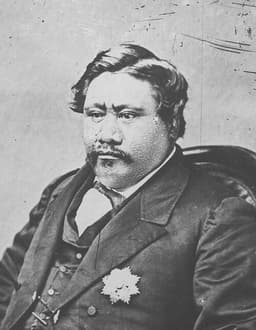
Kamehameha V
Emperor · Modern
45.0Total
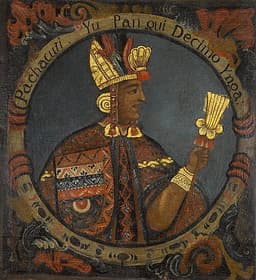
Pachacuti
Emperor · Medieval
69.4Total
Basic Information
Born
1830
1418
Died
1872
1472
Era
Modern
Medieval
Nationality
Hawaii
Inca Empire
Occupation
Emperor
Emperor
Civilization
Other
Other
Score Comparison
Military (10%)
11.3
78.5
Political (20%)
46.6
58.1
Influence (20%)
50.2
65.0
Legacy (20%)
42.5
72.0
Leadership (15%)
74.0
78.0
Strategy (15%)
26.5
69.2
TOTAL
45.0
69.4
Kamehameha V — Complete Timeline
1863 AD
Ascended to the Throne as Kamehameha VPolitical Action◆ Major
Lot Kapuāiwa became King Kamehameha V after the death of his brother Kamehameha IV. He was the last monarch of the Kamehameha dynasty.
Impact: national
1864 AD
Promulgated the 1864 ConstitutionReform◆ Major
Kamehameha V abrogated the 1852 constitution and promulgated a new one that increased royal power. The 1864 constitution abolished the office of kuhina nui (premier), gave the king veto power, and restricted suffrage to property owners.
Impact: national
1865 AD
Oversaw Economic Growth and Public WorksReform
Kamehameha V promoted economic development, including the expansion of the sugar industry, construction of roads and harbors, and the establishment of the Hawaiian Board of Health. His reign saw increased foreign investment and trade.
Impact: nationalconstructive
1867 AD
Refused to Sign the Reciprocity TreatyPolitical Action◆ Major
Kamehameha V refused to sign a reciprocity treaty with the United States that would have reduced tariffs on Hawaiian sugar. He believed the treaty would compromise Hawaiian sovereignty and lead to American domination.
Impact: national
1872 AD
Died Without an HeirOther◆ Major
Kamehameha V died without naming an heir, ending the Kamehameha dynasty. His death triggered a succession crisis that led to the election of Lunalilo as the next king.
Impact: nationaltragic
Pachacuti — Complete Timeline
1438 AD
Conquest of the Chanka KingdomWar
Pachacuti led the Inca army to defeat the Chanka, a powerful rival, in a decisive battle near Cusco. This victory secured his position as Sapa Inca and initiated a period of rapid expansion, transforming the Inca from a small kingdom into a vast empire.
ConquestInca ExpansionChanka
Impact: regional
1440 AD
Reconstruction of CuscoCultural◆ Major
Pachacuti rebuilt Cusco as the imperial capital, designing it in the shape of a puma and constructing massive stone structures like Sacsayhuam
Urban PlanningArchitectureInca Empire
Impact: regionalconstructive
1450 AD
Initiation of Machu Picchu's ConstructionCultural◆ Major
Pachacuti ordered the construction of Machu Picchu, a royal estate and ceremonial site high in the Andes. The complex featured sophisticated dry-stone masonry and terraced agriculture, serving as a symbol of Inca engineering and a retreat for the emperor.
ArchitectureRoyal EstateInca Engineering
Impact: regionalconstructive
Expert Analysis
Pachacuti vs Kamehameha V
# The Emperor's Choice: Two Paths of Power in Pachacuti and Kamehameha V
On a windswept plateau in the Andes, a young prince rallies his father's shattered army against a tide of Chanka warriors, turning certain defeat into the birth of an empire. Four centuries later, on a sun-drenched island in the Pacific, a Hawaiian king sits alone in his study, pen poised over a constitution, choosing between the will of his people and the authority of his crown. These two moments, separated by oceans and epochs, capture the essence of two rulers who faced the same fundamental question: how much power does a monarch truly need?
Origins
Pachacuti Inca Yupanqui was born in 1418 into a world of highland rivalries. His father, the Sapa Inca Viracocha, ruled a modest kingdom around Cusco, one among many warring states in the Andean region. The young prince grew up in a society where survival depended on military strength and where the gods spoke through earthquakes, eclipses, and the flight of birds. His name, meaning "he who remakes the world," proved prophetic—but only after a crisis forged him.
Kamehameha V, born Lot Kapuāiwa in 1830, entered a very different world. His grandfather, Kamehameha the Great, had unified the Hawaiian Islands by 1810, but by Lot's birth, the kingdom was already entangled with Western powers. American missionaries had arrived, whaling ships crowded Hawaiian ports, and diseases had decimated the native population. Lot was educated at the Royal School in Honolulu, where he learned English, studied law, and absorbed the contradictions of a kingdom caught between tradition and modernity.
Rise to Power
Pachacuti's rise was born of desperation. In 1438, the Chanka, a powerful rival kingdom, launched a massive assault on Cusco. Viracocha fled with his designated heir, leaving the city defenseless. But Pachacuti, the overlooked son, refused to abandon his people. Gathering what warriors remained, he led a counterattack that shattered the Chanka army in a decisive battle near Cusco. The victory was so complete that the Chanka never recovered, and Pachacuti's father, shamed by his own flight, effectively ceded power to his son.
Kamehameha V ascended the throne in 1863 upon the death of his brother Kamehameha IV, who had reigned for only eight years. Unlike Pachacuti, Lot inherited a stable kingdom, but one facing existential threats—not from armies, but from treaties, tariffs, and the slow erosion of Hawaiian sovereignty. His path to power was smooth, but the challenges that awaited him were anything but.
Leadership & Governance
Pachacuti transformed victory into empire with breathtaking speed. He reorganized the Inca army into a professional force, established a system of roads that would rival Rome's, and created the *mit'a* labor system that mobilized subjects for public works. He rebuilt Cusco in the shape of a puma, with massive stone walls that still stand without mortar. Around 1450, he ordered the construction of Machu Picchu, a royal estate and ceremonial site perched 8,000 feet above the Urubamba River—a testament to his vision of power as something both earthly and divine.
Kamehameha V's governance was a study in resistance. In 1864, he abrogated the liberal 1852 constitution and promulgated a new one that concentrated power in the monarchy, restricted voting rights to property owners, and eliminated the elected legislature's ability to override royal vetoes. He believed that only a strong king could protect Hawaii from foreign domination. His refusal in 1867 to sign a reciprocity treaty with the United States—which would have reduced tariffs on Hawaiian sugar—was a calculated gamble to preserve economic independence.
Triumph & Tragedy
Pachacuti's greatest triumph was the creation of an empire that stretched from modern-day Ecuador to Chile, encompassing millions of people across diverse terrains. He achieved this not just through conquest but through a sophisticated system of resettlement, cultural integration, and administrative efficiency. His tragedy came in his later years, as the empire grew too vast for any single ruler to control, and succession disputes began to fester.
Kamehameha V's triumph was his unwavering defense of royal authority against the tide of constitutionalism. He oversaw economic growth, expanded public works, and maintained Hawaiian independence during a period when other Pacific kingdoms were falling to colonial powers. But his tragedy was profound: when he died in 1872 without naming an heir, the Kamehameha dynasty ended. The succession crisis that followed opened the door to American influence, and within two decades, the monarchy itself would fall.
Character & Destiny
Pachacuti was a builder in the truest sense—of cities, roads, and institutions. His military score of 66.8 and strategy of 76.7 reflect a commander who understood that conquest was only the beginning; the real work was administration. His leadership score of 84.5 speaks to a man who could inspire warriors to die for him and laborers to build for him. He was ruthless when necessary but also pragmatic, incorporating conquered peoples into his system rather than simply destroying them.
Kamehameha V, with a leadership score of 78.5 and a political score of 50.2, was a different kind of ruler. He was a constitutional monarch in an age of empires, trying to hold back the tide of history with sheer will. His refusal to compromise—on the constitution, on the reciprocity treaty—stemmed from a deep conviction that a king's authority was absolute. But in a world where Hawaii's survival depended on navigating between great powers, this inflexibility may have been his undoing.
Legacy
Pachacuti's legacy is etched into stone. Machu Picchu draws millions of visitors each year. The Inca road system still connects the Andes. His administrative reforms became the foundation of an empire that, though short-lived, remains one of history's great achievements. His influence score of 77.6 and legacy of 66.1 reflect a ruler who not only conquered but created.
Kamehameha V's legacy is more ambiguous. His 1864 constitution is remembered by many Hawaiians as a betrayal of democratic principles, a power grab that weakened the very institutions that might have saved the monarchy. Yet his defenders argue that he saw clearly what others refused to see: that a weak king in a strongman's world was no king at all. His total score of 57.5, lower than Pachacuti's 73.7, reflects a ruler whose ambitions were constrained by circumstances beyond his control.
Conclusion
What separates these two emperors is not ability but opportunity. Pachacuti inherited a world of chaos and shaped it into order; Kamehameha V inherited a world of order and watched it dissolve into chaos. Both understood that power is not given but taken, and both paid the price for their choices. One built a mountain citadel that still defies the sky; the other signed a constitution that still divides historians. In the end, perhaps the true measure of a ruler is not what they build, but what they leave behind when the building stops. For Pachacuti, that was an empire. For Kamehameha V, it was a question—one that the Hawaiian people are still answering today.
Rankings
🥇
PachacutiLeader
Mil: 78.5Pol: 58.1Inf: 65.0
69.4
🥈
Kamehameha V
Mil: 11.3Pol: 46.6Inf: 50.2
45.0
+24.4 behind
How This Comparison Works
Algorithm
Each figure is scored on 6 dimensions (0—100 scale) based on structured historical data: Military (10%), Political (20%), Influence (20%), Legacy (20%), Leadership (15%), Strategy (15%). The weighted total produces the final ranking.
Data Sources
Scores are computed from structured sub-indicators in the database. Scale factors adjust for era (Ancient ×0.85, Modern ×1.0) and civilization size (Eastern ×1.05, Other ×0.80) to account for differences in population and military scale.
Maximum 3 Figures
Comparisons are limited to 2—3 figures to ensure readability and statistical meaningfulness.
Error Margins
±5 points per dimension — Sub-scores are derived from historical records with inherent uncertainty. Two figures within 5 points on a dimension should be considered roughly equivalent in that area.
Total Score Accuracy
±3 points overall — The weighted combination of 6 dimensions produces a total score with approximately ±3 points of uncertainty. Differences of less than 3 points are not statistically significant— the figures are effectively tied.
Known Limitations
- Historical records are incomplete and uneven across civilizations
- Figures from oral-tradition societies may be underrepresented
- Occupation labels can misclassify multi-role figures
- Scores measure capability and impact, not moral character
- Quantitative scoring is a comparison tool, not absolute truth
Capability Radar
Military (10%) — Battles & Warfare
Battles
4
85
Win Rate
9
90
Expansion
11
90
Political (20%) — Governance & Reform
Reform
20
92
Diplomacy
30
75
Economy
35
80
Influence (20%) — Cultural & Global Reach
Cultural
30
85
Global
10
65
Legacy (20%) — Historical Impact
Historical
35
80
Longevity
20
70
Leadership (15%) — Power & Stability
Tenure
40
85
Stability
25
82
Strategy (15%) — Tactics & Innovation
Strategy
15
88
Tactics
15
80
Reform
21
85
Similar Comparisons
Comments & Discussion
灰烬学者6/16/2026
拿Pachacuti和Kamehameha V比,根本是关公战秦琼。一个在15世纪用羊驼运输和梯田农业养活百万人口帝国,另一个在19世纪面对天花和土地兼并,连王权都快保不住。数据上:印加帝国巅峰时人口约1200万,而夏威夷王国1820年代只剩不到15万原住民。Pachacuti是扩张者,Kamehameha V是守成者,但后者的棋盘早被传教士和糖商掀翻了。别拿战象和溺水金鱼比游泳。
Lance of the Sun6/16/2026
Classics scholar here: the real genius of Pachacuti was his statecraft, not just warfare. He invented the mit'a labor system, binding conquered tribes into a reciprocal network of tribute and public works. That's why his empire didn't collapse after one battle—it was engineered for continuity. Kamehameha V, by contrast, tried to revive kapu traditions and traditional Hawaiian governance but lacked the demographic base. Pachacuti built a civilization; Lot Kapuāiwa tried to resurrect a ghost.
数据铁幕6/16/2026
别被叙事迷惑了。Pachacuti的成功有太多幸存者偏差——印加史料几乎都是胜利者后代编的,把失败粉饰成神意。而Kamehameha V面对的是真实的硬数据:1864年夏威夷原住民仅占总人口60%以下,并且持续下降。他强行颁布1864年宪法,收窄投票权,不是为了专权,而是防止被白种移民淹没事务。Pachacuti打的是冷兵器仗,Kamehameha V打的是人口战、法律战、病菌战。谁更艰难?用脚后跟想都知道。
The Last Ali'i6/16/2026
Let's be honest: Kamehameha V gets a bad rap because people romanticize his grandfather's unification. But Lot faced a more complex enemy—not tribes with spears, but a creeping colonial apparatus disguised as commerce. His 1864 constitution was a last-ditch effort to preserve Hawaiian sovereignty by centralizing power. Did it fail? Yes. But it bought a few decades before the coup. Pachacuti expanded into a vacuum
Chronicler72876/16/2026
Pachacuti wasn't some noble idealist—he was a brutal military innovator who turned the Andes into a death machine for enemies. The Chanka war wasn't just a defense; it was a calculated extermination campaign. He reorganized the Inca army into standardized units with rigid logistics, something unprecedented in the Americas. Kamehameha V? A paper-pushing monarch who let missionary-educated elites neuter his authority. Give me a conqueror who actually reshaped continents over a king who couldn't ev