Loading...
Charles de Gaulle vs Pachacuti
Pachacuti leads by 1.2 pts · 2 figures compared
…
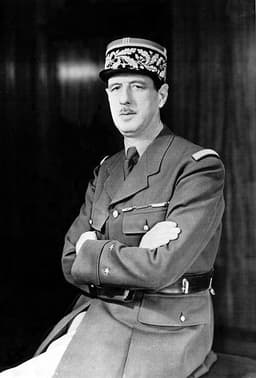
Charles de Gaulle
Politician · Modern
68.2Total
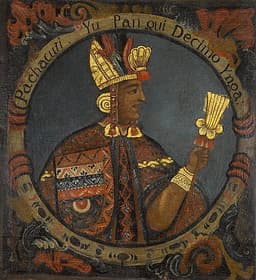
Pachacuti
Emperor · Medieval
69.4Total
Basic Information
Born
1890
1418
Died
1970
1472
Era
Modern
Medieval
Nationality
France
Inca Empire
Occupation
Politician
Emperor
Civilization
Western
Other
Score Comparison
Military (10%)
55.0
78.5
Political (20%)
75.0
58.1
Influence (20%)
65.0
65.0
Legacy (20%)
68.0
72.0
Leadership (15%)
78.0
78.0
Strategy (15%)
65.0
69.2
TOTAL
68.2
69.4
Charles de Gaulle — Complete Timeline
1940 AD
Appeal of 18 June 1940Political Action
From London, de Gaulle broadcast a radio appeal urging French resistance against Nazi occupation. He called on French soldiers and citizens to continue the fight, founding the Free French Forces and becoming the symbol of French defiance.
World War IIResistanceLeadership
Impact: nationalconstructive
1958 AD
Founding of the Fifth RepublicPolitical Action
De Gaulle returned to power during the Algerian crisis and oversaw the drafting of a new constitution. The Fifth Republic established a strong executive presidency, replacing the unstable parliamentary system of the Fourth Republic.
ConstitutionGovernment ReformPolitical System
Impact: nationalconstructive
1962 AD
End of the Algerian WarPolitical Action◆ Major
De Gaulle negotiated the
DecolonizationPeace TreatyAlgeria
Impact: regionalconstructive
1968 AD
May 1968 CrisisPolitical Action◆ Major
Mass student protests and general strikes paralyzed France, challenging de Gaulle's government. De Gaulle briefly fled to Germany, then returned to dissolve the National Assembly and call elections, which his party won, but his authority was weakened.
ProtestPolitical CrisisSocial Unrest
Impact: nationaldestructive
1969 AD
Resignation as PresidentPolitical Action
De Gaulle resigned after losing a referendum on regional reform and Senate restructuring. The defeat marked the end of his political career, as he withdrew from public life and died the following year.
ResignationPolitical DefeatReferendum
Impact: nationaltragic
Pachacuti — Complete Timeline
1438 AD
Conquest of the Chanka KingdomWar
Pachacuti led the Inca army to defeat the Chanka, a powerful rival, in a decisive battle near Cusco. This victory secured his position as Sapa Inca and initiated a period of rapid expansion, transforming the Inca from a small kingdom into a vast empire.
ConquestInca ExpansionChanka
Impact: regional
1440 AD
Reconstruction of CuscoCultural◆ Major
Pachacuti rebuilt Cusco as the imperial capital, designing it in the shape of a puma and constructing massive stone structures like Sacsayhuam
Urban PlanningArchitectureInca Empire
Impact: regionalconstructive
1450 AD
Initiation of Machu Picchu's ConstructionCultural◆ Major
Pachacuti ordered the construction of Machu Picchu, a royal estate and ceremonial site high in the Andes. The complex featured sophisticated dry-stone masonry and terraced agriculture, serving as a symbol of Inca engineering and a retreat for the emperor.
ArchitectureRoyal EstateInca Engineering
Impact: regionalconstructive
Expert Analysis
Charles de Gaulle vs Pachacuti
### The General and the Emperor: Two Paths to Forge a Nation
On a sweltering June afternoon in 1940, a solitary French general stood before a microphone in a London studio, his voice crackling across the English Channel to a defeated nation. Half a millennium earlier, on a windswept Andean plateau, a young prince rallied his father’s shattered army against a terrifying enemy, turning a desperate defense into a campaign that would reshape the world. Charles de Gaulle and Pachacuti Inca Yupanqui never met, never shared a language, and ruled worlds apart. Yet both were nation-builders who emerged from existential crises to redefine their civilizations. What drove one to save a republic through words and a constitution, while the other built an empire through stone and blood?
### Origins
Charles de Gaulle was born in 1890 into a devoutly Catholic, nationalist family in Lille, France. His father taught him history and literature, instilling a sense of France’s eternal grandeur. The trauma of the Franco-Prussian War and the humiliation of 1871 hung over his childhood like a shadow. He was shaped by a world of trenches, machine guns, and the bitter lessons of Verdun—a soldier who saw his nation collapse twice in his lifetime.
Pachacuti, born around 1418, knew no such written history. His world was oral, woven into quipus and mountain rituals. He was the son of the Sapa Inca Viracocha, ruler of a modest kingdom in the Cusco Valley, surrounded by powerful rivals like the Chanka. He grew up not in schools but on battlefields, learning to read the land, the stars, and the hearts of men. Where de Gaulle’s France was a mature, literate civilization haunted by decline, Pachacuti’s Inca world was young, fluid, and hungry for conquest.
### Rise to Power
De Gaulle’s rise was improbable. In 1940, he was a junior general known for his unorthodox ideas about armored warfare. When France fell, he fled to London, a voice in the wilderness. His Appeal of 18 June was a gamble—a single man claiming to speak for a nation that had surrendered. He had no army, no territory, no legitimacy. Only his will and his conviction that France was more than its current defeat. It took years of maneuvering, the chaos of the Algerian War, and a near-coup in 1958 to bring him back as the savior he had always imagined himself to be.
Pachacuti’s ascent was swifter and more dramatic. In 1438, the Chanka kingdom launched a massive assault on Cusco. The Inca emperor fled, but his son refused to retreat. Pachacuti took command, rallied the remnants of the army, and crushed the Chanka in a battle that became legend. His father abdicated, and the young prince became Sapa Inca. He did not wait for history to call him; he seized it with both hands. Within two years, he began transforming Cusco from a small town into the imperial capital of a growing empire.
### Leadership & Governance
De Gaulle governed through words and institutions. He believed in a strong, centralized state led by a president who stood above parties. The Fifth Republic, founded in 1958, was his masterpiece—a constitution designed to end the revolving-door governments that had plagued France. He wielded power with a cold, almost mystical authority. His military genius was limited—he was more strategist than tactician—but his political wisdom was immense. He ended the Algerian War in 1962, a decision that enraged his own generals but saved France from endless conflict.
Pachacuti governed through stone and systems. He rebuilt Cusco in the shape of a puma, its massive stone walls fitting so perfectly that a knife blade could not slip between them. He initiated the construction of Machu Picchu around 1450, a royal estate that was both a palace and a sacred observatory. But his true genius was administrative. He divided the empire into four provinces, imposed a single language, Quechua, and created a system of roads and storehouses that knit together a territory stretching from modern Colombia to Chile. He was a military commander of extraordinary skill, leading campaigns that expanded Inca rule from a small kingdom to the largest empire in the pre-Columbian Americas.
### Triumph & Tragedy
De Gaulle’s greatest moment was the founding of the Fifth Republic—a political resurrection that gave France stability for decades. His most devastating failure came in May 1968, when student protests and a general strike paralyzed the nation. He briefly fled to Germany, seemingly lost, before returning to dissolve the National Assembly and call new elections. He won that round, but the crisis broke something in him. In 1969, he resigned after losing a referendum on regional reform—a trivial issue compared to the wars he had fought. The man who had faced Hitler and the Algerian rebels was undone by a ballot box.
Pachacuti’s triumph was the transformation of a kingdom into an empire, a feat of conquest and organization that still inspires awe. His tragedy was the same as that of all conquerors: the seeds of destruction. The Inca system, so brilliantly centralized, depended entirely on the Sapa Inca’s authority. When the Spanish arrived, they simply decapitated the empire, and the whole edifice collapsed. Pachacuti built for eternity, but his creation lasted only a century after his death.
### Character & Destiny
De Gaulle was aloof, arrogant, and profoundly alone. He believed he embodied France, and he carried that burden with a stoic dignity that often alienated those around him. His decisions were driven by a vision of national greatness, not personal ambition. When he lost the 1969 referendum, he did not fight; he simply walked away, because his legitimacy came from the people’s trust, and that trust had been withdrawn.
Pachacuti was different—more ruthless, more pragmatic, and more willing to use terror alongside diplomacy. He did not merely defeat his enemies; he incorporated them, forcing conquered peoples to learn Quechua and worship Inca gods. He was a builder, not a philosopher. Where de Gaulle wrote memoirs and gave speeches, Pachacuti carved his legacy into the Andes.
### Legacy
De Gaulle’s legacy is the Fifth Republic, which still governs France. He is remembered as the man who said “no” to defeat, who gave France its modern identity, and who stood up to both Hitler and the United States. His statue stands in Paris, but his real monument is the stability of French democracy.
Pachacuti’s legacy is Machu Picchu, the lost city that draws millions of visitors, and the Inca road system that still crosses the mountains. He is remembered as the father of the Inca Empire, a figure of mythical proportions. But his empire fell to 168 Spanish soldiers in 1532, a reminder that even the greatest builders cannot control the future.
### Conclusion
De Gaulle and Pachacuti were both architects of nations, but they built with different materials. One used the power of the spoken word and the written constitution, the other the power of stone and the sword. Yet both understood something essential: that a nation is not just a territory or a government, but a story told by its people. De Gaulle told France it was eternal. Pachacuti told the Inca they were chosen. And in the end, both were right—and both were wrong. The empires fall, the republics change, but the story endures.
Rankings
🥇
PachacutiLeader
Mil: 78.5Pol: 58.1Inf: 65.0
69.4
🥈
Charles de Gaulle
Mil: 55.0Pol: 75.0Inf: 65.0
68.2
+1.2 behind
How This Comparison Works
Algorithm
Each figure is scored on 6 dimensions (0—100 scale) based on structured historical data: Military (10%), Political (20%), Influence (20%), Legacy (20%), Leadership (15%), Strategy (15%). The weighted total produces the final ranking.
Data Sources
Scores are computed from structured sub-indicators in the database. Scale factors adjust for era (Ancient ×0.85, Modern ×1.0) and civilization size (Eastern ×1.05, Other ×0.80) to account for differences in population and military scale.
Maximum 3 Figures
Comparisons are limited to 2—3 figures to ensure readability and statistical meaningfulness.
Error Margins
±5 points per dimension — Sub-scores are derived from historical records with inherent uncertainty. Two figures within 5 points on a dimension should be considered roughly equivalent in that area.
Total Score Accuracy
±3 points overall — The weighted combination of 6 dimensions produces a total score with approximately ±3 points of uncertainty. Differences of less than 3 points are not statistically significant— the figures are effectively tied.
Known Limitations
- Historical records are incomplete and uneven across civilizations
- Figures from oral-tradition societies may be underrepresented
- Occupation labels can misclassify multi-role figures
- Scores measure capability and impact, not moral character
- Quantitative scoring is a comparison tool, not absolute truth
Capability Radar
Military (10%) — Battles & Warfare
Battles
60
85
Win Rate
55
90
Expansion
20
90
Political (20%) — Governance & Reform
Reform
95
92
Diplomacy
90
75
Economy
70
80
Influence (20%) — Cultural & Global Reach
Cultural
70
85
Global
80
65
Legacy (20%) — Historical Impact
Historical
85
80
Longevity
75
70
Leadership (15%) — Power & Stability
Tenure
85
85
Stability
75
82
Strategy (15%) — Tactics & Innovation
Strategy
85
88
Tactics
70
80
Reform
80
85
Similar Comparisons
Comments & Discussion
GaulHammer6/16/2026
"De Gaulle was a brilliant propagandist who’d oversee guerrilla war and run a shadow government, but Pachacuti built a logistical machine that moved armies across the Andes without hunger or mutiny. One commanded radios and typewriters; the other commanded llamas and stone roads. If you swapped them, de Gaulle would have dissolved the Incan Empire into factions, and Pachacuti would have retaken Paris in six months using terraced supply chains. That’s the difference between oratory and engineerin
数据祭司6/16/2026
"说得好听叫‘民族重塑’,难听就是幸存者偏差的胜利。戴高乐在1940年只是个逃到伦敦的准将,支持率不到法国人口的百分之一;帕查库蒂的军事记录全靠印加口述史,连敌人数量都吹成天文数字。拿Qhapaq Ñan跟贝当的停战协定比?一个靠强迫劳动修路,一个靠投降保人命。两人都利用了信息不对称把自己吹成救世主,实质都是机会主义者,没什么可吹的。"
ClassicsSage6/16/2026
"Both men mastered the art of founding myth, but their tools define their legacies. De Gaulle, a Roman-style *dictator* in the old Republican sense, wielded the *logos* of the 1958 Constitution as a sword against chaos. Pachacuti, more akin to an Assyrian king, reshaped geography itself—terracing mountains, building Sacsayhuamán with stones so tight you cannot fit a blade between them. One carved words into law, the other carved will into stone. The Gaul raised a cross; the Inca raised a sun. Bo
跨时空杠精6/16/2026
"都在吹帕查库蒂是‘安第斯的亚历山大’,请问他的帝国撑了多久?到1532年西班牙人来了,印加人自己先内斗到崩溃。戴高乐至少建立的第五共和国现在还在运作。帕查库蒂修了路,但没解决继承问题;戴高乐弄了个宪法,还当了十二年稳定总统。一个帝国的基础设施好,不代表国家会活。帕查库蒂是扩张者,戴高乐是制度设计师。后者明显更难。"
VeritasVault6/16/2026
"Let’s not romanticize Pachacuti. He was a brilliant conqueror but also a ruthless autocrat who rearranged entire populations to crush rebellion and imposed a state cult that erased local gods. De Gaulle, whatever his ego, freed France from Vichy without a bloodbath, then stepped down when the people voted no in 1969. One bred sons who killed each other for power; the other left a democratic legacy that outlasted him. Which nation-builder deserves the monument? The one who left a republic, not