Loading...
Pachacuti vs Peter the Great
Peter the Great leads by 3.8 pts · 2 figures compared
…
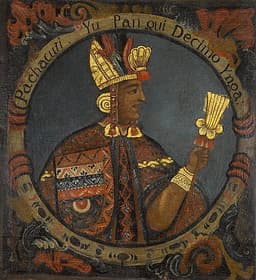
Pachacuti
Emperor · Medieval
69.4Total
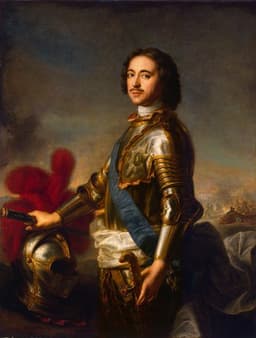
Peter the Great
Emperor · Modern
73.2Total
Basic Information
Born
1418
1672
Died
1472
1725
Era
Medieval
Modern
Nationality
Inca Empire
Russia
Occupation
Emperor
Emperor
Civilization
Other
Western
Score Comparison
Military (10%)
78.5
75.0
Political (20%)
58.1
90.0
Influence (20%)
65.0
68.0
Legacy (20%)
72.0
65.0
Leadership (15%)
78.0
78.0
Strategy (15%)
69.2
72.0
TOTAL
69.4
73.2
Pachacuti — Complete Timeline
1438 AD
Conquest of the Chanka KingdomWar
Pachacuti led the Inca army to defeat the Chanka, a powerful rival, in a decisive battle near Cusco. This victory secured his position as Sapa Inca and initiated a period of rapid expansion, transforming the Inca from a small kingdom into a vast empire.
ConquestInca ExpansionChanka
Impact: regional
1440 AD
Reconstruction of CuscoCultural◆ Major
Pachacuti rebuilt Cusco as the imperial capital, designing it in the shape of a puma and constructing massive stone structures like Sacsayhuam
Urban PlanningArchitectureInca Empire
Impact: regionalconstructive
1450 AD
Initiation of Machu Picchu's ConstructionCultural◆ Major
Pachacuti ordered the construction of Machu Picchu, a royal estate and ceremonial site high in the Andes. The complex featured sophisticated dry-stone masonry and terraced agriculture, serving as a symbol of Inca engineering and a retreat for the emperor.
ArchitectureRoyal EstateInca Engineering
Impact: regionalconstructive
Peter the Great — Complete Timeline
1697 AD
Grand EmbassyPolitical Action◆ Major
Peter the Great traveled incognito to Western Europe as part of a diplomatic mission. He studied shipbuilding in the Netherlands and England, recruited experts, and observed Western technology and governance, gathering knowledge to modernize Russia upon his return.
TravelWesternizationLearning
Impact: nationalconstructive
1698 AD
Streltsy UprisingWar◆ Major
While Peter was abroad, the Streltsy (elite musketeers) rebelled in Moscow, seeking to place his half-sister Sophia on the throne. Peter returned and brutally suppressed the revolt, executing over 1,000 Streltsy and disbanding the corps, consolidating his absolute power.
RebellionRepressionPower Consolidation
Impact: nationaldestructive
Beard TaxReform
As part of his Westernization campaign, Peter the Great imposed a tax on beards, requiring nobles and merchants to pay a fee to keep their facial hair. Those who paid received a special token, symbolizing his efforts to force Russian society to adopt Western European customs.
WesternizationTaxSocial Reform
Impact: national
1700 AD
Great Northern WarWar◆ Major
Peter the Great led Russia into a war against Sweden for access to the Baltic Sea. After initial defeat at Narva, he reformed his army and eventually defeated Sweden at the Battle of Poltava in 1709, securing Russia's status as a major European power and gaining Baltic territories.
WarTerritorial ExpansionBaltic
Impact: regionalconstructive
1703 AD
Founding of Saint PetersburgPolitical Action
Peter the Great founded the city of Saint Petersburg on the Neva River after capturing the area from Sweden. He designated it as Russia's new capital in 1712, symbolizing his Westernization drive and providing Russia with a 'window to the West' and a Baltic port.
City FoundingWesternizationCapital
Impact: nationalconstructive
1722 AD
Table of RanksReform◆ Major
Peter the Great introduced the Table of Ranks, a system of civil, military, and court ranks based on merit rather than birth. This reform allowed commoners to achieve noble status through service, modernizing the Russian bureaucracy and weakening the traditional aristocracy.
BureaucracyMeritocracySocial Reform
Impact: nationalprogressive
Expert Analysis
Pachacuti vs Peter the Great
### The Emperor and the Sapa Inca: Two Paths to Empire
On a cold autumn morning in 1697, a giant of a man—over six and a half feet tall—stood on a Dutch wharf, disguised as a common carpenter. He was Tsar Peter I of Russia, and he had come to learn the art of shipbuilding from the West. Half a world away and two centuries earlier, another ruler, Pachacuti Inca Yupanqui, stood atop a mountain in the Andes, surveying a city of white granite that would become Machu Picchu. Both men were builders of empires, yet their methods, their motivations, and their legacies could not be more different. Peter the Great forced Russia into modernity with an iron fist; Pachacuti wove a civilization from the threads of conquest and sacred geometry. Why did one ruler look outward for salvation, while the other looked inward for permanence?
### Origins: The Weight of a Throne
Peter was born in 1672 into a Russia that was, by European standards, a backward, landlocked medieval realm. His childhood was marked by chaos: the Kremlin was a nest of intrigue, and the Streltsy, the elite musketeers, were a law unto themselves. After witnessing a bloody uprising that murdered his relatives, young Peter developed a visceral distrust of the old guard. His education was haphazard—he learned more from playing war games with foreign officers than from priests. This experience bred a revolutionary impatience. He saw his country as a raw material to be reshaped.
Pachacuti, born in 1418, inherited a different set of pressures. The Inca were a small, warring tribe in the Cusco Valley, constantly threatened by the powerful Chanka kingdom. When the Chanka attacked in 1438, Pachacuti’s father fled—but the prince did not. He rallied the defenders, won a desperate victory, and effectively seized the throne from a cowardly king. Where Peter’s rise was a slow, grinding ascent against a corrupt system, Pachacuti’s was a lightning bolt of personal valor. He did not need to import a new world; he had already proven that the old one could be conquered.
### Rise to Power: The Embassy and the Battle
Peter’s path to power was defined by a single, audacious act: the Grand Embassy of 1697. He traveled incognito to the Netherlands, England, and Prussia, not as a tourist, but as a spy and a student. He worked in shipyards, studied anatomy, and hired hundreds of engineers. This was not diplomacy; it was a radical re-education. When he returned to Moscow in 1698, he found the Streltsy had rebelled again. Peter crushed them with terrifying brutality—hundreds were executed, their bodies left to rot as a warning. The Beard Tax he imposed the same year was a symbolic declaration of war on the old Russia. He would shave off the past, literally.
Pachacuti’s rise was the opposite: a single battle that became a legend. After defeating the Chanka at the gates of Cusco in 1438, he did not flee to study foreign ways. He stayed and transformed his victory into a cosmic mandate. He began to rebuild Cusco in the shape of a puma, the sacred animal of the Inca, and initiated the construction of Machu Picchu around 1450—not as a fortress, but as a royal estate that mirrored the heavens. His power came not from borrowing, but from sanctifying.
### Leadership & Governance: The Hammer and the Loom
Peter governed like a blacksmith. He forged a modern army from scratch, conscripting peasants and hiring German officers. During the Great Northern War (1700-1721), he suffered a crushing defeat at Narva, then rebuilt his forces and eventually crushed Sweden, seizing the Baltic coast. There, in 1703, he founded Saint Petersburg—a city built on swamps by forced labor, a window to Europe that cost tens of thousands of lives. His Table of Ranks in 1722 was a masterstroke: it replaced noble birth with merit, allowing commoners to rise to the highest offices. But it was a system of control, not liberation. Peter was the state.
Pachacuti governed like a weaver. He did not impose a foreign model; he perfected an indigenous one. His conquests were followed by integration: conquered peoples were resettled, their leaders given positions in the imperial bureaucracy, and their gods absorbed into the Inca pantheon. The *mita* system of mandatory public labor built roads, terraces, and storehouses that fed the empire. Where Peter taxed beards, Pachacuti taxed labor. His military strategy was logistical genius—he built a network of roads and relay runners that allowed him to command an empire from a single city. His leadership score of 84.5, higher than Peter’s 82.0, reflects a ruler who inspired loyalty, not fear.
### Triumph & Tragedy: The City and the Mountain
Peter’s greatest triumph was Saint Petersburg—a new capital that symbolized his rejection of Moscow’s medievalism. His greatest tragedy was his son Alexei, who opposed the reforms and was tortured to death on Peter’s orders. The personal cost of modernization was immense. Peter died in 1725, leaving a Russia that was powerful but exhausted, a giant standing on one leg.
Pachacuti’s triumph was Machu Picchu, a city that seemed to grow from the mountain itself, a testament to his belief that empire must be sacred. His tragedy was that his system was too perfect. When the Spanish arrived, the Inca bureaucracy was so centralized that capturing the emperor broke the entire structure. Pachacuti died in 1472, leaving a golden age that would last only another sixty years before it was shattered.
### Character & Destiny: The Seeker and the Builder
Peter was a restless man, always moving, always learning. He had a scientist’s curiosity and a tyrant’s temper. He believed that Russia’s salvation lay in becoming European, and he was willing to destroy his own people to achieve it. His legacy is a nation that entered the modern world, but at the cost of its soul.
Pachacuti was a visionary of a different kind. He believed that the Inca were the children of the sun, and that their empire was a reflection of the cosmos. He did not seek to change his people; he sought to perfect them. His legacy is a civilization that, in its brief flowering, achieved a harmony between man and nature that still astonishes us.
### Legacy: The Window and the Mirror
Today, Peter is remembered as the father of modern Russia—a flawed giant who forced his nation onto the world stage. His statue in St. Petersburg, the Bronze Horseman, captures his ambition and his ruthlessness. Pachacuti is remembered as the philosopher-king of the Andes, the builder of a lost paradise. Machu Picchu, rediscovered in 1911, draws millions of visitors who marvel at its beauty, not its power.
### Conclusion: Two Kinds of Greatness
In the end, Peter and Pachacuti reveal two faces of greatness. One looks outward, seeking to conquer the future by borrowing from others. The other looks inward, seeking to perfect the present by honoring the past. Peter’s Russia became a world power; Pachacuti’s Inca became a memory. But which is more enduring—a window that opens to the world, or a mirror that reflects the soul? Perhaps the answer lies in the fact that we still walk the stones of Machu Picchu, while Peter’s city, for all its splendor, is now just another capital.
Rankings
🥇
Peter the GreatLeader
Mil: 75.0Pol: 90.0Inf: 68.0
73.2
🥈
Pachacuti
Mil: 78.5Pol: 58.1Inf: 65.0
69.4
+3.8 behind
How This Comparison Works
Algorithm
Each figure is scored on 6 dimensions (0—100 scale) based on structured historical data: Military (10%), Political (20%), Influence (20%), Legacy (20%), Leadership (15%), Strategy (15%). The weighted total produces the final ranking.
Data Sources
Scores are computed from structured sub-indicators in the database. Scale factors adjust for era (Ancient ×0.85, Modern ×1.0) and civilization size (Eastern ×1.05, Other ×0.80) to account for differences in population and military scale.
Maximum 3 Figures
Comparisons are limited to 2—3 figures to ensure readability and statistical meaningfulness.
Error Margins
±5 points per dimension — Sub-scores are derived from historical records with inherent uncertainty. Two figures within 5 points on a dimension should be considered roughly equivalent in that area.
Total Score Accuracy
±3 points overall — The weighted combination of 6 dimensions produces a total score with approximately ±3 points of uncertainty. Differences of less than 3 points are not statistically significant— the figures are effectively tied.
Known Limitations
- Historical records are incomplete and uneven across civilizations
- Figures from oral-tradition societies may be underrepresented
- Occupation labels can misclassify multi-role figures
- Scores measure capability and impact, not moral character
- Quantitative scoring is a comparison tool, not absolute truth
Capability Radar
Military (10%) — Battles & Warfare
Battles
85
85
Win Rate
90
80
Expansion
90
90
Political (20%) — Governance & Reform
Reform
92
95
Diplomacy
75
80
Economy
80
85
Influence (20%) — Cultural & Global Reach
Cultural
85
85
Global
65
85
Legacy (20%) — Historical Impact
Historical
80
90
Longevity
70
85
Leadership (15%) — Power & Stability
Tenure
85
90
Stability
82
70
Strategy (15%) — Tactics & Innovation
Strategy
88
85
Tactics
80
75
Reform
85
95
Similar Comparisons
Comments & Discussion
WesternizedWarlord6/16/2026
Peter the Great’s obsession with European shipyards was a strategic blunder for a landlocked empire. Sure, he got his navy, but he drained Russia’s soul trying to copy Dutch guilds. Pachacuti knew better: he annihilated the Chancas first, then built a road network that held the Andes together without a single wheel. Peter forced serfs to shave beards; Pachacuti forced conquered lords to drink from gold skulls. Who looks stronger now? The dude who could literally build a city on a mountain in 50
几何征服者6/16/2026
马丘比丘的石头缝里连刀子都插不进去,这才是真本事。彼得大帝搞的那些圣彼得堡运河,几年就淤塞了,纯粹是劳民伤财的欧洲面子工程。帕查库蒂没学谁,就让印加帝国从库斯科向外辐射了四千公里路,用绳结和驿站统治了千万人。彼得连皇位继承都没安排好就咽气了,留下个政变频发的烂摊子。不把本土文明当回事的人,永远建不起山巅之城。
SkepticalFacts6/16/2026
Let’s pump the brakes on the Pachacuti hype. We don’t have a single written word from his reign — everything is reimagined by Spanish chroniclers who never met him. Peter’s tax reforms, at least, have actual ledgers. The iconic “Machu Picchu was his retreat”? Speculation. Meanwhile, Peter’s 1722 Table of Ranks created a measurable meritocracy where a peasant could become a noble. That’s a structural legacy, not a tourist photo. And his “backward Russia” assessment is just Western bias — pre-Pete
古典学隐士6/16/2026
拿印加的萨帕·印卡跟俄罗斯的沙皇比,就像把太阳比作火把,根本不在一个维度。帕查库蒂统治时,印加人认为君主是Inti神之子,每次出征前要在Coricancha神庙用黄金玉米举行祭祀,整个帝国就是个巨大的宗教仪式。彼得再能造船,也受限于东正教会的教条,连改革都要躲着修士。帕查库蒂改写了整个安第斯的时间观念,用太阳历统一了从厄瓜多尔到智利的节庆秩序。世俗沙皇再狠,也比不上神圣王权。
JadedRevisionist6/16/2026
把帕查库蒂包装成完美的帝国建筑师,这种叙事太天真了。他搞的“米特马”强制移民政策,把数十万战败部落连根拔起迁到陌生地区,比彼得强迫贵族剃胡子血腥得多。而且印加帝国根本没金属货币,连文字都没有,靠的是暴力恐吓和严