Loading...
Pachacuti vs Winston Churchill
Winston Churchill leads by 2.4 pts · 2 figures compared
…
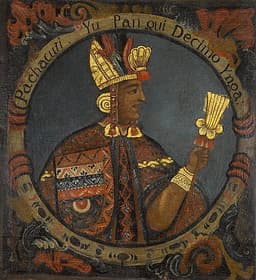
Pachacuti
Emperor · Medieval
69.4Total
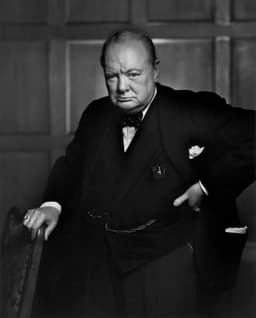
Winston Churchill
Politician · Modern
71.8Total
Basic Information
Born
1418
1874
Died
1472
1965
Era
Medieval
Modern
Nationality
Inca Empire
United Kingdom
Occupation
Emperor
Politician
Civilization
Other
Western
Score Comparison
Military (10%)
78.5
55.0
Political (20%)
58.1
78.0
Influence (20%)
65.0
75.0
Legacy (20%)
72.0
68.0
Leadership (15%)
78.0
82.0
Strategy (15%)
69.2
65.0
TOTAL
69.4
71.8
Pachacuti — Complete Timeline
1438 AD
Conquest of the Chanka KingdomWar
Pachacuti led the Inca army to defeat the Chanka, a powerful rival, in a decisive battle near Cusco. This victory secured his position as Sapa Inca and initiated a period of rapid expansion, transforming the Inca from a small kingdom into a vast empire.
ConquestInca ExpansionChanka
Impact: regional
1440 AD
Reconstruction of CuscoCultural◆ Major
Pachacuti rebuilt Cusco as the imperial capital, designing it in the shape of a puma and constructing massive stone structures like Sacsayhuam
Urban PlanningArchitectureInca Empire
Impact: regionalconstructive
1450 AD
Initiation of Machu Picchu's ConstructionCultural◆ Major
Pachacuti ordered the construction of Machu Picchu, a royal estate and ceremonial site high in the Andes. The complex featured sophisticated dry-stone masonry and terraced agriculture, serving as a symbol of Inca engineering and a retreat for the emperor.
ArchitectureRoyal EstateInca Engineering
Impact: regionalconstructive
Winston Churchill — Complete Timeline
1940 AD
Appointed Prime Minister of the United KingdomPolitical Action◆ Major
On May 10, 1940, Winston Churchill became Prime Minister of the United Kingdom, replacing Neville Chamberlain. His appointment came as Nazi Germany invaded France and the Low Countries, and Churchill formed a coalition government to lead Britain through World War II.
World War IILeadershipCoalition Government
Impact: globalconstructive
Delivered the 'We Shall Fight on the Beaches' SpeechOther◆ Major
On June 4, 1940, Churchill delivered a speech to the House of Commons following the evacuation of British forces from Dunkirk. He declared that Britain would fight on the beaches, landing grounds, fields, streets, and hills, and never surrender, rallying British morale during the darkest days of World War II.
World War IIOratoryMorale
Impact: nationalconstructive
1941 AD
Signed the Atlantic CharterOther◆ Major
On August 14, 1941, Churchill and U.S. President Franklin D. Roosevelt signed the Atlantic Charter aboard HMS Prince of Wales. This joint declaration outlined post-war goals including self-determination, disarmament, and free trade, and became a foundational document for the Allied war aims and the United Nations.
World War IIAllied CooperationPost-war Planning
Impact: globalconstructive
1945 AD
Attended the Yalta ConferenceOther◆ Major
In February 1945, Churchill attended the Yalta Conference with Roosevelt and Stalin to discuss the post-war reorganization of Europe. The conference agreed on the division of Germany, the establishment of the United Nations, and the fate of Eastern Europe, though Churchill later expressed regret over concessions to Stalin.
World War IIPost-war SettlementBig Three
Impact: global
1946 AD
Delivered the 'Iron Curtain' SpeechOther◆ Major
On March 5, 1946, Churchill delivered a speech at Westminster College in Fulton, Missouri, where he stated that an 'iron curtain' had descended across Europe from Stettin to Trieste. This speech is widely regarded as marking the beginning of the Cold War, as it highlighted the division between Soviet-controlled Eastern Europe and the West.
Cold WarSoviet UnionDivision of Europe
Impact: globaldestructive
1953 AD
Awarded the Nobel Prize in LiteratureOther◆ Major
In 1953, Churchill was awarded the Nobel Prize in Literature for his historical writings, particularly 'The Second World War' and 'A History of the English-Speaking Peoples'. The Nobel committee cited his mastery of historical and biographical description as well as his brilliant oratory in defending human values.
LiteratureNobel PrizeHistorical Writing
Impact: nationalconstructive
Expert Analysis
Pachacuti vs Winston Churchill
### The Lion and the Llama
In the winter of 1940, Winston Churchill stood in the rubble of a London street, his cigar a defiant ember against the blitz. He raised his hand in a V-sign, a gesture that would become a global emblem of resistance. Across the Atlantic of time, in the high Andes of the 15th century, another leader stood on a mountain ridge, surveying a landscape he would reshape with stone and blood. Pachacuti, the ninth Sapa Inca, had just watched his army hurl the Chanka warriors from the sacred valley of Cusco. One man rallied a crumbling empire against the modern tyranny of fascism; the other forged an empire from a cluster of warring tribes. What separates a defender of a civilization from its creator? The answer lies not in the battles they won, but in the worlds they were born to inherit.
### Origins
Churchill was born in 1874 into the very heart of the British aristocracy, at Blenheim Palace, a monument to his ancestor’s military glory. His upbringing was one of privilege, but also of emotional distance—his father, Lord Randolph, was a brilliant but erratic politician, his mother an American socialite. This loneliness forged a deep, almost theatrical ambition. He was a product of the late Victorian era, a time of unshakeable imperial confidence and industrial might. His world was one of parliamentary debate, global trade, and the rule of law.
Pachacuti, born around 1418, knew no such stability. His name, meaning "Earth Shaker," was a prophecy, not a given. The Inca were a small kingdom in the Cusco valley, constantly threatened by the powerful Chanka confederation. His father, Viracocha Inca, was a ruler who, when faced with the Chanka invasion, chose to flee. Pachacuti, a prince not even first in line for the throne, chose to stay. His world was one of steep mountain passes, animistic spirits, and a brutal struggle for survival where a single lost battle meant annihilation. His origins were not in a palace of stone, but in a crucible of fire.
### Rise to Power
Churchill’s rise was a long, winding staircase of failure and redemption. He entered politics as a young cavalry officer, seeking glory on the colonial frontiers of India and Sudan. He switched parties, from Conservative to Liberal and back, earning a reputation for brilliant oratory but poor judgment. The Gallipoli disaster of 1915, a catastrophic plan he championed, nearly ended his career. He spent the 1930s in the "wilderness," warning of Nazi Germany while being mocked as a warmonger. His moment came in May 1940, not through conquest, but through crisis. He became Prime Minister because the men who had opposed him for decades finally had nowhere else to turn.
Pachacuti’s rise was a single, cataclysmic bolt of lightning. In 1438, the Chanka army, 40,000 strong according to legend, marched on Cusco. His father fled. The city’s defenders were few. Pachacuti, then a young prince, rallied the garrison, prayed to the sun god Inti, and led a desperate counterattack. The victory was total. He did not merely win a battle; he killed the Chanka king and earned the royal *mascaypacha*—the fringe of supreme power—on the battlefield. He then forced his father to abdicate. There was no decades-long campaign of persuasion. He seized power with the blood still wet on his sword.
### Leadership & Governance
Churchill’s leadership was a performance of will. He was a master of the spoken word, using BBC radio broadcasts to weave a narrative of defiance that held a nation together. His military strategy was instinctive, aggressive, and often flawed. He obsessed over peripheral campaigns in the Mediterranean and Greece, clashing with his own generals. His political genius lay in his ability to forge the "Grand Alliance" with the United States and the Soviet Union, managing the titanic egos of Franklin D. Roosevelt and Joseph Stalin. He was a reformer in his early career, introducing unemployment insurance, but his governance was fundamentally conservative: to preserve the British Empire and the European balance of power.
Pachacuti governed as a divine architect. He was not just a king; he was the son of the Sun. His military strategy, scoring a 76.7 compared to Churchill’s 55.0, was systematic and logistical. He didn’t just conquer; he integrated. After defeating a tribe, he would impose the Inca language, religion, and tribute system, but often left local rulers in place. He rebuilt Cusco in the shape of a puma, a sacred animal, with massive, interlocking stone walls that still stand without mortar. In 1450, he initiated the construction of Machu Picchu, not as a fortress, but as a breathtaking royal estate and astronomical observatory. His political reforms were the creation of a totalitarian welfare state: the state owned all land, provided food in times of famine, and demanded absolute labor in return.
### Triumph & Tragedy
Churchill’s greatest triumph was his finest hour: the summer of 1940, when he stood alone against Hitler. His tragedy was his victory. In 1945, just months after the war in Europe ended, he was voted out of office. The empire he had fought to save was already dissolving. He returned to power in 1951, but his second premiership was a sad coda, marked by illness and decline. He won the Nobel Prize in Literature in 1953, a testament to the power of his words, but his political world had moved on.
Pachacuti’s triumph was the creation of the largest empire in pre-Columbian America, stretching from Colombia to Chile. His tragedy was the fragility of his creation. He established a system of absolute centralization that depended entirely on the competence of the Sapa Inca. When he died in 1472, he left a stable, wealthy empire to his son, Topa Inca. But this system had no answer for the arrival of a few hundred Spanish conquistadors sixty years later. The same roads and storehouses that unified the empire allowed the Spanish to march straight to its heart.
### Character & Destiny
Churchill was a man of immense ego, profound melancholy (his "black dog"), and a romantic view of history. He saw himself as a hero in a drama, which gave him the courage to resist when others would have surrendered. His character was his destiny: he was too stubborn to compromise with evil, and too romantic to see the end of his own empire.
Pacachuti was a man of cold, strategic genius. He was a builder, not a dreamer. His character was forged in the moment he refused to flee. He saw the world as stone and earth to be shaped. His destiny was to transform a frightened kingdom into an empire of stone, a project so absolute that it erased the memory of the world before him. He was the Earth Shaker, and he remade the world in his own image.
### Legacy
Winston Churchill is remembered as the voice of freedom. His legacy is a moral one: a template for how a democracy can resist tyranny. His name is synonymous with courage. But his legacy is also contested, tied to colonialism and imperial attitudes that are now rightly questioned.
Pachacuti is remembered as the father of the Inca nation. His legacy is physical: the terraces of Moray, the fortress of Sacsayhuamán, the silent, perfect stones of Machu Picchu. For the people of Peru, he is a national hero, a symbol of indigenous power and genius. His empire crumbled, but his stones remain.
### Conclusion
One man defended a world; the other built one. Churchill, standing in the rubble, used words to keep the light on. Pachacuti, standing on a mountain, used stone to build a temple to the sun. Both were men of their time, shaped by the resources their civilizations offered. Churchill had the printing press, the radio, and the ballot box. Pachacuti had the quipu, the llama, and the sacred coca leaf. In the end, the difference between the lion and the llama is not one of courage or ambition, but of the tools they were given to shape their destiny. One spoke to the future; the other carved it into the earth.
Rankings
🥇
Winston ChurchillLeader
Mil: 55.0Pol: 78.0Inf: 75.0
71.8
🥈
Pachacuti
Mil: 78.5Pol: 58.1Inf: 65.0
69.4
+2.4 behind
How This Comparison Works
Algorithm
Each figure is scored on 6 dimensions (0—100 scale) based on structured historical data: Military (10%), Political (20%), Influence (20%), Legacy (20%), Leadership (15%), Strategy (15%). The weighted total produces the final ranking.
Data Sources
Scores are computed from structured sub-indicators in the database. Scale factors adjust for era (Ancient ×0.85, Modern ×1.0) and civilization size (Eastern ×1.05, Other ×0.80) to account for differences in population and military scale.
Maximum 3 Figures
Comparisons are limited to 2—3 figures to ensure readability and statistical meaningfulness.
Error Margins
±5 points per dimension — Sub-scores are derived from historical records with inherent uncertainty. Two figures within 5 points on a dimension should be considered roughly equivalent in that area.
Total Score Accuracy
±3 points overall — The weighted combination of 6 dimensions produces a total score with approximately ±3 points of uncertainty. Differences of less than 3 points are not statistically significant— the figures are effectively tied.
Known Limitations
- Historical records are incomplete and uneven across civilizations
- Figures from oral-tradition societies may be underrepresented
- Occupation labels can misclassify multi-role figures
- Scores measure capability and impact, not moral character
- Quantitative scoring is a comparison tool, not absolute truth
Capability Radar
Military (10%) — Battles & Warfare
Battles
85
55
Win Rate
90
60
Expansion
90
40
Political (20%) — Governance & Reform
Reform
92
70
Diplomacy
75
85
Economy
80
60
Influence (20%) — Cultural & Global Reach
Cultural
85
85
Global
65
85
Legacy (20%) — Historical Impact
Historical
80
90
Longevity
70
80
Leadership (15%) — Power & Stability
Tenure
85
75
Stability
82
70
Strategy (15%) — Tactics & Innovation
Strategy
88
85
Tactics
80
65
Reform
85
70
Similar Comparisons
Comments & Discussion
PROVOCATEUR_IN_PLUNDERED_SANDA6/16/2026
Pachacuti built an empire from scratch using nothing but leather slings and sacrificial llamas. Churchill inherited the most powerful navy on Earth and still almost lost to a guy with a toothbrush mustache. Pachacuti conquered the Andes without artillery, gunpowder, or even the wheel—while Churchill had radar, codebreakers, and American loans. If Churchill had Pachacuti's logistics, he'd have surrendered after Dunkirk. The Inca didn't need V-signs—he needed victory, and he got it.
战术驼羊6/16/2026
拿二战首相跟印加皇帝比?丘吉尔有丘吉尔有皇家海军、布莱切利园破译机组、美国老爸给的租借法案。帕查库提只有石斧、投石索和安第斯土豆。但是15世纪南美没有欧亚大陆的病菌武器、没有铁制兵器、没有马。帕查库提在缺乏生物与技术优势的前提下,以山地部族为基础硬生生建成南北4000公里的帝国。这叫真正的hard mode开局。评价历史人物的军事能力,要看资源条件,不是比谁演讲更煽情。
THE_DATA_MULE6/16/2026
The comparison is impressive but statistically meaningless. Pachacuti governed before any written census—we're guessing his army size with error margins larger than some countries. Churchill's Britain had GDP estimates, birth/death records, and telegraph communication. We're comparing a civilization measured in precise digits to one we reconstruct from pottery shards and Spanish chroniclers who routinely lied. That's not history, that's poetry with body counts attached.
重编写年表6/16/2026
文明类型完全不同,硬比等于歪曲历史。印加是青铜时代晚期、无文字、无轮式运输的农业帝国,以贡品经济和强制劳役运行。英国是工业化、议会制、资本主义、全球贸易霸权。帕查库提的"政府"是一套用结绳记录和口头命令运作的官僚系统;丘吉尔能通过无线电直接指挥五大洲的舰队。你不该问"谁更强",该问"谁更符合自己时代的挑战"。结论是:两都赢了。但拿15世纪安第斯山地的标准去衡量20世纪大西洋战争,那是关公战秦琼。