Loading...
Kamehameha I vs Oscar I of Sweden
Kamehameha I leads by 5.4 pts · 2 figures compared
…
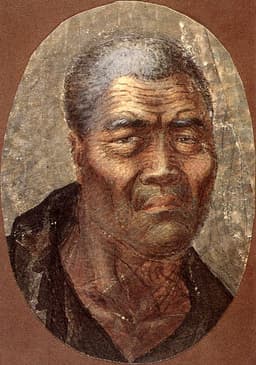
Kamehameha I
Emperor · Modern
59.9Total

Oscar I of Sweden
Emperor · Modern
54.5Total
Basic Information
Born
1758
1799
Died
1819
1859
Era
Modern
Modern
Nationality
Hawaii
Sweden
Occupation
Emperor
Emperor
Civilization
Other
Western
Score Comparison
Military (10%)
60.0
43.3
Political (20%)
59.3
70.0
Influence (20%)
60.0
50.2
Legacy (20%)
49.2
40.0
Leadership (15%)
85.0
78.0
Strategy (15%)
50.0
54.6
TOTAL
59.9
54.5
Kamehameha I — Complete Timeline
1778 AD
Opened Hawaii to foreign tradePolitical Action◆ Major
Following the arrival of Captain James Cook in 1778, Kamehameha I engaged with European explorers and traders. He acquired firearms and ships, which he used to conquer and unify the islands, while also establishing trade relations with the West.
HawaiiTradeEuropean Contact
Impact: regional
1797 AD
Implemented the Law of the Splintered PaddleReform◆ Major
After a near-fatal incident where he was struck by a paddle, Kamehameha I enacted a law protecting civilians during wartime. The law stated that women, children, and the elderly should not be harmed in conflicts, reflecting a humanitarian code.
HawaiiLawHuman Rights
Impact: regionalconstructive
1804 AD
Established the Kingdom of Hawaii's capital at HonoluluPolitical Action◆ Major
Kamehameha I moved his court to Honolulu on O'ahu, establishing it as the political and economic center of the unified Hawaiian Kingdom. This decision shaped Hawaii's development as a central port for trade.
HawaiiCapitalUrbanization
Impact: regionalconstructive
1810 AD
Unified the Hawaiian IslandsWar
Kamehameha I completed the unification of the Hawaiian Islands after a series of battles, including the Battle of Nu'uanu in 1795 and the peaceful cession of Kaua'i in 1810. He established the Kingdom of Hawaii as a single political entity.
HawaiiUnificationKingdom
Impact: regionalconstructive
Oscar I of Sweden — Complete Timeline
1844 AD
Coronation of Oscar IPolitical Action◆ Major
Oscar I was crowned King of Sweden and Norway after the death of his father Charles XIV John. His coronation marked the beginning of a reign focused on liberal reforms and modernization.
CoronationSuccession
Impact: national
1845 AD
Reform of the Swedish Penal CodeReform◆ Major
Oscar I introduced a new penal code that abolished the death penalty for most crimes, reduced the use of corporal punishment, and reformed the prison system. This was part of his broader liberal agenda.
Penal ReformHuman RightsJustice
Impact: nationalprogressive
1846 AD
Introduction of Free Trade PoliciesReform◆ Major
Oscar I implemented free trade reforms, reducing tariffs and abolishing the guild system. These policies stimulated economic growth and industrialization in Sweden.
Free TradeEconomic ReformIndustrialization
Impact: nationalconstructive
1848 AD
First Schleswig War (Swedish Involvement)War
Oscar I sent Swedish troops to support Denmark against Prussian-backed rebels in the First Schleswig War. The intervention was limited and ended with the London Protocol in 1851.
Schleswig-HolsteinWarDenmark
Impact: regional
1850 AD
Reform of the Swedish ParliamentReform◆ Major
Oscar I proposed and implemented reforms to the Riksdag, including the introduction of a more representative system and the abolition of the four-estate parliament. These changes laid the groundwork for modern parliamentary democracy.
Parliamentary ReformDemocracyRiksdag
Impact: nationalprogressive
1859 AD
Death of Oscar IOther
Oscar I died in Stockholm at age 60. His death ended a reign of 15 years marked by liberal reforms, economic modernization, and a shift toward constitutional monarchy.
Death
Impact: national
Expert Analysis
Origins
Kamehameha I was born around 1758 in Kohala, Hawaii, into a royal lineage as the son of Keōua, a chief, and Kekuʻiapoiwa. His birth coincided with the appearance of Halley's Comet, seen as an omen. He was raised in seclusion after a prophecy that he would become a conqueror, then trained in warfare and governance. Oscar I was born on July 4, 1799, in Paris, France, as the son of Jean-Baptiste Bernadotte (later King Charles XIV John of Sweden) and Désirée Clary. He grew up in the Swedish court after his father's adoption by the childless king Charles XIII. Oscar received a military education and served as crown prince, gaining administrative experience.
Rise to Power
Kamehameha rose through the Hawaiian chieftain system. After the death of his uncle Kalaniʻōpuʻu in 1782, he gained control of the districts of Kohala, Kona, and Hāmākua on the Big Island. He allied with British traders to acquire firearms and ships, notably the "Fair American" in 1790. His turning point came in 1795 when he conquered Maui and Oʻahu at the Battle of Nuʻuanu, driving enemies over the cliffs. By 1810, through diplomacy and force, he secured the peaceful cession of Kauaʻi, completing unification. Oscar I ascended to the throne on March 8, 1844, upon his father's death. His rise was smooth, as he had been groomed for kingship. He immediately pursued liberal reforms, inspired by his earlier exposure to European ideas during travels.
Leadership & Governance
Kamehameha I ruled as an absolute monarch but with a focus on stability and law. He enacted the Law of the Splintered Paddle (1797) after a near-fatal incident, protecting civilians during war—a pioneering humanitarian principle. He centralized power by appointing loyal governors, standardizing taxes, and promoting agriculture and trade. He maintained peace through a strong navy and alliances. Oscar I was a constitutional monarch who pushed for parliamentary reform. He abolished the four-estate Riksdag in 1866 (though completed after his death), introduced free trade, and reformed the penal code (1864), ending capital punishment for most crimes. His governance was consultative, relying on ministers. Kamehameha's leadership score of 85.0 reflects his decisive unification, while Oscar's 78.0 reflects his reformist but constrained role.
Triumph & Tragedy
Kamehameha's greatest triumph was unifying the Hawaiian Islands into a single kingdom, ending centuries of internecine warfare. He also preserved Hawaiian independence through diplomacy with foreign powers. His tragedy was the introduction of foreign diseases and reliance on Western weapons, which destabilized later reigns. He died in 1819, just before the arrival of Christian missionaries. Oscar I's triumphs include modernizing Sweden's legal system and economy, boosting industrial growth. He also maintained neutrality in the Crimean War (1853-1856). His tragedy was the limited success in the First Schleswig War (1848-1851), where Swedish intervention failed to secure Danish gains, and his health declined, leading to his death in 1859.
Character & Destiny
Kamehameha was known for his physical strength, strategic cunning, and pragmatism. He learned from Westerners but retained Hawaiian traditions. His character—determined yet merciful—shaped his destiny as unifier. Oscar I was intellectual, liberal, and reform-minded, but his health was poor, limiting his energy. He faced opposition from conservatives but pushed through changes. His character made him a transitional figure, bridging absolute monarchy and constitutional rule.
Legacy
Kamehameha's legacy is the unified Hawaiian Kingdom, which lasted until 1893. He is revered as a national hero, with statues and a state holiday. His laws influenced later Hawaiian governance. Oscar I's legacy includes a modernized Sweden: penal reforms, free trade, and parliamentary evolution. His reign set the stage for Sweden's democratic development. However, his impact is less globally recognized.
Conclusion
Kamehameha I had greater impact due to his foundational role in creating a sovereign nation. His military score of 60.0 and political score of 59.3 are modest, but his leadership (85.0) and legacy (49.2) reflect a transformative effect on Hawaii. Oscar I scored 70.0 politically but his influence (50.2) and legacy (40.0) are lower. While Oscar reformed an existing state, Kamehameha built one from chaos. Thus, Kamehameha's impact is more profound.
Rankings
🥇
Kamehameha ILeader
Mil: 60.0Pol: 59.3Inf: 60.0
59.9
🥈
Oscar I of Sweden
Mil: 43.3Pol: 70.0Inf: 50.2
54.5
+5.4 behind
How This Comparison Works
Algorithm
Each figure is scored on 6 dimensions (0—100 scale) based on structured historical data: Military (10%), Political (20%), Influence (20%), Legacy (20%), Leadership (15%), Strategy (15%). The weighted total produces the final ranking.
Data Sources
Scores are computed from structured sub-indicators in the database. Scale factors adjust for era (Ancient ×0.85, Modern ×1.0) and civilization size (Eastern ×1.05, Other ×0.80) to account for differences in population and military scale.
Maximum 3 Figures
Comparisons are limited to 2—3 figures to ensure readability and statistical meaningfulness.
Error Margins
±5 points per dimension — Sub-scores are derived from historical records with inherent uncertainty. Two figures within 5 points on a dimension should be considered roughly equivalent in that area.
Total Score Accuracy
±3 points overall — The weighted combination of 6 dimensions produces a total score with approximately ±3 points of uncertainty. Differences of less than 3 points are not statistically significant— the figures are effectively tied.
Known Limitations
- Historical records are incomplete and uneven across civilizations
- Figures from oral-tradition societies may be underrepresented
- Occupation labels can misclassify multi-role figures
- Scores measure capability and impact, not moral character
- Quantitative scoring is a comparison tool, not absolute truth
Capability Radar
Military (10%) — Battles & Warfare
Battles
45
5
Win Rate
70
5
Expansion
55
5
Political (20%) — Governance & Reform
Reform
65
70
Diplomacy
60
55
Economy
55
60
Influence (20%) — Cultural & Global Reach
Cultural
55
30
Global
45
20
Legacy (20%) — Historical Impact
Historical
55
30
Longevity
50
20
Leadership (15%) — Power & Stability
Tenure
60
60
Stability
60
65
Strategy (15%) — Tactics & Innovation
Strategy
65
5
Tactics
60
5
Reform
55
10
Similar Comparisons
Comments & Discussion
No comments yet. Be the first to share your thoughts!