Loading...
K. Shanmugam vs Mark Rutte
Mark Rutte leads by 9.2 pts · 2 figures compared
…

K. Shanmugam
Politician · Modern
48.4Total
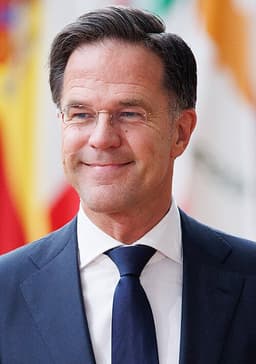
Mark Rutte
Politician · Modern
57.6Total
Basic Information
Born
1959
1967
Died
—
—
Era
Modern
Modern
Nationality
Singapore
Netherlands
Occupation
Politician
Politician
Civilization
Eastern
Western
Score Comparison
Military (10%)
11.7
41.8
Political (20%)
45.0
65.0
Influence (20%)
54.9
57.2
Legacy (20%)
45.8
48.3
Leadership (15%)
78.0
75.0
Strategy (15%)
36.3
60.0
TOTAL
48.4
57.6
K. Shanmugam — Complete Timeline
1988 AD
Elected to Parliament for Sembawang GRCPolitical Action
K. Shanmugam was first elected to Parliament as a Member of Parliament for Sembawang GRC. This marked the beginning of his political career in the People's Action Party.
ElectionParliamentPAP
constructive
2008 AD
Appointed Minister for LawPolitical Action◆ Major
Shanmugam was appointed Minister for Law, overseeing legal reforms and the development of Singapore's legal industry. He has been a key figure in shaping the legal framework.
LawLegal ReformSingapore
Impact: nationalconstructive
2011 AD
Appointed Minister for Foreign AffairsPolitical Action◆ Major
Shanmugam was appointed Minister for Foreign Affairs, serving until 2015. He represented Singapore in international diplomacy, including at the United Nations and ASEAN, and managed relations with key partners.
DiplomacyForeign PolicyASEAN
Impact: regionalconstructive
2015 AD
Appointed Minister for Law and Home AffairsPolitical Action◆ Major
K. Shanmugam was appointed Minister for Law and Home Affairs, overseeing Singapore's legal system and internal security. He has been involved in major legal reforms and counter-terrorism efforts.
LawHome AffairsSecurity
Impact: nationalconstructive
Mark Rutte — Complete Timeline
2006 AD
Elected Leader of the People's Party for Freedom and DemocracyPolitical Action◆ Major
Mark Rutte became the political leader of the VVD, the Dutch liberal-conservative party. He led the party through several election campaigns, eventually becoming prime minister in 2010.
Dutch PoliticsVVDParty Leadership
Impact: nationalconstructive
2010 AD
Became Prime Minister of the NetherlandsPolitical Action
Rutte became Prime Minister of the Netherlands, leading a minority coalition government with support from the Party for Freedom (PVV). His first term focused on austerity measures and immigration reforms.
Dutch PoliticsPrime MinisterCoalition
Impact: nationalconstructive
2020 AD
Led Netherlands Through COVID-19 PandemicPolitical Action◆ Major
Rutte oversaw the Dutch response to COVID-19, including lockdowns, vaccination campaigns, and economic support measures. His government faced criticism over the slow start of vaccinations and handling of the second wave.
COVID-19Dutch PoliticsPublic Health
Impact: national
2021 AD
Survived No-Confidence Vote Over Childcare Benefits ScandalPolitical Action◆ Major
Rutte's government faced a no-confidence vote after a parliamentary inquiry revealed that tax authorities falsely accused thousands of parents of fraud in childcare benefits. The scandal led to the resignation of his cabinet, though Rutte remained as caretaker prime minister.
Dutch PoliticsScandalChildcare Benefits
Impact: nationaldestructive
2023 AD
Announced Retirement from PoliticsPolitical Action◆ Major
Rutte announced he would leave politics after the 2023 general election, ending his 13-year tenure as prime minister. He cited the need for new leadership and the end of his political career.
Dutch PoliticsRetirementEnd of Era
Impact: national
Expert Analysis
Origins
K. Shanmugam was born in 1959 in Singapore, the son of a lawyer. He studied law at the National University of Singapore and later at Harvard Law School, becoming a Senior Counsel. His early career in law and academia shaped his meticulous, rule-based approach.
Mark Rutte was born in 1967 in The Hague, Netherlands, into a middle-class family. He studied history at Utrecht University and worked for Unilever before entering politics. His background in business and history gave him a pragmatic, consensus-driven style.
Rise to Power
Shanmugam entered politics in 1988, elected as a Member of Parliament for Sembawang GRC under the People's Action Party (PAP). He quickly rose through ministerial ranks, becoming Minister for Law and Home Affairs in 2008, a position he held for over a decade. His rise was steady, supported by the PAP's dominance.
Rutte became leader of the VVD in 2006 and led his party to victory in the 2010 general election. He became Prime Minister in October 2010, heading a minority coalition. His survival through multiple crises, including the childcare benefits scandal, demonstrated his political agility. He served four terms, retiring in 2023 after 13 years.
Leadership & Governance
Shanmugam's leadership is characterized by strict adherence to law and order. He oversaw the Internal Security Act, used to detain individuals for security reasons, and led legal reforms to maintain Singapore's status as a global legal hub. His approach is top-down, prioritizing stability over dissent. He scored 78.0 in leadership, reflecting his decisive but controversial style.
Rutte's leadership is pragmatic and coalition-based. He managed diverse partners, from the PVV to D66, and navigated the COVID-19 pandemic with lockdowns and economic support. He scored 75.0 in leadership, slightly lower than Shanmugam, but his political score of 65.0 outpaces Shanmugam's 45.0 due to his longevity and electoral success. Rutte's governance is more decentralized, relying on compromise.
Triumph & Tragedy
Shanmugam's triumphs include strengthening Singapore's legal framework and internal security. He was instrumental in the development of the Singapore International Commercial Court, boosting legal exports. His tragedy lies in criticism over human rights, particularly the use of the death penalty and restrictions on civil liberties. His influence score of 54.9 reflects Singapore's small size limiting global impact.
Rutte's triumphs include leading the Netherlands through economic recovery after 2008 and the COVID-19 pandemic. He also survived the childcare benefits scandal, a major political crisis. His tragedy is the scandal itself, which led to thousands of families being wrongly accused of fraud, damaging trust. His legacy score of 48.3 is modest, as his tenure is seen as managerial rather than transformative.
Character & Destiny
Shanmugam is analytical and methodical, traits from his legal background. He is known for his sharp debating skills in Parliament. His destiny is tied to Singapore's stability; he has been a loyal party man, never challenging for top leadership. His strategic score of 36.3 suggests a focus on execution over grand strategy.
Rutte is affable and resilient, often described as "Teflon" for surviving scandals. He is a pragmatist, adapting to political realities. His destiny was to be a long-serving but not deeply transformative leader. His strategic score of 60.0 reflects his ability to navigate complex coalitions.
Legacy
Shanmugam's legacy is as a key architect of Singapore's legal system and internal security apparatus. His reforms have lasting impact on Singapore's global legal hub status. However, his influence is largely confined to Singapore, with a global influence score of 54.9.
Rutte's legacy is as the Netherlands' longest-serving prime minister, but with mixed reviews. He stabilized the country through crises but failed to address systemic issues like housing and immigration. His legacy score of 48.3 is similar to Shanmugam's 45.8, but his political and influence scores are higher due to his international role, including in the EU.
Conclusion
Mark Rutte had greater impact based on total score (57.6 vs 48.4). His longer tenure as Prime Minister of a major European nation and his role in EU politics give him broader influence. Shanmugam's impact is significant but more localized. While Shanmugam excels in leadership (78.0 vs 75.0), Rutte's political maneuvering (65.0 vs 45.0) and strategic thinking (60.0 vs 36.3) tip the scales. Thus, Rutte emerges as the more impactful figure.
Rankings
🥇
Mark RutteLeader
Mil: 41.8Pol: 65.0Inf: 57.2
57.6
🥈
K. Shanmugam
Mil: 11.7Pol: 45.0Inf: 54.9
48.4
+9.2 behind
How This Comparison Works
Algorithm
Each figure is scored on 6 dimensions (0—100 scale) based on structured historical data: Military (10%), Political (20%), Influence (20%), Legacy (20%), Leadership (15%), Strategy (15%). The weighted total produces the final ranking.
Data Sources
Scores are computed from structured sub-indicators in the database. Scale factors adjust for era (Ancient ×0.85, Modern ×1.0) and civilization size (Eastern ×1.05, Other ×0.80) to account for differences in population and military scale.
Maximum 3 Figures
Comparisons are limited to 2—3 figures to ensure readability and statistical meaningfulness.
Error Margins
±5 points per dimension — Sub-scores are derived from historical records with inherent uncertainty. Two figures within 5 points on a dimension should be considered roughly equivalent in that area.
Total Score Accuracy
±3 points overall — The weighted combination of 6 dimensions produces a total score with approximately ±3 points of uncertainty. Differences of less than 3 points are not statistically significant— the figures are effectively tied.
Known Limitations
- Historical records are incomplete and uneven across civilizations
- Figures from oral-tradition societies may be underrepresented
- Occupation labels can misclassify multi-role figures
- Scores measure capability and impact, not moral character
- Quantitative scoring is a comparison tool, not absolute truth
Capability Radar
Military (10%) — Battles & Warfare
Battles
14
46
Win Rate
20
50
Expansion
19
53
Political (20%) — Governance & Reform
Reform
65
60
Diplomacy
60
75
Economy
55
70
Influence (20%) — Cultural & Global Reach
Cultural
30
30
Global
40
55
Legacy (20%) — Historical Impact
Historical
40
50
Longevity
35
40
Leadership (15%) — Power & Stability
Tenure
70
85
Stability
75
80
Strategy (15%) — Tactics & Innovation
Strategy
22
59
Tactics
24
59
Reform
31
61
Similar Comparisons
Comments & Discussion
No comments yet. Be the first to share your thoughts!