Loading...
David Lange vs Mark Rutte
David Lange leads by 0.6 pts · 2 figures compared
…

David Lange
Politician · Modern
58.2Total
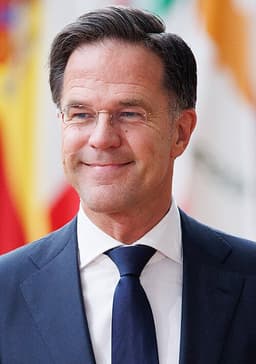
Mark Rutte
Politician · Modern
57.6Total
Basic Information
Born
1942
1967
Died
—
—
Era
Modern
Modern
Nationality
New Zealand
Netherlands
Occupation
Politician
Politician
Civilization
Western
Western
Score Comparison
Military (10%)
49.6
41.8
Political (20%)
72.0
65.0
Influence (20%)
58.3
57.2
Legacy (20%)
52.0
48.3
Leadership (15%)
72.0
75.0
Strategy (15%)
40.6
60.0
TOTAL
58.2
57.6
David Lange — Complete Timeline
1984 AD
Became Prime Minister of New ZealandPolitical Action◆ Major
David Lange became Prime Minister after the Labour Party won the 1984 general election. His government inherited an economic crisis and implemented radical free-market reforms known as Rogernomics, while also pursuing a strong anti-nuclear foreign policy.
ElectionGovernment FormationEconomic Reform
Impact: national
Declared New Zealand Nuclear-FreePolitical Action
Lange's government declared New Zealand a nuclear-free zone, banning nuclear-powered or nuclear-armed ships from entering its waters. This policy led to a major rift with the United States and the suspension of ANZUS treaty obligations.
Anti-NuclearForeign PolicyANZUS
Impact: regionalconstructive
1985 AD
Rainbow Warrior Bombing ResponsePolitical Action◆ Major
After French intelligence agents bombed the Greenpeace ship Rainbow Warrior in Auckland harbour, Lange's government condemned the act and pursued diplomatic and legal action against France. The incident strained New Zealand-France relations and led to international arbitration.
Diplomatic IncidentFranceGreenpeace
Impact: global
1989 AD
Resigned as Prime MinisterPolitical Action◆ Major
David Lange resigned as Prime Minister due to declining health and internal party conflicts over economic policy. His resignation marked the end of a transformative but divisive period in New Zealand politics.
ResignationPolitical Career
Impact: national
Mark Rutte — Complete Timeline
2006 AD
Elected Leader of the People's Party for Freedom and DemocracyPolitical Action◆ Major
Mark Rutte became the political leader of the VVD, the Dutch liberal-conservative party. He led the party through several election campaigns, eventually becoming prime minister in 2010.
Dutch PoliticsVVDParty Leadership
Impact: nationalconstructive
2010 AD
Became Prime Minister of the NetherlandsPolitical Action
Rutte became Prime Minister of the Netherlands, leading a minority coalition government with support from the Party for Freedom (PVV). His first term focused on austerity measures and immigration reforms.
Dutch PoliticsPrime MinisterCoalition
Impact: nationalconstructive
2020 AD
Led Netherlands Through COVID-19 PandemicPolitical Action◆ Major
Rutte oversaw the Dutch response to COVID-19, including lockdowns, vaccination campaigns, and economic support measures. His government faced criticism over the slow start of vaccinations and handling of the second wave.
COVID-19Dutch PoliticsPublic Health
Impact: national
2021 AD
Survived No-Confidence Vote Over Childcare Benefits ScandalPolitical Action◆ Major
Rutte's government faced a no-confidence vote after a parliamentary inquiry revealed that tax authorities falsely accused thousands of parents of fraud in childcare benefits. The scandal led to the resignation of his cabinet, though Rutte remained as caretaker prime minister.
Dutch PoliticsScandalChildcare Benefits
Impact: nationaldestructive
2023 AD
Announced Retirement from PoliticsPolitical Action◆ Major
Rutte announced he would leave politics after the 2023 general election, ending his 13-year tenure as prime minister. He cited the need for new leadership and the end of his political career.
Dutch PoliticsRetirementEnd of Era
Impact: national
Expert Analysis
Origins
David Lange was born in 1942 in Otahuhu, New Zealand, into a working-class family. He studied law at the University of Auckland and became a lawyer specializing in social justice cases. His early career included representing unions and indigent clients, shaping his left-wing politics. He entered Parliament in 1977 as a Labour MP.
Mark Rutte was born in 1966 in The Hague, Netherlands, into a middle-class family. He studied history at Utrecht University and worked as a human resources manager at Unilever. His political career began as a member of the youth wing of the People's Party for Freedom and Democracy (VVD). He became an MP in 2003.
Rise to Power
Lange rose rapidly through Labour's ranks, becoming party leader in 1983. He led Labour to victory in the 1984 snap election, capitalizing on public discontent with the National government's handling of an economic crisis. His key ally was Finance Minister Roger Douglas, who implemented radical neoliberal reforms.
Rutte became VVD leader in 2006 after the party's poor election results. He served as State Secretary for Education and later as Minister for Social Affairs. In 2010, he formed a minority coalition with the Christian Democrats, supported by Geert Wilders' Party for Freedom. Rutte's pragmatic coalition-building skills were crucial.
Leadership & Governance
Lange's leadership was defined by his anti-nuclear policy. In 1985, his government declared New Zealand nuclear-free, banning nuclear-powered or armed ships. This caused a rift with the United States and led to the suspension of ANZUS obligations. Domestically, his government implemented Rogernomics—deregulation, privatization, and tax reform—which caused internal party conflict. Lange scored 72.0 in political leadership, reflecting his principled stance, but 40.6 in strategy due to the division within his party.
Rutte, scoring 75.0 in leadership, was a master of consensus-building. He led four coalition governments over 13 years. His governance focused on fiscal conservatism, labor market reform, and EU integration. During the COVID-19 pandemic, he adopted a 'intelligent lockdown' approach, balancing health and economy. However, the childcare benefits scandal—where tax authorities falsely accused thousands of parents of fraud—damaged his government's credibility. Rutte survived a no-confidence vote but acknowledged systemic failures.
Triumph & Tragedy
Lange's greatest triumph was the nuclear-free policy, which became a defining feature of New Zealand's identity and foreign policy. He also managed the Rainbow Warrior crisis in 1985 after French agents bombed the Greenpeace ship in Auckland; Lange's diplomatic response forced France to apologize and pay reparations. His tragedy was the economic restructuring: while it stabilized the economy, it led to high unemployment and inequality, splitting the Labour Party. His resignation in 1989, driven by health issues and conflict with Douglas, marked a premature end.
Rutte's triumph was his longevity: he became the Netherlands' longest-serving prime minister, steering the country through the Eurozone crisis and the pandemic. He also played a key role in EU summits, often acting as a bridge between northern and southern states. His tragedy was the childcare benefits scandal, which forced his government to resign in 2021, though he remained as caretaker. The scandal exposed bureaucratic failures and eroded public trust. He scored 48.3 in legacy, reflecting mixed long-term impact.
Character & Destiny
Lange was charismatic and principled, often using wit to disarm critics. His anti-nuclear stance was deeply personal, rooted in moral conviction. This determination shaped his destiny: it made him a global icon for peace but also limited New Zealand's alliance options. His indecisiveness on economic policy, however, led to internal strife and his early resignation.
Rutte was pragmatic and resilient, known for his ability to survive crises. His calm demeanor and negotiating skills allowed him to lead fragile coalitions. However, his tendency to avoid confrontation sometimes led to policy drift and scandals festering. His character enabled him to stay in power long, but his legacy is more about stability than transformation.
Legacy
Lange's nuclear-free policy remains enshrined in New Zealand law and continues to influence its foreign policy. He is remembered as a principled leader who stood up to superpowers. His economic reforms, however, are controversial: they modernized the economy but increased inequality. Internationally, he is a symbol of anti-nuclear activism. His total score of 58.2 reflects a significant but mixed impact.
Rutte's legacy is that of a steady hand: he provided political stability during turbulent times. His neoliberal policies shaped Dutch labor and social security systems. However, the childcare benefits scandal and housing crisis tarnish his record. He is likely to be seen as a competent manager rather than a transformative leader. His total score of 57.6 is close to Lange's.
Conclusion
David Lange had a greater impact per year in office, with a defining moral stance that reshaped New Zealand's identity and influenced global anti-nuclear movements. Mark Rutte's longevity and management skills are impressive, but his legacy lacks a similar transformative moment. Lange scored 58.2 overall, slightly above Rutte's 57.6, but his influence in foreign policy and international perception is more distinct. While Rutte's leadership score is higher (75.0 vs 72.0), Lange's political courage and enduring symbol of peace give him the edge in historical significance.
Rankings
🥇
David LangeLeader
Mil: 49.6Pol: 72.0Inf: 58.3
58.2
🥈
Mark Rutte
Mil: 41.8Pol: 65.0Inf: 57.2
57.6
+0.6 behind
How This Comparison Works
Algorithm
Each figure is scored on 6 dimensions (0—100 scale) based on structured historical data: Military (10%), Political (20%), Influence (20%), Legacy (20%), Leadership (15%), Strategy (15%). The weighted total produces the final ranking.
Data Sources
Scores are computed from structured sub-indicators in the database. Scale factors adjust for era (Ancient ×0.85, Modern ×1.0) and civilization size (Eastern ×1.05, Other ×0.80) to account for differences in population and military scale.
Maximum 3 Figures
Comparisons are limited to 2—3 figures to ensure readability and statistical meaningfulness.
Error Margins
±5 points per dimension — Sub-scores are derived from historical records with inherent uncertainty. Two figures within 5 points on a dimension should be considered roughly equivalent in that area.
Total Score Accuracy
±3 points overall — The weighted combination of 6 dimensions produces a total score with approximately ±3 points of uncertainty. Differences of less than 3 points are not statistically significant— the figures are effectively tied.
Known Limitations
- Historical records are incomplete and uneven across civilizations
- Figures from oral-tradition societies may be underrepresented
- Occupation labels can misclassify multi-role figures
- Scores measure capability and impact, not moral character
- Quantitative scoring is a comparison tool, not absolute truth
Capability Radar
Military (10%) — Battles & Warfare
Battles
30
46
Win Rate
33
50
Expansion
33
53
Political (20%) — Governance & Reform
Reform
65
60
Diplomacy
70
75
Economy
55
70
Influence (20%) — Cultural & Global Reach
Cultural
55
30
Global
55
55
Legacy (20%) — Historical Impact
Historical
60
50
Longevity
50
40
Leadership (15%) — Power & Stability
Tenure
60
85
Stability
60
80
Strategy (15%) — Tactics & Innovation
Strategy
36
59
Tactics
39
59
Reform
42
61
Similar Comparisons
Comments & Discussion
No comments yet. Be the first to share your thoughts!