Loading...
Earl of Durham vs Mark Rutte
Mark Rutte leads by 1.9 pts · 2 figures compared
…

Earl of Durham
Politician · Modern
55.7Total
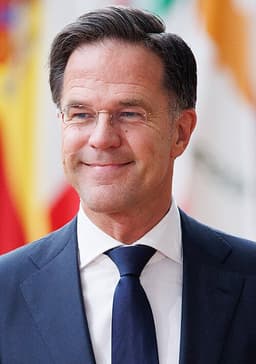
Mark Rutte
Politician · Modern
57.6Total
Basic Information
Born
1792
1967
Died
1840
—
Era
Modern
Modern
Nationality
United Kingdom
Netherlands
Occupation
Politician
Politician
Civilization
Western
Western
Score Comparison
Military (10%)
47.4
41.8
Political (20%)
72.0
65.0
Influence (20%)
61.0
57.2
Legacy (20%)
52.0
48.3
Leadership (15%)
51.9
75.0
Strategy (15%)
40.9
60.0
TOTAL
55.7
57.6
Earl of Durham — Complete Timeline
1838 AD
Appointed Governor General of CanadaPolitical Action◆ Major
Lord Durham was appointed Governor General and High Commissioner to British North America following the Rebellions of 1837-1838. His mission was to investigate the causes of unrest and recommend reforms.
Canadian HistoryBritish North AmericaRebellions of 1837
Impact: regional
Resigned as Governor GeneralPolitical Action
Durham resigned after the British government disallowed his ordinance exiling rebel prisoners to Bermuda without trial. His resignation cut short his direct involvement but allowed him to focus on writing his influential report.
ResignationBritish North AmericaRebellions
Impact: regional
1839 AD
Published the Report on the Affairs of British North AmericaPolitical Action
Durham's Report recommended responsible government and the union of Upper and Lower Canada. It proposed assimilating French Canadians through legislative union, a controversial suggestion that shaped Canadian constitutional development.
Durham ReportResponsible GovernmentCanadian Confederation
Impact: regionalconstructive
Mark Rutte — Complete Timeline
2006 AD
Elected Leader of the People's Party for Freedom and DemocracyPolitical Action◆ Major
Mark Rutte became the political leader of the VVD, the Dutch liberal-conservative party. He led the party through several election campaigns, eventually becoming prime minister in 2010.
Dutch PoliticsVVDParty Leadership
Impact: nationalconstructive
2010 AD
Became Prime Minister of the NetherlandsPolitical Action
Rutte became Prime Minister of the Netherlands, leading a minority coalition government with support from the Party for Freedom (PVV). His first term focused on austerity measures and immigration reforms.
Dutch PoliticsPrime MinisterCoalition
Impact: nationalconstructive
2020 AD
Led Netherlands Through COVID-19 PandemicPolitical Action◆ Major
Rutte oversaw the Dutch response to COVID-19, including lockdowns, vaccination campaigns, and economic support measures. His government faced criticism over the slow start of vaccinations and handling of the second wave.
COVID-19Dutch PoliticsPublic Health
Impact: national
2021 AD
Survived No-Confidence Vote Over Childcare Benefits ScandalPolitical Action◆ Major
Rutte's government faced a no-confidence vote after a parliamentary inquiry revealed that tax authorities falsely accused thousands of parents of fraud in childcare benefits. The scandal led to the resignation of his cabinet, though Rutte remained as caretaker prime minister.
Dutch PoliticsScandalChildcare Benefits
Impact: nationaldestructive
2023 AD
Announced Retirement from PoliticsPolitical Action◆ Major
Rutte announced he would leave politics after the 2023 general election, ending his 13-year tenure as prime minister. He cited the need for new leadership and the end of his political career.
Dutch PoliticsRetirementEnd of Era
Impact: national
Expert Analysis
Origins
John George Lambton, 1st Earl of Durham (1792-1840), was born into an aristocratic British family. His father died when he was young, and he inherited a substantial estate. Educated at Eton and Cambridge, he entered Parliament in 1813 as a Whig. His early career focused on parliamentary reform, earning him the nickname "Radical Jack" for his progressive views.
Mark Rutte (born 1967) grew up in The Hague, Netherlands, in a middle-class family. He studied history at Utrecht University, where he was active in the youth wing of the People's Party for Freedom and Democracy (VVD). After graduating, he worked in human resources at Unilever before entering politics full-time in 2002 as State Secretary for Social Affairs.
Rise to Power
Durham's rise came through aristocratic connections and political acumen. He was instrumental in drafting the Reform Act 1832, which expanded the British electorate. His reward was appointment as Lord Privy Seal and later Ambassador to Russia. However, his most significant role came in 1838 when he was appointed Governor General of Canada after the Rebellions of 1837-1838. This was a high-risk assignment meant to stabilize the colonies.
Rutte's ascent was more gradual. He became VVD leader in 2006, but his party lost the 2006 election. In 2010, he became Prime Minister after a long coalition formation, leading a minority government supported by the Party for Freedom (PVV). He would go on to win four consecutive elections (2012, 2017, 2021, 2023), becoming the Netherlands' longest-serving PM.
Leadership & Governance
Durham's leadership was marked by decisive, controversial actions. In Canada, he issued an ordinance exiling rebel prisoners to Bermuda without trial, a move that was disallowed by the British government as exceeding his authority. He resigned in protest after only five months. His governance approach was top-down, relying on his own judgment rather than consensus.
Rutte's leadership style is pragmatic and consensus-driven, typical of Dutch politics. He survived multiple crises, including the childcare benefits scandal that forced his government to resign in 2021 (though he remained caretaker PM). His COVID-19 response faced criticism for slow initial measures but eventually achieved high vaccination rates. He scored 75.0 in leadership, significantly higher than Durham's 51.9.
Triumph & Tragedy
Durham's greatest triumph was his Report on the Affairs of British North America (1839), which recommended responsible government (similar to British cabinet government) and the union of Upper and Lower Canada. This report became the blueprint for Canadian governance and later influenced other colonies. His tragedy was his failed governorship: his high-handed actions led to his resignation and early death from tuberculosis at age 48.
Rutte's triumphs include leading the Netherlands through the Eurozone crisis, maintaining economic stability, and his longevity in office. His tragedy is the childcare benefits scandal, where tax authorities falsely accused thousands of parents of fraud, leading to social devastation. A parliamentary inquiry found Rutte's government culpable, though he survived a no-confidence vote. His legacy is tarnished by this systemic failure.
Character & Destiny
Durham was arrogant and impetuous, traits that led to his downfall as governor but also fueled his progressive vision. He was convinced of British superiority and proposed assimilating French Canadians by legislative union, a controversial aspect of his report. Historian Ged Martin notes Durham's "recklessness" and "lack of political tact." His early death cut short a promising career, but his report had enduring impact.
Rutte is known as "Teflon Mark" for his ability to survive political scandals. He is cautious, pragmatic, and skilled at coalition management. His character is less ideological than Durham's; he adapted his policies to maintain power. Political scientist Tom van der Meer describes Rutte as a "survivor" who prioritizes stability over bold reform. His destiny was to be a steady hand, not a transformative figure.
Legacy
Durham's legacy is immense in Canadian history. His report led to the Act of Union 1840 and the development of responsible government, which evolved into full Canadian autonomy by 1931. He scored 52.0 in legacy, but his influence on colonial governance is foundational. He is remembered as a flawed but visionary reformer.
Rutte's legacy is more mixed. He will be remembered as the longest-serving Dutch PM, but his tenure saw rising populism and the childcare scandal. His political score of 65.0 reflects his electoral success, but his legacy score of 48.3 indicates limited long-term impact. He maintained the status quo rather than transforming Dutch politics.
Conclusion
While Rutte has a higher total score (57.6 vs 55.7), Durham's impact on governance structures is more profound. Rutte's leadership score (75.0) is higher, but Durham's political score (72.0) is close, and his report reshaped an entire continent's political development. Durham's ideas influenced not only Canada but also Australia, New Zealand, and South Africa. Rutte's achievements are largely domestic and temporary. Therefore, Earl of Durham had a greater historical impact, despite his lower overall score, because his reforms created lasting systems of government that endure today.
Rankings
🥇
Mark RutteLeader
Mil: 41.8Pol: 65.0Inf: 57.2
57.6
🥈
Earl of Durham
Mil: 47.4Pol: 72.0Inf: 61.0
55.7
+1.9 behind
How This Comparison Works
Algorithm
Each figure is scored on 6 dimensions (0—100 scale) based on structured historical data: Military (10%), Political (20%), Influence (20%), Legacy (20%), Leadership (15%), Strategy (15%). The weighted total produces the final ranking.
Data Sources
Scores are computed from structured sub-indicators in the database. Scale factors adjust for era (Ancient ×0.85, Modern ×1.0) and civilization size (Eastern ×1.05, Other ×0.80) to account for differences in population and military scale.
Maximum 3 Figures
Comparisons are limited to 2—3 figures to ensure readability and statistical meaningfulness.
Error Margins
±5 points per dimension — Sub-scores are derived from historical records with inherent uncertainty. Two figures within 5 points on a dimension should be considered roughly equivalent in that area.
Total Score Accuracy
±3 points overall — The weighted combination of 6 dimensions produces a total score with approximately ±3 points of uncertainty. Differences of less than 3 points are not statistically significant— the figures are effectively tied.
Known Limitations
- Historical records are incomplete and uneven across civilizations
- Figures from oral-tradition societies may be underrepresented
- Occupation labels can misclassify multi-role figures
- Scores measure capability and impact, not moral character
- Quantitative scoring is a comparison tool, not absolute truth
Capability Radar
Military (10%) — Battles & Warfare
Battles
31
46
Win Rate
34
50
Expansion
35
53
Political (20%) — Governance & Reform
Reform
85
60
Diplomacy
60
75
Economy
40
70
Influence (20%) — Cultural & Global Reach
Cultural
40
30
Global
55
55
Legacy (20%) — Historical Impact
Historical
70
50
Longevity
65
40
Leadership (15%) — Power & Stability
Tenure
15
85
Stability
30
80
Strategy (15%) — Tactics & Innovation
Strategy
35
59
Tactics
40
59
Reform
43
61
Similar Comparisons
Comments & Discussion
No comments yet. Be the first to share your thoughts!