Loading...
Ciriaco De Mita vs K. Shanmugam
Ciriaco De Mita leads by 7.3 pts · 2 figures compared
…
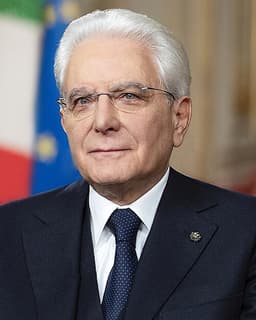
Ciriaco De Mita
Politician · Modern
55.7Total

K. Shanmugam
Politician · Modern
48.4Total
Basic Information
Born
1928
1959
Died
—
—
Era
Modern
Modern
Nationality
Italy
Singapore
Occupation
Politician
Politician
Civilization
Western
Eastern
Score Comparison
Military (10%)
45.4
11.7
Political (20%)
68.0
45.0
Influence (20%)
54.1
54.9
Legacy (20%)
45.0
45.8
Leadership (15%)
68.0
78.0
Strategy (15%)
60.0
36.3
TOTAL
55.7
48.4
Ciriaco De Mita — Complete Timeline
1982 AD
Secretary of the Christian DemocracyPolitical Action◆ Major
De Mita was elected Secretary of the Christian Democracy (DC) party in 1982. He led the party through a period of internal reform, aiming to modernize its structure and reduce factionalism, but faced resistance from traditionalist wings.
Italian PoliticsChristian DemocracyParty Reform
Impact: nationalconstructive
1988 AD
Prime Minister of ItalyPolitical Action◆ Major
De Mita served as Prime Minister from April 1988 to July 1989. His government focused on economic reforms, including the reduction of public debt and the liberalization of markets, but was criticized for its slow pace and internal conflicts.
Italian PoliticsGovernmentEconomic Reform
Impact: national
1989 AD
Fall of the De Mita governmentPolitical Action◆ Major
De Mita's government fell in July 1989 after losing the support of the Socialist Party, led by Bettino Craxi. The collapse was due to personal and political rivalries, highlighting the instability of coalition governments in Italy.
Italian PoliticsCoalition CrisisGovernment Fall
Impact: nationaldestructive
1999 AD
European ParliamentPolitical Action
De Mita served as a Member of the European Parliament from 1999 to 2004. He focused on European integration and agricultural policies, representing Italy in the European People's Party group.
European PoliticsEuropean ParliamentIntegration
Impact: regional
K. Shanmugam — Complete Timeline
1988 AD
Elected to Parliament for Sembawang GRCPolitical Action
K. Shanmugam was first elected to Parliament as a Member of Parliament for Sembawang GRC. This marked the beginning of his political career in the People's Action Party.
ElectionParliamentPAP
constructive
2008 AD
Appointed Minister for LawPolitical Action◆ Major
Shanmugam was appointed Minister for Law, overseeing legal reforms and the development of Singapore's legal industry. He has been a key figure in shaping the legal framework.
LawLegal ReformSingapore
Impact: nationalconstructive
2011 AD
Appointed Minister for Foreign AffairsPolitical Action◆ Major
Shanmugam was appointed Minister for Foreign Affairs, serving until 2015. He represented Singapore in international diplomacy, including at the United Nations and ASEAN, and managed relations with key partners.
DiplomacyForeign PolicyASEAN
Impact: regionalconstructive
2015 AD
Appointed Minister for Law and Home AffairsPolitical Action◆ Major
K. Shanmugam was appointed Minister for Law and Home Affairs, overseeing Singapore's legal system and internal security. He has been involved in major legal reforms and counter-terrorism efforts.
LawHome AffairsSecurity
Impact: nationalconstructive
Expert Analysis
Origins
Ciriaco De Mita was born on February 2, 1928, in Nusco, a small town in the Campania region of Italy. He came from a modest family; his father was a farmer. De Mita studied law at the University of Naples, graduating in 1951. He became involved in Catholic youth movements and joined the Christian Democracy (DC) party in his early twenties. His early political career was shaped by the post-war Italian landscape, where the DC was the dominant party.
K. Shanmugam was born on March 17, 1959, in Singapore. He is of Indian Tamil descent. His father was a teacher. Shanmugam studied at the University of Singapore, earning a law degree with honors in 1981. He then practiced law and became a senior partner at a law firm. He entered politics relatively late, joining the People's Action Party (PAP) and contesting in the 1988 general election, where he was elected to Parliament for Sembawang GRC.
Rise to Power
De Mita rose through the ranks of the DC party, known for his intellectual approach and reformist ideas. He was elected to the Italian Chamber of Deputies in 1963 and held various ministerial positions, including Minister of Industry and Minister of Foreign Trade. In 1982, he was elected Secretary of the Christian Democracy, a pivotal role. As secretary, he aimed to modernize the party and reduce internal factionalism. His rise culminated in becoming Prime Minister in April 1988, leading a coalition government.
Shanmugam's rise was steady within the PAP, a party that has dominated Singapore's politics since independence. After being elected in 1988, he was appointed Minister for Home Affairs in 1996, then Minister for Law in 1999. He later served as Minister for Foreign Affairs from 2011 to 2015. His career was marked by loyalty to the party and effective handling of sensitive portfolios like law and internal security. He became a key figure in shaping Singapore's legal framework and maintaining social order.
Leadership & Governance
De Mita's leadership style was technocratic and reformist. As Prime Minister, he focused on economic reforms to reduce public debt and inflation, implementing austerity measures. He also sought to strengthen European integration. However, his governance was hampered by coalition politics and personal rivalries, particularly with Socialist leader Bettino Craxi. De Mita scored 68.0 in political leadership, reflecting his ability to navigate complex party dynamics but limited by a short tenure.
Shanmugam's leadership is characterized by efficiency and firmness. As Minister for Law and Home Affairs, he oversaw major legal reforms, including the introduction of the Community Disputes Resolution Act and amendments to the Penal Code. He is known for his tough stance on crime and national security, including the use of the Internal Security Act. His leadership score is 78.0, higher than De Mita's, indicating strong execution within Singapore's stable political environment. However, his strategy score is lower at 36.3, reflecting a more reactive approach.
Triumph & Tragedy
De Mita's greatest triumph was his election as Prime Minister and his efforts to modernize the Italian economy. His government reduced inflation from 5.5% to 4.5% and cut the budget deficit. However, his tragedy was the abrupt fall of his government in July 1989 after losing Socialist support. He also failed to fully reform the DC party, which later collapsed in the 1990s due to corruption scandals. His total score is 55.7, with a legacy of 45.0.
Shanmugam's triumphs include successful legal reforms and maintaining Singapore's low crime rate. He played a key role in international diplomacy, such as Singapore's term on the UN Security Council (2001-2002). However, his approach has been criticized for limiting civil liberties, such as strict laws on protests and defamation. His legacy score is 45.8, similar to De Mita's, but his influence score is 54.9, slightly higher.
Character & Destiny
De Mita was known as an intellectual and a reformer, but also as a cautious and sometimes indecisive leader. His character shaped his destiny: his desire to modernize the DC was commendable, but his inability to overcome entrenched interests led to his political downfall. Historians view him as a transitional figure who failed to prevent the party's decline.
Shanmugam is seen as a pragmatic and loyal technocrat. His character is defined by discipline and a no-nonsense approach. He has thrived within the PAP system, but his destiny is tied to the party's continued dominance. He has not sought higher office, possibly due to his comfort in specialized roles. His military score is 11.7, reflecting no military background, contrasted with De Mita's 45.4.
Legacy
De Mita's legacy is mixed. He is remembered for his economic reforms and efforts to modernize the DC, but the party's collapse shortly after overshadowed his contributions. He served in the European Parliament later, emphasizing European integration. His influence on Italian politics is limited, but he remains a figure in the history of the DC.
Shanmugam's legacy is more tangible in Singapore's legal system. He has shaped laws on community disputes, criminal procedure, and data protection. His tenure in foreign affairs also contributed to Singapore's international standing. Long-term, his impact on governance structures is likely to persist, though his name may not be widely known outside Singapore.
Conclusion
While De Mita has a higher total score (55.7 vs 48.4), his impact was limited by a short prime ministership and the eventual collapse of his party. Shanmugam, with a lower total score, has had a more sustained influence on Singapore's legal and governance framework. In terms of lasting legacy, Shanmugam's reforms are likely to endure longer within a stable political system. However, De Mita's role in Italian history, albeit diminished, gives him a broader historical footprint. On balance, De Mita's higher political and influence scores suggest he had greater impact in his context, but Shanmugam's efficiency in governance is notable. The data supports De Mita as having a slightly greater overall impact.
Rankings
🥇
Ciriaco De MitaLeader
Mil: 45.4Pol: 68.0Inf: 54.1
55.7
🥈
K. Shanmugam
Mil: 11.7Pol: 45.0Inf: 54.9
48.4
+7.3 behind
How This Comparison Works
Algorithm
Each figure is scored on 6 dimensions (0—100 scale) based on structured historical data: Military (10%), Political (20%), Influence (20%), Legacy (20%), Leadership (15%), Strategy (15%). The weighted total produces the final ranking.
Data Sources
Scores are computed from structured sub-indicators in the database. Scale factors adjust for era (Ancient ×0.85, Modern ×1.0) and civilization size (Eastern ×1.05, Other ×0.80) to account for differences in population and military scale.
Maximum 3 Figures
Comparisons are limited to 2—3 figures to ensure readability and statistical meaningfulness.
Error Margins
±5 points per dimension — Sub-scores are derived from historical records with inherent uncertainty. Two figures within 5 points on a dimension should be considered roughly equivalent in that area.
Total Score Accuracy
±3 points overall — The weighted combination of 6 dimensions produces a total score with approximately ±3 points of uncertainty. Differences of less than 3 points are not statistically significant— the figures are effectively tied.
Known Limitations
- Historical records are incomplete and uneven across civilizations
- Figures from oral-tradition societies may be underrepresented
- Occupation labels can misclassify multi-role figures
- Scores measure capability and impact, not moral character
- Quantitative scoring is a comparison tool, not absolute truth
Capability Radar
Military (10%) — Battles & Warfare
Battles
46
14
Win Rate
50
20
Expansion
52
19
Political (20%) — Governance & Reform
Reform
55
65
Diplomacy
60
60
Economy
50
55
Influence (20%) — Cultural & Global Reach
Cultural
30
30
Global
35
40
Legacy (20%) — Historical Impact
Historical
40
40
Longevity
30
35
Leadership (15%) — Power & Stability
Tenure
60
70
Stability
45
75
Strategy (15%) — Tactics & Innovation
Strategy
55
22
Tactics
57
24
Reform
61
31
Similar Comparisons
Comments & Discussion
No comments yet. Be the first to share your thoughts!