Loading...
This comparison has not been analyzed yet.
One-time AI generation (~1 minute). Scores and timeline are already available below.
K. M. Cariappa vs Turenne
Turenne leads by 19.0 pts · 2 figures compared
…

K. M. Cariappa
General · Modern
56.8Total
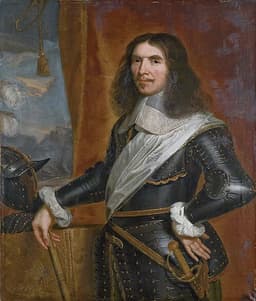
Turenne
General · Modern
75.8Total
Basic Information
Born
1899
1611
Died
1993
1675
Era
Modern
Modern
Nationality
India
France
Occupation
General
General
Civilization
Indian
Western
Score Comparison
Military (10%)
38.3
79.9
Political (20%)
68.0
72.0
Influence (20%)
55.0
88.0
Legacy (20%)
50.0
65.0
Leadership (15%)
70.0
77.2
Strategy (15%)
60.0
72.0
TOTAL
56.8
75.8
K. M. Cariappa — Complete Timeline
1945 AD
Awarded Order of the British Empire (OBE)Cultural
Cariappa was awarded the Order of the British Empire (OBE) for his services during World War II. He served in the Burma Campaign and other theaters, commanding troops.
AwardWorld War IIMilitary
Impact: national
1947 AD
Led Indian Forces in the 1947-48 Kashmir WarWar◆ Major
As a senior commander, Cariappa played a key role in the military operations during the first Indo-Pakistani war over Kashmir. He coordinated Indian forces to repel tribal invaders and secure the state's accession to India.
Kashmir WarMilitary Operations1947
Impact: regional
1949 AD
Appointed First Indian Commander-in-Chief of Indian ArmyPolitical Action◆ Major
K. M. Cariappa was appointed as the first Indian Commander-in-Chief of the Indian Army, succeeding General Sir Roy Bucher. This marked the Indianization of the army's top leadership after independence.
ArmyIndianizationLeadership
Impact: nationalconstructive
1953 AD
Served as High Commissioner to AustraliaPolitical Action
After retiring from the army, Cariappa served as India's High Commissioner to Australia. He focused on diplomatic relations and trade, representing India in the Commonwealth.
DiplomacyHigh CommissionerAustralia
Impact: national
Turenne — Complete Timeline
1639 AD
Campaign in the ValtellinaWar
Turenne commanded French forces in the Valtellina during the Thirty Years' War. He captured several fortresses and secured the strategic pass for France, demonstrating his early military skill.
Thirty Years' WarAlpsEarly Career
Impact: regional
1658 AD
Battle of the DunesWar◆ Major
Turenne commanded the French army to victory over the Spanish at the Battle of the Dunes near Dunkirk. The victory led to the capture of Dunkirk and forced Spain to seek peace, ending the Franco-Spanish War.
Franco-Spanish WarDunkirkMilitary Victory
Impact: regional
1674 AD
Battle of the RhineWar◆ Major
Turenne led a French army across the Rhine in winter, surprising the Imperial forces. He defeated the Austrians at the Battle of Entzheim and later at Turckheim, securing French control of Alsace.
Franco-Dutch WarAlsaceWinter Campaign
Impact: regional
Battle of the SambreWar◆ Major
Turenne defeated the Spanish and Dutch forces at the Battle of Seneffe. The battle was costly but prevented the Allies from invading France. It demonstrated Turenne's tactical skill in defensive warfare.
Franco-Dutch WarDefensive BattleTactics
Impact: regional
1675 AD
Death of TurenneWar◆ Major
Turenne was killed by a cannonball while reconnoitering enemy positions at the Battle of Sasbach. His death was a major loss for France. He was buried with honors in the Basilica of Saint-Denis.
Death in BattleFranco-Dutch WarMilitary Loss
Impact: nationaltragic
This comparison has not been analyzed yet.
One-time AI generation (~1 minute). Scores and timeline are already available below.
Rankings
🥇
TurenneLeader
Mil: 79.9Pol: 72.0Inf: 88.0
75.8
🥈
K. M. Cariappa
Mil: 38.3Pol: 68.0Inf: 55.0
56.8
+19.0 behind
How This Comparison Works
Algorithm
Each figure is scored on 6 dimensions (0—100 scale) based on structured historical data: Military (10%), Political (20%), Influence (20%), Legacy (20%), Leadership (15%), Strategy (15%). The weighted total produces the final ranking.
Data Sources
Scores are computed from structured sub-indicators in the database. Scale factors adjust for era (Ancient ×0.85, Modern ×1.0) and civilization size (Eastern ×1.05, Other ×0.80) to account for differences in population and military scale.
Maximum 3 Figures
Comparisons are limited to 2—3 figures to ensure readability and statistical meaningfulness.
Error Margins
±5 points per dimension — Sub-scores are derived from historical records with inherent uncertainty. Two figures within 5 points on a dimension should be considered roughly equivalent in that area.
Total Score Accuracy
±3 points overall — The weighted combination of 6 dimensions produces a total score with approximately ±3 points of uncertainty. Differences of less than 3 points are not statistically significant— the figures are effectively tied.
Known Limitations
- Historical records are incomplete and uneven across civilizations
- Figures from oral-tradition societies may be underrepresented
- Occupation labels can misclassify multi-role figures
- Scores measure capability and impact, not moral character
- Quantitative scoring is a comparison tool, not absolute truth
Capability Radar
Military (10%) — Battles & Warfare
Battles
30
85
Win Rate
40
88
Expansion
20
80
Political (20%) — Governance & Reform
Reform
50
60
Diplomacy
50
75
Economy
30
55
Influence (20%) — Cultural & Global Reach
Cultural
40
65
Global
45
70
Legacy (20%) — Historical Impact
Historical
55
80
Longevity
40
75
Leadership (15%) — Power & Stability
Tenure
55
70
Stability
60
65
Strategy (15%) — Tactics & Innovation
Strategy
40
92
Tactics
35
90
Reform
60
75
Similar Comparisons
Comments & Discussion
No comments yet. Be the first to share your thoughts!