Loading...
Julius Maada Bio vs Shi Dakai
Shi Dakai leads by 8.4 pts · 2 figures compared
…
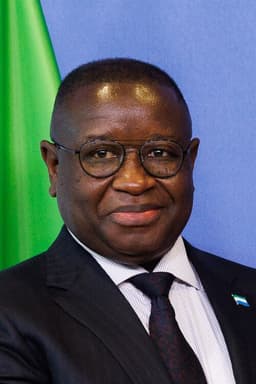
Julius Maada Bio
General · Modern
51.2Total
Shi Dakai
General · Modern
59.6Total
Basic Information
Born
1964
1831
Died
—
1863
Era
Modern
Modern
Nationality
Sierra Leone
China
Occupation
General
General
Civilization
Other
Eastern
Score Comparison
Military (10%)
50.0
76.0
Political (20%)
45.0
45.0
Influence (20%)
53.3
56.7
Legacy (20%)
45.0
54.0
Leadership (15%)
70.0
72.0
Strategy (15%)
43.7
68.1
TOTAL
51.2
59.6
Julius Maada Bio — Complete Timeline
1992 AD
1992 Sierra Leonean coup d'étatPolitical Action◆ Major
Julius Maada Bio was a member of the National Provisional Ruling Council (NPRC) that overthrew President Joseph Momoh in a military coup. Bio served as a key figure in the junta, which promised to end the civil war but faced criticism for human rights abuses.
CoupSierra LeoneCivil War
Impact: nationaldestructive
1996 AD
Brief tenure as head of statePolitical Action◆ Major
Bio led a palace coup within the NPRC in January 1996, becoming head of state. He oversaw the transition to civilian rule, handing over power to Ahmad Tejan Kabbah after elections in March 1996, a move that earned him praise for restoring democracy.
TransitionDemocracyCoup
Impact: nationalconstructive
2018 AD
Election as President of Sierra LeonePolitical Action◆ Major
Bio won the 2018 Sierra Leonean presidential election as the candidate of the Sierra Leone People's Party, defeating Samura Kamara in a runoff. His victory marked a return to power for the SLPP after a decade in opposition.
ElectionSierra LeonePresidency
Impact: nationalconstructive
2023 AD
Re-election amid economic challengesPolitical Action◆ Major
Bio was re-elected in 2023 with 56.6% of the vote, but the election was disputed by the opposition. His second term has been marked by economic difficulties, including high inflation and debt, as well as allegations of authoritarianism.
ElectionSierra LeoneEconomy
Impact: national
Shi Dakai — Complete Timeline
1851 AD
Jintian UprisingWar◆ Major
Shi Dakai joined the Taiping Rebellion at its inception in Jintian, Guangxi. As a core leader, he helped organize the rebel forces and was appointed Wing King, becoming one of the key military commanders of the Taiping Heavenly Kingdom.
Taiping RebellionUprisingMilitary Command
Impact: national
1854 AD
Battle of XiangtanWar◆ Major
Shi Dakai led Taiping forces to a major victory at Xiangtan, Hunan, defeating Qing imperial troops. This battle secured Taiping control over key territories in the Yangtze River valley and demonstrated his military skill.
Taiping RebellionBattleVictory
Impact: regional
1856 AD
Tianjing IncidentPolitical Action
Shi Dakai returned to Tianjing (Nanjing) after the internal purge of the Eastern King Yang Xiuqing and the murder of the Northern King Wei Changhui. He condemned the violence and was forced to flee, leading to a split in Taiping leadership.
Taiping RebellionInternal ConflictPurge
Impact: nationaltragic
1858 AD
Campaign in Zhejiang and FujianWar
Shi Dakai led a separate Taiping army into Zhejiang and Fujian provinces, capturing several cities. This campaign expanded Taiping influence into southeastern China but also isolated his forces from the main Taiping base.
Taiping RebellionCampaignExpansion
Impact: regional
1863 AD
Battle of Baishui RiverWar◆ Major
Shi Dakai's army was trapped and defeated by Qing forces at the Baishui River in Sichuan. He was captured and executed shortly after, marking the end of his military career and a significant loss for the Taiping cause.
Taiping RebellionBattleDefeatDeath
Impact: nationaltragic
Expert Analysis
Shi Dakai vs Julius Maada Bio
# The Rebel and the Reformer
On a spring morning in 1863, a thirty-two-year-old general knelt by the Baishui River in Sichuan, China, awaiting execution. His name was Shi Dakai, and he had been the most brilliant commander of the Taiping Heavenly Kingdom, a rebellion that had nearly toppled the Qing dynasty. A century and a half later, on a humid night in Freetown, Sierra Leone, another general—Julius Maada Bio—strode into State House not as a conqueror but as a democrat, having won an election. One died by the sword; the other lives to wield the ballot. What separates these two soldiers, both born into eras of upheaval, is not merely time or geography, but the fundamental choice between rebellion and governance.
Origins
Shi Dakai was born in 1831 into a wealthy Hakka family in Guangxi, southern China. The Qing dynasty was crumbling: opium wars, peasant uprisings, and foreign incursions had shattered imperial prestige. Shi received a classical Confucian education, but the times bred discontent. When Hong Xiuquan, a failed scholar who claimed to be the brother of Jesus Christ, launched the Taiping Rebellion in 1851, Shi joined at the Jintian Uprising. He was barely twenty, but his military talent was immediate.
Julius Maada Bio was born in 1964 in a small village in southern Sierra Leone, then a decade into independence from British rule. His country was poor, ethnically divided, and plagued by corruption. Bio joined the army as a young man, and by the 1990s, Sierra Leone had collapsed into a brutal civil war fueled by diamonds and warlords. Unlike Shi, Bio did not fight for a heavenly kingdom; he fought for survival in a failed state.
The difference in their origins is stark: Shi was born into a civilization in decline, Bio into a nation in chaos. One sought to tear down an empire, the other to rebuild a country.
Rise to Power
Shi Dakai’s rise was meteoric. By 1854, at the Battle of Xiangtan, he crushed Qing forces with a combination of speed and tactical cunning, securing the Taiping’s western flank. His reputation as the “Wing King” spread—he was the rebellion’s most reliable general. But the Taiping were not a nation; they were a movement, riven by messianic dogma and personal ambition.
Bio’s rise was more cynical. In 1992, he was part of the National Provisional Ruling Council that overthrew President Joseph Momoh. Power came through a coup—a common path in post-colonial Africa. Yet Bio surprised everyone: in 1996, after a palace coup made him head of state, he did not cling to power. Instead, he oversaw elections, handed over to a civilian government, and stepped aside. It was a rare act of restraint.
Shi rose through battlefield victories; Bio rose through barracks politics. One earned loyalty through blood, the other through calculation.
Leadership & Governance
Shi Dakai was a military genius but a political naïf. In 1856, the Tianjing Incident—an internal purge that killed the Eastern King Yang Xiuqing and thousands—shattered the Taiping leadership. Shi returned to the capital to restore order, but he was horrified by the bloodshed. He tried to mediate, failed, and eventually left to lead his own army. He never built institutions, only armies. His governance was war.
Bio, by contrast, learned the art of politics. After losing the 2007 presidential election, he waited, built his party, and won in 2018. As president, he faced collapsing infrastructure, an Ebola outbreak, and economic crisis. He did not declare martial law; he passed budgets, negotiated with the IMF, and stood for re-election in 2023—winning again, though amid disputed results. Bio governed not from a palace coup but from a parliament.
Shi ruled by the sword; Bio rules by the ballot. One commanded armies, the other commands ministries.
Triumph & Tragedy
Shi Dakai’s greatest triumph was his 1858 campaign in Zhejiang and Fujian, where he captured cities and evaded Qing armies with masterful maneuvers. But his tragedy was the Baishui River in 1863. Trapped, his army exhausted, he surrendered to spare his men—only to be executed by slow slicing. His death was a martyrdom for a failed cause.
Bio’s triumph was the 2018 election, a peaceful transfer of power in a country scarred by war. His tragedy is less dramatic but more persistent: the economy remains broken, corruption lingers, and his re-election in 2023 was marred by opposition boycotts. He wins elections, but he cannot win the peace.
Shi died in defeat; Bio lives in compromise. One’s tragedy is final, the other’s is ongoing.
Character & Destiny
Shi was honorable but rigid. He believed in loyalty, but in a movement that devoured its own, loyalty was fatal. He could not compromise with the Qing, nor could he reform the Taiping. His personality—proud, principled, inflexible—led him to a riverbank execution.
Bio is pragmatic and patient. He staged a coup, then stepped down. He lost an election, then won. He governs not with ideology but with survival instinct. His personality—flexible, calculating, resilient—has kept him alive and in power.
Shi’s character was that of a knight; Bio’s is that of a politician. One died for a cause; the other lives to manage a country.
Legacy
Shi Dakai is remembered as a tragic hero in Chinese history—a brilliant general whose cause was doomed. His legacy is romanticized in folklore, but his failure is a cautionary tale: military genius cannot substitute for political wisdom. His score of 71.4 reflects a man who excelled at war but could not build peace.
Julius Maada Bio’s legacy is unfinished. He is a former coup leader turned democrat, and his country’s future hangs in the balance. His score of 64.7 is lower, but it measures not a completed life but a work in progress. If he stabilizes Sierra Leone, he may be remembered as a founder; if not, as another soldier who failed to become a statesman.
Conclusion
Shi Dakai and Julius Maada Bio are separated by 130 years and half a world, yet they share a common question: what does a soldier do when the war ends? Shi never found an answer—he fought until the river swallowed him. Bio found an answer, but it is still being tested. One died with his sword in hand; the other lives with his hand on a pen. In the end, the difference between them is the difference between rebellion and governance—between a man who would rather die for his cause and a man who would rather live to manage its consequences. History, perhaps, judges the rebel more kindly, but it is the reformer who must endure the long, slow work of peace.
Rankings
🥇
Shi DakaiLeader
Mil: 76.0Pol: 45.0Inf: 56.7
59.6
🥈
Julius Maada Bio
Mil: 50.0Pol: 45.0Inf: 53.3
51.2
+8.4 behind
How This Comparison Works
Algorithm
Each figure is scored on 6 dimensions (0—100 scale) based on structured historical data: Military (10%), Political (20%), Influence (20%), Legacy (20%), Leadership (15%), Strategy (15%). The weighted total produces the final ranking.
Data Sources
Scores are computed from structured sub-indicators in the database. Scale factors adjust for era (Ancient ×0.85, Modern ×1.0) and civilization size (Eastern ×1.05, Other ×0.80) to account for differences in population and military scale.
Maximum 3 Figures
Comparisons are limited to 2—3 figures to ensure readability and statistical meaningfulness.
Error Margins
±5 points per dimension — Sub-scores are derived from historical records with inherent uncertainty. Two figures within 5 points on a dimension should be considered roughly equivalent in that area.
Total Score Accuracy
±3 points overall — The weighted combination of 6 dimensions produces a total score with approximately ±3 points of uncertainty. Differences of less than 3 points are not statistically significant— the figures are effectively tied.
Known Limitations
- Historical records are incomplete and uneven across civilizations
- Figures from oral-tradition societies may be underrepresented
- Occupation labels can misclassify multi-role figures
- Scores measure capability and impact, not moral character
- Quantitative scoring is a comparison tool, not absolute truth
Capability Radar
Military (10%) — Battles & Warfare
Battles
15
75
Win Rate
20
70
Expansion
5
75
Political (20%) — Governance & Reform
Reform
50
50
Diplomacy
55
45
Economy
45
40
Influence (20%) — Cultural & Global Reach
Cultural
30
55
Global
20
40
Legacy (20%) — Historical Impact
Historical
35
60
Longevity
25
45
Leadership (15%) — Power & Stability
Tenure
55
55
Stability
40
35
Strategy (15%) — Tactics & Innovation
Strategy
20
80
Tactics
25
85
Reform
10
60
Similar Comparisons
Comments & Discussion
IronChainsaw6/16/2026
As a military historian, I’ve got to side with Shi Dakai here. Maada Bio’s claim to fame is winning an election after staging a coup—that’s like showing up to a knife fight with a soggy napkin. Shi Dakai outmaneuvered the Qing at the Battle of Yidu, crossing a river under fire with 40,000 men. A tactical genius who died for his cause. Bio just swapped a uniform for a suit. Give me the rebel who actually fought over the politician who plays it safe.
数据屠夫6/16/2026
我是数据怀疑论者:别拿这两人硬比。1850年代中国人口约4.3亿,太平天国死了2000万;而塞拉利昂1990年代人口才400万。你拿Shi Dakai的战绩套在Maada Bio身上就是个数字游戏。Shi指挥过60万人的战役,Bio的“政变”就几百号人。背景不同,规则不同,比个屁?纯属标题党。
LuteAndScroll6/16/2026
As a classics scholar, I see Shi Dakai as a tragic hero straight out of Plutarch. He composed poetry on the battlefield—wrote "The mountains and rivers remain, but the kingdom has changed" before his execution. That’s a man who knew his fate was sealed by hubris and history. Maada Bio? He’s a modern pragmatist, all about election tricks and donor speeches. Shi died for a vision; Bio lives for a term. No contest in moral weight.
四海历史迷6/16/2026
从历史迷视角看,Shi Dakai和Maada Bio都是乱世中的棋子,但前者是孤注一掷的创造者,后者是制度内的投机者。Shi在1862年血战湘军,亲自断后救部下,那份兄弟情义至今在四川民间被传唱;而Bio在1996年主动交权却换了养老金。一个为了信仰赴死,一个为了生存投降——我选那个真刀真枪的疯子。
RevisionistRage6/16/2026
You revisionist critics are missing the point—Maada Bio is a master of survival, not a failure. Shi Dakai’s “brilliance” ended in a mass execution of his army. Bio’s coup in 1996 led to democratic elections he later won. That’s strategic genius in a post-colonial world. Shi was a doomed romantic; Bio is a cold-eyed realist who knows power is about adaptability, not glory. Call him boring, but he’s still alive and in charge. I’ll take the survivor over the martyr.