Loading...
Julius Maada Bio vs Louis Botha
Louis Botha leads by 9.9 pts · 2 figures compared
…
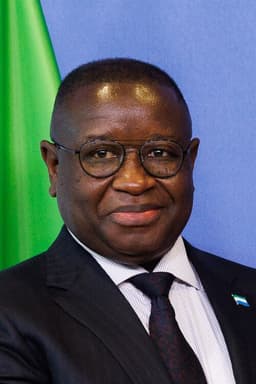
Julius Maada Bio
General · Modern
51.2Total
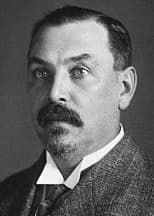
Louis Botha
General · Modern
61.1Total
Basic Information
Born
1964
1862
Died
—
1919
Era
Modern
Modern
Nationality
Sierra Leone
South Africa
Occupation
General
General
Civilization
Other
Other
Score Comparison
Military (10%)
50.0
61.7
Political (20%)
45.0
70.0
Influence (20%)
53.3
56.7
Legacy (20%)
45.0
50.0
Leadership (15%)
70.0
79.8
Strategy (15%)
43.7
58.0
TOTAL
51.2
61.1
Julius Maada Bio — Complete Timeline
1992 AD
1992 Sierra Leonean coup d'étatPolitical Action◆ Major
Julius Maada Bio was a member of the National Provisional Ruling Council (NPRC) that overthrew President Joseph Momoh in a military coup. Bio served as a key figure in the junta, which promised to end the civil war but faced criticism for human rights abuses.
CoupSierra LeoneCivil War
Impact: nationaldestructive
1996 AD
Brief tenure as head of statePolitical Action◆ Major
Bio led a palace coup within the NPRC in January 1996, becoming head of state. He oversaw the transition to civilian rule, handing over power to Ahmad Tejan Kabbah after elections in March 1996, a move that earned him praise for restoring democracy.
TransitionDemocracyCoup
Impact: nationalconstructive
2018 AD
Election as President of Sierra LeonePolitical Action◆ Major
Bio won the 2018 Sierra Leonean presidential election as the candidate of the Sierra Leone People's Party, defeating Samura Kamara in a runoff. His victory marked a return to power for the SLPP after a decade in opposition.
ElectionSierra LeonePresidency
Impact: nationalconstructive
2023 AD
Re-election amid economic challengesPolitical Action◆ Major
Bio was re-elected in 2023 with 56.6% of the vote, but the election was disputed by the opposition. His second term has been marked by economic difficulties, including high inflation and debt, as well as allegations of authoritarianism.
ElectionSierra LeoneEconomy
Impact: national
Louis Botha — Complete Timeline
1899 AD
Battle of ColensoWar◆ Major
Botha commanded Boer forces at the Battle of Colenso during the Second Boer War. His troops repelled a British attack under General Buller, inflicting heavy casualties and boosting Boer morale.
Second Boer WarBattleVictory
Impact: regional
1900 AD
Boer War Guerrilla CommanderWar◆ Major
After the British captured Pretoria, Botha led Boer guerrilla forces in the Transvaal. He conducted hit-and-run attacks against British columns, prolonging the war and becoming a symbol of Afrikaner resistance.
Second Boer WarGuerrillaResistance
Impact: regional
1902 AD
Signed the Treaty of VereenigingPolitical Action
Botha, as a leading Boer general, signed the Treaty of Vereeniging which ended the Second Boer War. The treaty granted the Boer republics self-government under British sovereignty and promised eventual self-rule.
TreatyPeaceSecond Boer War
Impact: regional
1910 AD
First Prime Minister of the Union of South AfricaPolitical Action
Botha became the first Prime Minister of the newly formed Union of South Africa. He led a coalition government that sought to reconcile Afrikaners and English-speaking whites, while implementing segregationist policies.
Prime MinisterUnion of South AfricaFounding
Impact: nationalconstructive
1914 AD
Suppressed the 1914 RebellionWar◆ Major
Botha personally led government forces to suppress the Maritz Rebellion, an Afrikaner uprising against South Africa's entry into World War I. He defeated the rebels, asserting state authority and maintaining support for the British Empire.
RebellionWorld War ISuppression
Impact: national
1915 AD
Conquered German South West AfricaWar◆ Major
Botha commanded South African forces in the invasion and conquest of German South West Africa. The campaign succeeded, and the territory was later administered by South Africa under a League of Nations mandate.
World War IConquestGerman South West Africa
Impact: regional
Expert Analysis
Louis Botha vs Julius Maada Bio
### The General Who Became a Nation Builder
In the winter of 1914, two men stood at opposite ends of a continent’s fate. One, Louis Botha, a former Boer guerrilla commander, now Prime Minister of the Union of South Africa, ordered his troops to fire on fellow Afrikaners who had risen in rebellion. The other, a young soldier named Julius Maada Bio, was still a child in Sierra Leone, unaware that his own path would mirror Botha’s in its arc from military power to democratic leadership—though with a far different ending. Both men were generals who became politicians, but their journeys reveal how era, circumstance, and character can turn similar roles into vastly different legacies.
### Origins
Louis Botha was born in 1862 on a farm in the Natal colony, the son of Voortrekker parents who had fled British rule. The frontier shaped him: a world of vast horizons, stubborn independence, and a deep distrust of imperial authority. When the British annexed the Transvaal in 1877, Botha was fifteen—old enough to remember the humiliation, young enough to carry it as fuel. By the time the Second Boer War erupted in 1899, he was a natural leader among the Boer commandos, a man who could read a landscape like a map and inspire men who owned no master.
Julius Maada Bio was born in 1964 in a small village in southern Sierra Leone, into a country on the edge of chaos. The post-independence dream had soured into corruption, coups, and civil war. Bio grew up in a world where the gun was the ultimate argument. He joined the Sierra Leone Army as a young man, not out of ideology but because it offered a path forward in a broken state. By 1992, at age twenty-eight, he was part of a group of junior officers who overthrew President Joseph Momoh, promising to end a brutal civil war. The difference between Botha and Bio was not ambition—both had it—but the worlds they were born into. Botha’s was a struggle between two white nations for control of a land; Bio’s was a struggle for the soul of a failed state.
### Rise to Power
Botha’s rise came through war. At the Battle of Colenso in December 1899, he commanded Boer forces that repelled a British assault with devastating firepower. The victory made him a legend. When the British captured Pretoria in 1900, Botha refused to surrender. Instead, he led a guerrilla campaign across the Transvaal, striking supply lines and vanishing into the veld. He became the face of Boer resistance, a symbol of defiance that outlasted the war itself. When peace came in 1902, Botha signed the Treaty of Vereeniging, accepting British sovereignty but preserving Afrikaner identity. He had fought the empire; now he would negotiate with it.
Bio’s rise was faster and more violent. In 1992, he was part of the National Provisional Ruling Council that seized power. Within four years, he staged a palace coup, becoming head of state in January 1996. Unlike Botha, who had earned his authority through years of war, Bio inherited a country bleeding from civil war. His tenure lasted only months, but he made a fateful choice: he handed power to an elected civilian government, becoming the first military ruler in Sierra Leone’s history to do so voluntarily. Botha rose through war; Bio rose through a coup. But where Botha’s path led to a seat at the peace table, Bio’s led to a gamble on democracy.
### Leadership & Governance
As Prime Minister from 1910, Botha faced an impossible task. He had to unite British loyalists and bitter Afrikaners, English and Dutch speakers, miners and farmers, into a single nation. He did so with a pragmatism that bordered on ruthlessness. He suppressed the 1914 Maritz Rebellion—Afrikaners who opposed South Africa’s entry into World War I on Britain’s side—by personally leading government forces against them. He then conquered German South West Africa in 1915, expanding South Africa’s territory while proving his loyalty to the empire. His leadership was a balancing act: conciliatory to the British, hard to his own people. He was a nation builder, but the nation he built was one of white supremacy, where black South Africans had no vote.
Bio’s governance is a study in patience. After leaving power in 1996, he waited twenty-two years to return. He ran for president in 2012 and lost; he ran again in 2018 and won, defeating an incumbent with a platform of education reform and anti-corruption. As president, he has faced economic collapse, the aftermath of Ebola, and a deeply polarized society. His military background is a shadow, not a weapon. He has not suppressed rebellions or conquered territories; he has negotiated loans, opened schools, and weathered disputed elections. In 2023, he won re-election with 56.6% of the vote, but the opposition cried fraud. Unlike Botha, who could command armies to enforce his will, Bio must rely on the fragile machinery of democracy.
### Triumph & Tragedy
Botha’s greatest triumph was the creation of the Union of South Africa in 1910, a political feat that required him to be both a Boer hero and a British ally. His tragedy was the same: the union he built excluded the majority, laying the groundwork for apartheid. His personal tragedy came in 1919, when he died of heart failure at just fifty-six, leaving a divided legacy.
Bio’s triumph is more modest but perhaps more profound: he handed over power once, and then won it back democratically. His tragedy is the weight of expectation. Sierra Leone remains one of the poorest countries on earth, and Bio’s second term has been marked by economic hardship and political tension. He is a general who chose the ballot box over the barracks, but the ballot box has not yet delivered the prosperity his people need.
### Character & Destiny
Botha was a man of iron will and pragmatic vision. He could fight a guerrilla war and then shake hands with the enemy. He was a soldier who understood that victory in battle meant nothing without victory in politics. His destiny was to forge a nation, but the nation he forged was flawed from birth.
Bio is a man of calculation and patience. He seized power, gave it away, and then waited decades to win it back. He is a general who learned that the gun can win a battle but not a country. His destiny is still unfolding, but it is a story of second chances—a rare thing in African politics.
### Legacy
Botha is remembered as the father of South Africa, but also as a figure who helped entrench white rule. His statue stands in Pretoria, a reminder of a past that is both honored and contested. Bio is less known globally, but in Sierra Leone, he is a symbol of the possibility that a soldier can become a democrat. His legacy is not yet written; it will depend on whether his second term brings stability or collapse.
### Conclusion
Botha and Bio are mirror images across a century. Both were generals who became politicians, but the worlds they shaped—and were shaped by—could not be more different. Botha built a nation on the backs of a majority he excluded; Bio inherited a nation broken by war and is trying to rebuild it with votes. One used war to create peace; the other used peace to escape war. Their stories remind us that leadership is never abstract—it is always a response to the specific burdens of time and place. And in the end, the measure of a general is not how many battles he wins, but what kind of peace he leaves behind.
Rankings
🥇
Louis BothaLeader
Mil: 61.7Pol: 70.0Inf: 56.7
61.1
🥈
Julius Maada Bio
Mil: 50.0Pol: 45.0Inf: 53.3
51.2
+9.9 behind
How This Comparison Works
Algorithm
Each figure is scored on 6 dimensions (0—100 scale) based on structured historical data: Military (10%), Political (20%), Influence (20%), Legacy (20%), Leadership (15%), Strategy (15%). The weighted total produces the final ranking.
Data Sources
Scores are computed from structured sub-indicators in the database. Scale factors adjust for era (Ancient ×0.85, Modern ×1.0) and civilization size (Eastern ×1.05, Other ×0.80) to account for differences in population and military scale.
Maximum 3 Figures
Comparisons are limited to 2—3 figures to ensure readability and statistical meaningfulness.
Error Margins
±5 points per dimension — Sub-scores are derived from historical records with inherent uncertainty. Two figures within 5 points on a dimension should be considered roughly equivalent in that area.
Total Score Accuracy
±3 points overall — The weighted combination of 6 dimensions produces a total score with approximately ±3 points of uncertainty. Differences of less than 3 points are not statistically significant— the figures are effectively tied.
Known Limitations
- Historical records are incomplete and uneven across civilizations
- Figures from oral-tradition societies may be underrepresented
- Occupation labels can misclassify multi-role figures
- Scores measure capability and impact, not moral character
- Quantitative scoring is a comparison tool, not absolute truth
Capability Radar
Military (10%) — Battles & Warfare
Battles
15
65
Win Rate
20
70
Expansion
5
60
Political (20%) — Governance & Reform
Reform
50
65
Diplomacy
55
70
Economy
45
55
Influence (20%) — Cultural & Global Reach
Cultural
30
45
Global
20
50
Legacy (20%) — Historical Impact
Historical
35
55
Longevity
25
40
Leadership (15%) — Power & Stability
Tenure
55
60
Stability
40
50
Strategy (15%) — Tactics & Innovation
Strategy
20
72
Tactics
25
68
Reform
10
55
Similar Comparisons
Comments & Discussion
平行历史匠6/16/2026
所谓“相同的军事转政治轨迹”纯属选择性失明。Botha打的是兄弟内斗——1914年镇压同胞叛军,流了布尔人的血换英式和平;Bio是在塞拉利昂内战里摸爬滚打,1996年主动交权给民选政府,2007年才卷土重来。一个为秩序开枪,一个为民主让步。你说谁更勇敢?答案不是你觉得,是历史档案说了算。|
BOER BOTHAMIST6/16/2026
Louis Botha is the real deal—a guerrilla who crushed his own people's rebellion to build a nation. That 1914 Rand Rebellion move? Pure statesman. Maada Bio? A coup-monger who played both sides in Sierra Leone's civil war, then waffled into presidency. Botha fought to unify; Bio fought for survival. History picks winners, and Botha's legacy has steel.|
数据炮手6/16/2026
拿两个相隔百年的将军比?分析全是空洞叙事,没硬数据啊。Botha对阵英军时指挥过多少战役?Bio的政变成功率是多少?1996年Bio短暂执政,GDP增长-0.2%,而Botha主政时南非GDP年均增长5%以上。数字不会撒谎——一个建设者,一个过客。下次别拿诗歌当历史讲。|
CLASSICS SCEPTIC6/16/2026
Spare me the "arc from military to democratic leadership" cliché. Botha didn't become a democrat—he became a white supremacist premier who denied blacks the vote. Bio, for all his faults, actually ran a free election in 2018. The comparison reeks of romanticizing colonial-era strongmen. Give me a modern flawed democrat over a 1910s Boer autocrat any day.|
FARMER'S GHOST6/16/2026
Botha didn't just read landscapes—he lived them. At Spion Kop in 1900, he outmaneuvered Buller's British force with just 8,000 Boers against 30,000 redcoats, using the kopjes like chess pieces. Bio's military record? He led the NPRC junta for five minutes in 1996, then fled to Nigeria. Don't conflate a guerrilla genius with a accidental coup plotter. Different leagues, simple as that.|
农庄铁砧6/16/2026
你们光谈政治,忘了他俩谁真会打仗。Botha在1902年维伦耶河战役以1700人击退英军万人,负伤不下火线,硬撑到和谈。Bio呢?1992年参与政变上台,1996年自己政变推翻自己,转了一圈又回来竞选。军事素养?一个是在马上打天下,一个是在政客椅上梦天下。差距不止百年。|