Loading...
Juan Carlos I of Spain vs Sobhuza II
Juan Carlos I of Spain leads by 4.0 pts · 2 figures compared
…
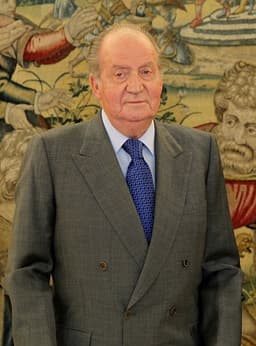
Juan Carlos I of Spain
Emperor · Modern
57.1Total

Sobhuza II
Emperor · Modern
53.1Total
Basic Information
Born
1938
1899
Died
—
1982
Era
Modern
Modern
Nationality
Spain
Swaziland
Occupation
Emperor
Emperor
Civilization
Western
Other
Score Comparison
Military (10%)
27.1
20.5
Political (20%)
75.0
55.0
Influence (20%)
55.0
56.4
Legacy (20%)
52.0
54.0
Leadership (15%)
72.0
80.7
Strategy (15%)
56.0
31.3
TOTAL
57.1
53.1
Juan Carlos I of Spain — Complete Timeline
1969 AD
Appointment as Franco's successorPolitical Action
Francisco Franco designated Juan Carlos as his successor, with the title of Prince of Spain. This decision was made to ensure the continuation of the regime after Franco's death, but Juan Carlos secretly worked to transition Spain to democracy.
SuccessionFrancoTransition
Impact: national
1975 AD
Proclamation as King of SpainPolitical Action
Juan Carlos I was proclaimed king two days after Franco's death. He inherited a dictatorial regime but quickly moved to dismantle it, initiating a process of political reform that would lead to democracy.
ProclamationMonarchyReform
Impact: nationalconstructive
1977 AD
Legalization of political partiesReform◆ Major
Under Juan Carlos I's guidance, the Spanish government legalized political parties, including the Communist Party. This was a key step in the transition to democracy, allowing for free elections and the establishment of a pluralistic political system.
DemocracyPolitical ReformLegalization
Impact: nationalprogressive
1978 AD
Approval of the 1978 ConstitutionReform
Juan Carlos I oversaw the drafting and approval of a new democratic constitution. The constitution established a parliamentary monarchy, guaranteed civil rights, and decentralized the state through autonomous communities, ending the Francoist centralization.
ConstitutionDemocracyDecentralization
Impact: nationalconstructive
1981 AD
Role in thwarting the 1981 coup attemptPolitical Action
During an attempted military coup, Juan Carlos I went on national television to denounce the coup and order the military to remain loyal to the democratic government. His decisive action helped defeat the coup and consolidate Spanish democracy.
CoupDemocracyLeadership
Impact: nationalconstructive
2014 AD
Abdication in favor of Felipe VIPolitical Action◆ Major
Juan Carlos I abdicated the throne, citing personal reasons and a desire to rejuvenate the monarchy. His abdication followed a series of scandals that had damaged the monarchy's reputation, and he handed over the crown to his son Felipe VI.
AbdicationSuccessionFelipe VI
Impact: national
Sobhuza II — Complete Timeline
1921 AD
Coronation as King of SwazilandPolitical Action◆ Major
Sobhuza II was crowned king of Swaziland at age 22, ending the regency of Labotsibeni Mdluli. His coronation marked the beginning of the longest reign in modern history, lasting 82 years.
CoronationLong ReignMonarchy
Impact: nationalconstructive
1922 AD
Land Rights CampaignPolitical Action◆ Major
Sobhuza II launched a legal campaign to reclaim Swazi land from European settlers. He petitioned the British government and the League of Nations, eventually securing the return of some territory.
Land RightsLegal CampaignColonial Resistance
Impact: nationalconstructive
1945 AD
Establishment of the Swazi National TreasuryReform
Sobhuza II established the Swazi National Treasury to manage royal and national finances independently of the British colonial administration. This strengthened Swazi economic autonomy.
Economic ReformAutonomyFinancial Management
Impact: nationalconstructive
1968 AD
Independence of SwazilandPolitical Action
Sobhuza II led Swaziland to independence from British colonial rule on September 6, 1968. He became the constitutional monarch of the newly independent Kingdom of Swaziland.
IndependenceDecolonizationNationhood
Impact: nationalconstructive
1973 AD
Abolition of the ConstitutionPolitical Action
Sobhuza II repealed the 1968 constitution and declared a state of emergency, assuming absolute power. He dissolved parliament and banned political parties, establishing an absolute monarchy.
Constitutional CrisisAbsolute MonarchyAuthoritarianism
Impact: nationaldestructive
1978 AD
Establishment of the Tinkhundla SystemReform◆ Major
Sobhuza II introduced the Tinkhundla system of governance, a traditional-based local government structure that replaced parliamentary democracy. This system concentrated power in the monarchy.
Governance ReformTraditional SystemCentralization
Impact: national
1982 AD
Death and SuccessionPolitical Action◆ Major
Sobhuza II died at age 83 after 82 years on the throne. His death triggered a succession crisis and a period of regency before his son Mswati III assumed the throne.
DeathSuccessionEnd of Era
Impact: national
Expert Analysis
Origins
Juan Carlos I was born on January 5, 1938, in Rome, Italy, into the Spanish Bourbon royal family. His grandfather, King Alfonso XIII, had been deposed in 1931. Juan Carlos spent his early years in exile, receiving education in Switzerland and later in Spain under the supervision of Francisco Franco. He attended military academies and studied law and political science at the Complutense University of Madrid. His upbringing was carefully managed by Franco to prepare him as a future leader.
Sobhuza II was born on July 22, 1899, in Zombodze, Swaziland (now Eswatini), the son of King Ngwane V. He was only four months old when his father died, and his grandmother, Labotsibeni Mdluli, acted as regent. He was educated at the Swazi National School and later at the Lovedale Institute in South Africa. His early life was steeped in Swazi traditions and customs, which deeply influenced his later governance.
Rise to Power
Juan Carlos's rise was orchestrated by Franco. In 1969, Franco designated him as his successor with the title Prince of Spain, bypassing his father, Don Juan. After Franco's death on November 20, 1975, Juan Carlos was proclaimed king two days later. He quickly surprised many by supporting democratic reforms, appointing Adolfo Suárez as prime minister in 1976 and legalizing political parties, including the Communist Party, in 1977. The 1978 constitution was approved by referendum, establishing a parliamentary monarchy.
Sobhuza II was crowned king on December 22, 1921, at age 22, ending the regency. He ruled as a constitutional monarch under British colonial rule until Swaziland gained independence on September 6, 1968. Initially, he accepted a Westminster-style constitution, but in 1973, he repealed it, declaring a state of emergency and assuming absolute power. He dissolved parliament and banned political parties, ruling by decree until his death.
Leadership & Governance
Juan Carlos I's leadership was characterized by a strategic shift from authoritarian figure to democratic monarch. He used his position to facilitate negotiations between Francoist holdouts and democratic reformers. His decision to legalize the Communist Party in 1977 was risky but crucial for democratic consolidation. During the 1981 coup attempt, he appeared on television in military uniform, ordering the military to support the democratically elected government, which effectively ended the coup. His political score of 75.0 reflects his effective navigation of the transition.
Sobhuza II's governance was rooted in traditional Swazi authority. He introduced the Tinkhundla system, a local governance structure based on traditional chiefs, which replaced parliamentary democracy. He centralized power, banned political parties, and ruled as an absolute monarch. His leadership score of 80.7 is high due to his ability to maintain control and cultural continuity, but his political score of 55.0 reflects the lack of democratic institutions. He prioritized stability and tradition over political liberalization.
Triumph & Tragedy
Juan Carlos's greatest triumph was overseeing Spain's peaceful transition to democracy, culminating in the 1978 constitution and thwarting the 1981 coup. His legacy as the king who democratized Spain is secure. However, his later years were marred by scandals, including a corruption investigation involving his son-in-law and a controversial elephant-hunting trip in 2012, which damaged his reputation. He abdicated in 2014, leaving a mixed legacy.
Sobhuza II's triumph was leading Swaziland to independence and maintaining stability during his 82-year reign. He preserved Swazi culture and institutions. However, his abolition of the constitution and assumption of absolute power suppressed political freedoms. The lack of democratic development left the country with a weak civil society and a succession crisis after his death in 1982, leading to a period of regency. His total score of 53.1 is slightly lower than Juan Carlos's 57.1.
Character & Destiny
Juan Carlos I was pragmatic and adaptive, willing to relinquish autocratic powers to secure democracy. His decision to support democratic reforms against Franco's expectations showed political acumen. His character shaped Spain's destiny, as his actions during the coup were decisive. However, his later scandals highlighted a sense of entitlement and poor judgment.
Sobhuza II was deeply traditional and authoritative, viewing himself as the embodiment of Swazi unity. His long reign allowed him to consolidate power, but his resistance to political change left Eswatini as one of the few absolute monarchies in Africa. His character was shaped by a belief in hereditary authority and cultural preservation, which ultimately limited political development.
Legacy
Juan Carlos I's legacy is Spain's stable democracy. The 1978 constitution, his role in the transition, and the thwarting of the 1981 coup are enduring achievements. However, his abdication and subsequent scandals have led to a more nuanced public memory. He is credited with scoring 72.0 in leadership and 75.0 in political influence.
Sobhuza II's legacy is the longest modern reign and the preservation of Swazi traditions. He is revered by many Swazis as the "Lion of Swaziland." However, his abolition of democracy left a legacy of authoritarian rule. His influence score of 56.4 and legacy score of 54.0 reflect his cultural impact but limited political legacy.
Conclusion
Juan Carlos I had a greater impact on history because he facilitated a transition from dictatorship to democracy, affecting Spain's trajectory and influencing global perceptions of monarchy. Sobhuza II, while culturally significant, maintained an absolute monarchy that hindered political development. Juan Carlos's political score of 75.0 versus Sobhuza's 55.0 underscores this difference. Despite his later scandals, Juan Carlos's role in democratization outweighs Sobhuza's long but static reign. The clear position is that Juan Carlos I's contribution to democratic governance is more significant in historical terms.
Rankings
🥇
Juan Carlos I of SpainLeader
Mil: 27.1Pol: 75.0Inf: 55.0
57.1
🥈
Sobhuza II
Mil: 20.5Pol: 55.0Inf: 56.4
53.1
+4.0 behind
How This Comparison Works
Algorithm
Each figure is scored on 6 dimensions (0—100 scale) based on structured historical data: Military (10%), Political (20%), Influence (20%), Legacy (20%), Leadership (15%), Strategy (15%). The weighted total produces the final ranking.
Data Sources
Scores are computed from structured sub-indicators in the database. Scale factors adjust for era (Ancient ×0.85, Modern ×1.0) and civilization size (Eastern ×1.05, Other ×0.80) to account for differences in population and military scale.
Maximum 3 Figures
Comparisons are limited to 2—3 figures to ensure readability and statistical meaningfulness.
Error Margins
±5 points per dimension — Sub-scores are derived from historical records with inherent uncertainty. Two figures within 5 points on a dimension should be considered roughly equivalent in that area.
Total Score Accuracy
±3 points overall — The weighted combination of 6 dimensions produces a total score with approximately ±3 points of uncertainty. Differences of less than 3 points are not statistically significant— the figures are effectively tied.
Known Limitations
- Historical records are incomplete and uneven across civilizations
- Figures from oral-tradition societies may be underrepresented
- Occupation labels can misclassify multi-role figures
- Scores measure capability and impact, not moral character
- Quantitative scoring is a comparison tool, not absolute truth
Capability Radar
Military (10%) — Battles & Warfare
Battles
35
8
Win Rate
37
10
Expansion
42
12
Political (20%) — Governance & Reform
Reform
85
60
Diplomacy
80
70
Economy
60
55
Influence (20%) — Cultural & Global Reach
Cultural
55
50
Global
65
30
Legacy (20%) — Historical Impact
Historical
70
55
Longevity
60
70
Leadership (15%) — Power & Stability
Tenure
65
95
Stability
75
75
Strategy (15%) — Tactics & Innovation
Strategy
48
12
Tactics
49
15
Reform
51
22
Similar Comparisons
Comments & Discussion
No comments yet. Be the first to share your thoughts!