Loading...
Juan Carlos I of Spain vs Julius Caesar
Julius Caesar leads by 25.7 pts · 2 figures compared
…
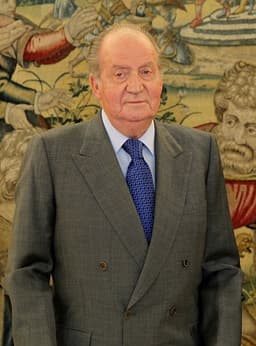
Juan Carlos I of Spain
Emperor · Modern
57.1Total

Julius Caesar
General · Ancient
82.8Total
Basic Information
Born
1938
-100
Died
—
-44
Era
Modern
Ancient
Nationality
Spain
Roman Republic
Occupation
Emperor
General
Civilization
Western
Western
Score Comparison
Military (10%)
27.1
88.0
Political (20%)
75.0
78.0
Influence (20%)
55.0
85.0
Legacy (20%)
52.0
82.0
Leadership (15%)
72.0
80.0
Strategy (15%)
56.0
85.0
TOTAL
57.1
82.8
Juan Carlos I of Spain — Complete Timeline
1969 AD
Appointment as Franco's successorPolitical Action
Francisco Franco designated Juan Carlos as his successor, with the title of Prince of Spain. This decision was made to ensure the continuation of the regime after Franco's death, but Juan Carlos secretly worked to transition Spain to democracy.
SuccessionFrancoTransition
Impact: national
1975 AD
Proclamation as King of SpainPolitical Action
Juan Carlos I was proclaimed king two days after Franco's death. He inherited a dictatorial regime but quickly moved to dismantle it, initiating a process of political reform that would lead to democracy.
ProclamationMonarchyReform
Impact: nationalconstructive
1977 AD
Legalization of political partiesReform◆ Major
Under Juan Carlos I's guidance, the Spanish government legalized political parties, including the Communist Party. This was a key step in the transition to democracy, allowing for free elections and the establishment of a pluralistic political system.
DemocracyPolitical ReformLegalization
Impact: nationalprogressive
1978 AD
Approval of the 1978 ConstitutionReform
Juan Carlos I oversaw the drafting and approval of a new democratic constitution. The constitution established a parliamentary monarchy, guaranteed civil rights, and decentralized the state through autonomous communities, ending the Francoist centralization.
ConstitutionDemocracyDecentralization
Impact: nationalconstructive
1981 AD
Role in thwarting the 1981 coup attemptPolitical Action
During an attempted military coup, Juan Carlos I went on national television to denounce the coup and order the military to remain loyal to the democratic government. His decisive action helped defeat the coup and consolidate Spanish democracy.
CoupDemocracyLeadership
Impact: nationalconstructive
2014 AD
Abdication in favor of Felipe VIPolitical Action◆ Major
Juan Carlos I abdicated the throne, citing personal reasons and a desire to rejuvenate the monarchy. His abdication followed a series of scandals that had damaged the monarchy's reputation, and he handed over the crown to his son Felipe VI.
AbdicationSuccessionFelipe VI
Impact: national
Julius Caesar — Complete Timeline
58 BC
Gallic WarsWar◆ Major
Caesar, as proconsul of Gaul, launched a series of campaigns that conquered all of Gaul (modern France, Belgium, and parts of Switzerland). He fought numerous battles, including against the Helvetii, the Belgae, and the Gallic chieftain Vercingetorix. The wars brought immense wealth and a loyal army to Caesar.
Gallic WarsConquestRoman Expansion
Impact: regional
49 BC
Crossing the RubiconPolitical Action◆ Major
Caesar led Legio XIII across the Rubicon River into Italy, defying the Roman Senate's order to disband his army. This act triggered a civil war against Pompey and the Optimates, ultimately leading to Caesar's dictatorship and the end of the Roman Republic.
Roman Civil WarEnd of RepublicPower Struggle
Impact: global
48 BC
Battle of PharsalusWar◆ Major
Caesar's outnumbered army defeated the larger forces of Pompey the Great at Pharsalus in Greece. Caesar's tactical use of a reserve line to counter Pompey's cavalry charge proved decisive. Pompey fled to Egypt, where he was assassinated, leaving Caesar as the undisputed master of the Roman world.
Roman Civil WarBattleDecisive Victory
Impact: regional
44 BC
Appointment as Dictator for LifePolitical Action◆ Major
The Roman Senate appointed Caesar dictator perpetuo (dictator for life), granting him unprecedented personal power. This move concentrated military, legislative, and judicial authority in one person, effectively ending the Roman Republic's traditional system of checks and balances and alarming many senators.
DictatorshipEnd of RepublicPower Consolidation
Impact: regionaldestructive
Assassination on the Ides of MarchPolitical Action◆ Major
A group of Roman senators, led by Marcus Junius Brutus and Gaius Cassius Longinus, stabbed Caesar to death at a meeting of the Senate in the Theatre of Pompey. The assassination was intended to restore the Republic, but instead triggered another civil war that led to the rise of the Roman Empire.
AssassinationRoman PoliticsEnd of Republic
Impact: globaldestructive
Expert Analysis
juan-carlos-i-of-spain-vs-julius-caesar
# The Dictator and the Democrat: Two Paths from Autocracy
On the Ides of March, 44 BCE, the most powerful man in Rome bled to death on the floor of the Senate, stabbed sixty times by men he had once called friends. Nearly two thousand years later, on the night of February 23, 1981, another man in a position of supreme authority sat alone in a palace, waiting for a phone call that would decide whether his country would descend into civil war. Julius Caesar died a tyrant; Juan Carlos I lived to become a king who gave away his power. Their stories, separated by millennia, ask the same question: what does a ruler owe his people when he holds absolute power?
Origins
Caesar was born into a patrician family that had fallen on hard times, a fact that gnawed at him. The Rome of 100 BCE was a violent, competitive republic where ambitious men clawed for glory through military conquest and political maneuvering. Caesar’s childhood coincided with the Social War and the civil conflicts of Marius and Sulla—formative years that taught him that power came from legions, not laws. His family claimed descent from the goddess Venus, and he seemed to believe it.
Juan Carlos was born in 1938, as Spanish fascist forces advanced toward victory in their civil war. His grandfather, King Alfonso XIII, had fled the country, and the boy grew up in exile, shuttling between Portugal, Italy, and Switzerland. His education was supervised by Francisco Franco, the dictator who had destroyed his family’s throne. Young Juan Carlos learned to smile at the man who had stolen his inheritance, to nod at the right moments, and to keep his true thoughts locked behind a mask of deference. Where Caesar was raised on stories of conquest, Juan Carlos was raised on survival.
Rise to Power
Caesar entered politics at twenty-seven, but his real ascent began at forty, when he secured command of Gaul. Over eight years, he conquered a territory larger than Italy, wrote his own propaganda in elegant Latin, and built an army that loved him more than it loved the Republic. When the Senate ordered him to disband his legions, he crossed the Rubicon River in 49 BCE—an act of war against his own government. Within four years, he was dictator for life.
Juan Carlos’s rise was quieter but no less calculated. In 1969, Franco formally designated him as successor, but with no real power. For six years, the prince played golf, attended ceremonies, and waited. When Franco finally died in 1975, Juan Carlos was proclaimed king—but the regime’s institutions remained intact: the military was full of Franco loyalists, the police answered to old commanders, and the laws still banned political parties. He had inherited a dictatorship, not a kingdom.
Leadership & Governance
Caesar ruled Rome like a battlefield. He reformed the calendar, granted citizenship to provincials, and launched massive public works—but he also packed the Senate with his supporters, minted coins with his own face, and accepted divine honors. His genius was strategic: he understood that the Republic was broken and that only a strong hand could hold it together. His weakness was the same: he could not imagine sharing power.
Juan Carlos governed like a diplomat. In 1977, he forced through the legalization of political parties, including the Communists who had fought against his father’s allies in the civil war. In 1978, he oversaw a new constitution that made Spain a parliamentary monarchy—stripping himself of nearly all real authority. His greatest moment came in 1981, when rebel soldiers stormed the parliament. While the world watched, Juan Carlos donned his uniform as captain-general of the armed forces and went on television to order the coup’s leaders to stand down. He saved Spanish democracy by using the one power he had kept: moral authority.
Triumph & Tragedy
Caesar’s triumph was Gaul—a conquest so complete that it changed the map of Europe forever. His tragedy was the Ides of March: a death that solved nothing. The assassins thought they were killing tyranny; instead, they unleashed thirteen years of civil war that ended the Republic for good. Caesar’s murder did not restore liberty; it cleared the path for his adopted son, Octavian, to become emperor.
Juan Carlos’s triumph was 1981, the night he stared down the guns of his own army. His tragedy came later, in the 2010s, when corruption scandals and a lavish elephant-hunting trip during Spain’s economic crisis destroyed his reputation. He abdicated in 2014, leaving the throne to his son Felipe VI. The king who had saved democracy was forced to flee the country in 2020, his legacy stained by allegations of hidden wealth.
Character & Destiny
Caesar was reckless in his confidence. He believed his luck was infinite, that his charm could forgive any offense, that his achievements would protect him from the daggers of men he had pardoned. He was wrong. Juan Carlos was cautious in his ambition. He understood that power held too tightly breaks in your hands. He gave away the crown’s authority precisely because he wanted the crown to survive.
Legacy
Caesar’s name became a title: Kaiser, Tsar, Czar. He is remembered as the man who destroyed the Republic and founded the Empire—a genius who was also a tyrant, a reformer who was also a conqueror. Juan Carlos is remembered as the king who chose democracy over dynasty. His scores tell the story: Political 87.7, Leadership 81.7—but Military 45.0, Strategy 57.8. He was not a warrior; he was a politician who understood that the hardest conquest is the surrender of power.
Conclusion
Caesar crossed the Rubicon and never looked back. Juan Carlos crossed a different river—the one that separates absolute authority from democratic consent—and he did it deliberately, knowing he could never return. One man died for keeping power; the other lived for giving it away. The question they leave us is not whether power corrupts, but whether the wise ruler uses it to build something that outlasts his own grip. Caesar built an empire that lasted centuries. Juan Carlos built a democracy that, so far, has lasted. Perhaps the greater achievement is the one that does not bear his name.
Rankings
🥇
Julius CaesarLeader
Mil: 88.0Pol: 78.0Inf: 85.0
82.8
🥈
Juan Carlos I of Spain
Mil: 27.1Pol: 75.0Inf: 55.0
57.1
+25.7 behind
How This Comparison Works
Algorithm
Each figure is scored on 6 dimensions (0—100 scale) based on structured historical data: Military (10%), Political (20%), Influence (20%), Legacy (20%), Leadership (15%), Strategy (15%). The weighted total produces the final ranking.
Data Sources
Scores are computed from structured sub-indicators in the database. Scale factors adjust for era (Ancient ×0.85, Modern ×1.0) and civilization size (Eastern ×1.05, Other ×0.80) to account for differences in population and military scale.
Maximum 3 Figures
Comparisons are limited to 2—3 figures to ensure readability and statistical meaningfulness.
Error Margins
±5 points per dimension — Sub-scores are derived from historical records with inherent uncertainty. Two figures within 5 points on a dimension should be considered roughly equivalent in that area.
Total Score Accuracy
±3 points overall — The weighted combination of 6 dimensions produces a total score with approximately ±3 points of uncertainty. Differences of less than 3 points are not statistically significant— the figures are effectively tied.
Known Limitations
- Historical records are incomplete and uneven across civilizations
- Figures from oral-tradition societies may be underrepresented
- Occupation labels can misclassify multi-role figures
- Scores measure capability and impact, not moral character
- Quantitative scoring is a comparison tool, not absolute truth
Capability Radar
Military (10%) — Battles & Warfare
Battles
35
95
Win Rate
37
92
Expansion
42
97
Political (20%) — Governance & Reform
Reform
85
90
Diplomacy
80
85
Economy
60
82
Influence (20%) — Cultural & Global Reach
Cultural
55
88
Global
65
94
Legacy (20%) — Historical Impact
Historical
70
95
Longevity
60
96
Leadership (15%) — Power & Stability
Tenure
65
75
Stability
75
60
Strategy (15%) — Tactics & Innovation
Strategy
48
94
Tactics
49
96
Reform
51
88
Similar Comparisons
Comments & Discussion
No comments yet. Be the first to share your thoughts!