Loading...
Juan Carlos I of Spain vs Qin Shi Huang
Qin Shi Huang leads by 28.1 pts · 2 figures compared
…
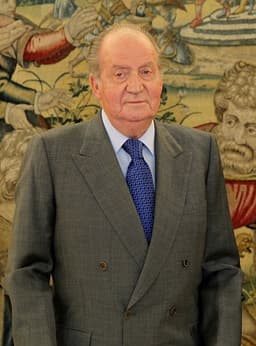
Juan Carlos I of Spain
Emperor · Modern
57.1Total
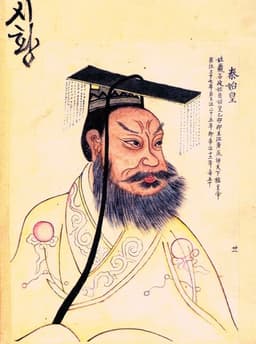
Qin Shi Huang
Emperor · Ancient
85.2Total
Basic Information
Born
1938
-259
Died
—
-210
Era
Modern
Ancient
Nationality
Spain
China
Occupation
Emperor
Emperor
Civilization
Western
Eastern
Score Comparison
Military (10%)
27.1
80.0
Political (20%)
75.0
90.0
Influence (20%)
55.0
85.0
Legacy (20%)
52.0
90.0
Leadership (15%)
72.0
78.0
Strategy (15%)
56.0
82.0
TOTAL
57.1
85.2
Juan Carlos I of Spain — Complete Timeline
1969 AD
Appointment as Franco's successorPolitical Action
Francisco Franco designated Juan Carlos as his successor, with the title of Prince of Spain. This decision was made to ensure the continuation of the regime after Franco's death, but Juan Carlos secretly worked to transition Spain to democracy.
SuccessionFrancoTransition
Impact: national
1975 AD
Proclamation as King of SpainPolitical Action
Juan Carlos I was proclaimed king two days after Franco's death. He inherited a dictatorial regime but quickly moved to dismantle it, initiating a process of political reform that would lead to democracy.
ProclamationMonarchyReform
Impact: nationalconstructive
1977 AD
Legalization of political partiesReform◆ Major
Under Juan Carlos I's guidance, the Spanish government legalized political parties, including the Communist Party. This was a key step in the transition to democracy, allowing for free elections and the establishment of a pluralistic political system.
DemocracyPolitical ReformLegalization
Impact: nationalprogressive
1978 AD
Approval of the 1978 ConstitutionReform
Juan Carlos I oversaw the drafting and approval of a new democratic constitution. The constitution established a parliamentary monarchy, guaranteed civil rights, and decentralized the state through autonomous communities, ending the Francoist centralization.
ConstitutionDemocracyDecentralization
Impact: nationalconstructive
1981 AD
Role in thwarting the 1981 coup attemptPolitical Action
During an attempted military coup, Juan Carlos I went on national television to denounce the coup and order the military to remain loyal to the democratic government. His decisive action helped defeat the coup and consolidate Spanish democracy.
CoupDemocracyLeadership
Impact: nationalconstructive
2014 AD
Abdication in favor of Felipe VIPolitical Action◆ Major
Juan Carlos I abdicated the throne, citing personal reasons and a desire to rejuvenate the monarchy. His abdication followed a series of scandals that had damaged the monarchy's reputation, and he handed over the crown to his son Felipe VI.
AbdicationSuccessionFelipe VI
Impact: national
Qin Shi Huang — Complete Timeline
246 BC
Construction of the Mausoleum and Terracotta ArmyOther◆ Major
Qin Shi Huang commissioned a vast mausoleum complex near Xi'an, guarded by thousands of life-sized terracotta soldiers, horses, and chariots. The project employed hundreds of thousands of workers and reflected his obsession with immortality and imperial power.
Impact: global
230 BC
Conquest of the Six Warring StatesWar
From 230 to 221 BCE, Ying Zheng led the Qin state in a series of campaigns that conquered the Han, Zhao, Wei, Chu, Yan, and Qi states. This unified China under a single ruler for the first time, ending the Warring States period.
Impact: global
221 BC
Standardization of Writing, Currency, and MeasurementsReform◆ Major
Qin Shi Huang ordered the standardization of Chinese script, currency, and weights and measures across the unified empire. This facilitated administration, trade, and cultural integration, laying a foundation for future dynasties.
Impact: globalconstructive
Proclamation of the Qin DynastyPolitical Action
After conquering the last independent state, Ying Zheng declared himself Shi Huangdi (First Emperor), founding the Qin Dynasty. He adopted a new title to signify his supreme authority and initiated centralized imperial rule.
Impact: global
214 BC
Initiation of the Great Wall ConstructionOther◆ Major
Qin Shi Huang ordered the connection and extension of existing northern fortifications to create a unified defensive wall against nomadic Xiongnu raids. This project involved massive conscripted labor and became the precursor to the later Great Wall.
Impact: regional
213 BC
Burning of Books and Burying of ScholarsPolitical Action◆ Major
On the advice of Li Si, Qin Shi Huang ordered the burning of historical records and philosophical texts not aligned with Legalist doctrine. He also had 460 Confucian scholars buried alive to suppress dissent and consolidate ideological control.
Impact: nationaldestructive
Expert Analysis
juan-carlos-i-of-spain-vs-qin-shi-huang
# The First Emperor and the Reluctant King: Two Paths to Power, Two Legacies of Change
On a cold February night in 1981, King Juan Carlos I of Spain donned his military uniform, sat before a television camera, and stared down the barrel of a coup that threatened to plunge his nation back into dictatorship. Two thousand years earlier, another ruler—Qin Shi Huang, the First Emperor of China—had no need for such dramatic gestures. When his generals conquered the last independent kingdom in 221 BC, he simply declared himself divine, buried scholars alive for disagreeing with him, and built a wall that would outlast his dynasty by millennia. One man inherited absolute power and gave it away. The other seized chaos and forged an empire from blood and bronze. What drove these two rulers—separated by twenty centuries and half a world—to such radically different outcomes?
Origins
Qin Shi Huang was born into war. In 259 BC, the Chinese world was a patchwork of seven warring states, each fighting for supremacy. His father was king of Qin, a western state that had long been considered semi-barbaric by its rivals. The boy who would become emperor grew up in a court where survival meant ruthlessness. His mother was a former concubine, his early years shadowed by palace intrigue and assassination attempts. By the time he ascended the throne at age thirteen, Ying Zheng had learned one lesson above all: power was something you took, not something you were given.
Juan Carlos de Borbón, born in Rome in 1938, learned a different lesson. His grandfather had been Spain’s last king, forced into exile when the republic was declared. The Spanish Civil War raged as he entered the world, and Francisco Franco—the general who would rule Spain for four decades—was already reshaping the country. Juan Carlos grew up in exile, then under Franco’s watchful eye, educated to be a king but never told when or how. He learned patience. He learned to smile while others made decisions for him. He learned that power could be a cage.
Rise to Power
Ying Zheng’s path was swift and brutal. At twenty-two, he seized control of his own government, executing his mother’s lover and exiling her. Then he turned to war. From 230 to 221 BC, his armies swept through the six remaining states—Han, Zhao, Wei, Chu, Yan, and Qi—in a series of campaigns that displayed both strategic brilliance and terrifying efficiency. When it was over, Ying Zheng did not simply call himself king. He invented a new title: Shi Huangdi, the First Emperor, a name that claimed not just rule but cosmic authority.
Juan Carlos’s rise was slower, more careful. In 1969, Franco formally designated him as successor, but the prince spent the next six years waiting, watching, preparing. When Franco finally died in November 1975, Juan Carlos was proclaimed king. Everyone expected him to continue the dictatorship. The military had been purged of democrats; the apparatus of repression was intact. But Juan Carlos had other plans. Within two years, he had legalized political parties—including the Communist Party, which had been his grandfather’s mortal enemy—and called for democratic elections.
Leadership & Governance
The contrast in governing styles could not be sharper. Qin Shi Huang ruled through terror and uniformity. He standardized writing, currency, and measurements across his empire—a practical achievement that would last for millennia—but he also burned books that disagreed with his philosophy and buried 460 Confucian scholars alive. His Great Wall, begun in 214 BC, was built by conscripted laborers who died by the thousands. His mausoleum, guarded by the Terracotta Army, consumed resources on a scale that still astonishes archaeologists. For Qin Shi Huang, leadership meant absolute control, enforced by law and fear.
Juan Carlos governed through persuasion and symbolism. He could not command the military to accept democracy—he had to convince them. When the 1978 Constitution was drafted, he did not impose it; he presided over the debate. His greatest moment came on February 23, 1981, when rebel soldiers stormed parliament. While the world watched, Juan Carlos appeared on television in his uniform, denounced the coup, and ordered the military to stand down. He did not use force—he used legitimacy. His authority came not from fear but from trust.
Triumph & Tragedy
Qin Shi Huang’s triumph was the unification of China—a feat that had eluded every ruler before him. His tragedy was that he could not keep it. Obsessed with immortality, he consumed mercury pills that likely killed him at age forty-nine. His dynasty collapsed within three years of his death, destroyed by the very harshness that had built it.
Juan Carlos’s triumph was Spain’s peaceful transition to democracy—a miracle in a country that had suffered civil war and dictatorship. His tragedy came later, slowly, as scandals eroded the trust he had built. By 2014, when he abdicated in favor of his son Felipe VI, the king who had saved democracy was increasingly seen as a symbol of privilege and corruption.
Character & Destiny
Qin Shi Huang believed he was destined to rule forever. His personality—paranoid, ruthless, visionary—shaped every decision he made. He trusted no one, killed anyone who opposed him, and demanded that his empire reflect his own image of order. This mindset unified China but also ensured its fragmentation. He built for eternity but left nothing that could survive without him.
Juan Carlos believed he was destined to serve. His personality—cautious, pragmatic, patient—allowed him to navigate between Franco’s legacy and democratic aspirations. He understood that monarchy in the modern world required sacrifice, not assertion. He gave up powers his predecessors had fought to keep. In doing so, he saved his throne—at least for a generation.
Legacy
Qin Shi Huang’s legacy is written in stone and bone. The Great Wall, the Terracotta Army, the standardized script—these endure as monuments to a man who would be remembered as both founder and tyrant. China’s subsequent dynasties built on his administrative foundations, even as they condemned his methods.
Juan Carlos’s legacy is more fragile. He is remembered as the king who gave Spain democracy, but also as the monarch who lost his people’s trust. His son Felipe VI faces the challenge of restoring a monarchy that his father’s scandals damaged. The 1978 Constitution he championed remains Spain’s foundation, but the political landscape it created is increasingly fractured.
Conclusion
Two rulers, two worlds, two very different answers to the same question: what does a leader owe his people? Qin Shi Huang believed he owed them order, even if it meant their suffering. Juan Carlos believed he owed them freedom, even if it meant his own diminishment. The First Emperor’s empire collapsed with his death; the king who gave away his power saw his nation thrive for decades. Perhaps the lesson is that the strongest foundations are not built by those who demand the most, but by those who are willing to give the most away.
Rankings
🥇
Qin Shi HuangLeader
Mil: 80.0Pol: 90.0Inf: 85.0
85.2
🥈
Juan Carlos I of Spain
Mil: 27.1Pol: 75.0Inf: 55.0
57.1
+28.1 behind
How This Comparison Works
Algorithm
Each figure is scored on 6 dimensions (0—100 scale) based on structured historical data: Military (10%), Political (20%), Influence (20%), Legacy (20%), Leadership (15%), Strategy (15%). The weighted total produces the final ranking.
Data Sources
Scores are computed from structured sub-indicators in the database. Scale factors adjust for era (Ancient ×0.85, Modern ×1.0) and civilization size (Eastern ×1.05, Other ×0.80) to account for differences in population and military scale.
Maximum 3 Figures
Comparisons are limited to 2—3 figures to ensure readability and statistical meaningfulness.
Error Margins
±5 points per dimension — Sub-scores are derived from historical records with inherent uncertainty. Two figures within 5 points on a dimension should be considered roughly equivalent in that area.
Total Score Accuracy
±3 points overall — The weighted combination of 6 dimensions produces a total score with approximately ±3 points of uncertainty. Differences of less than 3 points are not statistically significant— the figures are effectively tied.
Known Limitations
- Historical records are incomplete and uneven across civilizations
- Figures from oral-tradition societies may be underrepresented
- Occupation labels can misclassify multi-role figures
- Scores measure capability and impact, not moral character
- Quantitative scoring is a comparison tool, not absolute truth
Capability Radar
Military (10%) — Battles & Warfare
Battles
35
85
Win Rate
37
90
Expansion
42
90
Political (20%) — Governance & Reform
Reform
85
95
Diplomacy
80
75
Economy
60
90
Influence (20%) — Cultural & Global Reach
Cultural
55
95
Global
65
85
Legacy (20%) — Historical Impact
Historical
70
95
Longevity
60
95
Leadership (15%) — Power & Stability
Tenure
65
70
Stability
75
65
Strategy (15%) — Tactics & Innovation
Strategy
48
85
Tactics
49
80
Reform
51
95
Similar Comparisons
Comments & Discussion
QIN-SHATTERED6/17/2026
Calling Qin Shi Huang just a "tyrant" misses the point—he was a revolutionary systematizer. His standardization of script, weights, and axle lengths wasn't cruelty; it was empire-building pragmatism. The buried scholars? Exaggerated by Confucian historians who hated his Legalist reforms. Meanwhile, Juan Carlos played savior after Franco, but let's be real: he only stepped aside when corruption scandals forced his hand. One built a unified China; the other bailed on a monarchy he never fully earn
君主制造者6/17/2026
秦始皇和胡安·卡洛斯根本没有可比性。一个亲手铸造了帝国,另一个不过是佛朗哥安排的吉祥物。秦始皇活埋儒生?那是维护国家统一的手段。胡安·卡洛斯呢?1981年政变他确实站了出来,但之后呢?贪腐丑闻缠身,最后灰溜溜退位。真正的帝王不会逃跑,只会建造——万里长城至今还在,西班牙王室还剩什么?少拿现代民主标准评判古代君主,幼稚。