Loading...
Juan Carlos I of Spain vs Maria Theresa
Maria Theresa leads by 10.9 pts · 2 figures compared
…
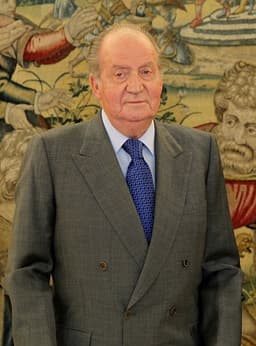
Juan Carlos I of Spain
Emperor · Modern
57.1Total

Maria Theresa
Emperor · Modern
68.0Total
Basic Information
Born
1938
1717
Died
—
1780
Era
Modern
Modern
Nationality
Spain
Austria
Occupation
Emperor
Emperor
Civilization
Western
Western
Score Comparison
Military (10%)
27.1
50.0
Political (20%)
75.0
78.0
Influence (20%)
55.0
82.0
Legacy (20%)
52.0
55.0
Leadership (15%)
72.0
80.0
Strategy (15%)
56.0
50.0
TOTAL
57.1
68.0
Juan Carlos I of Spain — Complete Timeline
1969 AD
Appointment as Franco's successorPolitical Action
Francisco Franco designated Juan Carlos as his successor, with the title of Prince of Spain. This decision was made to ensure the continuation of the regime after Franco's death, but Juan Carlos secretly worked to transition Spain to democracy.
SuccessionFrancoTransition
Impact: national
1975 AD
Proclamation as King of SpainPolitical Action
Juan Carlos I was proclaimed king two days after Franco's death. He inherited a dictatorial regime but quickly moved to dismantle it, initiating a process of political reform that would lead to democracy.
ProclamationMonarchyReform
Impact: nationalconstructive
1977 AD
Legalization of political partiesReform◆ Major
Under Juan Carlos I's guidance, the Spanish government legalized political parties, including the Communist Party. This was a key step in the transition to democracy, allowing for free elections and the establishment of a pluralistic political system.
DemocracyPolitical ReformLegalization
Impact: nationalprogressive
1978 AD
Approval of the 1978 ConstitutionReform
Juan Carlos I oversaw the drafting and approval of a new democratic constitution. The constitution established a parliamentary monarchy, guaranteed civil rights, and decentralized the state through autonomous communities, ending the Francoist centralization.
ConstitutionDemocracyDecentralization
Impact: nationalconstructive
1981 AD
Role in thwarting the 1981 coup attemptPolitical Action
During an attempted military coup, Juan Carlos I went on national television to denounce the coup and order the military to remain loyal to the democratic government. His decisive action helped defeat the coup and consolidate Spanish democracy.
CoupDemocracyLeadership
Impact: nationalconstructive
2014 AD
Abdication in favor of Felipe VIPolitical Action◆ Major
Juan Carlos I abdicated the throne, citing personal reasons and a desire to rejuvenate the monarchy. His abdication followed a series of scandals that had damaged the monarchy's reputation, and he handed over the crown to his son Felipe VI.
AbdicationSuccessionFelipe VI
Impact: national
Maria Theresa — Complete Timeline
1713 AD
Pragmatic Sanction of 1713Political Action◆ Major
Maria Theresa's father, Emperor Charles VI, issued the Pragmatic Sanction to ensure Habsburg lands would pass intact to his daughter. This document became the legal basis for her succession and triggered the War of the Austrian Succession.
SuccessionHabsburg DynastyLegal Reform
Impact: regionalconstructive
1740 AD
War of the Austrian SuccessionWar
Upon Maria Theresa's accession, Frederick II of Prussia invaded Silesia, sparking a European war. Despite losing Silesia in the Treaty of Aix-la-Chapelle (1748), she retained the Habsburg throne and secured her dynasty's survival.
WarSuccessionPrussia
Impact: global
1749 AD
Theresian ReformsReform◆ Major
Maria Theresa initiated comprehensive administrative, fiscal, and military reforms in Austria. She centralized government, created a standing army, and improved tax collection, strengthening the Habsburg state after the losses of the war.
AdministrationMilitary ReformCentralization
Impact: nationalconstructive
1756 AD
Diplomatic RevolutionPolitical Action◆ Major
Maria Theresa orchestrated the reversal of traditional alliances, allying Austria with France and Russia against Prussia. This diplomatic shift led to the Seven Years' War, though Austria failed to recover Silesia.
DiplomacyAllianceSeven Years' War
Impact: global
1774 AD
Education ReformReform◆ Major
Maria Theresa introduced compulsory primary education for all children in the Habsburg monarchy. The General School Ordinance established state-run schools, increasing literacy and reducing Church control over education.
EducationSocial ReformEnlightenment
Impact: nationalprogressive
Expert Analysis
Origins
Juan Carlos I of Spain was born on January 5, 1938, in Rome, Italy, into the Spanish royal family exiled during the Second Spanish Republic. His grandfather, King Alfonso XIII, had left Spain in 1931. Juan Carlos spent his early years in Italy, Switzerland, and Portugal, receiving a military education in Spain under the supervision of Francisco Franco. He studied at the General Military Academy in Zaragoza and later at the University of Madrid. In 1962, he married Princess Sophia of Greece and Denmark, strengthening ties with European royalty.
Maria Theresa was born on May 13, 1717, in Vienna, Austria, the eldest daughter of Emperor Charles VI and Elisabeth Christine of Brunswick-Wolfenbüttel. As a female, her right to inherit the Habsburg domains was secured by the Pragmatic Sanction of 1713, a document her father spent years getting European powers to recognize. She received a rigorous education in languages, history, and religion, but was excluded from military and diplomatic training due to her gender. In 1736, she married Francis Stephen of Lorraine, who later became Holy Roman Emperor.
Rise to Power
Juan Carlos I rose to power through a calculated succession plan. In 1969, Franco designated him as his successor with the title Prince of Spain, bypassing Juan Carlos's father, Don Juan, who was the legitimate heir. After Franco's death on November 20, 1975, Juan Carlos was proclaimed king on November 22, 1975. He quickly moved to dismantle the authoritarian regime, appointing Adolfo Suárez as Prime Minister in 1976 and legalizing political parties, including the Communist Party, in 1977. His role in the 1981 coup attempt, where he ordered the military to remain loyal to democracy, solidified his position as a champion of democracy.
Maria Theresa's rise was tumultuous. She succeeded her father on October 20, 1740, but her accession was immediately challenged. Frederick II of Prussia invaded Silesia in December 1740, sparking the War of the Austrian Succession (1740-1748). Despite losing Silesia in the Treaty of Aix-la-Chapelle, she retained her throne through a combination of diplomacy and military effort, notably securing Hungarian support with a dramatic appeal at the Diet of Pressburg in 1741. Her political score of 78.0 reflects her ability to navigate this crisis.
Leadership & Governance
Juan Carlos I's leadership style was one of strategic delegation and symbolic authority. He oversaw the transition to democracy by supporting reforms initiated by his prime ministers, particularly Adolfo Suárez. His approval of the 1978 Constitution established a parliamentary monarchy with limited royal powers. He actively intervened only in moments of crisis, such as the 1981 coup attempt, where he went on television to denounce the rebels. His governance score of 72.0 reflects his effective but indirect role.
Maria Theresa was a hands-on reformer. She centralized the Habsburg administration, creating a unified state from disparate territories. Her Theresian reforms included a standing army, a more efficient tax system, and the establishment of a supreme court. She also introduced compulsory primary education in 1774, a pioneering move in Europe. Her leadership score of 80.0 indicates her direct and comprehensive approach to governance. She scored 78.0 in politics, reflecting her diplomatic skill in forming the Diplomatic Revolution of 1756, which allied Austria with France and Russia against Prussia.
Triumph & Tragedy
Juan Carlos I's greatest triumph was the peaceful transition of Spain from dictatorship to democracy, a process completed with the 1978 Constitution and Spain's integration into NATO and the European Union. His role in thwarting the 1981 coup attempt earned him widespread respect. However, his later years were marred by scandals, including a controversial elephant hunting trip in Botswana in 2012 during an economic crisis, and allegations of financial impropriety. He abdicated in 2014, and his reputation suffered significantly, scoring 52.0 in legacy.
Maria Theresa's triumph was preserving the Habsburg monarchy against multiple enemies and implementing lasting reforms. She strengthened the state's finances and military, and her education reform laid the foundation for modern schooling. Her tragedy was the loss of Silesia, a wealthy province that she never recovered. The Seven Years' War (1756-1763) further drained resources without regaining Silesia. Her political score of 78.0 is offset by a military score of 50.0, reflecting her inability to defeat Prussia.
Character & Destiny
Juan Carlos I was a pragmatic and patient figure, biding his time under Franco before initiating democratic reforms. He was willing to sacrifice personal power for national stability, as seen in his acceptance of a constitutional monarchy. However, his later scandals suggest a sense of entitlement and poor judgment. Historian Paul Preston noted that Juan Carlos's abdication was necessary to preserve the monarchy's future. His influence score of 55.0 reflects his mixed legacy.
Maria Theresa was determined and energetic, famously declaring, "I am a queen, but I have not the heart of a queen." She was a devout Catholic and a devoted mother of 16 children, but she could be ruthless in politics, as seen in her partition of Poland in 1772. Her character combined reformist zeal with conservative social views. She scored 82.0 in influence, reflecting her impact on Austrian state-building and European diplomacy.
Legacy
Juan Carlos I's legacy is the consolidation of Spanish democracy. The 1978 Constitution, which he championed, remains the framework for Spanish governance. His abdication in 2014 paved the way for his son Felipe VI, who has worked to restore the monarchy's reputation. However, his personal scandals have tarnished his image, and his legacy score of 52.0 is modest.
Maria Theresa's legacy is more enduring. She transformed the Habsburg monarchy into a modern state, with centralized administration and a professional army. Her education reforms established state-run schools across the empire. The Theresian reforms influenced subsequent Austrian rulers and set a precedent for enlightened absolutism. Her legacy score of 55.0 is slightly higher than Juan Carlos's, reflecting her systemic impact.
Conclusion
Maria Theresa had a greater impact than Juan Carlos I of Spain. Her total score of 68.0 exceeds his 57.1 by 10.9 points. While Juan Carlos I played a crucial role in Spain's democratization, his influence was largely confined to a single transition and was later undermined by personal failures. Maria Theresa, despite losing Silesia, fundamentally reshaped the Habsburg state, implementing reforms that lasted for generations. Her political, influence, and leadership scores (78.0, 82.0, 80.0) all surpass his (75.0, 55.0, 72.0). In the broader sweep of history, Maria Theresa's state-building achievements eclipse Juan Carlos's transitional role.
Rankings
🥇
Maria TheresaLeader
Mil: 50.0Pol: 78.0Inf: 82.0
68.0
🥈
Juan Carlos I of Spain
Mil: 27.1Pol: 75.0Inf: 55.0
57.1
+10.9 behind
How This Comparison Works
Algorithm
Each figure is scored on 6 dimensions (0—100 scale) based on structured historical data: Military (10%), Political (20%), Influence (20%), Legacy (20%), Leadership (15%), Strategy (15%). The weighted total produces the final ranking.
Data Sources
Scores are computed from structured sub-indicators in the database. Scale factors adjust for era (Ancient ×0.85, Modern ×1.0) and civilization size (Eastern ×1.05, Other ×0.80) to account for differences in population and military scale.
Maximum 3 Figures
Comparisons are limited to 2—3 figures to ensure readability and statistical meaningfulness.
Error Margins
±5 points per dimension — Sub-scores are derived from historical records with inherent uncertainty. Two figures within 5 points on a dimension should be considered roughly equivalent in that area.
Total Score Accuracy
±3 points overall — The weighted combination of 6 dimensions produces a total score with approximately ±3 points of uncertainty. Differences of less than 3 points are not statistically significant— the figures are effectively tied.
Known Limitations
- Historical records are incomplete and uneven across civilizations
- Figures from oral-tradition societies may be underrepresented
- Occupation labels can misclassify multi-role figures
- Scores measure capability and impact, not moral character
- Quantitative scoring is a comparison tool, not absolute truth
Capability Radar
Military (10%) — Battles & Warfare
Battles
35
65
Win Rate
37
55
Expansion
42
40
Political (20%) — Governance & Reform
Reform
85
95
Diplomacy
80
80
Economy
60
90
Influence (20%) — Cultural & Global Reach
Cultural
55
70
Global
65
70
Legacy (20%) — Historical Impact
Historical
70
80
Longevity
60
75
Leadership (15%) — Power & Stability
Tenure
65
85
Stability
75
70
Strategy (15%) — Tactics & Innovation
Strategy
48
60
Tactics
49
50
Reform
51
75
Similar Comparisons
Comments & Discussion
No comments yet. Be the first to share your thoughts!