Loading...
Joseph Stalin vs Yuan Shikai
Joseph Stalin leads by 8.8 pts · 2 figures compared
…
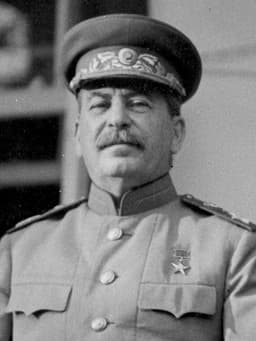
Joseph Stalin
Politician · Modern
68.8Total
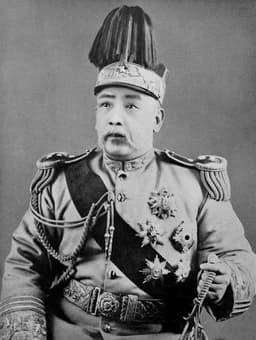
Yuan Shikai
Politician · Modern
60.0Total
Basic Information
Born
1878
1859
Died
1953
1916
Era
Modern
Modern
Nationality
Russia
China
Occupation
Politician
Politician
Civilization
Western
Eastern
Score Comparison
Military (10%)
75.0
45.0
Political (20%)
70.0
72.0
Influence (20%)
72.0
57.2
Legacy (20%)
55.0
54.0
Leadership (15%)
80.0
72.0
Strategy (15%)
70.0
61.2
TOTAL
68.8
60.0
Joseph Stalin — Complete Timeline
1928 AD
Launched the First Five-Year PlanReform
Stalin initiated a series of centralized economic plans aimed at rapid industrialization and collectivization of agriculture. The First Five-Year Plan set ambitious targets for heavy industry, leading to significant growth but also severe shortages and human cost.
Impact: global
1929 AD
Implemented forced collectivization of agricultureReform
Stalin ordered the consolidation of individual peasant farms into collective farms (kolkhozy). This was met with resistance, leading to the liquidation of kulaks (wealthy peasants) as a class. The policy caused a catastrophic famine, particularly in Ukraine (Holodomor), resulting in millions of deaths.
Impact: nationaldestructive
1937 AD
Conducted the Great Purge (Great Terror)Political Action
Stalin orchestrated a campaign of political repression against alleged enemies of the state. Millions were arrested, executed, or sent to the Gulag labor camps. The purges targeted the Communist Party, military leadership, intellectuals, and ordinary citizens, consolidating Stalin's absolute power.
Impact: nationaldestructive
1945 AD
Led the Soviet Union to victory in World War IIWar
Stalin served as Supreme Commander of the Soviet armed forces. The Soviet Union bore the brunt of the war against Nazi Germany, suffering immense casualties. The Red Army's victory at Stalingrad and the capture of Berlin were key turning points. The war ended with Soviet domination of Eastern Europe.
Impact: global
Established the Eastern Bloc and the Iron CurtainPolitical Action◆ Major
After WWII, Stalin imposed communist governments in Eastern European countries occupied by the Red Army, creating a buffer zone against the West. This division of Europe into Soviet and Western spheres of influence marked the beginning of the Cold War.
Impact: globaldestructive
Yuan Shikai — Complete Timeline
1901 AD
Command of the Beiyang ArmyReform◆ Major
Yuan Shikai took command of the Beiyang Army, the most modern military force in late Qing China. He expanded and trained the army, which became the basis for his political power and later dominated Chinese politics.
Military reformBeiyang Army
Impact: national
1912 AD
Appointed First President of the Republic of ChinaPolitical Action
Yuan Shikai became the first president of the Republic of China after negotiating the abdication of the Qing emperor. He used his control of the Beiyang Army to pressure the revolutionary government into accepting his leadership.
PresidencyRepublic of China
Impact: national
1915 AD
Declaration of the Empire of ChinaPolitical Action◆ Major
Yuan Shikai declared himself emperor of the Empire of China, attempting to restore the monarchy. This move sparked widespread opposition from provincial leaders and foreign powers, leading to the collapse of his regime.
Monarchy restorationPolitical crisis
Impact: nationaldestructive
Signing of the Twenty-One DemandsPolitical Action◆ Major
Yuan Shikai accepted most of Japan's Twenty-One Demands, which expanded Japanese influence in China. The agreement granted Japan economic rights in Manchuria and Shandong, and was seen as a national humiliation.
DiplomacyJapanese imperialism
Impact: globaltragic
1916 AD
Death and Collapse of the Beiyang GovernmentPolitical Action◆ Major
Yuan Shikai died of uremia, leaving no clear successor. His death led to the fragmentation of the Beiyang Army into warlord factions, plunging China into a period of civil war and political instability.
Warlord eraPolitical fragmentation
Impact: nationaltragic
Expert Analysis
Yuan Shikai vs Joseph Stalin
# The Emperor and the General Secretary
On a crisp autumn morning in 1915, Yuan Shikai ascended the Altar of Heaven in Beijing, performing the ancient rites of imperial succession that had remained unchanged for centuries. He wore the dragon robes of a Son of Heaven. Thousands of miles away, in Moscow, Joseph Stalin sat in the Kremlin, studying reports of grain quotas and factory output, his mind fixed not on ceremony but on the brutal arithmetic of power. One man attempted to resurrect a dynasty; the other was building a new kind of empire, one that would outlast him. Both sought absolute control over vast, fractious nations. Yet their paths diverged so sharply that one ended in ignominious collapse, the other in decades of global dominance. What explains the difference?
Origins
Yuan Shikai was born in 1859 into a landed gentry family in Henan province, a world still governed by Confucian hierarchy and the fading mandate of the Qing dynasty. His early career followed the classic route of military examination and bureaucratic patronage. He was a man of the old order, pragmatic and ambitious, but his imagination was bounded by the imperial system that had raised him.
Stalin, born Ioseb Dzhugashvili in 1878 in the Georgian town of Gori, came from a very different world—the impoverished periphery of the Russian Empire. His father was a cobbler, his mother a devout peasant. Where Yuan inherited connections, Stalin inherited resentment. He trained for the priesthood but abandoned it for revolutionary Marxism, absorbing a worldview that promised to smash every throne. One man sought to reform a dying empire; the other sought to build a new world from its ashes.
Rise to Power
Yuan’s ascent was a masterclass in bureaucratic maneuvering. In 1901, he took command of the Beiyang Army, the most modern military force in late Qing China, and used it as his personal power base. He cultivated foreign support, played factions against each other, and positioned himself as the indispensable man. When the Qing dynasty collapsed in 1912, he negotiated the emperor’s abdication and was appointed the first president of the Republic of China. His rise was bloodless, transactional, and reversible.
Stalin’s path was neither bloodless nor reversible. He climbed through the ranks of the Bolshevik Party, not through military command but through organizational control. After Lenin’s death in 1924, Stalin methodically outmaneuvered rivals like Trotsky, Zinoviev, and Kamenev, using his position as General Secretary to appoint loyalists and purge dissenters. By 1928, he had absolute power. His rise was a slow, grinding accumulation of leverage over every lever of the state.
Leadership & Governance
Yuan governed as a traditional Chinese strongman, balancing regional warlords and foreign powers. He understood military power but lacked a transformative vision. His political wisdom was tactical, not strategic: he could manipulate individuals but could not reshape institutions. In 1915, facing pressure from Japan, he accepted most of the Twenty-One Demands, granting Japan extensive economic and political influence in China—a decision that fatally damaged his legitimacy.
Stalin’s governance was ideological and total. In 1928, he launched the First Five-Year Plan, a forced march toward industrialization that built factories, dams, and steel mills at staggering human cost. In 1929, he implemented forced collectivization of agriculture, crushing peasant resistance and triggering a famine that killed millions. His military genius was brutal and strategic: as Supreme Commander during World War II, he accepted catastrophic losses but ultimately led the Soviet Union to victory in 1945. Where Yuan sought stability, Stalin sought transformation.
Triumph & Tragedy
Yuan’s greatest moment was also his greatest miscalculation. In 1915, he declared himself emperor of the Empire of China, believing that only a monarchy could unify the fractured republic. The result was immediate and devastating: nationwide rebellion, the collapse of his support among former allies, and the rapid disintegration of his authority. He died of uremia in 1916, leaving no successor, and the Beiyang Army fragmented into warlord factions that plunged China into a decade of chaos.
Stalin’s triumph was World War II. Under his leadership, the Red Army crushed Nazi Germany at Stalingrad and Berlin, establishing the Soviet Union as a superpower. By 1945, he had imposed communist governments across Eastern Europe, drawing an Iron Curtain across the continent. But his tragedy was the Great Purge of 1937, when he orchestrated the arrest and execution of millions of alleged enemies—decimating the military officer corps, the intelligentsia, and the party itself. He won the war, but the cost was incalculable.
Character & Destiny
Yuan was cautious, calculating, and deeply conservative. He understood power as personal loyalty and military force. He could not conceive of a nation held together by ideology or mass mobilization. His ambition was limited by his worldview: he wanted to be emperor, not revolutionary. That conservatism doomed him. The twentieth century had no patience for a man who tried to turn back the clock.
Stalin was paranoid, ruthless, and relentlessly strategic. He understood that power required not just loyalty but fear, not just control but transformation. He was willing to destroy entire classes, nationalities, and generations to achieve his vision. His paranoia was his weakness—it led to the purges that crippled his own military—but it also made him invulnerable to rivals. He could not be overthrown because he had already destroyed every alternative.
Legacy
Yuan Shikai is remembered as a tragic figure, a man who had the opportunity to build a modern China but chose a path that led to fragmentation and warlordism. His legacy is a cautionary tale: the failure of personal ambition without institutional vision. His scores reflect this—a leader of some skill (81.3 leadership) but limited strategic vision (65.4 strategy) and a deeply mixed legacy (65.9).
Stalin’s legacy is far more complex and contested. He industrialized a backward nation, defeated Nazi Germany, and built a global superpower. But he also murdered millions, created a police state, and left a system that could not survive without terror. His total score of 68.3 masks a deeper truth: he was a leader of immense effectiveness and immense evil. In Russia today, his image is rehabilitated by some as a wartime savior; in the West, he remains the archetype of modern tyranny.
Conclusion
Yuan Shikai tried to become emperor at a moment when empires were collapsing. Stalin became a dictator at a moment when dictatorship was being perfected. One looked backward and failed; the other looked forward and succeeded, at a terrible price. Their stories remind us that leadership is never just about the man—it is about the moment. Yuan’s moment had already passed; Stalin’s had not yet arrived. The difference between them is the difference between a man who tried to restore the past and a man who built a future so terrible that it could not last.
Rankings
🥇
Joseph StalinLeader
Mil: 75.0Pol: 70.0Inf: 72.0
68.8
🥈
Yuan Shikai
Mil: 45.0Pol: 72.0Inf: 57.2
60.0
+8.8 behind
How This Comparison Works
Algorithm
Each figure is scored on 6 dimensions (0—100 scale) based on structured historical data: Military (10%), Political (20%), Influence (20%), Legacy (20%), Leadership (15%), Strategy (15%). The weighted total produces the final ranking.
Data Sources
Scores are computed from structured sub-indicators in the database. Scale factors adjust for era (Ancient ×0.85, Modern ×1.0) and civilization size (Eastern ×1.05, Other ×0.80) to account for differences in population and military scale.
Maximum 3 Figures
Comparisons are limited to 2—3 figures to ensure readability and statistical meaningfulness.
Error Margins
±5 points per dimension — Sub-scores are derived from historical records with inherent uncertainty. Two figures within 5 points on a dimension should be considered roughly equivalent in that area.
Total Score Accuracy
±3 points overall — The weighted combination of 6 dimensions produces a total score with approximately ±3 points of uncertainty. Differences of less than 3 points are not statistically significant— the figures are effectively tied.
Known Limitations
- Historical records are incomplete and uneven across civilizations
- Figures from oral-tradition societies may be underrepresented
- Occupation labels can misclassify multi-role figures
- Scores measure capability and impact, not moral character
- Quantitative scoring is a comparison tool, not absolute truth
Capability Radar
Military (10%) — Battles & Warfare
Battles
85
45
Win Rate
80
55
Expansion
85
50
Political (20%) — Governance & Reform
Reform
90
55
Diplomacy
70
70
Economy
85
50
Influence (20%) — Cultural & Global Reach
Cultural
70
40
Global
95
35
Legacy (20%) — Historical Impact
Historical
95
65
Longevity
80
40
Leadership (15%) — Power & Stability
Tenure
95
60
Stability
60
30
Strategy (15%) — Tactics & Innovation
Strategy
85
65
Tactics
60
60
Reform
90
80
Similar Comparisons
Comments & Discussion
IronTimeCzar6/16/2026
This comparison overlooks the real driver: industrialization's timeline. Stalin built a totalitarian state on the back of forced collectivization and five-year plans, which Yuan Shikai couldn't even dream of—China in 1915 had maybe 1% of the industrial base of Russia in 1928. You can't consolidate absolute power without steel mills and tractor factories. Yuan's failure wasn't personal ineptitude; he lacked the economic levers that Stalin ruthlessly wielded. It's like comparing a feudal warlord t
数据链剑客6/16/2026
现代国家建设需要可控的暴力工具,袁世凯有北洋新军,但军队效忠的是个人而非体制;斯大林则消灭了红军中所有独立派系,把政治军官塞进每个团部。没有对军队的绝对意识形态控制,所谓的“绝对权力”不过是纸糊的城墙。袁世凯的失败是组织革命的失败,不是比较统治手段能解释的。
MandarinMachiavelli6/16/2026
The real question is: why did one man's ambitions collapse in three months while the other's lasted thirty years? Simple: Stalin understood that terror must be institutionalized, not ceremonialized. Yuan wasted time with dragon robes and ancient rituals; Stalin wielded the NKVD and show trials. Yuan's movement was a fragile coalition of regional power brokers; Stalin's was a monolithic party that consumed its own children. One was a Confucian die-hard, the other a Marxist butcher. Apples to plan
经典学者老张6/16/2026
从古典视角看,袁世凯犯了“称帝时序”的大忌:天下未定,妄图正名。乱世需先取实权,再修法统。朱元璋先灭群雄,后登大宝;赵匡胤陈桥兵变前已领兵多年。袁世凯1912年逼宫、1915年劝进,根基未稳、列强观望,却仓促改元洪宪。斯大林则不同,他先用1920年代清除了托洛茨基等所有对手,1930年代才将个人崇拜仪式化。名不正则言不顺,古今中外皆同。
RevisionistRattler6/16/2026
把袁世凯和斯大林并列是对后者的过度拔高。袁世凯1916年死前还没建立过完整意识形态机器,北洋军阀各怀鬼胎;而斯大林1924年后就系统性地把马克思列宁主义变成极权教条,连语言、历史、生物学都按他的意志改写。袁世凯的“专制”最多是旧式集权,斯大林却是现代全控国家的完美模型。二者根本不同质,拿传统权臣和现代独裁者比,是类型错误。