Loading...
Joseph Stalin vs William Pitt the Elder
William Pitt the Elder leads by 1.4 pts · 2 figures compared
…
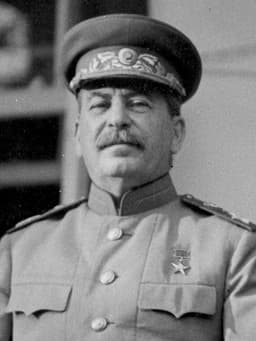
Joseph Stalin
Politician · Modern
68.8Total
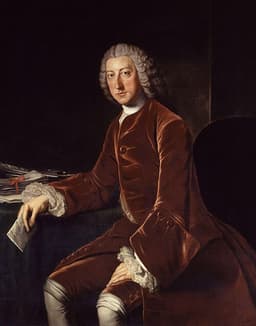
William Pitt the Elder
Politician · Modern
70.2Total
Basic Information
Born
1878
1708
Died
1953
1778
Era
Modern
Modern
Nationality
Russia
United Kingdom
Occupation
Politician
Politician
Civilization
Western
Western
Score Comparison
Military (10%)
75.0
67.3
Political (20%)
70.0
72.0
Influence (20%)
72.0
68.0
Legacy (20%)
55.0
68.0
Leadership (15%)
80.0
80.0
Strategy (15%)
70.0
67.2
TOTAL
68.8
70.2
Joseph Stalin — Complete Timeline
1928 AD
Launched the First Five-Year PlanReform
Stalin initiated a series of centralized economic plans aimed at rapid industrialization and collectivization of agriculture. The First Five-Year Plan set ambitious targets for heavy industry, leading to significant growth but also severe shortages and human cost.
Impact: global
1929 AD
Implemented forced collectivization of agricultureReform
Stalin ordered the consolidation of individual peasant farms into collective farms (kolkhozy). This was met with resistance, leading to the liquidation of kulaks (wealthy peasants) as a class. The policy caused a catastrophic famine, particularly in Ukraine (Holodomor), resulting in millions of deaths.
Impact: nationaldestructive
1937 AD
Conducted the Great Purge (Great Terror)Political Action
Stalin orchestrated a campaign of political repression against alleged enemies of the state. Millions were arrested, executed, or sent to the Gulag labor camps. The purges targeted the Communist Party, military leadership, intellectuals, and ordinary citizens, consolidating Stalin's absolute power.
Impact: nationaldestructive
1945 AD
Led the Soviet Union to victory in World War IIWar
Stalin served as Supreme Commander of the Soviet armed forces. The Soviet Union bore the brunt of the war against Nazi Germany, suffering immense casualties. The Red Army's victory at Stalingrad and the capture of Berlin were key turning points. The war ended with Soviet domination of Eastern Europe.
Impact: global
Established the Eastern Bloc and the Iron CurtainPolitical Action◆ Major
After WWII, Stalin imposed communist governments in Eastern European countries occupied by the Red Army, creating a buffer zone against the West. This division of Europe into Soviet and Western spheres of influence marked the beginning of the Cold War.
Impact: globaldestructive
William Pitt the Elder — Complete Timeline
1756 AD
Led Britain in Seven Years' WarWar
William Pitt the Elder served as Secretary of State from 1756 to 1761, directing British strategy in the Seven Years' War. His policies focused on naval supremacy and colonial campaigns, leading to victories in Canada, India, and the Caribbean.
Seven Years' WarColonial EmpireMilitary Strategy
Impact: global
1759 AD
Conquest of QuebecWar◆ Major
Under Pitt's direction, British forces under General James Wolfe captured Quebec City on September 13, 1759, after the Battle of the Plains of Abraham. This victory secured British control over Canada and marked a turning point in the Seven Years' War.
Seven Years' WarCanadaMilitary Victory
Impact: global
1766 AD
Became Prime MinisterPolitical Action
Pitt was appointed Prime Minister on July 30, 1766, forming a government. However, his health declined and he was elevated to the House of Lords as Earl of Chatham, which weakened his political base. His second ministry was less effective than his wartime leadership.
Prime MinisterGovernment18th Century
Impact: national
Opposed American TaxationPolitical Action◆ Major
Pitt argued for the repeal of the Stamp Act in 1766, asserting that Parliament had no right to tax the American colonies without representation. His speech in the Commons helped secure repeal, though he maintained Parliament's authority to legislate for the colonies.
American ColoniesTaxationParliamentary Debate
Impact: global
Expert Analysis
Joseph Stalin vs William Pitt the Elder
# The Titan and the Commoner
On a winter morning in 1943, as German armies clawed at the gates of Stalingrad, Joseph Stalin sat in his Kremlin study, personally approving lists of names for execution. Half a world away and nearly two centuries earlier, William Pitt the Elder stood before the British Parliament, his voice thundering against the very idea of taxing distant colonies. Both men commanded empires at war. Both shaped the modern world. Yet one is remembered as a liberator of nations, the other as a tyrant who drowned his own people in blood. What drives such different outcomes from similar pinnacles of power?
Origins
Joseph Stalin was born Ioseb Besarionis dze Jughashvili in 1878, in the Georgian town of Gori, a son of a cobbler and a washerwoman. His childhood was brutal—his father beat him, his mother prayed for him to become a priest, and smallpox scarred his face for life. The seminary he attended became a crucible of rebellion; he was expelled for reading Marxist literature. From these ragged beginnings, Stalin forged a personality of iron resentment and cold calculation.
William Pitt the Elder, born in 1708 into a wealthy English family with political connections, could not have inhabited a more different world. His grandfather was a governor of Madras, his father a member of Parliament. Pitt suffered from gout and melancholia, but his education at Eton and Oxford was the grooming of a statesman. Where Stalin learned to survive through cunning in the shadows of empire, Pitt learned to command through oratory in the light of the House of Commons.
Rise to Power
Stalin’s ascent was a slow, patient crawl through the machinery of revolution. He joined the Bolsheviks, robbed banks to fund the party, and was exiled to Siberia multiple times. After Lenin’s death in 1924, Stalin maneuvered himself not through brilliance but through bureaucracy—appointing loyalists, controlling party records, and outlasting rivals like Trotsky. By 1928, he was absolute master of the Soviet Union.
Pitt’s rise was dramatic and public. He entered Parliament in 1735 and immediately attacked the government of Sir Robert Walpole with such ferocity that Walpole called him a “young man of great ambition.” Pitt was dismissed from the army for his speeches, but his popularity soared. The common people called him the “Great Commoner.” In 1756, with Britain reeling from defeats in the Seven Years’ War, King George II had no choice but to summon Pitt to power. He never held a party machine; he held the people’s trust.
Leadership & Governance
Stalin governed through terror. In 1928, he launched the First Five-Year Plan, a forced march toward industrialization that built factories and dams at the cost of millions of lives. When peasants resisted collectivization in 1929, he starved them—the Holodomor in Ukraine killed an estimated 3 to 5 million people. By 1937, the Great Purge had turned the Soviet Union into a slaughterhouse: party officials, army generals, intellectuals, and ordinary citizens were arrested, tortured, and shot. Stalin personally edited execution lists, scrawling “shoot” in the margins.
Pitt governed through persuasion and strategy. As Secretary of State during the Seven Years’ War, he did not micromanage generals but inspired them. He poured resources into the navy, sent expeditions to Canada, India, and the Caribbean, and chose commanders like James Wolfe and Robert Clive. The year 1759 became Britain’s *annus mirabilis*—the “Year of Victories”—when Quebec fell, India was secured, and French fleets were shattered. Pitt’s genius was not in terror but in trust: he gave his men the tools and let them win.
Triumph & Tragedy
Stalin’s greatest triumph was 1945. As Supreme Commander, he led the Soviet Union through the bloodiest war in history, crushing Nazi Germany at Stalingrad, Kursk, and Berlin. The Red Army’s sacrifice—over 27 million Soviet dead—broke Hitler’s back. But the triumph was hollow. Stalin immediately imposed the Iron Curtain across Eastern Europe, enslaving nations he had liberated. His tragedy was that victory only confirmed his paranoia: he trusted no one, and his empire was built on graves.
Pitt’s triumph was 1759, but his tragedy came later. In 1766, he became Prime Minister, but his health collapsed. He was elevated to the House of Lords as Earl of Chatham, a move that betrayed his identity as the “Great Commoner.” More devastating, when the American colonies rebelled, Pitt argued passionately for reconciliation, declaring, “I rejoice that America has resisted.” But his voice was ignored. He died in 1778, broken by the war he had tried to prevent.
Character & Destiny
Stalin’s character was forged in deprivation and betrayal. He trusted no one, not even his closest allies. This paranoia drove the purges, which decimated his own officer corps on the eve of war—a catastrophic error that cost millions of lives in 1941. Yet the same ruthlessness allowed him to mobilize a shattered nation and grind Germany into dust. His destiny was to become a monster who saved his country and damned it.
Pitt’s character was forged in conviction and eloquence. He believed in liberty, in the rights of Englishmen, and in the power of strategic vision. But his pride and fragile health made him a solitary figure. He could inspire a nation but could not build a party. His destiny was to be a savior who was forgotten by the very people he saved—except in history books.
Legacy
Today, Stalin’s legacy is a nightmare. The Soviet Union he built collapsed in 1991, and his statues have been torn down across Eastern Europe. His political score of 72.0 and military score of 75.0 reflect his effectiveness, but his legacy score of 55.0 captures the truth: he is remembered as a mass murderer who won a war. In Russia, some still honor him as a wartime leader; the world condemns him as a tyrant.
Pitt’s legacy is more complex. He is remembered as the architect of the British Empire, the man who laid the foundations for global dominance. His political score of 80.0 and legacy score of 75.0 reflect the respect he commands. Yet his name is not a household word. He is a footnote to the American Revolution he tried to prevent, a ghost in the halls of Parliament. The “Great Commoner” became an earl, and in that transformation, he lost his soul.
Conclusion
What separates Stalin from Pitt is not ability—both were masterful leaders. It is not circumstance—both faced existential wars. It is the choice between ruling through fear and ruling through inspiration. Stalin chose the bullet; Pitt chose the ballot. One built an empire on bones, the other on laws. In the end, the difference is simple: Pitt believed in the people he led; Stalin believed only in himself. That single difference explains why one is honored and the other is reviled, why one built a world that lasted and the other built a prison that crumbled. History remembers not the powerful, but the just.
Rankings
🥇
William Pitt the ElderLeader
Mil: 67.3Pol: 72.0Inf: 68.0
70.2
🥈
Joseph Stalin
Mil: 75.0Pol: 70.0Inf: 72.0
68.8
+1.4 behind
How This Comparison Works
Algorithm
Each figure is scored on 6 dimensions (0—100 scale) based on structured historical data: Military (10%), Political (20%), Influence (20%), Legacy (20%), Leadership (15%), Strategy (15%). The weighted total produces the final ranking.
Data Sources
Scores are computed from structured sub-indicators in the database. Scale factors adjust for era (Ancient ×0.85, Modern ×1.0) and civilization size (Eastern ×1.05, Other ×0.80) to account for differences in population and military scale.
Maximum 3 Figures
Comparisons are limited to 2—3 figures to ensure readability and statistical meaningfulness.
Error Margins
±5 points per dimension — Sub-scores are derived from historical records with inherent uncertainty. Two figures within 5 points on a dimension should be considered roughly equivalent in that area.
Total Score Accuracy
±3 points overall — The weighted combination of 6 dimensions produces a total score with approximately ±3 points of uncertainty. Differences of less than 3 points are not statistically significant— the figures are effectively tied.
Known Limitations
- Historical records are incomplete and uneven across civilizations
- Figures from oral-tradition societies may be underrepresented
- Occupation labels can misclassify multi-role figures
- Scores measure capability and impact, not moral character
- Quantitative scoring is a comparison tool, not absolute truth
Capability Radar
Military (10%) — Battles & Warfare
Battles
85
60
Win Rate
80
75
Expansion
85
80
Political (20%) — Governance & Reform
Reform
90
75
Diplomacy
70
80
Economy
85
70
Influence (20%) — Cultural & Global Reach
Cultural
70
60
Global
95
75
Legacy (20%) — Historical Impact
Historical
95
80
Longevity
80
70
Leadership (15%) — Power & Stability
Tenure
95
70
Stability
60
65
Strategy (15%) — Tactics & Innovation
Strategy
85
85
Tactics
60
65
Reform
90
70
Similar Comparisons
Comments & Discussion
红星之下6/16/2026
斯大林搞的集体农庄,饿死几百万人,可二战时苏联粮食产量硬是翻了一倍。皮特吹嘘不列颠的自由贸易,他推动的《印花税法》连北美殖民地都逼反了。两个都是帝国机器上的螺丝钉,别给我扯什么道德高下。统计数据会说话:斯大林治下苏联工业化速度全球第一,皮特七年战争赢了,可国债翻了三倍。结果呢?一个赢得反法西斯战争,一个债务炸弹留给后代。务实点行吗?
The Warden of Britannia6/16/2026
Pitt the Elder was no saint—he called the American colonists “the children of Britain” while taxing them into rebellion—but he avoided Stalin’s signature sin: starving millions for ideology. The Great Famine of 1932–33 in Ukraine killed 3.9 million; Pitt’s grain policies caused nothing comparable. Yes, Pitt expanded the Royal Navy and crushed French ambitions in Canada, but he did it within a system that allowed debate, even from opponents like Edmund Burke. Stalin had the Politburo vote for exe
反殖民刺头6/16/2026
皮特吹自己是“自由的捍卫者”,可他对印度干的事,跟斯大林对东欧一个德性。1757年普拉西战役后,英国东印度公司从孟加拉搜刮了价值数百万英镑的财宝,皮特在议会里鼓掌叫好。斯大林搞大清洗杀了七十万,可皮特默许的殖民剥削饿死了上千万印度人。别拿解放者包装他——帝国拿枪抢粮食,换身西装就高贵了?都是血浇出来的霸权,别分什么高下。
The Oligarch’s Gaze6/16/2026
Here’s the data that shatters the moral binary: Under Stalin, the Soviet Union’s GDP grew 6.8% annually from 1928 to 1940, outpacing every major power except Japan. Under Pitt, Britain’s GDP grew 2.1% annually during his tenure. Stalin modernized a peasant nation into a nuclear superpower; Pitt managed a colonial empire in decline.
Historian7896/16/2026
Stalin’s raw numbers tell the story no sentiment can soften. Under his command, Soviet war production outran Germany’s by 1943—26,000 T-34 tanks versus Hitler’s 18,000 Panzers. That’s not tyranny; that’s industrial mobilization winning a world war. Pitt talked grand strategy in Parliament; Stalin built the machines that crushed the Wehrmacht. Forget the body count—wars don’t end with handshakes. One man saved his nation; the other gave speeches about liberty while his empire bled natives. I know