Loading...
Joseph Stalin vs Peter the Great
Peter the Great leads by 4.4 pts · 2 figures compared
…
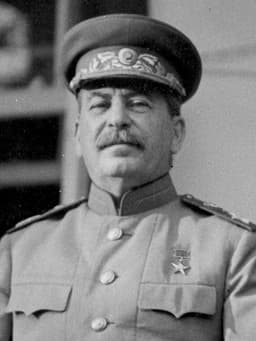
Joseph Stalin
Politician · Modern
68.8Total
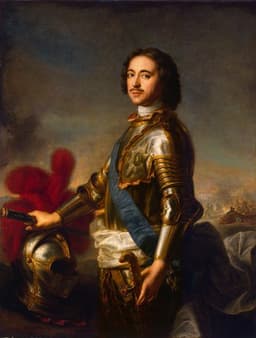
Peter the Great
Emperor · Modern
73.2Total
Basic Information
Born
1878
1672
Died
1953
1725
Era
Modern
Modern
Nationality
Russia
Russia
Occupation
Politician
Emperor
Civilization
Western
Western
Score Comparison
Military (10%)
75.0
75.0
Political (20%)
70.0
90.0
Influence (20%)
72.0
68.0
Legacy (20%)
55.0
65.0
Leadership (15%)
80.0
78.0
Strategy (15%)
70.0
72.0
TOTAL
68.8
73.2
Joseph Stalin — Complete Timeline
1928 AD
Launched the First Five-Year PlanReform
Stalin initiated a series of centralized economic plans aimed at rapid industrialization and collectivization of agriculture. The First Five-Year Plan set ambitious targets for heavy industry, leading to significant growth but also severe shortages and human cost.
Impact: global
1929 AD
Implemented forced collectivization of agricultureReform
Stalin ordered the consolidation of individual peasant farms into collective farms (kolkhozy). This was met with resistance, leading to the liquidation of kulaks (wealthy peasants) as a class. The policy caused a catastrophic famine, particularly in Ukraine (Holodomor), resulting in millions of deaths.
Impact: nationaldestructive
1937 AD
Conducted the Great Purge (Great Terror)Political Action
Stalin orchestrated a campaign of political repression against alleged enemies of the state. Millions were arrested, executed, or sent to the Gulag labor camps. The purges targeted the Communist Party, military leadership, intellectuals, and ordinary citizens, consolidating Stalin's absolute power.
Impact: nationaldestructive
1945 AD
Led the Soviet Union to victory in World War IIWar
Stalin served as Supreme Commander of the Soviet armed forces. The Soviet Union bore the brunt of the war against Nazi Germany, suffering immense casualties. The Red Army's victory at Stalingrad and the capture of Berlin were key turning points. The war ended with Soviet domination of Eastern Europe.
Impact: global
Established the Eastern Bloc and the Iron CurtainPolitical Action◆ Major
After WWII, Stalin imposed communist governments in Eastern European countries occupied by the Red Army, creating a buffer zone against the West. This division of Europe into Soviet and Western spheres of influence marked the beginning of the Cold War.
Impact: globaldestructive
Peter the Great — Complete Timeline
1697 AD
Grand EmbassyPolitical Action◆ Major
Peter the Great traveled incognito to Western Europe as part of a diplomatic mission. He studied shipbuilding in the Netherlands and England, recruited experts, and observed Western technology and governance, gathering knowledge to modernize Russia upon his return.
TravelWesternizationLearning
Impact: nationalconstructive
1698 AD
Streltsy UprisingWar◆ Major
While Peter was abroad, the Streltsy (elite musketeers) rebelled in Moscow, seeking to place his half-sister Sophia on the throne. Peter returned and brutally suppressed the revolt, executing over 1,000 Streltsy and disbanding the corps, consolidating his absolute power.
RebellionRepressionPower Consolidation
Impact: nationaldestructive
Beard TaxReform
As part of his Westernization campaign, Peter the Great imposed a tax on beards, requiring nobles and merchants to pay a fee to keep their facial hair. Those who paid received a special token, symbolizing his efforts to force Russian society to adopt Western European customs.
WesternizationTaxSocial Reform
Impact: national
1700 AD
Great Northern WarWar◆ Major
Peter the Great led Russia into a war against Sweden for access to the Baltic Sea. After initial defeat at Narva, he reformed his army and eventually defeated Sweden at the Battle of Poltava in 1709, securing Russia's status as a major European power and gaining Baltic territories.
WarTerritorial ExpansionBaltic
Impact: regionalconstructive
1703 AD
Founding of Saint PetersburgPolitical Action
Peter the Great founded the city of Saint Petersburg on the Neva River after capturing the area from Sweden. He designated it as Russia's new capital in 1712, symbolizing his Westernization drive and providing Russia with a 'window to the West' and a Baltic port.
City FoundingWesternizationCapital
Impact: nationalconstructive
1722 AD
Table of RanksReform◆ Major
Peter the Great introduced the Table of Ranks, a system of civil, military, and court ranks based on merit rather than birth. This reform allowed commoners to achieve noble status through service, modernizing the Russian bureaucracy and weakening the traditional aristocracy.
BureaucracyMeritocracySocial Reform
Impact: nationalprogressive
Expert Analysis
Peter the Great vs Joseph Stalin
### The Architect and the Executioner: Peter the Great and Joseph Stalin
In the winter of 1703, a giant of a man, over six and a half feet tall, stood on a swampy, mosquito-infested island at the mouth of the Neva River. Tsar Peter I, dressed in the simple clothes of a Dutch ship carpenter, saw not mud and misery, but a window to the West. He would build a city here, a capital carved from stone and will, a declaration that Russia would no longer be an Asian backwater. Two centuries later, another man, shorter, stocky, with a face scarred by smallpox, sat in a dark Kremlin office. Joseph Stalin looked at a map of the same vast empire and saw not a window, but a fortress. Where Peter sought to open Russia, Stalin sought to seal it, to forge it into an industrial and military machine through terror and iron discipline. Both were ruthless builders, but they built for profoundly different reasons, and the worlds they left behind could not be more different.
### Origins: The Window and the Fortress
Peter was born in 1672 into a chaotic, medieval Russia, a realm of boyars, bearded priests, and a deep suspicion of foreigners. His childhood was a violent tutorial. He witnessed the brutal Streltsy Uprising, a bloody revolt of the royal guard that massacred his relatives before his eyes. This trauma forged in him a visceral hatred of the old guard, the *starshina*, and a burning curiosity for the West. As a young man, he famously traveled incognito with the Grand Embassy of 1697, working in Dutch shipyards and English dockyards, learning the tools of modernity with his own hands. He was a man of action, a builder, a tinkerer.
Stalin, born in 1878 in the impoverished town of Gori, Georgia, emerged from a world of grinding poverty and a brutal, alcoholic father. His path was not to the shipyard, but to the seminary. He studied for the priesthood, but found his true gospel in the revolutionary writings of Karl Marx. His early life was a shadowy network of bank robberies and exile in Siberia, a life of conspiracy and survival. Where Peter learned from the open sea, Stalin learned from the closed cell. He was not a builder of ships, but a manipulator of men, a master of the apparatus of power.
### Rise to Power: The Hammer and the Sickle
Peter’s rise was a coup d’état. At seventeen, he crushed the Streltsy rebels, hanging them from the Kremlin walls, and seized sole power from his half-sister Sophia. His path was one of open force, a declaration of war against the past. He then plunged Russia into the Great Northern War against Sweden in 1700, a grueling 21-year conflict that would define his reign. The war was his forge; after a disastrous defeat at Narva, he rebuilt his army from scratch, learning from his enemies.
Stalin’s rise was a slow, silent poison. He did not seize power; he burrowed into it. After Lenin’s death in 1924, he outmaneuvered his rivals—Trotsky, Zinoviev, Kamenev—not in battle, but in the backrooms of the Politburo. He accumulated power through patronage, blackmail, and the careful placement of loyalists. By 1928, he was the undisputed master of the Soviet Union. His path was not a war against an external enemy, but a war of bureaucratic attrition.
### Leadership & Governance: The Scalpel and the Sledgehammer
Peter governed as a hands-on autocrat. He personally cut the beards of his boyars, imposed a Beard Tax on those who clung to tradition, and introduced the Table of Ranks in 1722, which allowed commoners to rise to nobility based on merit. He was a reformer who saw the state as a machine to be fixed. His military score of 75 reflects his pragmatic genius: he built a navy from nothing and defeated Sweden, securing a Baltic coastline. But his reforms were often brutal and superficial—he forced Western dress and shaved heads, but the soul of Russia remained largely untouched.
Stalin governed with a sledgehammer. The First Five-Year Plan, launched in 1928, was a forced march of industrialization. He collectivized agriculture in 1929, leading to a devastating famine in Ukraine. His political score of 72 masks a terrifying truth: he was a master of control, but his methods were the Great Terror of 1937, where millions were arrested, shot, or sent to the Gulag. Where Peter punished disobedience, Stalin destroyed entire categories of people. Peter’s Table of Ranks was a ladder; Stalin’s system was a trap door.
### Triumph & Tragedy: The City and the Cemetery
Peter’s greatest triumph was the founding of Saint Petersburg in 1703, a city built on the bones of thousands of serfs who died in the swamps. It was a monument to his will, a symbol of Russia’s entry into Europe. His tragedy was his own son, Alexei, whom he tortured to death for opposing his reforms. The personal and the political were one.
Stalin’s triumph was victory in World War II in 1945. As Supreme Commander, he led the Soviet Union through the most devastating war in history, crushing Nazi Germany at Stalingrad and Berlin. His tragedy was the cost. The war killed 27 million Soviets, and his pre-war purges had decimated the Red Army’s officer corps, costing countless lives. His victory was a hollow one, built on a mountain of his own people’s corpses.
### Character & Destiny: The Builder and the Paranoiac
Peter was driven by a restless, almost manic energy. He was curious, crude, and capable of great cruelty, but he believed in progress. His legacy score of 75 reflects a man who changed Russia’s trajectory, even if he could not change its essence.
Stalin was driven by paranoia. He saw enemies everywhere—in the peasant, the intellectual, the general, the comrade. His legacy score of 55 is the lowest among these titans, because his achievements are forever stained by the millions he killed. He did not build a nation; he built a prison.
### Legacy: The Eternal City and the Crumbling Empire
Peter the Great left a city. Saint Petersburg stands today, a cultural capital, a testament to his vision. He forced Russia into Europe, and though the journey was painful, it was irreversible. His influence score of 78 is a measure of that transformation.
Stalin left a system. The Soviet Union, the Eastern Bloc, the Iron Curtain—all were his creations. But they crumbled within four decades of his death. His influence was immense, but it was brittle. He is remembered today not as a builder, but as a tyrant.
### Conclusion: The Two Faces of Power
In the end, Peter and Stalin represent two faces of Russian autocracy. Peter was the architect who wanted to build a new house, even if it meant breaking windows and shattering old walls. Stalin was the executioner who wanted to lock the doors, to ensure no one could ever leave. One sought to open Russia to the world; the other sought to close it. Both succeeded, but at a terrible price. Their stories remind us that power, in any era, is a choice. It can be used to build a window, or to build a wall. Russia, to this day, is still deciding which one it wants.
Rankings
🥇
Peter the GreatLeader
Mil: 75.0Pol: 90.0Inf: 68.0
73.2
🥈
Joseph Stalin
Mil: 75.0Pol: 70.0Inf: 72.0
68.8
+4.4 behind
How This Comparison Works
Algorithm
Each figure is scored on 6 dimensions (0—100 scale) based on structured historical data: Military (10%), Political (20%), Influence (20%), Legacy (20%), Leadership (15%), Strategy (15%). The weighted total produces the final ranking.
Data Sources
Scores are computed from structured sub-indicators in the database. Scale factors adjust for era (Ancient ×0.85, Modern ×1.0) and civilization size (Eastern ×1.05, Other ×0.80) to account for differences in population and military scale.
Maximum 3 Figures
Comparisons are limited to 2—3 figures to ensure readability and statistical meaningfulness.
Error Margins
±5 points per dimension — Sub-scores are derived from historical records with inherent uncertainty. Two figures within 5 points on a dimension should be considered roughly equivalent in that area.
Total Score Accuracy
±3 points overall — The weighted combination of 6 dimensions produces a total score with approximately ±3 points of uncertainty. Differences of less than 3 points are not statistically significant— the figures are effectively tied.
Known Limitations
- Historical records are incomplete and uneven across civilizations
- Figures from oral-tradition societies may be underrepresented
- Occupation labels can misclassify multi-role figures
- Scores measure capability and impact, not moral character
- Quantitative scoring is a comparison tool, not absolute truth
Capability Radar
Military (10%) — Battles & Warfare
Battles
85
85
Win Rate
80
80
Expansion
85
90
Political (20%) — Governance & Reform
Reform
90
95
Diplomacy
70
80
Economy
85
85
Influence (20%) — Cultural & Global Reach
Cultural
70
85
Global
95
85
Legacy (20%) — Historical Impact
Historical
95
90
Longevity
80
85
Leadership (15%) — Power & Stability
Tenure
95
90
Stability
60
70
Strategy (15%) — Tactics & Innovation
Strategy
85
85
Tactics
60
75
Reform
90
95
Similar Comparisons
Comments & Discussion
TSAR HAMMER6/16/2026
Stalin’s Great Terror killed over 700,000 people in 1937-38 alone—more than Peter lost in the entire Great Northern War. That’s not nation-building, that’s genocide disguised as modernization. Peter executed maybe 1,200 Streltsy rebels, but Stalin starved millions. The scale difference is moral, not just numerical. Any military historian knows: forced industrialization built with corpses is no victory.
红场铁砧6/16/2026
说彼得是“西方之窗”,纯属刻板印象。他在莫斯科郊外建了个德国区,可那里面全是雇佣兵和酒鬼。真正的彼得大帝是个东正教暴君,他砍掉男孩的胡子时,可没问过荷兰人的意见。斯大林至少知道怎样用五年计划把农民变成工人,彼得呢?他把奴隶钉在木桩上,还管这叫改革。
VODKA REVISIONIST6/16/2026
Comparing Peter to Stalin is like comparing a sledgehammer to a nuclear bomb. Peter wanted to drag Russia into modernity by its hair; Stalin wanted to pulverize it and rebuild from scratch. The key difference: Peter borrowed Western tech and styles without destroying the old society, while Stalin literally exported grain during the Holodomor to buy machines. That’s not modernization—that’s a gulag with a five-year plan.
西伯利亚老兵6/16/2026
数据不说谎:彼得时代俄国人口约1400万,打仗死掉大概一个百分点。斯大林时代,光二战就损失2700万,加上大清洗和集体化饿死的,至少占战前人口的15%。效率呢?彼得用30年建了个首都,斯大林用30年建了个核武库。但人民愿意为彼得流的血,远比斯大林少得多。
FIRST EMPEROR'S GHOST6/16/2026
You revisionists keep missing the point: Peter wasn't a proto-Stalin—he was a reactionary autocrat who hated bureaucrats. Stalin built a managerial state; Peter distrusted all clerks and gave power to favorites like Menshikov, a peasant who could barely read. Stalin’s terror was systematic, cold, and bureaucratic; Peter’s was personal, hot-blooded, and theatrical. One was a calculator, the other a hurricane.