Loading...
Joseph Stalin vs Nelson Mandela
Joseph Stalin leads by 11.8 pts · 2 figures compared
…
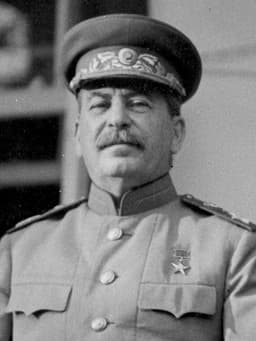
Joseph Stalin
Politician · Modern
68.8Total
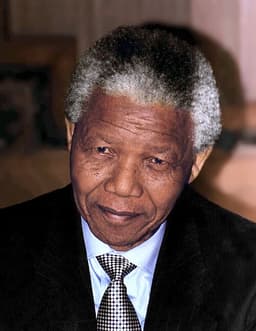
Nelson Mandela
Politician · Modern
57.0Total
Basic Information
Born
1878
1918
Died
1953
2013
Era
Modern
Modern
Nationality
Russia
South Africa
Occupation
Politician
Politician
Civilization
Western
Other
Score Comparison
Military (10%)
75.0
10.0
Political (20%)
70.0
78.0
Influence (20%)
72.0
40.0
Legacy (20%)
55.0
68.0
Leadership (15%)
80.0
82.0
Strategy (15%)
70.0
50.0
TOTAL
68.8
57.0
Joseph Stalin — Complete Timeline
1928 AD
Launched the First Five-Year PlanReform
Stalin initiated a series of centralized economic plans aimed at rapid industrialization and collectivization of agriculture. The First Five-Year Plan set ambitious targets for heavy industry, leading to significant growth but also severe shortages and human cost.
Impact: global
1929 AD
Implemented forced collectivization of agricultureReform
Stalin ordered the consolidation of individual peasant farms into collective farms (kolkhozy). This was met with resistance, leading to the liquidation of kulaks (wealthy peasants) as a class. The policy caused a catastrophic famine, particularly in Ukraine (Holodomor), resulting in millions of deaths.
Impact: nationaldestructive
1937 AD
Conducted the Great Purge (Great Terror)Political Action
Stalin orchestrated a campaign of political repression against alleged enemies of the state. Millions were arrested, executed, or sent to the Gulag labor camps. The purges targeted the Communist Party, military leadership, intellectuals, and ordinary citizens, consolidating Stalin's absolute power.
Impact: nationaldestructive
1945 AD
Led the Soviet Union to victory in World War IIWar
Stalin served as Supreme Commander of the Soviet armed forces. The Soviet Union bore the brunt of the war against Nazi Germany, suffering immense casualties. The Red Army's victory at Stalingrad and the capture of Berlin were key turning points. The war ended with Soviet domination of Eastern Europe.
Impact: global
Established the Eastern Bloc and the Iron CurtainPolitical Action◆ Major
After WWII, Stalin imposed communist governments in Eastern European countries occupied by the Red Army, creating a buffer zone against the West. This division of Europe into Soviet and Western spheres of influence marked the beginning of the Cold War.
Impact: globaldestructive
Nelson Mandela — Complete Timeline
1964 AD
Rivonia TrialPolitical Action
Nelson Mandela and other anti-apartheid leaders were tried for sabotage and conspiracy. Mandela was sentenced to life imprisonment, delivering a speech from the dock that became a rallying cry against apartheid. The trial drew international attention to the anti-apartheid struggle.
Impact: global
1990 AD
Release from PrisonPolitical Action
After 27 years of imprisonment, Mandela was released from Victor Verster Prison by President F.W. de Klerk. His release was a pivotal moment in South Africa's transition from apartheid to multiracial democracy, leading to negotiations for a new constitution.
Impact: globalprogressive
1993 AD
Awarding of the Nobel Peace PrizeCultural◆ Major
Mandela and F.W. de Klerk were jointly awarded the Nobel Peace Prize for their roles in ending apartheid and laying the foundations for a democratic South Africa. The award recognized their peaceful transition and commitment to reconciliation.
Impact: globalprogressive
1994 AD
Inauguration as President of South AfricaPolitical Action
Mandela was inaugurated as South Africa's first Black president after the country's first fully democratic elections. His presidency focused on national reconciliation, establishing the Truth and Reconciliation Commission, and dismantling the legacy of apartheid.
Impact: globalprogressive
Expert Analysis
Nelson Mandela vs Joseph Stalin
### The Prisoner and the Tyrant: Two Paths to Power in the Modern Age
In the spring of 1994, Nelson Mandela stood before a crowd in Pretoria, his hand raised in a gesture of peace, about to be sworn in as South Africa’s first Black president. A few thousand miles away, in a Moscow mausoleum, the embalmed body of Joseph Stalin lay encased in glass, a monument to a man who had died four decades earlier, his legacy already crumbling. Both men dominated the twentieth century, yet they could not have been more different. One emerged from a prison cell to forge a nation; the other emerged from a revolutionary underground to forge an empire of fear. What explains the chasm between them? The answer lies not merely in their choices, but in the soil from which they grew.
### Origins
Nelson Mandela was born in 1918 in the rural village of Mvezo, in the Eastern Cape of South Africa. His father was a chief of the Thembu people, and Mandela grew up steeped in the traditions of tribal council—where decisions were made through consensus, where elders listened before they spoke. He was educated at missionary schools and later at the University of Fort Hare, a crucible for Black intellectuals. The world he entered was one of legalized racial oppression, the apartheid system that stripped Black South Africans of citizenship, land, and dignity. Mandela’s early life taught him the power of words, of patience, and of the long view.
Joseph Stalin was born in 1878 in Gori, Georgia, a small town in the Russian Empire. His father was a violent alcoholic shoemaker; his mother, a devout peasant. Stalin grew up in poverty and brutality, a world where survival meant cunning and strength. He was educated at a theological seminary, but instead of becoming a priest, he became a revolutionary. The Russia of his youth was a decaying autocracy, where dissent meant exile or death. Stalin’s early life taught him that trust was a weakness, that power was the only currency, and that the ends justified any means.
The difference is profound. Mandela’s world was one of community and dialogue; Stalin’s was one of scarcity and suspicion. One man learned to build bridges; the other learned to burn them.
### Rise to Power
Mandela’s path to power was a gradual, grinding ascent through the ranks of the African National Congress (ANC). In the 1950s, he was a lawyer and activist, organizing peaceful protests and defiance campaigns. But after the Sharpeville massacre of 1960, when police killed 69 peaceful protesters, the ANC turned to armed struggle. Mandela co-founded Umkhonto we Sizwe, the armed wing, and went underground. In 1964, he was captured and put on trial—the Rivonia Trial. Facing the death penalty, he stood in the courtroom and declared: “I have fought against white domination, and I have fought against black domination. I have cherished the ideal of a democratic and free society… It is an ideal for which I am prepared to die.” He was sentenced to life in prison. For 27 years, he was silenced.
Stalin’s path was a ruthless climb through the Bolshevik apparatus. He was a minor figure in the 1917 Revolution, but he maneuvered into key posts—Commissar of Nationalities, General Secretary of the Communist Party. The latter role, seemingly administrative, became his springboard. He packed the party with loyalists, exploited factional splits, and outmaneuvered rivals like Trotsky and Bukharin. By the late 1920s, he was the undisputed leader. Where Mandela’s rise was marked by principle, Stalin’s was marked by calculation. Mandela was imprisoned for his beliefs; Stalin imprisoned others for his.
### Leadership & Governance
As president from 1994 to 1999, Mandela governed with a philosophy of reconciliation. He invited his former jailers to his inauguration, wore the jersey of the white Springboks rugby team, and established the Truth and Reconciliation Commission to heal wounds, not punish them. His political strategy was one of inclusion—building a multiracial South Africa where former enemies could live together. His military score of 10.0 reflects his lack of battlefield command, but his leadership score of 85.0 speaks to his ability to lead a nation through moral example.
Stalin, as Soviet leader from the late 1920s until his death in 1953, governed through terror. He launched the First Five-Year Plan in 1928, forcing rapid industrialization at immense human cost. Forced collectivization of agriculture in 1929 led to a famine that killed millions in Ukraine and elsewhere. The Great Purge of 1937 saw the arrest, execution, or exile of millions more—party officials, intellectuals, army officers, ordinary citizens. His military score of 75.0 reflects his role as Supreme Commander during World War II, where he led the Soviet Union to victory in 1945, but at a staggering cost of 27 million Soviet lives. His leadership was based on fear, not inspiration.
### Triumph & Tragedy
Mandela’s greatest triumph was the 1994 election, a peaceful transition from apartheid to democracy. His Nobel Peace Prize in 1993, shared with F.W. de Klerk, was the world’s recognition of that miracle. His tragedy was the long imprisonment, the years stolen from his family and his people. But he turned that tragedy into a source of moral authority.
Stalin’s greatest triumph was the defeat of Nazi Germany in 1945. The Red Army’s capture of Berlin and the establishment of the Eastern Bloc—an Iron Curtain across Europe—cemented the Soviet Union as a superpower. His tragedy was the cost: a society built on graves. The purges, the famines, the gulags—millions of lives sacrificed to his paranoia and ambition.
### Character & Destiny
Mandela’s character was forged in prison. He learned to control his anger, to see his enemies as humans, to negotiate from strength without vengeance. His destiny was to be a unifier, a father of a nation. Stalin’s character was forged in the underworld of revolution. He saw betrayal everywhere, trusted no one, and believed that power was the only reality. His destiny was to be a destroyer, a builder of a system that ultimately crumbled under its own weight.
### Legacy
Mandela is remembered today as a global icon of peace and forgiveness. His legacy score of 78.0 reflects a man whose influence transcended his country. Statues stand in his honor, schools bear his name, and his image is a symbol of hope. But his legacy is also contested—critics note that economic inequality in South Africa remains severe, that the ANC has struggled with corruption.
Stalin’s legacy is a shadow. His score of 55.0 reflects a man reviled by many, defended by a few. In Russia, his image has been partially rehabilitated by some who see him as a wartime leader who made the nation strong. But for the world, he remains a byword for tyranny. The mausoleum in Red Square still holds his body, but the soul of his system is long dead.
### Conclusion
What drove these two men down such different paths? It was not fate, but the choices they made in the crucible of history. Mandela, faced with oppression, chose to resist with dignity. Stalin, faced with chaos, chose to control with terror. One built a nation on the promise of reconciliation; the other built an empire on the rubble of human lives. Their stories remind us that power is a tool, not a destiny. It can heal or destroy, depending on the hands that hold it. And in the end, history judges not by the force of the grip, but by the humanity of the touch.
Rankings
🥇
Joseph StalinLeader
Mil: 75.0Pol: 70.0Inf: 72.0
68.8
🥈
Nelson Mandela
Mil: 10.0Pol: 78.0Inf: 40.0
57.0
+11.8 behind
How This Comparison Works
Algorithm
Each figure is scored on 6 dimensions (0—100 scale) based on structured historical data: Military (10%), Political (20%), Influence (20%), Legacy (20%), Leadership (15%), Strategy (15%). The weighted total produces the final ranking.
Data Sources
Scores are computed from structured sub-indicators in the database. Scale factors adjust for era (Ancient ×0.85, Modern ×1.0) and civilization size (Eastern ×1.05, Other ×0.80) to account for differences in population and military scale.
Maximum 3 Figures
Comparisons are limited to 2—3 figures to ensure readability and statistical meaningfulness.
Error Margins
±5 points per dimension — Sub-scores are derived from historical records with inherent uncertainty. Two figures within 5 points on a dimension should be considered roughly equivalent in that area.
Total Score Accuracy
±3 points overall — The weighted combination of 6 dimensions produces a total score with approximately ±3 points of uncertainty. Differences of less than 3 points are not statistically significant— the figures are effectively tied.
Known Limitations
- Historical records are incomplete and uneven across civilizations
- Figures from oral-tradition societies may be underrepresented
- Occupation labels can misclassify multi-role figures
- Scores measure capability and impact, not moral character
- Quantitative scoring is a comparison tool, not absolute truth
Capability Radar
Military (10%) — Battles & Warfare
Battles
85
0
Win Rate
80
7
Expansion
85
9
Political (20%) — Governance & Reform
Reform
90
95
Diplomacy
70
95
Economy
85
60
Influence (20%) — Cultural & Global Reach
Cultural
70
85
Global
95
90
Legacy (20%) — Historical Impact
Historical
95
90
Longevity
80
80
Leadership (15%) — Power & Stability
Tenure
95
60
Stability
60
80
Strategy (15%) — Tactics & Innovation
Strategy
85
8
Tactics
60
12
Reform
90
17
Similar Comparisons
Comments & Discussion
No comments yet. Be the first to share your thoughts!