Loading...
George Washington vs Joseph Stalin
George Washington leads by 8.0 pts · 2 figures compared
…
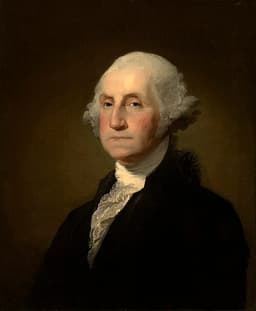
George Washington
Politician · Modern
76.8Total
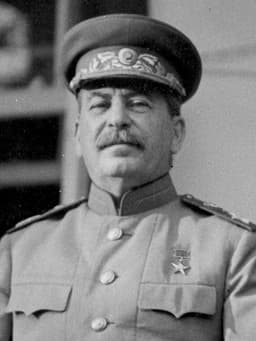
Joseph Stalin
Politician · Modern
68.8Total
Basic Information
Born
1732
1878
Died
1799
1953
Era
Modern
Modern
Nationality
United States
Russia
Occupation
Politician
Politician
Civilization
Western
Western
Score Comparison
Military (10%)
75.0
75.0
Political (20%)
82.0
70.0
Influence (20%)
75.0
72.0
Legacy (20%)
80.0
55.0
Leadership (15%)
85.0
80.0
Strategy (15%)
55.0
70.0
TOTAL
76.8
68.8
George Washington — Complete Timeline
1775 AD
Appointed Commander-in-Chief of the Continental ArmyOther◆ Major
The Second Continental Congress appointed Washington as commander-in-chief of the Continental Army on June 15, 1775. He accepted the position without pay, taking command of the forces besieging Boston at the start of the American Revolutionary War.
American RevolutionMilitary Leadership
Impact: national
1776 AD
Crossed the Delaware RiverOther◆ Major
On the night of December 25-26, 1776, Washington led 2,400 troops across the ice-choked Delaware River. The surprise attack on Hessian forces at Trenton resulted in a decisive American victory, capturing nearly 1,000 prisoners and reviving Patriot morale after a series of defeats.
American RevolutionBattleTurning Point
Impact: nationalconstructive
1787 AD
Presided over the Constitutional ConventionPolitical Action◆ Major
Washington served as president of the Constitutional Convention in Philadelphia from May to September 1787. His presence lent legitimacy to the proceedings, and he formally signed the final draft of the U.S. Constitution, though he contributed little to the debates.
ConstitutionFounding Father
Impact: national
1789 AD
Inaugurated as First President of the United StatesPolitical Action◆ Major
Washington was unanimously elected by the Electoral College and inaugurated on April 30, 1789, at Federal Hall in New York City. He established numerous executive branch precedents, including the cabinet system, the inaugural address, and the title 'Mr. President'.
PresidencyFounding Father
Impact: national
1793 AD
Issued the Proclamation of NeutralityOther◆ Major
Washington issued the Proclamation of Neutrality on April 22, 1793, declaring the United States neutral in the conflict between France and Great Britain. This decision established the precedent of American isolationism and avoided entanglement in European wars.
Foreign PolicyNeutrality
Impact: national
1796 AD
Delivered the Farewell AddressOther◆ Major
Washington published his Farewell Address on September 19, 1796, announcing his decision not to seek a third term. The address warned against political factionalism, permanent foreign alliances, and the influence of the military in government, shaping American political culture.
PresidencyLegacy
Impact: national
Joseph Stalin — Complete Timeline
1928 AD
Launched the First Five-Year PlanReform
Stalin initiated a series of centralized economic plans aimed at rapid industrialization and collectivization of agriculture. The First Five-Year Plan set ambitious targets for heavy industry, leading to significant growth but also severe shortages and human cost.
Impact: global
1929 AD
Implemented forced collectivization of agricultureReform
Stalin ordered the consolidation of individual peasant farms into collective farms (kolkhozy). This was met with resistance, leading to the liquidation of kulaks (wealthy peasants) as a class. The policy caused a catastrophic famine, particularly in Ukraine (Holodomor), resulting in millions of deaths.
Impact: nationaldestructive
1937 AD
Conducted the Great Purge (Great Terror)Political Action
Stalin orchestrated a campaign of political repression against alleged enemies of the state. Millions were arrested, executed, or sent to the Gulag labor camps. The purges targeted the Communist Party, military leadership, intellectuals, and ordinary citizens, consolidating Stalin's absolute power.
Impact: nationaldestructive
1945 AD
Led the Soviet Union to victory in World War IIWar
Stalin served as Supreme Commander of the Soviet armed forces. The Soviet Union bore the brunt of the war against Nazi Germany, suffering immense casualties. The Red Army's victory at Stalingrad and the capture of Berlin were key turning points. The war ended with Soviet domination of Eastern Europe.
Impact: global
Established the Eastern Bloc and the Iron CurtainPolitical Action◆ Major
After WWII, Stalin imposed communist governments in Eastern European countries occupied by the Red Army, creating a buffer zone against the West. This division of Europe into Soviet and Western spheres of influence marked the beginning of the Cold War.
Impact: globaldestructive
Expert Analysis
George Washington vs Joseph Stalin
### The Reluctant Father and the Absolute Master
On a December night in 1799, a 67-year-old man lay dying in his bed at Mount Vernon, Virginia. He had spent the day inspecting his farms on horseback, caught in a mix of rain and snow, and returned with a sore throat. As the infection swelled his windpipe, his doctors bled him repeatedly—a practice he had once authorized for his soldiers. He did not complain. "I die hard," he whispered, "but I am not afraid to go." Across the Atlantic and a century and a half later, another man, in his seventies, sat in a dacha outside Moscow. He had just overseen a vast parade celebrating his own genius. That night, he collapsed from a cerebral hemorrhage. His body lay unattended for hours, because his terrified inner circle dared not approach. One was the father of a nation that had to be invented; the other, the master of a nation that had to be remade in his image. Both were modern, Western men. Their paths could not have diverged more sharply—and the gap between them reveals the terrifying power of choice in history.
### Origins
Washington was born into the Virginia gentry in 1732, a world of tobacco plantations, enslaved labor, and the rituals of British colonial deference. His father died when he was eleven, leaving him without a university education but with a fierce hunger for self-improvement. He taught himself surveying, read manuals on military tactics, and absorbed the Enlightenment ideals of civic virtue and honor. His America was a society of local elites, where a man's reputation was his currency.
Stalin emerged from a radically different soil. Born Ioseb Jughashvili in 1878 in the Georgian town of Gori, his father was a cobbler who beat him; his mother, a devout washerwoman. He entered a seminary but was expelled for reading Marxist literature. The Russian Empire was a crumbling autocracy, brutal and vast, where dissent meant exile or death. Where Washington learned to negotiate with neighbors, Stalin learned to survive within a system of spies, informants, and secret police. His early life was a school of suspicion.
### Rise to Power
Washington’s ascent was a study in steady accumulation of trust. He served as a young officer in the French and Indian War, where his rashness led to a disastrous surrender—a mistake he never repeated. He returned to Virginia, married Martha Custis, and became a prosperous planter. When the colonies rebelled, the Continental Congress chose him to lead the army not because he was the most brilliant general, but because he was the most uniting figure—a Southerner who could hold together a fragile coalition of New Englanders and Virginians.
Stalin’s rise was a labyrinth of cunning. He joined the Bolshevik underground, robbed banks to fund the party, and spent years in Siberian exile. After the 1917 Revolution, he rose through the ranks of the Soviet bureaucracy, positioning himself as the man who managed the machine. While Leon Trotsky was the charismatic orator and Lenin the ideological genius, Stalin became the general secretary—a dull title that gave him control over appointments. He waited, outmaneuvered his rivals one by one, and by the late 1920s, he stood alone. His path was not one of earned trust, but of accumulated leverage.
### Leadership & Governance
Washington’s leadership was defined by restraint. As commander of the Continental Army, he held a near-dictatorial power but repeatedly deferred to Congress. After the war, he resigned his commission—an act that shocked King George III, who called it "the greatest character of the age." As president, he surrounded himself with rivals like Thomas Jefferson and Alexander Hamilton, believing that debate strengthened the republic. He established the tradition of a two-term limit and the cabinet system. His greatest reform was the Constitution itself, which he helped shape as president of the Constitutional Convention.
Stalin’s governance was the opposite: total control. He launched the First Five-Year Plan in 1928, forcing rapid industrialization through centralized commands. He collectivized agriculture in 1929, seizing grain from peasants and triggering a famine that killed millions in Ukraine and the Volga region. Those who resisted were declared "enemies of the state." In 1937, he unleashed the Great Purge, executing or imprisoning nearly a million people—including most of the army’s officer corps. His military genius lay not in strategy but in grim endurance: during World War II, he accepted staggering losses—over 20 million Soviet deaths—and refused to retreat from Stalingrad or Moscow. He was a commander who fed his own army into the meat grinder and dared the enemy to match his cruelty.
### Triumph & Tragedy
Washington’s greatest moment was the winter of 1776, when he crossed the Delaware River on Christmas night and surprised the Hessian garrison at Trenton. It was a small victory, but it saved the revolution from collapse. His greatest tragedy was the thing he could not fix: the institution of slavery. He owned hundreds of enslaved people at Mount Vernon, and while he privately expressed discomfort with the system, he freed his slaves only in his will. The republic he founded would tear itself apart over that sin eighty years later.
Stalin’s triumph was 1945. The Red Army captured Berlin, and the Soviet Union emerged as a superpower. He stood on Lenin’s mausoleum as victory banners were thrown at his feet. But his tragedy was the cost: a nation hollowed out by famine, purges, and war. He had killed more of his own people than Hitler had. And the Eastern Bloc he created after the war—the Iron Curtain—trapped millions behind a wall of fear for four decades.
### Character & Destiny
Washington was a man of immense self-control. He suppressed his temper, cultivated dignity, and worried constantly about his legacy. He believed that a republic required virtuous citizens, and he tried to be the model. His decisions were shaped by a fear of chaos—he had seen what mob rule could do. That fear made him cautious, but it also made him wise.
Stalin was paranoid, vengeful, and deeply insecure. He saw enemies everywhere because he had made enemies of everyone. His character—the seminary dropout who never forgot a slight—drove him to eliminate anyone who could threaten him. That paranoia made the Soviet Union a police state, but it also made him ruthless enough to defeat Nazi Germany. His destiny was to be the man who industrialized a peasant nation at the cost of its soul.
### Legacy
Washington is remembered as the "Father of His Country," his face on the dollar bill, his name on the capital. His greatest legacy is the peaceful transfer of power—a radical idea in an age of kings. He proved that a revolutionary could lay down power.
Stalin’s legacy is a shadow. In Russia today, some polls show a grudging respect for his wartime leadership, but the memory of the Gulag and the famine haunts the nation. His statues have fallen; his archives remain half-open. He is a warning about what happens when the state becomes an extension of one man’s rage.
### Conclusion
Standing at the end of their lives, both men faced the same question: What do you leave behind? Washington left a system designed to outlast him. Stalin left a system that could not function without him. One built a republic; the other built a prison. The difference was not in their eras—both lived in times of revolution and war. It was not in their intelligence—both were brilliant. The difference was in what they believed about power. Washington believed it was a trust; Stalin believed it was a weapon. The rest is history—and the choice is still ours.
Rankings
🥇
George WashingtonLeader
Mil: 75.0Pol: 82.0Inf: 75.0
76.8
🥈
Joseph Stalin
Mil: 75.0Pol: 70.0Inf: 72.0
68.8
+8.0 behind
How This Comparison Works
Algorithm
Each figure is scored on 6 dimensions (0—100 scale) based on structured historical data: Military (10%), Political (20%), Influence (20%), Legacy (20%), Leadership (15%), Strategy (15%). The weighted total produces the final ranking.
Data Sources
Scores are computed from structured sub-indicators in the database. Scale factors adjust for era (Ancient ×0.85, Modern ×1.0) and civilization size (Eastern ×1.05, Other ×0.80) to account for differences in population and military scale.
Maximum 3 Figures
Comparisons are limited to 2—3 figures to ensure readability and statistical meaningfulness.
Error Margins
±5 points per dimension — Sub-scores are derived from historical records with inherent uncertainty. Two figures within 5 points on a dimension should be considered roughly equivalent in that area.
Total Score Accuracy
±3 points overall — The weighted combination of 6 dimensions produces a total score with approximately ±3 points of uncertainty. Differences of less than 3 points are not statistically significant— the figures are effectively tied.
Known Limitations
- Historical records are incomplete and uneven across civilizations
- Figures from oral-tradition societies may be underrepresented
- Occupation labels can misclassify multi-role figures
- Scores measure capability and impact, not moral character
- Quantitative scoring is a comparison tool, not absolute truth
Capability Radar
Military (10%) — Battles & Warfare
Battles
75
85
Win Rate
70
80
Expansion
60
85
Political (20%) — Governance & Reform
Reform
90
90
Diplomacy
85
70
Economy
65
85
Influence (20%) — Cultural & Global Reach
Cultural
85
70
Global
85
95
Legacy (20%) — Historical Impact
Historical
95
95
Longevity
90
80
Leadership (15%) — Power & Stability
Tenure
70
95
Stability
85
60
Strategy (15%) — Tactics & Innovation
Strategy
80
85
Tactics
65
60
Reform
85
90
Similar Comparisons
Comments & Discussion
数据狂人6/16/2026
这个对比把两人的死亡方式说得太浪漫了。华盛顿被放血治疗,这是18世纪的常规做法,不是"沉默受苦"的证明。斯大林脑溢血后无人敢靠近,这是苏联政治恐怖文化的直接结果——但两位都死在自己的床上,都活了六十多岁,在各自时代已是高龄。数据上看,这两位都是成功的老头子,都不是战场阵亡或被公开处决。非要拔高成一个"自由之父"对"恐怖之主",未免太戏剧化了。
历史迷6/16/2026
我要为华盛顿说句话:他主动放弃权力的行为在整个历史上都是罕见的。凯撒没有,拿破仑没有,列宁也没有。斯大林建立个人崇拜,华盛顿拒绝第三任期,这不是性格差异,这是价值选择的鸿沟。华盛顿深知自己没有军事或政治天赋的垄断权,斯大林则把整个国家变成了他的私有财产。对比两人如何对待异见者就够了——华盛顿签署了赦免法案,斯大林搞了大清洗。数字不会说谎。
Historian6676/16/2026
Calling Washington "reluctant" misses the point. He was a shrewd political operator who knew when to step back and let others worship his image. History is full of leaders who overstay their welcome—he didn't. Compare that to Stalin's paranoid cult where you couldn't leave even if you wanted to. Washington built a system that could survive him; Stalin built one that couldn't function without him. That's not reluctance, that's genius-level foresight.
BoldEye806/16/2026
The real difference isn't character—it's time. Washington died in 1799, when the Enlightenment was still fresh and nation-building was experimental. Stalin died in 1953, after two world wars and industrial totalitarianism had proven what a single man could do with modern bureaucracy and propaganda. Washington couldn't have become Stalin even if he wanted to; the tools didn't exist. And Stalin couldn't have become Washington—he'd have been crushed by the 18th-century plantation elite. History gav
Historian6126/16/2026
This comparison is intellectually lazy. You're using death scenes to moralize about two completely different historical contexts. Washington owned hundreds of slaves and ran a plantation economy that literally built America on stolen labor. Stalin industrialized a backwards country at horrific human cost. Both were ruthless modernizers who used violence and hierarchy to achieve their goals. The "father" vs "master" framing is just patriotic fluff. Let's talk about the native Americans Washington