Loading...
Joseph Stalin vs Mahatma Gandhi
Joseph Stalin leads by 0.1 pts · 2 figures compared
…
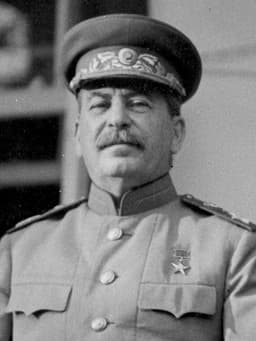
Joseph Stalin
Politician · Modern
68.8Total
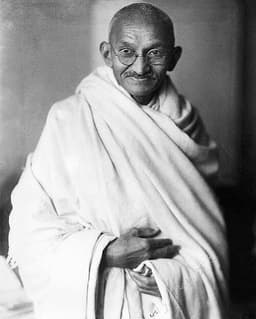
Mahatma Gandhi
Politician · Modern
68.7Total
Basic Information
Born
1878
1869
Died
1953
1948
Era
Modern
Modern
Nationality
Russia
India
Occupation
Politician
Politician
Civilization
Western
Indian
Score Comparison
Military (10%)
75.0
42.3
Political (20%)
70.0
65.0
Influence (20%)
72.0
80.0
Legacy (20%)
55.0
75.0
Leadership (15%)
80.0
70.0
Strategy (15%)
70.0
55.0
TOTAL
68.8
68.7
Joseph Stalin — Complete Timeline
1928 AD
Launched the First Five-Year PlanReform
Stalin initiated a series of centralized economic plans aimed at rapid industrialization and collectivization of agriculture. The First Five-Year Plan set ambitious targets for heavy industry, leading to significant growth but also severe shortages and human cost.
Impact: global
1929 AD
Implemented forced collectivization of agricultureReform
Stalin ordered the consolidation of individual peasant farms into collective farms (kolkhozy). This was met with resistance, leading to the liquidation of kulaks (wealthy peasants) as a class. The policy caused a catastrophic famine, particularly in Ukraine (Holodomor), resulting in millions of deaths.
Impact: nationaldestructive
1937 AD
Conducted the Great Purge (Great Terror)Political Action
Stalin orchestrated a campaign of political repression against alleged enemies of the state. Millions were arrested, executed, or sent to the Gulag labor camps. The purges targeted the Communist Party, military leadership, intellectuals, and ordinary citizens, consolidating Stalin's absolute power.
Impact: nationaldestructive
1945 AD
Led the Soviet Union to victory in World War IIWar
Stalin served as Supreme Commander of the Soviet armed forces. The Soviet Union bore the brunt of the war against Nazi Germany, suffering immense casualties. The Red Army's victory at Stalingrad and the capture of Berlin were key turning points. The war ended with Soviet domination of Eastern Europe.
Impact: global
Established the Eastern Bloc and the Iron CurtainPolitical Action◆ Major
After WWII, Stalin imposed communist governments in Eastern European countries occupied by the Red Army, creating a buffer zone against the West. This division of Europe into Soviet and Western spheres of influence marked the beginning of the Cold War.
Impact: globaldestructive
Mahatma Gandhi — Complete Timeline
1917 AD
Champaran SatyagrahaPolitical Action
Gandhi led his first nonviolent protest in India, supporting indigo farmers in Champaran, Bihar, against exploitative British planters. He organized a campaign of civil disobedience and negotiations, resulting in the abolition of the oppressive tinkathia system.
Civil disobedienceFarmers' rightsBritish Raj
Impact: nationalprogressive
1919 AD
Jallianwala Bagh massacre aftermathPolitical Action◆ Major
After British troops killed hundreds of unarmed civilians in Amritsar, Gandhi organized a nationwide hartal (strike) and nonviolent protests. He returned his medals and launched the Rowlatt Satyagraha, marking a shift from cooperation to non-cooperation with British rule.
ProtestBritish RajMassacre
Impact: nationaltragic
1930 AD
Salt MarchPolitical Action
Gandhi led a 240-mile march from Sabarmati to Dandi, Gujarat, to defy the British salt monopoly. Thousands joined him, making salt from seawater. This act of civil disobedience sparked mass protests across India and drew global attention to the independence movement.
Civil disobedienceSalt taxIndependence movement
Impact: globalprogressive
1942 AD
Quit India Movement launchPolitical Action◆ Major
Gandhi launched the Quit India Movement, calling for an end to British rule with the slogan 'Do or Die'. The British arrested him and other leaders, but the movement led to widespread protests and repression, accelerating the end of colonial rule.
IndependenceCivil disobedienceBritish Raj
Impact: nationalprogressive
1948 AD
AssassinationPolitical Action
Gandhi was shot and killed by Nathuram Godse, a Hindu nationalist, during a prayer meeting in New Delhi. His assassination shocked the world and led to a wave of grief and violence, but also reinforced his legacy as a martyr for nonviolence.
AssassinationMartyrdomNonviolence
Impact: globaltragic
Expert Analysis
Mahatma Gandhi vs Joseph Stalin
### Two Paths to Power: Gandhi and Stalin
In the winter of 1948, as the world mourned the assassination of a man in a simple white dhoti, the other sat in the Kremlin, surrounded by the trappings of absolute power. One had died with a prayer on his lips, the other would die five years later in a paranoid fit, his bodyguards too terrified to enter his room. Both were titans of the twentieth century, yet they represent perhaps the most extreme poles of human leadership: the saint and the tyrant. How did two men, born barely a decade apart, come to shape the world so differently?
### Origins
Mohandas Karamchand Gandhi was born in 1869 into a devout Hindu family in the coastal town of Porbandar, India. His father was a chief minister in a small princely state, his mother a deeply religious woman who instilled in him the principles of non-violence and fasting. The young Gandhi was a mediocre student, shy and afraid of the dark. It was in London, studying law, and later in South Africa, that he began to forge his identity. There, thrown off a train for being a "colored" man, he experienced racism firsthand. This humiliation, coupled with his reading of the Bhagavad Gita, Tolstoy, and Thoreau, crystallized his philosophy of *Satyagraha*—truth-force, or nonviolent resistance.
Iosif Vissarionovich Dzhugashvili, later known as Stalin, was born in 1878 in Gori, Georgia, a poor, violent corner of the Russian Empire. His father was a cobbler and a drunkard who beat him; his mother was a devout washerwoman who wanted him to become a priest. Stalin, unlike Gandhi, was a brilliant student at the Tiflis Theological Seminary, but he was expelled for reading revolutionary literature. Where Gandhi found his calling in the law and moral philosophy, Stalin found his in the underground world of Marxist revolutionaries. The world of bank robberies, exiles, and secret police forged a man who saw power as the only currency, and ruthlessness as the only virtue.
### Rise to Power
Gandhi’s rise was gradual, a slow accretion of moral authority. His first major act in India was the 1917 Champaran Satyagraha, a protest against the forced cultivation of indigo by British planters. He did not seek to overthrow the government; he sought to redress a specific injustice. The turning point came in 1930 with the Salt March. In a moment of breathtaking political theatre, Gandhi led a 240-mile march to the sea to make salt, a direct challenge to the British monopoly. The image of the frail old man picking up a lump of natural salt was a masterstroke of strategy. It was not a battle of armies, but a battle of symbols. He won by losing—by being beaten, arrested, and humiliated, he exposed the moral bankruptcy of the Empire.
Stalin’s rise was a brutal climb over the bodies of his rivals. After Lenin’s death in 1924, Stalin, as General Secretary, used his position to pack the party with his loyalists. He outmaneuvered the charismatic Leon Trotsky, the intellectual Nikolai Bukharin, and all others. His was a politics of patience and poison. He did not lead a march; he manipulated a machine. By 1928, he was the unchallenged master of the Soviet Union, a position he secured not through popular acclaim, but through a mastery of backroom alliances and terror.
### Leadership & Governance
As a leader, Gandhi was a revolutionary of the soul. He had no army, no treasury, no state. His "governance" was a constant act of moral suasion. He led the Quit India Movement in 1942 with the slogan "Do or Die," a call to mass civil disobedience that paralyzed the British administration. His political wisdom lay in his understanding that the British could not rule India if Indians refused to cooperate. His reforms were social as well as political: he fought against untouchability, championed village industries, and promoted religious harmony. His leadership score of 75.0 reflects this unique ability to inspire without coercion.
Stalin governed with an iron fist and a five-year plan. He launched the First Five-Year Plan in 1928, a crash course in industrialization that transformed a peasant nation into a military superpower. But the cost was staggering. Forced collectivization of agriculture in 1929 led to a famine that killed millions in Ukraine and Kazakhstan. The Great Purge of 1937 saw the execution or imprisonment of over a million people, including most of the Red Army’s officer corps. Yet, when World War II came, it was this same brutal state that, under Stalin’s supreme command, crushed the Nazi war machine at Stalingrad and Berlin. His military score of 75.0 acknowledges his cold, strategic genius, but his legacy score of 55.0 reflects the moral abyss of his methods.
### Triumph & Tragedy
Gandhi’s greatest triumph was Indian independence in August 1947. His greatest tragedy was the partition of India into India and Pakistan, a bloody divorce that led to the deaths of over a million people. He spent his final months fasting and walking through the riot-torn streets of Bengal and Delhi, trying to stop the communal violence. His assassination in 1948 by a Hindu nationalist was the ultimate irony: the man who preached nonviolence was killed by one of his own.
Stalin’s greatest triumph was the victory over Nazi Germany in 1945, a victory that cost the Soviet Union 27 million lives but made it a global superpower. His greatest tragedy was the system he built. In establishing the Eastern Bloc and the Iron Curtain, he condemned half of Europe to decades of totalitarian rule. He died in 1953, having created a nuclear-armed empire, but also a society paralyzed by fear.
### Character & Destiny
Gandhi’s character was one of unyielding principle. He was stubborn, often impractical, and sometimes tyrannical to his own family. But his destiny was to become the conscience of the world. He believed that the means were the ends in the making, and he lived that belief to his last breath.
Stalin’s character was one of unyielding paranoia. He trusted no one, saw conspiracies everywhere, and destroyed anyone who could challenge him. His destiny was to build a great power on a foundation of bones. He believed that the ends justified any means, and he proved that a man can change the world, but at a terrible price.
### Legacy
Gandhi’s legacy is the idea that power can be challenged without violence. His philosophy of Satyagraha inspired Martin Luther King Jr., Nelson Mandela, and countless others. His political score of 70.0 and influence score of 85.0 reflect his enduring moral authority. He is remembered not as a ruler, but as a light.
Stalin’s legacy is more ambiguous. He is reviled in the West and in much of the former Soviet bloc, but still respected in parts of Russia as the man who defeated Hitler and built a superpower. His influence score of 72.0 is high, but his legacy score of 55.0 is the lowest among the great leaders of his era. He is remembered as a necessary monster by some, and as a plain monster by most.
### Conclusion
Gandhi and Stalin stand as the two faces of modernity. One offered a path of redemption through suffering; the other offered a path of power through control. Gandhi asked, "What is the truth?" Stalin asked, "Who is the enemy?" One died with his hands empty, the other with his hands full of blood. In the end, the question they pose to us is not which one was more effective, but which one was more human. And that is a question every generation must answer for itself.
Rankings
🥇
Joseph StalinLeader
Mil: 75.0Pol: 70.0Inf: 72.0
68.8
🥈
Mahatma Gandhi
Mil: 42.3Pol: 65.0Inf: 80.0
68.7
+0.1 behind
How This Comparison Works
Algorithm
Each figure is scored on 6 dimensions (0—100 scale) based on structured historical data: Military (10%), Political (20%), Influence (20%), Legacy (20%), Leadership (15%), Strategy (15%). The weighted total produces the final ranking.
Data Sources
Scores are computed from structured sub-indicators in the database. Scale factors adjust for era (Ancient ×0.85, Modern ×1.0) and civilization size (Eastern ×1.05, Other ×0.80) to account for differences in population and military scale.
Maximum 3 Figures
Comparisons are limited to 2—3 figures to ensure readability and statistical meaningfulness.
Error Margins
±5 points per dimension — Sub-scores are derived from historical records with inherent uncertainty. Two figures within 5 points on a dimension should be considered roughly equivalent in that area.
Total Score Accuracy
±3 points overall — The weighted combination of 6 dimensions produces a total score with approximately ±3 points of uncertainty. Differences of less than 3 points are not statistically significant— the figures are effectively tied.
Known Limitations
- Historical records are incomplete and uneven across civilizations
- Figures from oral-tradition societies may be underrepresented
- Occupation labels can misclassify multi-role figures
- Scores measure capability and impact, not moral character
- Quantitative scoring is a comparison tool, not absolute truth
Capability Radar
Military (10%) — Battles & Warfare
Battles
85
45
Win Rate
80
46
Expansion
85
51
Political (20%) — Governance & Reform
Reform
90
85
Diplomacy
70
80
Economy
85
40
Influence (20%) — Cultural & Global Reach
Cultural
70
85
Global
95
90
Legacy (20%) — Historical Impact
Historical
95
90
Longevity
80
85
Leadership (15%) — Power & Stability
Tenure
95
60
Stability
60
55
Strategy (15%) — Tactics & Innovation
Strategy
85
52
Tactics
60
56
Reform
90
55
Similar Comparisons
Comments & Discussion
REVOLUTION_GHOST6/16/2026
Gandhi liberated 350 million with prayer, Stalin enslaved 300 million with terror. One fact haunts me: when Gandhi was asked what he thought of Western civilization, he replied “that would be a good idea.” Stalin, meanwhile, was personally approving death lists in his dacha at 3 AM. The moral arithmetic is simple—Gandhi starved himself to stop riots, Stalin starved millions to collectivize wheat. End of story.
CHAOS_MOSAIC6/16/2026
The real comparison isn’t saint vs tyrant, it’s method vs outcome. Both achieved massive geopolitical goals—Indian independence and Soviet industrialization. But Gandhi’s nonviolence was a luxury of the colonized bargaining with a liberal empire. Try satyagraha against Stalin’s NKVD and you’d vanish into Lubyanka basement by sunset. One man’s moral purity is another man’s privilege of not facing total extermination.
铁血政委6/16/2026
两个人都用死亡铺路,但一个是自我牺牲,一个是消灭异己。甘地绝食19次,用自己的命换和平;斯大林在1937年大清洗中处决了68万“人民敌人”。数字不会骗人:甘地领导的非暴力运动只有不到3000人死亡,斯大林治下苏联至少有2000万人非正常死亡。这不是哲学差异,这是谋杀与殉道的区别。
古典逻辑6/16/2026
拿甘地和斯大林并列是历史失忆症的表现。甘地一生没杀过一只蚊子,斯大林却说过“死亡解决一切问题”。1921年苏联大饥荒时,斯大林执意出口粮食换取机器,导致500万人饿死,而甘地却在1934年比哈尔地震后绝食祈福。更扎心的是:甘地死后印度流了百万血,斯大林死后东欧流了千万血。谁更“成功”?
反叛史笔6/16/2026
别美化甘地了!他主张的“非暴力”本质上是对旧秩序的妥协——反对工业化、支持种姓分工、甚至认为黑死病是神的惩罚。而斯大林至少打破了沙俄的千年冰封,把文盲率从70%降到10%,建立了免费医疗体系。甘地死后印度仍是穷国,斯大林死后苏联成了超级大国。暴力不一定丑陋,非暴力不一定高尚,关键看你站在哪个历史的甲板上。