Loading...
Jose Rizal vs Pushpa Kamal Dahal
Pushpa Kamal Dahal leads by 3.3 pts · 2 figures compared
…
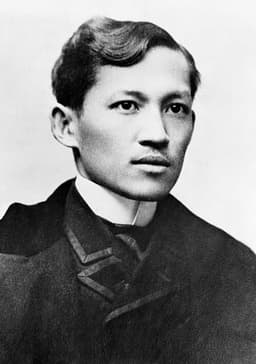
Jose Rizal
Revolutionary · Modern
46.7Total
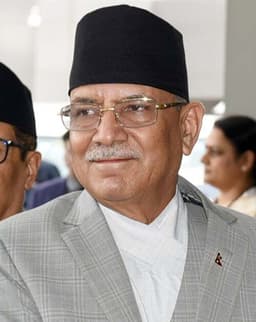
Pushpa Kamal Dahal
Revolutionary · Modern
50.0Total
Basic Information
Born
1861
1954
Died
1896
—
Era
Modern
Modern
Nationality
Philippines
Nepal
Occupation
Revolutionary
Revolutionary
Civilization
Eastern
Indian
Score Comparison
Military (10%)
11.9
35.0
Political (20%)
33.6
54.7
Influence (20%)
62.0
51.0
Legacy (20%)
58.0
40.8
Leadership (15%)
40.4
62.0
Strategy (15%)
44.5
60.0
TOTAL
46.7
50.0
Jose Rizal — Complete Timeline
1887 AD
Publication of Noli Me TangereCultural
Rizal published his first novel, Noli Me Tangere, in Berlin. The book exposed the corruption and abuses of Spanish colonial rule and the Catholic Church in the Philippines, sparking nationalist sentiment among Filipinos.
LiteratureNationalismColonial Critique
Impact: nationalprogressive
1891 AD
Publication of El FilibusterismoCultural◆ Major
Rizal published his second novel, El Filibusterismo, in Ghent, Belgium. A darker sequel to Noli Me Tangere, it advocated for revolution and further criticized Spanish oppression, intensifying calls for reform and independence.
LiteratureRevolutionColonial Critique
Impact: nationalprogressive
1892 AD
Exile to DapitanPolitical Action◆ Major
Rizal was exiled by Spanish authorities to Dapitan in Mindanao for his alleged involvement in revolutionary activities. During his four-year exile, he practiced medicine, taught, and conducted scientific research, but remained under surveillance.
ExileSpanish ColonialismDapitan
Impact: nationaltragic
1896 AD
Execution of José RizalPolitical Action
Rizal was executed by firing squad in Manila on charges of sedition and rebellion, following a trial by Spanish military court. His martyrdom galvanized the Philippine Revolution, making him a national hero and symbol of resistance.
ExecutionMartyrdomPhilippine Revolution
Impact: nationaltragic
Pushpa Kamal Dahal — Complete Timeline
1996 AD
Launch of People's WarWar
Prachanda, as leader of the Communist Party of Nepal (Maoist), initiated a armed insurgency against the Nepalese state. The People's War began with attacks on police posts and government offices, escalating into a decade-long civil war.
InsurgencyCivil WarMaoist
Impact: nationaldestructive
2006 AD
Signing of Comprehensive Peace AccordPolitical Action◆ Major
Prachanda signed the Comprehensive Peace Accord with Prime Minister Girija Prasad Koirala, ending the civil war. The agreement committed the Maoists to lay down arms and join mainstream politics in exchange for integration into state institutions.
Peace TreatyCivil WarNepal
Impact: nationalconstructive
2008 AD
Election as Prime MinisterPolitical Action◆ Major
Following the Maoist victory in the Constituent Assembly elections, Prachanda became the first prime minister of the Federal Democratic Republic of Nepal. His tenure focused on integrating former Maoist combatants into the national army.
ElectionGovernmentRepublic
Impact: national
2009 AD
Resignation as Prime MinisterPolitical Action
Prachanda resigned as prime minister after a dispute with President Ram Baran Yadav over the dismissal of the army chief. The crisis highlighted tensions between the Maoists and the established political order.
ResignationPoliticsCrisis
Impact: national
Expert Analysis
Jose Rizal vs Pushpa Kamal Dahal
# The Quill and the Gun: Two Paths to Revolution
On a cold December morning in 1896, a 35-year-old man in a black suit walked calmly to his execution in Manila. José Rizal, poet, novelist, and ophthalmologist, faced the Spanish firing squad with dignity—his last words a quiet affirmation of his faith. Half a century later and half a world away, in the hills of western Nepal, a young schoolteacher named Pushpa Kamal Dahal was reading Maoist literature by candlelight, dreaming not of martyrdom but of a people's war. One man wrote books that sparked a revolution he did not live to see; the other led a civil war that ended with him becoming prime minister. Their lives, separated by geography and circumstance, raise a haunting question: What makes a revolutionary succeed—the pen or the sword?
Origins
Rizal was born into the ilustrado class of colonial Philippines, a world of privilege and oppression. His family owned land, spoke Spanish, and sent him to Europe for education. But every privilege came with a bitter taste: his mother spent years in prison on false charges; his brother was harassed by friars. The young Rizal absorbed Enlightenment philosophy in Madrid, Paris, and Heidelberg, returning home with a diagnosis of colonial society that was both clinical and devastating.
Prachanda’s roots were humbler. Born in 1954 to a farming family in the hills of Kaski District, Nepal, he grew up in a country ruled by a hereditary monarchy backed by India and the West. The caste system crushed millions, and land ownership was concentrated among a tiny elite. Where Rizal had libraries and salons, Prachanda had the fields and the forests. His education came not from European universities but from Marxist pamphlets smuggled across the Indian border.
The difference in their worlds shaped their weapons. Rizal, the cosmopolitan intellectual, reached for the pen. Prachanda, the peasant’s son, reached for the gun.
Rise to Power
Rizal’s path was literary. In 1887, he published *Noli Me Tangere* in Berlin, a novel that dissected Spanish colonial society with surgical precision. The book was banned, but it circulated in secret, passed from hand to hand. Four years later came *El Filibusterismo*, darker and more radical—a call not just for reform but for revolution. Rizal did not lead armies; he led minds. His power was the power of ideas, and it grew with every smuggled copy.
Prachanda’s rise was clandestine and violent. In 1996, as leader of the Communist Party of Nepal (Maoist), he launched the "People's War" from the remote hills of Rolpa. With a few hundred fighters and outdated rifles, he declared war on the Nepalese state. The government responded with brutality, burning villages and killing civilians—and in doing so, created the very army it feared. By the early 2000s, the Maoists controlled much of the countryside.
Their turning points were mirror images. Rizal’s exile to Dapitan in 1892 isolated him from the revolution he had inspired. Prachanda’s war brought him to the negotiating table.
Leadership & Governance
Rizal never governed. He was executed before the Philippine Revolution began. But his leadership was moral and intellectual—he founded the La Liga Filipina, a reformist organization, and corresponded with revolutionaries while urging restraint. His strategy was one of education and awakening: expose the wound, and the body would heal itself.
Prachanda governed for three terms as prime minister (2008–2009, 2016–2017, 2024–present). His leadership style was pragmatic and ruthless. After signing the Comprehensive Peace Accord in 2006, he integrated his guerrilla army into the national military, contested elections, and won. But governance proved harder than war. His first term collapsed in 2009 over a dispute with the president about the army chief—a petty squabble that revealed the difficulty of transitioning from revolutionary to statesman.
Where Rizal’s political wisdom was theoretical and idealistic, Prachanda’s was tactical and survivalist. Rizal dreamed of a nation of equals; Prachanda settled for a share of power.
Triumph & Tragedy
Rizal’s triumph was posthumous. His execution on December 30, 1896, turned him into a martyr and ignited the Philippine Revolution. The man who had preached peaceful reform became the symbol of armed struggle. His tragedy was that he died before seeing his nation free—and that his execution was largely a mistake, ordered by authorities who feared his influence.
Prachanda’s triumph was the peace accord of 2006, which ended a decade-long war that killed over 17,000 people. He walked into Kathmandu as a victor, not a defendant. His tragedy is that the peace he won has been hollow. Nepal remains poor, corrupt, and divided. The Maoist dream of a classless society has given way to political infighting and cronyism.
Character & Destiny
Rizal was a man of contradictions: a revolutionary who opposed violence, a nationalist who wrote in Spanish, a martyr who asked for last rites. He was gentle, brilliant, and doomed by his own clarity. He saw the future but could not change the past.
Prachanda is a survivor. He has outlasted kings, rivals, and international pressure. He has reinvented himself from guerrilla commander to prime minister to elder statesman. His destiny was not to die for the revolution but to live through it—and to watch it compromise.
Legacy
Rizal is a national hero of the Philippines, his face on the one-peso coin, his novels required reading in schools. His legacy is that of the intellectual martyr—a man whose ideas outlived his body. His scores in influence (70.6) and legacy (72.2) reflect this enduring power.
Prachanda’s legacy is more ambiguous. He is remembered as the man who ended the monarchy and brought Nepal into the modern era—but also as the man who failed to deliver on his promises. His leadership score (75.7) is high, but his legacy (54.7) is middling, a reflection of a revolution that succeeded only to stagnate.
Conclusion
The quill and the gun: two instruments of change, wielded by men of different worlds. Rizal wrote the words that moved a nation; Prachanda fired the shots that overthrew a king. One died young and became eternal; the other grew old and became ordinary. Perhaps the lesson is not that one path is superior, but that revolution is never a single story. It is the tragedy of the poet who cannot lead and the soldier who cannot dream—and the strange, fragile hope that somehow, between them, a people finds its way.
Rankings
🥇
Pushpa Kamal DahalLeader
Mil: 35.0Pol: 54.7Inf: 51.0
50.0
🥈
Jose Rizal
Mil: 11.9Pol: 33.6Inf: 62.0
46.7
+3.3 behind
How This Comparison Works
Algorithm
Each figure is scored on 6 dimensions (0—100 scale) based on structured historical data: Military (10%), Political (20%), Influence (20%), Legacy (20%), Leadership (15%), Strategy (15%). The weighted total produces the final ranking.
Data Sources
Scores are computed from structured sub-indicators in the database. Scale factors adjust for era (Ancient ×0.85, Modern ×1.0) and civilization size (Eastern ×1.05, Other ×0.80) to account for differences in population and military scale.
Maximum 3 Figures
Comparisons are limited to 2—3 figures to ensure readability and statistical meaningfulness.
Error Margins
±5 points per dimension — Sub-scores are derived from historical records with inherent uncertainty. Two figures within 5 points on a dimension should be considered roughly equivalent in that area.
Total Score Accuracy
±3 points overall — The weighted combination of 6 dimensions produces a total score with approximately ±3 points of uncertainty. Differences of less than 3 points are not statistically significant— the figures are effectively tied.
Known Limitations
- Historical records are incomplete and uneven across civilizations
- Figures from oral-tradition societies may be underrepresented
- Occupation labels can misclassify multi-role figures
- Scores measure capability and impact, not moral character
- Quantitative scoring is a comparison tool, not absolute truth
Capability Radar
Military (10%) — Battles & Warfare
Battles
14
35
Win Rate
21
40
Expansion
22
25
Political (20%) — Governance & Reform
Reform
15
40
Diplomacy
20
50
Economy
5
35
Influence (20%) — Cultural & Global Reach
Cultural
75
40
Global
65
35
Legacy (20%) — Historical Impact
Historical
80
45
Longevity
75
30
Leadership (15%) — Power & Stability
Tenure
0
55
Stability
5
30
Strategy (15%) — Tactics & Innovation
Strategy
27
50
Tactics
28
45
Reform
28
30
Similar Comparisons
Comments & Discussion
鲜血诗人6/16/2026
非要把眼科医生跟游击队头目放一起比?Rizal用德文写诗给Blumentritt,Prachanda拿AK-47扫射警察局。一个在Dapitan开诊所治白内障,一个在Rolpa埋地雷炸桥梁。你说谁是革命者?我选那个活下来当总理的。死在行刑队面前的,只是个浪漫主义殉道者。革命不需要牺牲,需要胜利。
RevolutionDebunker6/16/2026
Rizal’s execution proves why the pen fails. He wrote two novels, got martyred, and Spain still ruled for two more years. Prachanda actually picked up a gun and toppled a 240-year monarchy. “Noli Me Tangere” didn’t make a single friar leave—but 16,000 Nepali Maoist fighters sure made the king sign an abdication paper in 2008. The quill is poetic, but the gun wins revolutions.
OphthalmologistTactician6/16/2026
Comparing their military outcomes is absurd. Rizal explicitly rejected armed revolt in his manifesto of 1896, urging education over violence. Prachanda’s decade-long insurgency killed 17,000 people, destroyed infrastructure, and ended with him in a palace chair—yet Nepal remains one of Asia’s poorest countries. What revolution? He just swapped a crown for his own seat. The pen didn’t fail—Rizal’s ideas ignited Asia’s first nationalist movement. The gun just traded one elite for another.
毛选读不懂6/16/2026
Prachan的“人民战争”抄得四不像。毛泽东说革命分三阶段:战略防御、相持、反攻。Prachanda呢?2001年跟国王签停火协议,2002年撕毁,2003年又谈,2005年突然跟反对派结盟。他打了十年游击,最后靠谈判桌当上总理。而Rizal虽然死了,他的画像挂在每个菲律宾教室,启发了一百二十年的抗争。谁是真正的革命者?那个让人民记住的。
SociologicalSniper6/16/2026
This comparison misses class entirely. Rizal was an ilustrado aristocrat whose “indios” were mostly illiterate peasants who couldn’t read his Spanish novels. Prachanda mobilized landless Dalits and ethnic Madhesis who actually had grievances against Kathmandu elites. Rizal wrote about love and reform from a European café; Prachanda slept in mud huts with his fighters. One was a liberal reformer with a complex; the other was a Marxist revolutionary. Apples and oranges, but at least Prachanda unde