Loading...
Jose Rizal vs Napoleon Bonaparte
Napoleon Bonaparte leads by 24.2 pts · 2 figures compared
…
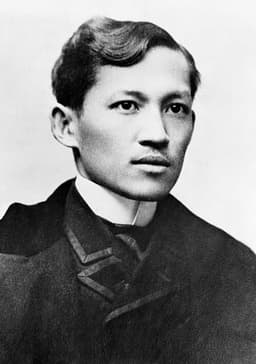
Jose Rizal
Revolutionary · Modern
46.7Total

Napoleon Bonaparte
General · Modern
70.9Total
Basic Information
Born
1861
1769
Died
1896
1821
Era
Modern
Modern
Nationality
Philippines
France
Occupation
Revolutionary
General
Civilization
Eastern
Western
Score Comparison
Military (10%)
11.9
94.0
Political (20%)
33.6
72.0
Influence (20%)
62.0
40.0
Legacy (20%)
58.0
80.0
Leadership (15%)
40.4
78.0
Strategy (15%)
44.5
90.0
TOTAL
46.7
70.9
Jose Rizal — Complete Timeline
1887 AD
Publication of Noli Me TangereCultural
Rizal published his first novel, Noli Me Tangere, in Berlin. The book exposed the corruption and abuses of Spanish colonial rule and the Catholic Church in the Philippines, sparking nationalist sentiment among Filipinos.
LiteratureNationalismColonial Critique
Impact: nationalprogressive
1891 AD
Publication of El FilibusterismoCultural◆ Major
Rizal published his second novel, El Filibusterismo, in Ghent, Belgium. A darker sequel to Noli Me Tangere, it advocated for revolution and further criticized Spanish oppression, intensifying calls for reform and independence.
LiteratureRevolutionColonial Critique
Impact: nationalprogressive
1892 AD
Exile to DapitanPolitical Action◆ Major
Rizal was exiled by Spanish authorities to Dapitan in Mindanao for his alleged involvement in revolutionary activities. During his four-year exile, he practiced medicine, taught, and conducted scientific research, but remained under surveillance.
ExileSpanish ColonialismDapitan
Impact: nationaltragic
1896 AD
Execution of José RizalPolitical Action
Rizal was executed by firing squad in Manila on charges of sedition and rebellion, following a trial by Spanish military court. His martyrdom galvanized the Philippine Revolution, making him a national hero and symbol of resistance.
ExecutionMartyrdomPhilippine Revolution
Impact: nationaltragic
Napoleon Bonaparte — Complete Timeline
1799 AD
Coup of 18 BrumaireOther◆ Major
Napoleon Bonaparte, with support from his brother Lucien and key political figures, overthrew the Directory in a bloodless coup. He established the Consulate with himself as First Consul, effectively becoming the ruler of France. This event ended the French Revolution's most unstable period.
French RevolutionCoupRise to Power
Impact: regional
1804 AD
Promulgation of the Napoleonic CodeOther◆ Major
Napoleon enacted the Civil Code of the French, known as the Napoleonic Code, a comprehensive set of laws that replaced the fragmented feudal legal systems. The code established legal equality, protected property rights, and secularized law. It became the basis for legal systems in many European and world countries.
Legal ReformNapoleonic CodeCivil Law
Impact: globalconstructive
1805 AD
Battle of AusterlitzWar◆ Major
Napoleon's Grande Arm
Napoleonic WarsBattleDecisive Victory
Impact: global
1812 AD
Invasion of RussiaWar◆ Major
Napoleon led the Grande Arm
Napoleonic WarsInvasionDisaster
Impact: globaldestructive
1815 AD
Battle of WaterlooWar◆ Major
Napoleon's French army was defeated by the combined forces of the Duke of Wellington's Anglo-Allied army and Gebhard Leberecht von Bl
Napoleonic WarsBattleFinal Defeat
Impact: globaldestructive
Expert Analysis
jose-rizal-vs-napoleon-bonaparte
# The Pen and the Sword: Napoleon Bonaparte and José Rizal
On a gray December morning in 1896, a man in a black suit walked calmly toward a field in Manila, his hands bound, his mind composed. Across the world, in a very different time, a young Corsican artillery officer watched the cannon smoke clear over Toulon in 1793, his first great victory opening before him like a door to destiny. One would conquer Europe; the other would conquer hearts. One commanded armies; the other commanded ideas. Yet both men changed the world forever—and both died in exile, their dreams unfinished. What separates a Napoleon from a Rizal? The answer lies not in talent, but in the soil where their roots grew.
Origins
Napoleon Bonaparte was born in 1769 on the island of Corsica, a place that had only recently become French. His family was minor nobility, poor but proud, and young Napoleon grew up speaking Italian-accented French, an outsider in a nation he would one day rule. The French Revolution erupted when he was twenty, a cataclysmic upheaval that shattered old hierarchies and opened paths for ambitious men of talent. Corsica’s rocky hills and the chaos of revolution forged in him a relentless will—a belief that destiny could be seized, not waited for.
José Rizal was born in 1861 in Calamba, a town in the Philippines under Spanish colonial rule. His family was wealthy, educated, and *mestizo*—mixed-race—occupying a precarious middle ground between the Spanish elite and the native masses. Unlike Napoleon’s world of cannon and conquest, Rizal’s childhood was filled with books, languages, and the quiet hum of injustice. He saw his mother arrested on false charges, witnessed the casual cruelty of friars who ruled like petty kings. Where Napoleon learned to command, Rizal learned to question.
The difference in their eras was profound. Napoleon came of age in a time when Europe was a chessboard of kingdoms, and a bold general could redraw borders with a single campaign. Rizal lived in an age of empires, when colonial powers seemed eternal, and resistance meant either submission or martyrdom. One era rewarded action; the other demanded patience.
Rise to Power
Napoleon’s rise was meteoric. At twenty-four, he drove the British from Toulon and became a brigadier general. By twenty-six, he crushed a royalist uprising in Paris with a “whiff of grapeshot,” earning the trust of the revolutionary government. In 1796, at twenty-seven, he took command of the French army in Italy and, within a year, defeated the Austrians in a series of dazzling campaigns. His path was built on victories—Marengo, Austerlitz, Jena—each one a stepping stone to the imperial throne he seized in 1804.
Rizal’s rise was quieter but no less deliberate. He left the Philippines in 1882 for Europe, studying medicine, philosophy, and languages. In 1887, at twenty-six, he published *Noli Me Tangere* in Berlin, a novel that laid bare the corruption of Spanish rule. The book was smuggled into the Philippines, passed from hand to hand, read aloud in secret gatherings. In 1891, he followed it with *El Filibusterismo*, darker and more incendiary, which called for revolution. Rizal did not lead armies; he armed minds.
The key turning point came in 1892. Napoleon had just returned from his disastrous Egyptian campaign, but within a year he staged a coup and made himself First Consul of France. Rizal, meanwhile, returned to Manila and founded the Liga Filipina, a peaceful reform movement. The Spanish authorities arrested him and exiled him to Dapitan, a remote town in Mindanao. One man seized power; the other was stripped of it.
Leadership & Governance
As emperor, Napoleon was a genius of organization. He reformed French law with the Napoleonic Code, standardizing justice across a fractured nation. He built schools, roads, and a centralized bureaucracy that still shapes France today. His military strategy was revolutionary—fast marches, massed artillery, and the decisive battle that shattered enemy armies. At his peak in 1807, he controlled most of Europe. But his political wisdom had limits. He crowned himself emperor, placed his brothers on thrones, and treated conquered nations as spoils. His score of 75.0 in politics reflects a ruler who could conquer but could not govern wisely.
Rizal never held power. His leadership was moral, not political. In Dapitan, he built a school, treated the sick, and taught farmers modern techniques. He remained a reformist, not a revolutionary, believing that education and peaceful change were the only paths to freedom. His political score of 37.4 reflects not weakness but a different kind of leadership—one that inspired others to act. When the Philippine Revolution erupted in 1896, the rebels used his name, even though he opposed their violent methods.
Napoleon’s military genius earned him a score of 94.0, the highest possible. Rizal’s military score of 24.6 is a reminder that he was never a soldier. Yet his strategy—of writing novels that exposed injustice, of building a national consciousness—was perhaps more enduring than any battlefield plan.
Triumph & Tragedy
Napoleon’s greatest moment was Austerlitz in 1805, where he crushed the combined armies of Russia and Austria, a victory so complete it ended the Third Coalition. His worst was the invasion of Russia in 1812, where 600,000 men marched east and fewer than 100,000 returned. He was exiled to Elba in 1814, escaped, and ruled for a hundred days before Waterloo ended his dream forever. He died in 1821 on Saint Helena, a prisoner of the British, at age fifty-one.
Rizal’s triumph was quieter but no less profound. His novels became the foundation of Filipino identity, read by generations. His execution in 1896, at age thirty-five, turned him into a martyr. As the firing squad raised their rifles, he turned his back—a final act of defiance. His death ignited the Philippine Revolution, which, though ultimately crushed by American forces, planted the seeds of independence.
Character & Destiny
Napoleon was restless, ambitious, and supremely confident. “Impossible is not a word in my dictionary,” he once said. This drive made him great but also doomed him. He could not stop, could not compromise, could not share power. His personality shaped his destiny: a man who conquered the world but could not keep it.
Rizal was thoughtful, disciplined, and deeply moral. “He who does not love his own language is worse than an animal and a stinking fish,” he wrote. His personality led him to choose reform over revolution, ideas over violence. Yet this same restraint made him vulnerable. The Spanish authorities executed him precisely because he was dangerous—not with a sword, but with a pen.
Legacy
Napoleon’s legacy is a paradox. He spread the ideals of the French Revolution—equality before the law, meritocracy, secular governance—across Europe, yet he also restored slavery and crowned himself emperor. His military tactics are still studied, his Napoleonic Code still used. His score of 78.0 in legacy reflects a figure who is both admired and condemned.
Rizal’s legacy is more unified. He is the national hero of the Philippines, his face on currency, his books required reading. His score of 72.2 in legacy understates his impact: he created a nation’s soul. Every Filipino schoolchild learns his words, his sacrifice, his vision of a free and just society.
Conclusion
Napoleon Bonaparte and José Rizal represent two poles of human achievement. One changed the world through force, the other through truth. One built an empire that crumbled, the other planted a seed that grew. In the end, perhaps the question is not who was greater, but what kind of greatness the world needs. Napoleon proved that power, without wisdom, destroys itself. Rizal proved that ideas, even when silenced, outlive their enemies. The pen is mightier than the sword—but only if someone is brave enough to write, and someone else brave enough to read.
Rankings
🥇
Napoleon BonaparteLeader
Mil: 94.0Pol: 72.0Inf: 40.0
70.9
🥈
Jose Rizal
Mil: 11.9Pol: 33.6Inf: 62.0
46.7
+24.2 behind
How This Comparison Works
Algorithm
Each figure is scored on 6 dimensions (0—100 scale) based on structured historical data: Military (10%), Political (20%), Influence (20%), Legacy (20%), Leadership (15%), Strategy (15%). The weighted total produces the final ranking.
Data Sources
Scores are computed from structured sub-indicators in the database. Scale factors adjust for era (Ancient ×0.85, Modern ×1.0) and civilization size (Eastern ×1.05, Other ×0.80) to account for differences in population and military scale.
Maximum 3 Figures
Comparisons are limited to 2—3 figures to ensure readability and statistical meaningfulness.
Error Margins
±5 points per dimension — Sub-scores are derived from historical records with inherent uncertainty. Two figures within 5 points on a dimension should be considered roughly equivalent in that area.
Total Score Accuracy
±3 points overall — The weighted combination of 6 dimensions produces a total score with approximately ±3 points of uncertainty. Differences of less than 3 points are not statistically significant— the figures are effectively tied.
Known Limitations
- Historical records are incomplete and uneven across civilizations
- Figures from oral-tradition societies may be underrepresented
- Occupation labels can misclassify multi-role figures
- Scores measure capability and impact, not moral character
- Quantitative scoring is a comparison tool, not absolute truth
Capability Radar
Military (10%) — Battles & Warfare
Battles
14
95
Win Rate
21
90
Expansion
22
95
Political (20%) — Governance & Reform
Reform
15
95
Diplomacy
20
80
Economy
5
85
Influence (20%) — Cultural & Global Reach
Cultural
75
85
Global
65
90
Legacy (20%) — Historical Impact
Historical
80
95
Longevity
75
90
Leadership (15%) — Power & Stability
Tenure
0
85
Stability
5
70
Strategy (15%) — Tactics & Innovation
Strategy
27
95
Tactics
28
98
Reform
28
92
Similar Comparisons
Comments & Discussion
Napoleon-slayer6/17/2026
Comparing Rizal to Napoleon is like comparing a scalpel to a broadsword. Napoleon left 400,000 French corpses across Russia alone, while Rizal never killed a single man. Yet Rizal’s two novels toppled an empire of 300 years, while Napoleon’s Grande Armée crumbled into snow. The pen isn't just mightier—it's cleaner. Give me a man who writes novels in exile over one who crowns himself emperor any day.
藏剑书生6/17/2026
拿破仑的滑铁卢死了五万人,黎刹的《不许犯我》只印了两千本。可西班牙殖民者怕这两千本胜过怕一个军团。拿破仑用大炮画国界,黎刹用文字种灵魂。谁的遗产更长?看看巴黎荣军院的金顶和菲律宾比索上的头像——子弹会锈,墨水不朽。
CorpseCounter6/17/2026
Before you deify Rizal, remember Napoleon’s civil code shaped modern Europe. He standardized laws, abolished feudalism, and created the metric system. Rizal wrote two novels that got him executed. Look, I love a good martyr, but Napoleon actually governed. France’s lycées, its banking system, its judicial structure—all Bonaparte. Rizal’s a statue; Napoleon’s a foundation.
帝国考古学家6/17/2026
拿破仑称帝时加冕自己,黎刹被处决前拒绝忏悔。一个抢了教皇的皇冠,一个对神父说“我准备好了”。两人都死在孤岛——圣赫勒拿和达皮丹。但拿破仑的囚笼是英国人造的,黎刹的刑场是西班牙人建的。一个死于敌人的铁链,一个死于主人的锁铐。你选哪个死法?
SkepticalBookworm6/17/2026
Everyone loves the "quiet intellectual" trope, but Rizal wasn't just a poet. He studied medicine, ophthalmology, engineering, and spoke 22 languages. Napoleon read Rousseau and campaigned. Rizal dissected cadavers in Madrid; Napoleon dissected Europe. One healed eyes; the other gouged them out. I know who I'd rather have dinner with—and it's not the guy who reintroduced slavery in 1802.