Loading...
John Lambert vs Prem Tinsulanonda
John Lambert leads by 3.3 pts · 2 figures compared
…
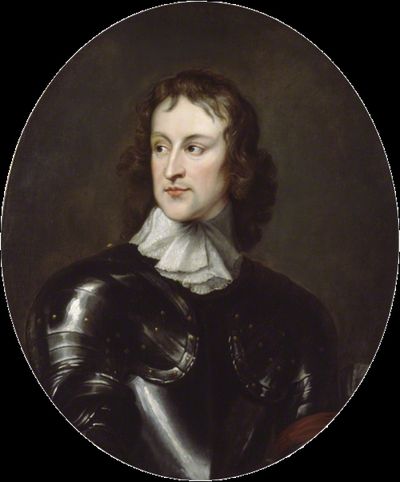
John Lambert
General · Modern
71.7Total
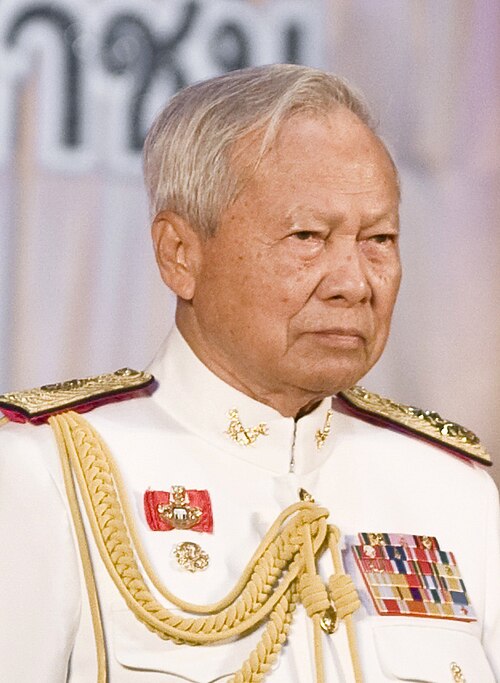
Prem Tinsulanonda
General · Modern
68.4Total
Basic Information
Born
1619
1920
Died
1684
—
Era
Modern
Modern
Nationality
England
Thailand
Occupation
General
General
Civilization
Western
Eastern
Score Comparison
Military (10%)
66.3
33.7
Political (20%)
70.0
68.8
Influence (20%)
72.3
73.9
Legacy (20%)
68.9
66.8
Leadership (15%)
79.0
89.0
Strategy (15%)
73.2
65.0
TOTAL
71.7
68.4
Rankings
🥇
John LambertLeader
Mil: 66.3Pol: 70.0Inf: 72.3
71.7
🥈
Prem Tinsulanonda
Mil: 33.7Pol: 68.8Inf: 73.9
68.4
+3.3 behind
How This Comparison Works
Algorithm
Each figure is scored on 6 dimensions (0—100 scale) based on structured historical data: Military (10%), Political (20%), Influence (20%), Legacy (20%), Leadership (15%), Strategy (15%). The weighted total produces the final ranking.
Data Sources
Scores are computed from structured sub-indicators in the database. Scale factors adjust for era (Ancient ×0.85, Modern ×1.0) and civilization size (Eastern ×1.05, Other ×0.80) to account for differences in population and military scale.
Maximum 3 Figures
Comparisons are limited to 2—3 figures to ensure readability and statistical meaningfulness.
Error Margins
±5 points per dimension — Sub-scores are derived from historical records with inherent uncertainty. Two figures within 5 points on a dimension should be considered roughly equivalent in that area.
Total Score Accuracy
±3 points overall — The weighted combination of 6 dimensions produces a total score with approximately ±3 points of uncertainty. Differences of less than 3 points are not statistically significant— the figures are effectively tied.
Known Limitations
- Historical records are incomplete and uneven across civilizations
- Figures from oral-tradition societies may be underrepresented
- Occupation labels can misclassify multi-role figures
- Scores measure capability and impact, not moral character
- Quantitative scoring is a comparison tool, not absolute truth
Capability Radar
Military (10%) — Battles & Warfare
Battles
65
20
Win Rate
60
25
Expansion
40
10
Political (20%) — Governance & Reform
Reform
55
55
Diplomacy
50
60
Economy
45
50
Influence (20%) — Cultural & Global Reach
Cultural
35
30
Global
30
30
Legacy (20%) — Historical Impact
Historical
50
40
Longevity
40
35
Leadership (15%) — Power & Stability
Tenure
60
65
Stability
40
60
Strategy (15%) — Tactics & Innovation
Strategy
65
30
Tactics
70
30
Reform
55
35
Expert Analysis
John Lambert vs Prem Tinsulanonda
**The General Who Wrote a Constitution, and the General Who Became a Kingmaker**
On a grey morning in 1662, an old soldier stepped onto a ship bound for Guernsey. John Lambert had once commanded armies, crushed royalist hopes at Preston, and drafted England’s first written constitution. Now he was a prisoner of the king he had helped unseat. Three hundred years later, on the other side of the world, another general named Prem Tinsulanonda was being appointed Regent of Thailand, effectively the guardian of a throne he had never sought. Both men wore military uniforms. Both navigated the treacherous currents between armies and thrones. But one ended his days in exile, the other in a palace. Why?
**Origins**
John Lambert was born in 1619 into the Yorkshire gentry, a world of manor houses and Puritan piety. England was a kingdom tearing itself apart over religion, taxes, and the power of the Crown. Lambert’s father had been a lawyer; his mother came from a family of merchants. He inherited a modest estate and a fierce commitment to Parliament’s cause. The English Civil War was not a distant rumor—it was a flood that swept up young men like him.
Prem Tinsulanonda was born in 1920 in Songkhla, southern Thailand, then still called Siam. His father was a schoolteacher, his mother a homemaker. Thailand had never been colonized, but it was a kingdom haunted by the shadow of European empires and the fragility of its own monarchy. Prem grew up in a world where loyalty to the king was not a political choice but a spiritual duty. Where Lambert learned to read the Bible and the law, Prem learned to read the palace and the barracks.
**Rise to Power**
Lambert rose through the ranks of the New Model Army, that disciplined force that had remade England. His moment came in 1648 at the Battle of Preston. Cromwell was the famous name, but Lambert was the man on the ground, commanding the parliamentary forces that shattered a Scottish royalist army. He was not merely a fighter; he was a thinker. After Cromwell’s death, when England drifted without a rudder, Lambert stepped forward with a bold solution.
Prem’s rise was slower, quieter. He joined the Thai army as a young officer, served in the Korean War, and climbed the ladder of command. In 1980, after a coup, the military appointed him Prime Minister. He was not a revolutionary. He was a stabilizer. Thailand had seen coups and counter-coups; the monarchy had survived, but barely. Prem’s task was not to write a new constitution but to hold the old one together.
**Leadership & Governance**
Lambert’s greatest achievement was the Instrument of Government, drafted in 1653. It was the first written constitution in English history—a radical document that created a Protectorate under Cromwell, with a parliament, a council, and a separation of powers. Lambert was not just a general; he was a constitutional architect. Yet his vision was fragile. Cromwell was a dictator in republican robes, and Lambert himself could not escape the logic of military rule.
Prem governed with a lighter touch. He survived a coup attempt in 1981, when the “Young Turks” faction tried to overthrow him. He did not crush them; he outlasted them. His leadership score of 89.0 reflects a man who knew when to fight and when to wait. He was not a battlefield commander like Lambert—his military score is a modest 33.7—but he was a master of political survival. He resigned in 1988 after a general election, handing power to a civilian government. This was extraordinary in a country where generals usually clung to power until they were dragged out.
**Triumph & Tragedy**
Lambert’s triumph was Preston. His tragedy was the Restoration. When Charles II returned in 1660, Lambert was tried for treason. He was not executed—the king was merciful—but exiled to Guernsey, where he spent his final years in a stone house, watching the sea. The man who had tried to write a new England was erased from its history books.
Prem’s triumph was his longevity. He served as Prime Minister for eight years, then as President of the Privy Council, then as Regent after King Bhumibol’s death in 2016. He became the bridge between a dying monarch and a new one. His tragedy was more subtle: he never truly escaped the shadow of the palace. He was a servant of the crown, not its master.
**Character & Destiny**
Lambert was a man of ideas. He believed that a nation could be remade by law and arms. That belief drove him to draft constitutions and lead armies, but it also blinded him to the fact that England was not ready for a republic. He was a republican in a royalist world.
Prem was a man of patience. He believed that power was something to be held, not seized. He served kings, not causes. In a way, he was more realistic than Lambert: he understood that in Thailand, the monarchy was the only stable institution. He did not try to build a new order; he tried to preserve the old one.
**Legacy**
Lambert is remembered, if at all, as a footnote—the man who wrote the Instrument of Government, then vanished. His legacy score of 68.9 is modest. But his constitution influenced later thinkers, and his life is a cautionary tale about the limits of military idealism.
Prem is remembered as a kingmaker, a regent, a survivor. His legacy score of 66.8 is similar, but his influence score of 73.9 is higher. He shaped modern Thailand more than Lambert shaped England, precisely because he did not try to shape it too much.
**Conclusion**
The difference between Lambert and Prem is not just time or place. It is the difference between the man who tries to build a new world and the man who knows that the old world is stronger. Lambert wrote a constitution; Prem preserved a throne. One was a revolutionary, the other a guardian. Both were generals. Both served their countries. But only one understood that power, in the end, is not about what you write—it is about what you let stand.
Frequently Asked Questions
Who ranks highest among John Lambert, Prem Tinsulanonda?
Our six-dimension data-driven scoring system compares Military, Political, Influence, Legacy, Leadership, and Strategy to determine the ranking among John Lambert, Prem Tinsulanonda. See the full score breakdown on this page.
How accurate is this historical comparison?
Scores are computed from structured historical sub-indicators with era and civilization scale factors. The system has approximately ±3 points of uncertainty per dimension. Differences under 3 points are not statistically significant.
John Lambert — Complete Timeline
1648 AD
Battle of PrestonWar◆ Major
John Lambert commanded parliamentary forces at the Battle of Preston, defeating a Scottish royalist army. The victory helped secure the parliamentary cause in the Second English Civil War.
BattleEnglish Civil WarParliament
Impact: national
1653 AD
Drafted the Instrument of GovernmentPolitical Action◆ Major
John Lambert was the principal author of the Instrument of Government, the written constitution that established the Protectorate under Oliver Cromwell. The document created a Lord Protector and a Council of State, but was never fully implemented.
ConstitutionProtectorateCromwell
Impact: nationalconstructive
1662 AD
Exiled to GuernseyPolitical Action◆ Major
After the Restoration, John Lambert was tried for treason and exiled to the island of Guernsey. He spent the remainder of his life in captivity, never regaining political influence.
ExileRestorationPunishment
Impact: nationaltragic
Prem Tinsulanonda — Complete Timeline
1980 AD
Appointed Prime Minister after a coupPolitical Action◆ Major
Prem Tinsulanonda was appointed Prime Minister of Thailand by the military after a coup. He served for over eight years, overseeing a period of political stability and economic growth.
Prime MinisterMilitary RuleStability
Impact: national
1981 AD
Survived a coup attemptPolitical Action◆ Major
Prem survived a coup attempt by military officers loyal to the 'Young Turks' faction. The coup failed due to lack of support and the loyalty of key military units, allowing Prem to remain in power.
Coup AttemptPolitical CrisisMilitary
Impact: national
1988 AD
Resigned as Prime MinisterPolitical Action◆ Major
Prem resigned as Prime Minister after the general election, handing over power to a civilian government led by Chatichai Choonhavan. His resignation marked a rare peaceful transition of power in Thai politics.
ResignationDemocratic TransitionPeaceful
Impact: nationalconstructive
2016 AD
Appointed Regent of ThailandPolitical Action
After the death of King Bhumibol, Prem was appointed Regent of Thailand until the ascension of King Maha Vajiralongkorn. He served as a key figure in the transition of the monarchy.
RegentMonarchyTransition
Impact: national
Similar Comparisons
Comments & Discussion
"The Iron Draftsman"6/16/2026
Lambert was a military intellectual who didn't just command armies—he tried to reinvent England's government with the Instrument of Government. Prem, by contrast, was a bureaucratic fixer who kept Thailand stable through sheer longevity. One was a revolutionary with a pen, the other a guardian with a telephone. Lambert's constitution lasted five years; Prem's influence has haunted Thai politics for four decades. I'd take the man who tried to write a new world order over a backroom kingmaker any
"中立国王的将军"6/16/2026
说Prem是"忠诚的典范"?别傻了。他当了17年总理,又做了20年枢密院主席,始终站在军队和君主制之间那根细线上。他不是政治教父——他是危机公关大师。1992年流血事件后,他把军方拉回兵营,让国王当仲裁者。这不是理想主义,这是精算。Lambert至少敢为共和理想赌上一切,而Prem只会算哪边风大。