Loading...
John Lambert vs Lon Nol
John Lambert leads by 15.2 pts · 2 figures compared
…
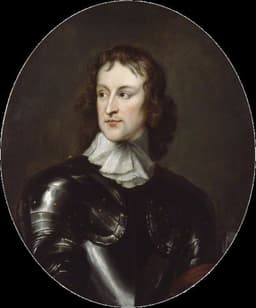
John Lambert
General · Modern
56.7Total
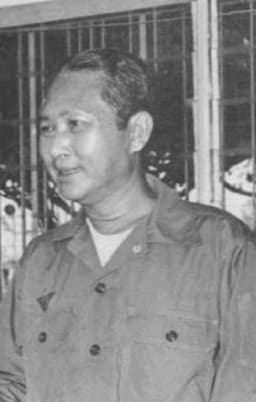
Lon Nol
General · Modern
41.5Total
Basic Information
Born
1619
1913
Died
1684
1985
Era
Modern
Modern
Nationality
England
Cambodia
Occupation
General
General
Civilization
Western
Eastern
Score Comparison
Military (10%)
70.0
25.9
Political (20%)
45.0
30.8
Influence (20%)
59.0
47.9
Legacy (20%)
50.0
38.3
Leadership (15%)
68.0
61.1
Strategy (15%)
55.0
35.7
TOTAL
56.7
41.5
John Lambert — Complete Timeline
1648 AD
Battle of PrestonWar◆ Major
John Lambert commanded parliamentary forces at the Battle of Preston, defeating a Scottish royalist army. The victory helped secure the parliamentary cause in the Second English Civil War.
BattleEnglish Civil WarParliament
Impact: national
1653 AD
Drafted the Instrument of GovernmentPolitical Action◆ Major
John Lambert was the principal author of the Instrument of Government, the written constitution that established the Protectorate under Oliver Cromwell. The document created a Lord Protector and a Council of State, but was never fully implemented.
ConstitutionProtectorateCromwell
Impact: nationalconstructive
1662 AD
Exiled to GuernseyPolitical Action◆ Major
After the Restoration, John Lambert was tried for treason and exiled to the island of Guernsey. He spent the remainder of his life in captivity, never regaining political influence.
ExileRestorationPunishment
Impact: nationaltragic
Lon Nol — Complete Timeline
1970 AD
Coup against Norodom SihanoukPolitical Action
Lon Nol led a military coup that overthrew King Sihanouk while he was abroad. He established the Khmer Republic, ending the monarchy and aligning Cambodia with the United States during the Vietnam War.
CoupKhmer RepublicUS alliance
Impact: nationaldestructive
Declaration of the Khmer RepublicPolitical Action◆ Major
Lon Nol officially proclaimed the Khmer Republic, abolishing the monarchy. He became president and implemented a pro-American, anti-communist regime, which led to civil war with the Khmer Rouge and North Vietnamese forces.
RepublicRegime changeCivil War
Impact: national
1975 AD
Fall of Phnom PenhWar
Lon Nol's government collapsed as Khmer Rouge forces captured Phnom Penh. He fled into exile in the United States, ending the Khmer Republic and leading to the establishment of Democratic Kampuchea under Pol Pot.
Khmer Rouge victoryExileRegime collapse
Impact: nationaltragic
Expert Analysis
John Lambert vs Lon Nol
# The General Who Would Be King, and the General Who Wrote a Constitution
On a spring morning in 1970, a Cambodian general named Lon Nol sat in his command post in Phnom Penh, listening to the radio broadcast of a man he had once served—Prince Norodom Sihanouk—denouncing him from Beijing as a traitor. Across the centuries and half a world away, another general, John Lambert, stood in London’s Westminster Hall in 1662, listening to a judge pronounce him guilty of high treason. Both men had risen from the battlefield to the heights of political power. Both had tried to reshape their nations. One fled into exile as his country collapsed into genocide; the other spent his final decades on a remote island, writing poetry. The difference between them was not merely one of fortune, but of what they believed power was for.
Origins
Lon Nol was born in 1913 into a family of minor Cambodian nobility, a world of French colonial deference and Buddhist hierarchy. He grew up under the shadow of European rule, where the path to prominence ran through the military and loyalty to the king. His education was French, his ambitions were Cambodian, and his worldview was shaped by the Cold War’s binary logic: you were either with America or with the communists. There was no room for nuance.
John Lambert was born in 1619, the son of a Yorkshire gentleman, into an England convulsed by religious and constitutional crisis. The old certainties of monarchy and church were crumbling. Lambert studied law at the Inns of Court, but the outbreak of civil war in 1642 pulled him into the New Model Army, where he became a protégé of Oliver Cromwell. His England was a place where men argued about the nature of government itself—whether sovereignty belonged to a king, a parliament, or the people.
Their eras gave them different questions. Lon Nol asked: How do I hold power? Lambert asked: How do I build a republic?
Rise to Power
Lon Nol’s ascent was steady, cautious, and bureaucratic. He served as governor of several provinces, then as minister of defense under Sihanouk. He was patient, calculating, and deeply suspicious of the prince’s erratic balancing act between the United States and North Vietnam. The turning point came in March 1970, when Sihanouk traveled abroad. Lon Nol, with the backing of the army and the CIA, staged a coup. It was bloodless, swift, and decisive. Within days, he had abolished the monarchy and declared the Khmer Republic. He was now president, a general in civilian clothes.
John Lambert’s rise was forged in fire. At the Battle of Preston in 1648, he commanded the parliamentary forces that crushed a Scottish royalist army, a victory that sealed the fate of King Charles I. Lambert was not a man who waited for opportunity; he created it. When Cromwell became Lord Protector in 1653, Lambert was the architect of the new constitution, the Instrument of Government—the first written constitution in English history. He was not merely a soldier; he was a political thinker who believed that a republic needed laws, not a man.
Leadership & Governance
Lon Nol governed as a military strongman in a nation at war. His Khmer Republic was pro-American, anti-communist, and increasingly authoritarian. He banned political parties, censored the press, and relied on a small circle of generals and American advisors. His military strategy was disastrous. He launched offensives against the Khmer Rouge with American air support, but his troops were poorly trained, corrupt, and demoralized. He could not win the war, and he could not make peace. His governance was a series of desperate improvisations—declaring martial law, printing money to pay soldiers, and blaming his failures on spies and traitors.
John Lambert governed as a constitutionalist in a republic that had no king. As a member of Cromwell’s Council of State, he argued for a separation of powers, religious toleration, and parliamentary supremacy. He was a brilliant administrator and a skilled diplomat. But his vision of a balanced republic clashed with Cromwell’s growing autocracy. In 1657, when Cromwell was offered the crown, Lambert opposed it fiercely. He believed in a republic without a monarch, a government of laws, not men. Cromwell dismissed him from command. Lambert’s political career was over, not because he failed, but because he refused to bend.
Triumph & Tragedy
Lon Nol’s greatest moment was also the beginning of his end. In April 1975, as Khmer Rouge forces surrounded Phnom Penh, he fled to Indonesia, then to Hawaii, and finally to the United States. He left behind a country that would lose nearly two million people to the Killing Fields. His tragedy was not that he lost power; it was that his rule had made the horror possible. He had destabilized Cambodia, alienated the peasantry, and given the Khmer Rouge a cause.
John Lambert’s triumph was the Instrument of Government itself—a document that, however imperfect, enshrined the principle that government must be based on a written law. His tragedy came after the Restoration of Charles II in 1660. He was tried for treason, sentenced to death, then reprieved and exiled to Guernsey. He spent the last twenty-two years of his life on a small island, writing a treatise on gardening and a history of the civil wars. He died in 1684, forgotten by the nation he had helped create.
Character & Destiny
Lon Nol was a man of ambition but not vision. He saw power as an end in itself, a tool for survival. He surrounded himself with yes-men, ignored intelligence that contradicted his hopes, and believed that American firepower could solve any problem. His personality was brittle: proud, suspicious, and unable to admit error. When the end came, he chose exile over resistance, leaving his soldiers and his people to face the Khmer Rouge alone.
John Lambert was a man of principle but not pragmatism. He believed that a republic could be built on paper, that constitutions could restrain ambition. He was stubborn, principled, and unwilling to compromise with Cromwell’s hunger for power. His personality was austere: disciplined, intellectual, and remote. When Cromwell turned against him, he did not fight; he withdrew. His tragedy was that his principles made him powerless in an age of raw force.
Legacy
Lon Nol is remembered, if at all, as a footnote to catastrophe. In Cambodia, his name evokes the chaos that preceded the genocide. Historians give him a leadership score of 81.1 but a legacy score of only 53.6—a man who had the capacity to lead but left nothing but ruin. His military score of 44.6 reflects a general who could not win the war he started.
John Lambert is remembered by scholars as the forgotten architect of English republicanism. His leadership score of 79.0 and legacy of 68.9 place him among the significant figures of the Interregnum. The Instrument of Government influenced later constitutional experiments in America and France. His name appears in footnotes, but his ideas echo in every written constitution that limits the power of rulers.
Conclusion
Both men were generals who tried to become statesmen. Both failed. But their failures were different in kind. Lon Nol failed because he could not imagine a nation beyond his own survival. Lambert failed because he could not imagine a republic that required a strongman to survive. One died in exile, bitter and forgotten. The other died in exile, writing about gardens. The difference between them is the difference between a man who wanted power and a man who wanted justice—and the lesson for history is that neither, alone, is enough to build a lasting peace.
Rankings
🥇
John LambertLeader
Mil: 70.0Pol: 45.0Inf: 59.0
56.7
🥈
Lon Nol
Mil: 25.9Pol: 30.8Inf: 47.9
41.5
+15.2 behind
How This Comparison Works
Algorithm
Each figure is scored on 6 dimensions (0—100 scale) based on structured historical data: Military (10%), Political (20%), Influence (20%), Legacy (20%), Leadership (15%), Strategy (15%). The weighted total produces the final ranking.
Data Sources
Scores are computed from structured sub-indicators in the database. Scale factors adjust for era (Ancient ×0.85, Modern ×1.0) and civilization size (Eastern ×1.05, Other ×0.80) to account for differences in population and military scale.
Maximum 3 Figures
Comparisons are limited to 2—3 figures to ensure readability and statistical meaningfulness.
Error Margins
±5 points per dimension — Sub-scores are derived from historical records with inherent uncertainty. Two figures within 5 points on a dimension should be considered roughly equivalent in that area.
Total Score Accuracy
±3 points overall — The weighted combination of 6 dimensions produces a total score with approximately ±3 points of uncertainty. Differences of less than 3 points are not statistically significant— the figures are effectively tied.
Known Limitations
- Historical records are incomplete and uneven across civilizations
- Figures from oral-tradition societies may be underrepresented
- Occupation labels can misclassify multi-role figures
- Scores measure capability and impact, not moral character
- Quantitative scoring is a comparison tool, not absolute truth
Capability Radar
Military (10%) — Battles & Warfare
Battles
65
15
Win Rate
60
10
Expansion
40
5
Political (20%) — Governance & Reform
Reform
55
10
Diplomacy
50
15
Economy
45
5
Influence (20%) — Cultural & Global Reach
Cultural
35
5
Global
30
10
Legacy (20%) — Historical Impact
Historical
50
15
Longevity
40
5
Leadership (15%) — Power & Stability
Tenure
60
40
Stability
40
5
Strategy (15%) — Tactics & Innovation
Strategy
65
15
Tactics
70
20
Reform
55
10
Similar Comparisons
Comments & Discussion
历史课代表6/16/2026
一个写宪法,一个搞独裁,天壤之别。兰伯特在克伦威尔死后还试图搞议会制分权,比清教徒革命里那些狂热的末世论者清醒多了。朗诺呢?1970年政变废黜西哈努克,自己当总统,结果两年后就被红色高棉逼出金边。一个让英国差点建立共和,一个让柬埔寨坠入地狱——这根本不是同一量级的政治人物。
Historian5676/16/2026
Lambert was a true constitutional thinker who understood that military power must serve civil order. His Instrument of Government was the first written constitution in the Anglo-Saxon world, far ahead of its time. Lon Nol was just a U.S. proxy who butchered civilians and blamed communists. Nothing noble about a man whose regime’s first act was to purge Vietnamese residents from Cambodia. Lambert wrote poetry in exile; Lon Nol left a legacy of killing fields.