Loading...
John II of Avesnes vs Yuwen Yong
Yuwen Yong leads by 22.3 pts · 2 figures compared
…
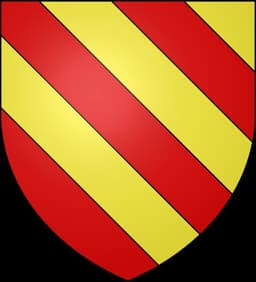
John II of Avesnes
Emperor · Medieval
44.9Total
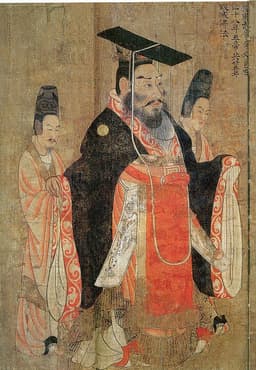
Yuwen Yong
Emperor · Medieval
67.2Total
Basic Information
Born
1248
543
Died
1304
578
Era
Medieval
Medieval
Nationality
Hainaut
China
Occupation
Emperor
Emperor
Civilization
Western
Eastern
Score Comparison
Military (10%)
45.0
78.0
Political (20%)
35.1
78.0
Influence (20%)
51.0
58.0
Legacy (20%)
40.8
54.0
Leadership (15%)
55.3
85.0
Strategy (15%)
38.6
69.1
TOTAL
44.9
67.2
John II of Avesnes — Complete Timeline
1280 AD
Inherited County of Hainaut and HollandPolitical Action◆ Major
John II of Avesnes inherited the County of Hainaut from his mother Margaret II of Flanders, and later the County of Holland from his father John I of Avesnes. This united the two counties under the Avesnes dynasty.
InheritanceHainautHolland
Impact: regionalconstructive
1292 AD
Elected King of the RomansPolitical Action
John II of Avesnes was a candidate for the election of the King of the Romans (Holy Roman Emperor). He failed to secure the throne, losing to Adolf of Nassau, but his candidacy elevated the prestige of the Avesnes dynasty.
ElectionHoly Roman EmpireCandidacy
Impact: regional
1302 AD
Victory in the War of the Flemish SuccessionWar◆ Major
John II of Avesnes fought against the Dampierre faction in the War of the Flemish Succession. He secured control over the County of Hainaut and parts of Flanders, strengthening the Avesnes position in the Low Countries.
WarFlandersAvesnes
Impact: regionalconstructive
Yuwen Yong — Complete Timeline
574 AD
Suppression of Buddhism in Northern ZhouReform◆ Major
Emperor Wu of Northern Zhou (Yuwen Yong) ordered the suppression of Buddhism, confiscating monastic lands, forcing monks and nuns to return to lay life, and destroying temples. He aimed to increase state revenue and military manpower, strengthening the state.
Northern ZhouBuddhist PersecutionReform
Impact: nationaldestructive
577 AD
Conquest of Northern QiWar
Emperor Wu led a successful campaign against the rival Northern Qi dynasty, conquering its territory and unifying northern China under Northern Zhou. This victory ended the division of the north and set the stage for the Sui dynasty's unification of all China.
Northern ZhouUnificationNorthern Qi
Impact: regionalconstructive
578 AD
Death during campaign against the TurksWar◆ Major
Emperor Wu died of illness while leading a campaign against the G
Northern ZhouMilitary CampaignDeath
Impact: regionaltragic
Expert Analysis
Yuwen Yong vs John II of Avesnes
# The Emperor and the Count: Two Paths to Power in a Divided World
On a spring morning in 578, Yuwen Yong, Emperor Wu of Northern Zhou, lay dying in his tent somewhere on the vast steppe north of China. He had been marching against the Göktürks when fever seized him, and now his grand project of unifying all of China under one rule hung in the balance. Half a world away, in the lowlands of Flanders, another medieval ruler, John II of Avesnes, was consolidating a very different kind of power—not through conquest but through marriage alliances, legal claims, and the patient accumulation of influence. These two men, born a century apart, could hardly have been more different. Yet both faced the same fundamental challenge: how to turn a fragile inheritance into lasting authority. Their stories reveal how geography, culture, and personality shaped the very meaning of power in the medieval world.
Origins
Yuwen Yong was born in 543 into a world of warring dynasties, where China had splintered into competing kingdoms after the collapse of the Han Empire. His family, the Yuwen clan, were military aristocrats who had seized control of the Western Wei state and later founded the Northern Zhou dynasty in 557. From childhood, Yuwen Yong was steeped in the brutal realities of court politics—his elder brothers were murdered by a regent, and he himself survived only by feigning weakness and incompetence. This early lesson in survival would define his entire approach to rule: patient, calculating, and utterly ruthless when the moment came.
John II of Avesnes, born in 1248, emerged from a very different crucible. His homeland of Hainaut was a patchwork of counties and bishoprics in the Low Countries, where power was measured not in armies but in charters, feudal obligations, and the delicate balance between local lords and distant kings. His mother, Margaret II of Flanders, was a formidable political player in her own right, and John inherited from her a tangled web of claims to Hainaut, Holland, and Zeeland. Where Yuwen Yong learned to survive through deception, John learned to navigate through negotiation.
Rise to Power
Yuwen Yong’s path to supreme power was forged in blood. In 560, at age seventeen, he was placed on the throne as a puppet by his cousin Yuwen Hu, the regent who had murdered his brothers. For twelve years, the young emperor played the role of a compliant figurehead while secretly building alliances within the court and military. In 572, he struck: in a carefully planned coup, he killed Yuwen Hu and seized full control. It was a masterstroke of patience and timing—he had waited until his enemies underestimated him completely.
John II’s rise was more conventional but no less complex. In 1280, he inherited the County of Hainaut from his mother, and later added Holland through a combination of inheritance and political maneuvering. Unlike Yuwen Yong, who seized power in a single violent stroke, John spent decades pressing claims, forging alliances, and fighting legal battles. In 1292, he even put himself forward as a candidate for the throne of the Holy Roman Empire—a bid that failed but demonstrated his ambition. His real test came in the War of the Flemish Succession, where he faced the rival Dampierre faction. In 1302, he secured victory, but it was a triumph of diplomacy as much as arms.
Leadership & Governance
Yuwen Yong ruled as a warrior-emperor in the tradition of China’s great unifiers. His military score of 74.6 and strategy of 81.8 reflect a commander who thought in terms of grand campaigns. In 577, he launched his greatest achievement: the conquest of Northern Qi, the rival dynasty that controlled eastern China. Leading his armies personally, he broke through enemy defenses, captured their capital, and within months had unified northern China under his rule. It was a feat of logistics and will that his predecessors had only dreamed of.
But Yuwen Yong’s most controversial act was his suppression of Buddhism in 574. He saw the Buddhist monasteries as rival centers of power that hoarded wealth, exempted lands from taxation, and drained men from military service. In a single decree, he confiscated monastic lands, forced monks and nuns back into secular life, and redirected the resources toward the state. It was a radical act of centralization—and one that made him both admired and reviled.
John II governed in a world where power was fragmented and negotiated. His political score of 62.4 and leadership of 74.9 reflect a ruler who excelled at managing competing interests rather than commanding armies. He spent much of his reign consolidating control over Holland and Zeeland, issuing charters to towns, and building alliances with the French crown and the English king. His victory in 1302 was less a conquest than a settlement—a confirmation of his rights against the Dampierre claim. Where Yuwen Yong destroyed his rivals, John outmaneuvered them.
Triumph & Tragedy
Yuwen Yong’s greatest moment was the conquest of Northern Qi in 577. At age thirty-four, he had achieved what no other ruler had managed in decades: the unification of northern China. Contemporary chroniclers recorded his joy, his generosity to his soldiers, and his determination to push southward. But tragedy followed swiftly. In 578, while campaigning against the Göktürks, he fell ill and died at just thirty-five. His empire, built so quickly, had no strong successor. Within three years, his dynasty would fall to a usurper.
John II’s triumph was more modest but more lasting. His victory in the War of the Flemish Succession in 1302 secured his control over Holland and Zeeland, and he spent his remaining years strengthening the administration of his counties. He died in 1304, at age fifty-six, having ruled for nearly a quarter-century. His tragedy was not a dramatic fall but a quiet limitation: he never achieved the imperial title he had sought, and his realm remained a secondary power in European politics.
Character & Destiny
Yuwen Yong was a man of iron will and cold calculation. He could wait twelve years for revenge, then strike without hesitation. His suppression of Buddhism was not religious zealotry but statecraft—he saw the monks as a threat to his power and acted accordingly. Yet this same ruthlessness created a brittle empire. He built through force, but force alone could not sustain what he had created.
John II was a pragmatist, a survivor in a world of shifting alliances. He understood that in the Low Countries, power came from patience, from legal claims, from the support of towns and nobles. He was less a conqueror than a consolidator. His legacy was not a unified empire but a dynasty that would, through marriage, eventually produce the Habsburg emperors of the sixteenth century.
Legacy
Yuwen Yong is remembered as a great unifier and a destroyer. His conquest of Northern Qi paved the way for the Sui and Tang dynasties, which would reunite all of China. Yet his suppression of Buddhism earned him condemnation from later Buddhist historians, who painted him as a tyrant. His total score of 74.0 reflects a figure of genuine achievement but also of limitation—a ruler who unified but could not sustain.
John II’s legacy score of 53.9 is lower, but this masks his true importance. He was not a world-historical figure like Yuwen Yong, but he was a successful medieval prince who built a stable dynasty in a turbulent region. His descendants would marry into the royal houses of Europe, and his methods of governance—negotiation, legalism, alliance-building—would become the norm for later European rulers.
Conclusion
The difference between Yuwen Yong and John II is the difference between two medieval worlds. In China, power was centralized, absolute, and won through conquest. A ruler could issue a single decree and transform an entire religion. In Europe, power was fragmented, contested, and built through centuries of patient accumulation. John II could never have unified the Low Countries by force alone, because force alone was never enough.
Yet both men faced the same fundamental truth: that power, once gained, must be held. Yuwen Yong’s empire crumbled because he had no time to build institutions. John II’s counties endured because he built alliances that outlasted him. In the end, the conqueror and the count each succeeded in their own way—and each failed in ways that reveal the deepest structures of their age.
Rankings
🥇
Yuwen YongLeader
Mil: 78.0Pol: 78.0Inf: 58.0
67.2
🥈
John II of Avesnes
Mil: 45.0Pol: 35.1Inf: 51.0
44.9
+22.3 behind
How This Comparison Works
Algorithm
Each figure is scored on 6 dimensions (0—100 scale) based on structured historical data: Military (10%), Political (20%), Influence (20%), Legacy (20%), Leadership (15%), Strategy (15%). The weighted total produces the final ranking.
Data Sources
Scores are computed from structured sub-indicators in the database. Scale factors adjust for era (Ancient ×0.85, Modern ×1.0) and civilization size (Eastern ×1.05, Other ×0.80) to account for differences in population and military scale.
Maximum 3 Figures
Comparisons are limited to 2—3 figures to ensure readability and statistical meaningfulness.
Error Margins
±5 points per dimension — Sub-scores are derived from historical records with inherent uncertainty. Two figures within 5 points on a dimension should be considered roughly equivalent in that area.
Total Score Accuracy
±3 points overall — The weighted combination of 6 dimensions produces a total score with approximately ±3 points of uncertainty. Differences of less than 3 points are not statistically significant— the figures are effectively tied.
Known Limitations
- Historical records are incomplete and uneven across civilizations
- Figures from oral-tradition societies may be underrepresented
- Occupation labels can misclassify multi-role figures
- Scores measure capability and impact, not moral character
- Quantitative scoring is a comparison tool, not absolute truth
Capability Radar
Military (10%) — Battles & Warfare
Battles
25
75
Win Rate
30
80
Expansion
30
80
Political (20%) — Governance & Reform
Reform
25
85
Diplomacy
35
70
Economy
30
75
Influence (20%) — Cultural & Global Reach
Cultural
20
40
Global
15
40
Legacy (20%) — Historical Impact
Historical
25
65
Longevity
20
50
Leadership (15%) — Power & Stability
Tenure
40
60
Stability
30
70
Strategy (15%) — Tactics & Innovation
Strategy
25
75
Tactics
20
70
Reform
15
85
Similar Comparisons
Comments & Discussion
SwordAndSandals6/16/2026
Yuwen Yong was a proper emperor who died on campaign, not in some damp castle signing marriage treaties like John II. One man unified northern China through sheer military will, the other played matchmaker for a century. Give me the general who crushed the Northern Qi any day over a count who treated power like a property dispute. Facts: Yuwen personally led every major campaign from 564-577.
铁血削藩6/16/2026
宇文邕才是真皇帝,死在征途上是军人最体面的结局。约翰二世不过是个靠联姻混日子的投机者,算什么英雄?看看北周武帝怎么用三年时间剪除权臣宇文护——装疯卖傻的帝王心术,比什么弗兰德法律条文强一万倍。权力的本质是暴力,不是公证文件。
StatCheckPete6/16/2026
Let’s be real—comparing a 6th century Chinese emperor to a 13th century Flemish count is like comparing apples to orbital lasers. The data sets are incomparable: Yuwen commanded armies of 100,000+ with logistics spanning thousands of miles; John II ruled maybe 500 square miles of marshland. Population of Northern Zhou peaked around 20 million, while John’s Hainaut barely had 200,000 souls. Different leagues, different rules.
法理狂徒6/16/2026
婚姻政治才真正改变了欧洲的权力结构,你这是不尊重历史规律。约翰二世通过135条不同的继承契约和联姻文书,把艾诺伯爵领扩张了四倍——这比宇文邕砍人头的军事扩张更持久!北周统一北方后二十年就完蛋了,而弗兰德的法律体系影响了整个低地国家的自治传统。长远的权力来自羊皮纸,不是战马蹄印。
NomanAfterAll6/16/2026
Yuwen Yong’s story is emperor porn for people who think conquest equals greatness. Dude died at 35 after 20 years of constant war, and his dynasty collapsed in three years. John II reigned 37 years, built alliances that outlasted him, and died in his own bed surrounded by competent heirs. If we’re measuring survival—the actual metric of successful rule—John wins. Yuwen was a comet; John was a forest growing root by root.
帝国黄昏6/16/2026
你们太迷恋北周的武功了,但宇文邕死后儿子杨坚直接篡位,整个家族被屠尽。反观约翰二世,他的后代统治荷兰和德意志直到15世纪。权力的最终检验从来不是征服了多少城池,而是血脉延续了多少代。约翰二世输掉了每一次大会战,却赢下了整个王朝游戏。历史嘲笑那些只会打仗的莽夫,奖励那些会生育的老人。