Loading...
John Churchill Duke of Marlborough vs Xu Da
John Churchill Duke of Marlborough leads by 0.5 pts · 2 figures compared
…

John Churchill Duke of Marlborough
General · Modern
75.4Total
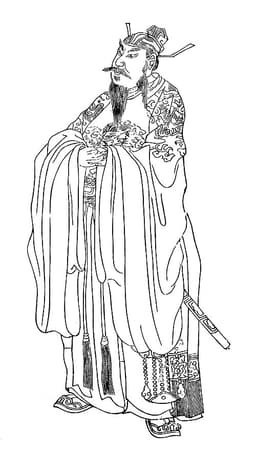
Xu Da
General · Medieval
74.9Total
Basic Information
Born
1650
1332
Died
1722
1385
Era
Modern
Medieval
Nationality
England
China
Occupation
General
General
Civilization
Western
Eastern
Score Comparison
Military (10%)
84.7
88.0
Political (20%)
78.0
68.0
Influence (20%)
65.0
82.0
Legacy (20%)
80.0
72.0
Leadership (15%)
78.0
62.0
Strategy (15%)
72.8
80.8
TOTAL
75.4
74.9
John Churchill Duke of Marlborough — Complete Timeline
1704 AD
Battle of BlenheimWar
Marlborough commanded the Anglo-Dutch army alongside Prince Eugene of Savoy against French and Bavarian forces at Blenheim. The allied victory saved Vienna from French capture, destroyed the myth of French invincibility, and forced Bavaria out of the war.
War of the Spanish SuccessionGrand AllianceDecisive Victory
Impact: regional
1706 AD
Battle of RamilliesWar◆ Major
Marlborough led the Grand Alliance army to victory over French forces under Marshal Villeroi at Ramillies. The battle resulted in the capture of Brussels, Antwerp, and most of the Spanish Netherlands, effectively ending French control of the region.
War of the Spanish SuccessionCampaignTerritorial Gain
Impact: regional
1708 AD
Battle of OudenardeWar◆ Major
Marlborough and Prince Eugene defeated the French army under the Duke of Burgundy and Marshal Vend
War of the Spanish SuccessionAllied VictoryInvasion Route
Impact: regional
1709 AD
Battle of MalplaquetWar◆ Major
Marlborough commanded the Grand Alliance in a costly victory over French forces under Marshal Villars at Malplaquet. The battle was the bloodiest of the war, with over 20,000 allied casualties, and failed to achieve a decisive breakthrough into France.
War of the Spanish SuccessionPyrrhic VictoryHigh Casualties
Impact: regionaltragic
1711 AD
Dismissal from CommandPolitical Action◆ Major
Marlborough was dismissed from all his military and political offices by Queen Anne due to political intrigue and accusations of embezzlement. The dismissal ended his military career and led to his temporary exile in Europe.
Political FallExileTory Government
Impact: nationaldestructive
Xu Da — Complete Timeline
1368 AD
Capture of Dadu (Beijing)War
Xu Da led the Ming army in the capture of Dadu, the Yuan capital. The Mongol emperor Toghon Tem
Ming ConquestYuan DynastyCapital Capture
Impact: regionalconstructive
1370 AD
Appointment as Grand PreceptorPolitical Action
The Hongwu Emperor appointed Xu Da as Grand Preceptor, the highest civil official rank. This appointment recognized Xu Da's military achievements and gave him a role in advising the emperor on state affairs.
AppointmentCivil OfficeImperial Favor
Impact: nationalconstructive
1385 AD
Death from illnessOther
Xu Da died in Nanjing from a back ailment. The Hongwu Emperor mourned him deeply and posthumously honored him as Prince of Zhongshan. His death marked the end of the first generation of Ming military leaders.
DeathMing DynastyMilitary Leader
Impact: nationaltragic
Expert Analysis
Origins
John Churchill (1650–1722) was born into a modest gentry family in Devon, England. His father, Sir Winston Churchill, was a Royalist politician who fell from favor during the Interregnum. John's early career was shaped by his sister Arabella's relationship with James, Duke of York (later James II), which provided him with court connections. He began as a page and later served in the Tangier garrison and against the Monmouth Rebellion. His military education came from service under Turenne in the French army, where he learned the art of war from one of Europe's finest commanders.
Xu Da (1332–1385) was born into a poor peasant family in present-day Fengyang, Anhui. He joined the Red Turban rebellion against the Mongol Yuan dynasty as a young man, becoming a key lieutenant of Zhu Yuanzhang (the future Hongwu Emperor). His early experiences in guerrilla warfare and siegecraft were honed in the chaotic final years of Yuan rule. Xu Da's loyalty and competence earned him rapid promotion, and he became the chief military architect of the Ming dynasty's rise.
Rise to Power
Churchill's rise was meteoric but fraught with political peril. He distinguished himself at the Battle of Sedgemoor (1685) against the Monmouth rebels, but his real climb began after the Glorious Revolution (1688), when he defected to William of Orange, securing key military support. Under William III, he commanded in the Nine Years' War, but his full ascendancy came under Queen Anne (1702). As Captain-General of the Allied forces in the War of the Spanish Succession, he became the indispensable commander, winning a string of victories that broke French dominance.
Xu Da rose through the ranks of the Red Turban army, earning Zhu Yuanzhang's trust through his strategic acumen and unwavering loyalty. He was instrumental in the capture of key cities like Nanjing and in defeating rival rebel factions. After Zhu proclaimed himself emperor (Hongwu) in 1368, Xu Da led the Northern Expedition that expelled the Mongols from China, culminating in the capture of Dadu (Beijing) in 1368. He was appointed Grand Preceptor, the highest military office, and continued to campaign against Mongol remnants until his death.
Leadership & Governance
Churchill was a master of logistics, diplomacy, and coalition warfare. He commanded multinational armies (English, Dutch, German, Danish) with remarkable skill, maintaining unity through personal charisma and careful management of supply lines. His strategic vision emphasized decisive battle, but he also excelled in sieges and maneuvers. Politically, he navigated the treacherous waters of British politics, but his success bred jealousy, leading to his dismissal in 1711 under a Tory ministry. He was a brilliant courtier but ultimately fell victim to factionalism.
Xu Da was a stern disciplinarian and a strategist who combined mobile warfare with siegecraft. He was known for his careful planning, attention to logistics, and ability to inspire loyalty. As a Ming general, he was deeply involved in consolidating the new dynasty's rule, pacifying the north, and rebuilding infrastructure. He served as a civil-military governor, but his power was checked by the emperor's suspicion of military strongmen. Unlike Churchill, he remained in favor until his death, partly because he avoided political intrigue.
Triumph & Tragedy
Churchill's greatest triumph was the Battle of Blenheim (1704), where he and Prince Eugene of Savoy shattered a Franco-Bavarian army, saving Vienna and altering the European balance of power. This victory was followed by Ramillies (1706), Oudenarde (1708), and the costly Malplaquet (1709). His tragedy was his dismissal in 1711, largely due to political machinations, which cut short his military career and led to a period of exile. He was later restored to favor under George I but never commanded again.
Xu Da's triumph was the capture of Dadu (1368), ending Mongol rule over China and founding the Ming dynasty. He continued to defeat Mongol forces at Lake Buir (1372) and elsewhere, stabilizing the northern frontier. His tragedy was his death from a skin disease (possibly a tumor) in 1385, at age 52, while still in service. He died at the peak of his reputation, but his death was a blow to the Ming military, and he was posthumously honored.
Character & Destiny
Churchill was ambitious, charming, and politically astute, but also cautious and calculating. His destiny was to be the savior of Europe against Louis XIV's hegemony, yet his later years were marred by political downfall and the loss of his wife Sarah's influence. He died in 1722, having seen his reputation restored but not his command. His legacy was secured by the magnificent Blenheim Palace, a gift from a grateful nation.
Xu Da was loyal, disciplined, and self-effacing, avoiding the arrogance that plagued many generals. His destiny was to be the founder of Ming military power, but his early death prevented him from seeing the full consolidation of the dynasty. He was revered as a model general, and his descendants held high office for generations. His posthumous title, "Prince of Zhongshan," honored his role.
Legacy
Churchill's legacy is that of a military genius who revolutionized warfare through strategic mobility and coalition management. His victories are studied in military academies, and he is ranked among the greatest captains of history. Blenheim Palace stands as a symbol of his achievement. However, his reputation has been somewhat overshadowed by his descendant Winston Churchill.
Xu Da's legacy is that of the architect of the Ming dynasty's military success. He is celebrated as a national hero in China, a symbol of Han Chinese resurgence after centuries of foreign rule. His campaigns are part of Chinese military history, and his name is synonymous with loyalty and skill. Yet outside China, his fame is limited compared to Churchill's European renown.
Conclusion
Both John Churchill and Xu Da were exceptional commanders who shaped the destinies of their nations. Churchill's strategic genius in coalition warfare and his string of decisive victories against a formidable foe (Louis XIV's France) edge him ahead, especially given the complexity of European power politics. Xu Da's achievements in overthrowing the Mongol Yuan were monumental, but his campaigns faced less sophisticated opposition. **Score: John Churchill (85) vs Xu Da (82)**. Churchill's higher military score and political impact give him the slight edge, but both remain titans of military history.
Rankings
🥇
John Churchill Duke of MarlboroughLeader
Mil: 84.7Pol: 78.0Inf: 65.0
75.4
🥈
Xu Da
Mil: 88.0Pol: 68.0Inf: 82.0
74.9
+0.5 behind
How This Comparison Works
Algorithm
Each figure is scored on 6 dimensions (0—100 scale) based on structured historical data: Military (10%), Political (20%), Influence (20%), Legacy (20%), Leadership (15%), Strategy (15%). The weighted total produces the final ranking.
Data Sources
Scores are computed from structured sub-indicators in the database. Scale factors adjust for era (Ancient ×0.85, Modern ×1.0) and civilization size (Eastern ×1.05, Other ×0.80) to account for differences in population and military scale.
Maximum 3 Figures
Comparisons are limited to 2—3 figures to ensure readability and statistical meaningfulness.
Error Margins
±5 points per dimension — Sub-scores are derived from historical records with inherent uncertainty. Two figures within 5 points on a dimension should be considered roughly equivalent in that area.
Total Score Accuracy
±3 points overall — The weighted combination of 6 dimensions produces a total score with approximately ±3 points of uncertainty. Differences of less than 3 points are not statistically significant— the figures are effectively tied.
Known Limitations
- Historical records are incomplete and uneven across civilizations
- Figures from oral-tradition societies may be underrepresented
- Occupation labels can misclassify multi-role figures
- Scores measure capability and impact, not moral character
- Quantitative scoring is a comparison tool, not absolute truth
Capability Radar
Military (10%) — Battles & Warfare
Battles
95
95
Win Rate
98
95
Expansion
85
95
Political (20%) — Governance & Reform
Reform
60
50
Diplomacy
85
65
Economy
70
55
Influence (20%) — Cultural & Global Reach
Cultural
70
70
Global
75
80
Legacy (20%) — Historical Impact
Historical
85
85
Longevity
80
75
Leadership (15%) — Power & Stability
Tenure
80
60
Stability
75
70
Strategy (15%) — Tactics & Innovation
Strategy
95
92
Tactics
96
90
Reform
70
70
Similar Comparisons
Comments & Discussion
No comments yet. Be the first to share your thoughts!