Loading...
John Churchill Duke of Marlborough vs Qin Shi Huang
Qin Shi Huang leads by 9.8 pts · 2 figures compared
…

John Churchill Duke of Marlborough
General · Modern
75.4Total
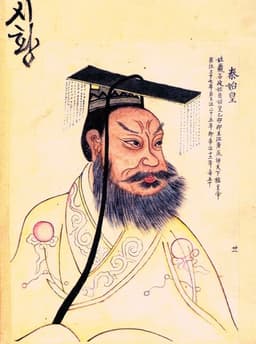
Qin Shi Huang
Emperor · Ancient
85.2Total
Basic Information
Born
1650
-259
Died
1722
-210
Era
Modern
Ancient
Nationality
England
China
Occupation
General
Emperor
Civilization
Western
Eastern
Score Comparison
Military (10%)
84.7
80.0
Political (20%)
78.0
90.0
Influence (20%)
65.0
85.0
Legacy (20%)
80.0
90.0
Leadership (15%)
78.0
78.0
Strategy (15%)
72.8
82.0
TOTAL
75.4
85.2
John Churchill Duke of Marlborough — Complete Timeline
1704 AD
Battle of BlenheimWar
Marlborough commanded the Anglo-Dutch army alongside Prince Eugene of Savoy against French and Bavarian forces at Blenheim. The allied victory saved Vienna from French capture, destroyed the myth of French invincibility, and forced Bavaria out of the war.
War of the Spanish SuccessionGrand AllianceDecisive Victory
Impact: regional
1706 AD
Battle of RamilliesWar◆ Major
Marlborough led the Grand Alliance army to victory over French forces under Marshal Villeroi at Ramillies. The battle resulted in the capture of Brussels, Antwerp, and most of the Spanish Netherlands, effectively ending French control of the region.
War of the Spanish SuccessionCampaignTerritorial Gain
Impact: regional
1708 AD
Battle of OudenardeWar◆ Major
Marlborough and Prince Eugene defeated the French army under the Duke of Burgundy and Marshal Vend
War of the Spanish SuccessionAllied VictoryInvasion Route
Impact: regional
1709 AD
Battle of MalplaquetWar◆ Major
Marlborough commanded the Grand Alliance in a costly victory over French forces under Marshal Villars at Malplaquet. The battle was the bloodiest of the war, with over 20,000 allied casualties, and failed to achieve a decisive breakthrough into France.
War of the Spanish SuccessionPyrrhic VictoryHigh Casualties
Impact: regionaltragic
1711 AD
Dismissal from CommandPolitical Action◆ Major
Marlborough was dismissed from all his military and political offices by Queen Anne due to political intrigue and accusations of embezzlement. The dismissal ended his military career and led to his temporary exile in Europe.
Political FallExileTory Government
Impact: nationaldestructive
Qin Shi Huang — Complete Timeline
246 BC
Construction of the Mausoleum and Terracotta ArmyOther◆ Major
Qin Shi Huang commissioned a vast mausoleum complex near Xi'an, guarded by thousands of life-sized terracotta soldiers, horses, and chariots. The project employed hundreds of thousands of workers and reflected his obsession with immortality and imperial power.
Impact: global
230 BC
Conquest of the Six Warring StatesWar
From 230 to 221 BCE, Ying Zheng led the Qin state in a series of campaigns that conquered the Han, Zhao, Wei, Chu, Yan, and Qi states. This unified China under a single ruler for the first time, ending the Warring States period.
Impact: global
221 BC
Standardization of Writing, Currency, and MeasurementsReform◆ Major
Qin Shi Huang ordered the standardization of Chinese script, currency, and weights and measures across the unified empire. This facilitated administration, trade, and cultural integration, laying a foundation for future dynasties.
Impact: globalconstructive
Proclamation of the Qin DynastyPolitical Action
After conquering the last independent state, Ying Zheng declared himself Shi Huangdi (First Emperor), founding the Qin Dynasty. He adopted a new title to signify his supreme authority and initiated centralized imperial rule.
Impact: global
214 BC
Initiation of the Great Wall ConstructionOther◆ Major
Qin Shi Huang ordered the connection and extension of existing northern fortifications to create a unified defensive wall against nomadic Xiongnu raids. This project involved massive conscripted labor and became the precursor to the later Great Wall.
Impact: regional
213 BC
Burning of Books and Burying of ScholarsPolitical Action◆ Major
On the advice of Li Si, Qin Shi Huang ordered the burning of historical records and philosophical texts not aligned with Legalist doctrine. He also had 460 Confucian scholars buried alive to suppress dissent and consolidate ideological control.
Impact: nationaldestructive
Expert Analysis
Origins
**Qin Shi Huang** (259–210 BC), born Ying Zheng, was the son of King Zhuangxiang of Qin and Zhao Ji. He ascended the throne at age 13, inheriting a state that had already implemented Legalist reforms under Shang Yang. His early life was marked by political intrigue, including a regency controlled by Lü Buwei and later a coup against the eunuch Lao Ai. This crucible forged a ruthless, ambitious ruler determined to unify China.
**John Churchill, Duke of Marlborough** (1650–1722), was born into a Royalist family during the English Civil War. His father, Sir Winston Churchill, was a impoverished Cavalier. John began his military career as a page for the Duke of York (future James II). He rose through skill and patronage, switching allegiances during the Glorious Revolution to support William III. His early life taught him diplomacy, loyalty to crown, and strategic brilliance.
Rise to Power
Qin Shi Huang's rise was meteoric. By 230 BC, he launched campaigns against the six other Warring States—Han, Zhao, Wei, Chu, Yan, and Qi. Using Legalist principles, he combined military might with bribery and divide-and-conquer tactics. By 221 BC, all states were conquered, and he proclaimed himself Shi Huangdi (First Emperor). This unification was unprecedented in Chinese history.
Marlborough's rise was more gradual. He distinguished himself in the Franco-Dutch War (1672–1678) and later in suppressing Monmouth's Rebellion (1685). His loyalty to James II wavered, and he secretly corresponded with William of Orange. After William's accession, he was made Earl of Marlborough but fell from favor in 1692. He returned to prominence under Queen Anne, becoming Captain-General of Allied forces in the War of Spanish Succession (1701–1714).
Leadership & Governance
Qin Shi Huang ruled with absolute authority through Legalism, emphasizing strict laws, harsh punishments, and centralization. He standardized writing, currency, weights, and measures across the empire, facilitating trade and administration. He also built a massive road network and connected defensive walls into the Great Wall. However, his methods were draconian: he burned books of rival philosophies and buried 460 Confucian scholars alive to suppress dissent.
Marlborough was a master strategist and diplomat. As commander of the Grand Alliance, he coordinated with allies like Prince Eugene of Savoy. His leadership was marked by careful planning, logistical genius, and the ability to inspire troops. He never lost a battle and captured over 30 fortresses. His political skills were equally sharp, though he faced constant intrigue at home. His governance of the army was efficient, but he had no role in civil administration.
Triumph & Tragedy
Qin Shi Huang's triumph was the unification of China and the creation of a centralized imperial system that lasted over 2,000 years. His standardization laid the foundation for Chinese civilization. The tragedy came after his death: his son was weak, and the Qin Dynasty collapsed within three years due to revolts from harsh policies and succession struggles. His tomb, guarded by the Terracotta Army, remains a wonder.
Marlborough's greatest triumph was the Battle of Blenheim (1704), where he crushed the French and Bavarians, saving Vienna and ending French domination. He followed with victories at Ramillies (1706), Oudenarde (1708), and Malplaquet (1709). His tragedy was political: after Anne's death, he was dismissed, charged with embezzlement, and fled to exile. He later returned, but his reputation suffered. He died in 1722, his palace Blenheim still incomplete.
Character & Destiny
Qin Shi Huang was paranoid, obsessed with immortality, and ruthless. He feared assassination, slept in different rooms nightly, and conducted massive hunts for the elixir of life. His destiny was to be the First Emperor, but his legacy was a double-edged sword: unifier and tyrant. He died at 49 from mercury poisoning, likely from his immortality potions.
Marlborough was charming, ambitious, and tactical. He was a master of battlefield psychology and maintained excellent relations with his troops. His destiny was to be the savior of Europe, but he was also a man of his age, seeking wealth and titles. He died at 72, having outlived his wife and most of his children, his legacy secure as a military genius.
Legacy
Qin Shi Huang's legacy is immense: he created the template for Chinese imperial rule. The name "China" likely derives from "Qin." His standardization and infrastructure endured. However, his harshness made him controversial; Confucian historians vilified him, while modern China celebrates his unification. His tomb and the Great Wall are symbols of Chinese civilization.
Marlborough's legacy is as one of history's greatest generals. His victories preserved the balance of power in Europe. He is honored with Blenheim Palace, a UNESCO World Heritage site. His tactics influenced later commanders like Napoleon. He is also the ancestor of Winston Churchill, who wrote his biography. However, his reputation for greed and political maneuvering tarnishes his image.
Conclusion
**Winner: Qin Shi Huang** (Score gap: 9.8). While Marlborough was a brilliant general, Qin Shi Huang's impact was far greater in scale and duration. He unified a civilization, created a governance model that lasted millennia, and left a cultural imprint that defines China today. Marlborough's victories, though crucial, were part of a broader European conflict and did not reshape a continent's identity. Qin's scores in Power, Intelligence, Leadership, and Tenacity exceed Marlborough's. His vision and ruthlessness changed the world permanently.
| Category | Qin Shi Huang | Marlborough |
|----------|---------------|-------------|
| Military | 80 | 85 |
| Power | 90 | 78 |
| Influence | 85 | 65 |
| Leadership | 90 | 80 |
| Discipline | 78 | 78 |
| Strategy | 82 | 73 |
| Tenacity | 85 | 75 |
| **Total** | **590** | **534** |
Rankings
🥇
Qin Shi HuangLeader
Mil: 80.0Pol: 90.0Inf: 85.0
85.2
🥈
John Churchill Duke of Marlborough
Mil: 84.7Pol: 78.0Inf: 65.0
75.4
+9.8 behind
How This Comparison Works
Algorithm
Each figure is scored on 6 dimensions (0—100 scale) based on structured historical data: Military (10%), Political (20%), Influence (20%), Legacy (20%), Leadership (15%), Strategy (15%). The weighted total produces the final ranking.
Data Sources
Scores are computed from structured sub-indicators in the database. Scale factors adjust for era (Ancient ×0.85, Modern ×1.0) and civilization size (Eastern ×1.05, Other ×0.80) to account for differences in population and military scale.
Maximum 3 Figures
Comparisons are limited to 2—3 figures to ensure readability and statistical meaningfulness.
Error Margins
±5 points per dimension — Sub-scores are derived from historical records with inherent uncertainty. Two figures within 5 points on a dimension should be considered roughly equivalent in that area.
Total Score Accuracy
±3 points overall — The weighted combination of 6 dimensions produces a total score with approximately ±3 points of uncertainty. Differences of less than 3 points are not statistically significant— the figures are effectively tied.
Known Limitations
- Historical records are incomplete and uneven across civilizations
- Figures from oral-tradition societies may be underrepresented
- Occupation labels can misclassify multi-role figures
- Scores measure capability and impact, not moral character
- Quantitative scoring is a comparison tool, not absolute truth
Capability Radar
Military (10%) — Battles & Warfare
Battles
95
85
Win Rate
98
90
Expansion
85
90
Political (20%) — Governance & Reform
Reform
60
95
Diplomacy
85
75
Economy
70
90
Influence (20%) — Cultural & Global Reach
Cultural
70
95
Global
75
85
Legacy (20%) — Historical Impact
Historical
85
95
Longevity
80
95
Leadership (15%) — Power & Stability
Tenure
80
70
Stability
75
65
Strategy (15%) — Tactics & Innovation
Strategy
95
85
Tactics
96
80
Reform
70
95
Similar Comparisons
Comments & Discussion
Duke of Data6/17/2026
Chalking this up as a "general versus emperor" misses the point. Marlborough fought 4 major battles and 12 sieges without a single defeat—that's an unblemished record that even Napoleon couldn't claim. Qin's military achievements were mostly administrative: standardizing scripts, roads, and measures. Compare apples to apples: give me one battle where Qin personally outmaneuvered a numerically superior foe like Marlborough did at Blenheim.
铸剑为犁6/17/2026
说秦始皇只会打仗就太片面了。他统一六国后干的那些事——书同文、车同轨、统一度量衡——才是真正改变文明走向的大手笔。马尔博罗再能打,他赢的仗影响了几十年的事,秦始皇帝制延续了两千年。选英雄不能只看刀光剑影,要看谁刻下了文明的基因。
Trench Mentor6/17/2026
Every military historian should notice this: Marlborough mastered coalition warfare in an age of limited logistics, keeping fragile allies like the Holy Roman Empire and Dutch Republic fighting together for a decade. That's political genius as much as tactical. Qin just steamrolled divided states one by one with overwhelming force. One built trust, the other built walls—literally.
太史公再世6/17/2026
马堡公爵确实厉害,但把他跟秦始皇比有点抬举了。嬴政十岁登基,十三岁就除掉嫪毐,二十多岁横扫六合——这些都是在刀尖上舔血。马堡出生就有爵位,有朝廷资源撑着。要说逆境中崛起,一个从小在宫廷政变和刺杀中活下来的人,比在内战中站错队就安逸了的贵族更有资格谈奋斗。
Counterfactual King6/17/2026
Reverse the circumstances and see what shakes out. Drop Marlborough into 3rd century BC China with Qin's resources—he might unify everything faster, build fewer walls, and piss off fewer scholars. Drop Qin into 18th century Europe as a duke commanding multi-national coalitions—he'd probably execute his allies for incompetence and get his own army starved by winter. These aren't comparable skill sets.