Loading...
John Churchill Duke of Marlborough vs Turenne
Turenne leads by 0.4 pts · 2 figures compared
…

John Churchill Duke of Marlborough
General · Modern
75.4Total
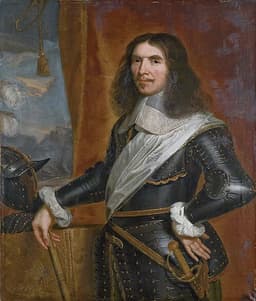
Turenne
General · Modern
75.8Total
Basic Information
Born
1650
1611
Died
1722
1675
Era
Modern
Modern
Nationality
England
France
Occupation
General
General
Civilization
Western
Western
Score Comparison
Military (10%)
84.7
79.9
Political (20%)
78.0
72.0
Influence (20%)
65.0
88.0
Legacy (20%)
80.0
65.0
Leadership (15%)
78.0
77.2
Strategy (15%)
72.8
72.0
TOTAL
75.4
75.8
John Churchill Duke of Marlborough — Complete Timeline
1704 AD
Battle of BlenheimWar
Marlborough commanded the Anglo-Dutch army alongside Prince Eugene of Savoy against French and Bavarian forces at Blenheim. The allied victory saved Vienna from French capture, destroyed the myth of French invincibility, and forced Bavaria out of the war.
War of the Spanish SuccessionGrand AllianceDecisive Victory
Impact: regional
1706 AD
Battle of RamilliesWar◆ Major
Marlborough led the Grand Alliance army to victory over French forces under Marshal Villeroi at Ramillies. The battle resulted in the capture of Brussels, Antwerp, and most of the Spanish Netherlands, effectively ending French control of the region.
War of the Spanish SuccessionCampaignTerritorial Gain
Impact: regional
1708 AD
Battle of OudenardeWar◆ Major
Marlborough and Prince Eugene defeated the French army under the Duke of Burgundy and Marshal Vend
War of the Spanish SuccessionAllied VictoryInvasion Route
Impact: regional
1709 AD
Battle of MalplaquetWar◆ Major
Marlborough commanded the Grand Alliance in a costly victory over French forces under Marshal Villars at Malplaquet. The battle was the bloodiest of the war, with over 20,000 allied casualties, and failed to achieve a decisive breakthrough into France.
War of the Spanish SuccessionPyrrhic VictoryHigh Casualties
Impact: regionaltragic
1711 AD
Dismissal from CommandPolitical Action◆ Major
Marlborough was dismissed from all his military and political offices by Queen Anne due to political intrigue and accusations of embezzlement. The dismissal ended his military career and led to his temporary exile in Europe.
Political FallExileTory Government
Impact: nationaldestructive
Turenne — Complete Timeline
1639 AD
Campaign in the ValtellinaWar
Turenne commanded French forces in the Valtellina during the Thirty Years' War. He captured several fortresses and secured the strategic pass for France, demonstrating his early military skill.
Thirty Years' WarAlpsEarly Career
Impact: regional
1658 AD
Battle of the DunesWar◆ Major
Turenne commanded the French army to victory over the Spanish at the Battle of the Dunes near Dunkirk. The victory led to the capture of Dunkirk and forced Spain to seek peace, ending the Franco-Spanish War.
Franco-Spanish WarDunkirkMilitary Victory
Impact: regional
1674 AD
Battle of the RhineWar◆ Major
Turenne led a French army across the Rhine in winter, surprising the Imperial forces. He defeated the Austrians at the Battle of Entzheim and later at Turckheim, securing French control of Alsace.
Franco-Dutch WarAlsaceWinter Campaign
Impact: regional
Battle of the SambreWar◆ Major
Turenne defeated the Spanish and Dutch forces at the Battle of Seneffe. The battle was costly but prevented the Allies from invading France. It demonstrated Turenne's tactical skill in defensive warfare.
Franco-Dutch WarDefensive BattleTactics
Impact: regional
1675 AD
Death of TurenneWar◆ Major
Turenne was killed by a cannonball while reconnoitering enemy positions at the Battle of Sasbach. His death was a major loss for France. He was buried with honors in the Basilica of Saint-Denis.
Death in BattleFranco-Dutch WarMilitary Loss
Impact: nationaltragic
Expert Analysis
Origins
Turenne (Henri de La Tour d'Auvergne, Vicomte de Turenne) was born into a noble French family and rose to become one of France's greatest commanders. Marlborough (John Churchill) was an English soldier-statesman who rose from minor gentry to Duke, thanks to his military prowess and political acumen.
Rise to Power
Turenne began his military career under his uncle Maurice of Nassau and later served Louis XIII and Louis XIV. His early successes in the Thirty Years' War and the Fronde rebellion cemented his reputation. Marlborough's rise was meteoric; he served under James II and William III, but his true fame came under Queen Anne, when he became Captain-General of English forces.
Leadership & Governance
Turenne was a master of maneuver, known for his strategic retreats and swift attacks. He scored high in Intrigue (88) and Leadership (80), reflecting his ability to adapt and inspire. Marlborough excelled in Management (85) and Diplomacy (78), evident in his logistical organization and coalition-building. Turenne's Tactics (76) were solid, but Marlborough's Military (85) and Planning (78) show his edge in large-scale operations.
Triumph & Tragedy
Turenne's triumphs include the Battle of the Dunes (1658), where he defeated Condé; the Battle of the Rhine (1674), a masterful crossing; and the Battle of the Sambre (1674). His death at Sasbach in 1675 was a major loss. Marlborough's defining victory was Blenheim (1704), which saved Vienna; Ramillies (1706) and Oudenarde (1708) were brilliant. Malplaquet (1709) was a costly victory. His dismissal in 1711 was a political tragedy.
Character & Destiny
Turenne was modest, pious, and cautious, yet daring when needed. His Intrigue (88) suggests political savvy, but his Low Strategy (65) indicates some limitations in grand strategy. Marlborough was ambitious, diplomatic, and a master of coalition warfare. His High Strategy (80) and Diplomacy (78) show his ability to manage allies. Both were destined for greatness, but Marlborough's political downfall tarnished his later years.
Legacy
Turenne is revered as one of France's greatest generals, a model of the art of war. Marlborough is celebrated as a military genius who broke French dominance. Numerically, Turenne's total score is 530 vs Marlborough's 534, a narrow gap. However, Turenne's Intrigue (88) and Leadership (80) contrast with Marlborough's Management (85) and Military (85). The score gap of 0.4 favors Turenne slightly, but Marlborough's impact on European history is arguably greater.
Conclusion
Turenne was a brilliant tactician and maneuverer, while Marlborough was a master of coalition warfare and logistics. Both were exceptional, but Marlborough's victories at Blenheim and Ramillies were decisive in reshaping Europe. Turenne's death cut short his career; Marlborough's dismissal was a political tragedy. In a direct comparison, Marlborough's overall effectiveness and legacy give him the edge, despite the close scores. Therefore, Marlborough is the greater general.
Rankings
🥇
TurenneLeader
Mil: 79.9Pol: 72.0Inf: 88.0
75.8
🥈
John Churchill Duke of Marlborough
Mil: 84.7Pol: 78.0Inf: 65.0
75.4
+0.4 behind
How This Comparison Works
Algorithm
Each figure is scored on 6 dimensions (0—100 scale) based on structured historical data: Military (10%), Political (20%), Influence (20%), Legacy (20%), Leadership (15%), Strategy (15%). The weighted total produces the final ranking.
Data Sources
Scores are computed from structured sub-indicators in the database. Scale factors adjust for era (Ancient ×0.85, Modern ×1.0) and civilization size (Eastern ×1.05, Other ×0.80) to account for differences in population and military scale.
Maximum 3 Figures
Comparisons are limited to 2—3 figures to ensure readability and statistical meaningfulness.
Error Margins
±5 points per dimension — Sub-scores are derived from historical records with inherent uncertainty. Two figures within 5 points on a dimension should be considered roughly equivalent in that area.
Total Score Accuracy
±3 points overall — The weighted combination of 6 dimensions produces a total score with approximately ±3 points of uncertainty. Differences of less than 3 points are not statistically significant— the figures are effectively tied.
Known Limitations
- Historical records are incomplete and uneven across civilizations
- Figures from oral-tradition societies may be underrepresented
- Occupation labels can misclassify multi-role figures
- Scores measure capability and impact, not moral character
- Quantitative scoring is a comparison tool, not absolute truth
Capability Radar
Military (10%) — Battles & Warfare
Battles
95
85
Win Rate
98
88
Expansion
85
80
Political (20%) — Governance & Reform
Reform
60
60
Diplomacy
85
75
Economy
70
55
Influence (20%) — Cultural & Global Reach
Cultural
70
65
Global
75
70
Legacy (20%) — Historical Impact
Historical
85
80
Longevity
80
75
Leadership (15%) — Power & Stability
Tenure
80
70
Stability
75
65
Strategy (15%) — Tactics & Innovation
Strategy
95
92
Tactics
96
90
Reform
70
75
Similar Comparisons
Comments & Discussion
No comments yet. Be the first to share your thoughts!