Loading...
John Adams vs Trygve Lie
John Adams leads by 6.0 pts · 2 figures compared
…
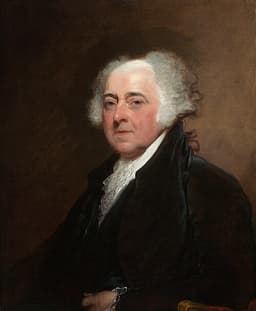
John Adams
Politician · Modern
64.7Total
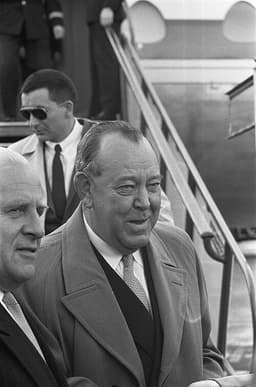
Trygve Lie
Politician · Modern
58.7Total
Basic Information
Born
1735
1896
Died
1826
1968
Era
Modern
Modern
Nationality
United States
Norway
Occupation
Politician
Politician
Civilization
Western
Western
Score Comparison
Military (10%)
49.7
49.2
Political (20%)
70.0
68.0
Influence (20%)
82.0
61.0
Legacy (20%)
55.0
52.0
Leadership (15%)
72.0
72.0
Strategy (15%)
42.0
45.3
TOTAL
64.7
58.7
John Adams — Complete Timeline
1770 AD
Defense of the British Soldiers in the Boston Massacre TrialPolitical Action◆ Major
Adams defended British soldiers accused of murder in the Boston Massacre. He secured acquittals for most, arguing for fair trial rights. This action demonstrated his commitment to rule of law despite political pressure.
Boston MassacreLegal DefenseAmerican Revolution
1796 AD
Election as Second President of the United StatesPolitical Action◆ Major
Adams was elected as the second US president, defeating Thomas Jefferson. His presidency was marked by tensions with France, the XYZ Affair, and the passage of the Alien and Sedition Acts.
PresidencyUS PoliticsElection
Impact: national
1798 AD
Signing of the Alien and Sedition ActsPolitical Action◆ Major
Adams signed the Alien and Sedition Acts, which restricted immigration and criminalized criticism of the government. These acts were widely condemned as violations of free speech and led to the Kentucky and Virginia Resolutions.
Alien and Sedition ActsCivil LibertiesUS Politics
Impact: nationaldestructive
1801 AD
Appointment of John Marshall as Chief JusticePolitical Action◆ Major
Adams appointed John Marshall as Chief Justice of the Supreme Court in the final months of his presidency. Marshall's tenure established judicial review and shaped American constitutional law for decades.
Supreme CourtJudicial ReviewUS Constitution
Impact: nationalconstructive
Peaceful Transfer of Power to Thomas JeffersonPolitical Action
Adams peacefully transferred power to his political rival Thomas Jefferson after losing the 1800 election. This set a precedent for peaceful transitions of power in the United States.
Peaceful TransferUS PoliticsDemocracy
Impact: nationalconstructive
Trygve Lie — Complete Timeline
1941 AD
Served as Norwegian Minister of Foreign AffairsPolitical Action
Lie served as Norwegian Minister of Foreign Affairs in the London-based exile government during World War II. He helped maintain Norwegian diplomatic relations and advocated for post-war international cooperation.
World War IINorwegian GovernmentDiplomacy
Impact: nationalconstructive
1946 AD
Elected first Secretary-General of the United NationsPolitical Action◆ Major
Trygve Lie became the first Secretary-General of the United Nations, serving from 1946 to 1952. His appointment was a compromise between the US and Soviet Union, and he helped establish the UN's administrative structure.
UN Secretary-GeneralFoundingPost-War
Impact: globalconstructive
Oversaw the creation of the UN Security CouncilPolitical Action◆ Major
Lie played a key role in establishing the UN Security Council as the primary body for maintaining international peace and security. He helped define its procedures and the veto power of permanent members.
UN Security CouncilInstitution BuildingPeace
Impact: globalconstructive
1948 AD
Mediated the Berlin BlockadePolitical Action◆ Major
Lie attempted to mediate the Berlin Blockade, but the Soviet Union rejected his proposals. The crisis was eventually resolved through the Berlin Airlift, highlighting the limitations of UN diplomacy during the Cold War.
Cold WarBerlinDiplomacy
Impact: global
1952 AD
Resigned as Secretary-GeneralPolitical Action◆ Major
Lie resigned as UN Secretary-General after facing Soviet opposition and criticism for his handling of the Korean War. His resignation paved the way for Dag Hammarskj
ResignationUN PoliticsCold War
Impact: global
Expert Analysis
Origins
John Adams was born on October 30, 1735, in Braintree, Massachusetts, to a modest farming family. He graduated from Harvard College in 1755 and initially became a schoolteacher before studying law. Adams was admitted to the bar in 1758 and quickly established himself as a prominent lawyer. His early legal work included defending British soldiers after the Boston Massacre in 1770, a case that demonstrated his commitment to fair trials. Adams married Abigail Smith in 1764, forming a partnership that would influence his political career.
Trygve Lie was born on July 16, 1896, in Oslo, Norway, to a carpenter and a homemaker. He studied law at the University of Oslo, graduating in 1919. Lie joined the Norwegian Labour Party and became a legal advisor to the trade unions. His early career included serving as a secretary to the Norwegian Minister of Justice and later as a judge. Lie's political ascent was tied to his legal expertise and diplomatic skills, which he developed during Norway's interwar period.
Rise to Power
Adams rose to prominence as a leading voice for American independence. He served in the Continental Congress from 1774 to 1777, where he championed the Declaration of Independence and helped secure its adoption in 1776. Adams later served as a diplomat in France and the Netherlands, securing crucial loans and recognition for the fledgling United States. In 1789, he became the first Vice President under George Washington, a role he found frustrating. Adams was elected as the second President in 1796, defeating Thomas Jefferson in a contentious election.
Lie's rise to power came through Norwegian politics and international diplomacy. He served as Norway's Minister of Foreign Affairs from 1940 to 1945, leading the government-in-exile in London during World War II. After the war, he played a key role in establishing the United Nations. In 1946, Lie was elected the first Secretary-General of the UN, a position he held until 1952. His appointment was a compromise between the US and Soviet Union, reflecting his perceived neutrality.
Leadership & Governance
Adams' leadership style was principled but often confrontational. As President, he prioritized avoiding war with France, despite pressure from his own Federalist Party. He sent diplomatic missions to France, leading to the Convention of 1800, which ended hostilities. However, Adams signed the Alien and Sedition Acts in 1798, which restricted speech and immigration. These acts were widely condemned and damaged his reputation. Adams scored 70.0 in political leadership, reflecting his ability to make principled decisions but also his political miscalculations.
Lie's governance at the UN focused on establishing the organization's structures and mediating early Cold War crises. He oversaw the creation of the UN Security Council and worked to define its role. Lie attempted to mediate the Berlin Blockade in 1948-1949, but his proposals were rejected by the Soviet Union. He also supported UN intervention in the Korean War, which led to Soviet opposition and his eventual resignation. Lie scored 72.0 in leadership, demonstrating his diplomatic efforts but also the limitations of his influence.
Triumph & Tragedy
Adams' greatest triumph was the peaceful transfer of power to Thomas Jefferson after the 1800 election. This set a precedent for democratic transitions and strengthened the American political system. He also appointed John Marshall as Chief Justice, who established judicial review. Adams' tragedy was the Alien and Sedition Acts, which undermined civil liberties and fueled opposition. His presidency was marked by partisan conflict, and he lost re-election.
Lie's triumph was successfully launching the United Nations as a functional international organization. He helped establish the UN's administrative framework and peacekeeping mechanisms. His tragedy was his inability to navigate Cold War tensions, particularly his handling of the Korean War, which led to Soviet hostility and his resignation in 1952. Lie's tenure ended with diminished influence, and he returned to Norwegian politics.
Character & Destiny
Adams was intellectual, principled, and often stubborn. He valued independence and rule of law, but his combative nature alienated allies. His decision to defend British soldiers in 1770 showed his commitment to justice, but his support for the Sedition Acts contradicted his principles. Adams' character shaped his destiny: he was a founding father but a one-term president.
Lie was pragmatic, diplomatic, and resilient. He worked to build consensus but lacked the authority to enforce decisions. His character led him to take risks, like supporting UN action in Korea, but also made him a target for Soviet criticism. Lie's destiny was to be a transitional figure, laying groundwork for future UN leaders.
Legacy
Adams' legacy is mixed. He is remembered as a key founder who championed independence and the rule of law. The peaceful transfer of power remains a cornerstone of American democracy. However, the Alien and Sedition Acts are a cautionary tale. Adams scored 55.0 in legacy, reflecting his enduring but contested place in history. His influence on the Supreme Court through Marshall is significant.
Lie's legacy is as the first UN Secretary-General, establishing precedents for international diplomacy. He set the stage for later peacekeeping efforts. However, his tenure is often overshadowed by his successors. Lie scored 52.0 in legacy, indicating his foundational but limited long-term impact. He is remembered more for his role in founding the UN than for specific achievements.
Conclusion
John Adams had a greater impact than Trygve Lie. Adams scored 64.7 overall compared to Lie's 58.7, a gap of 6 points. Adams' contributions to American independence and the precedent of peaceful transition outweigh Lie's foundational but constrained work at the UN. While Lie helped establish an international institution, Adams shaped a nation that would become a global power. His political and influence scores (70.0 and 82.0) reflect his role in creating a lasting political system. Lie's influence score of 61.0 shows his more limited reach. Therefore, John Adams had the greater historical impact.
Rankings
🥇
John AdamsLeader
Mil: 49.7Pol: 70.0Inf: 82.0
64.7
🥈
Trygve Lie
Mil: 49.2Pol: 68.0Inf: 61.0
58.7
+6.0 behind
How This Comparison Works
Algorithm
Each figure is scored on 6 dimensions (0—100 scale) based on structured historical data: Military (10%), Political (20%), Influence (20%), Legacy (20%), Leadership (15%), Strategy (15%). The weighted total produces the final ranking.
Data Sources
Scores are computed from structured sub-indicators in the database. Scale factors adjust for era (Ancient ×0.85, Modern ×1.0) and civilization size (Eastern ×1.05, Other ×0.80) to account for differences in population and military scale.
Maximum 3 Figures
Comparisons are limited to 2—3 figures to ensure readability and statistical meaningfulness.
Error Margins
±5 points per dimension — Sub-scores are derived from historical records with inherent uncertainty. Two figures within 5 points on a dimension should be considered roughly equivalent in that area.
Total Score Accuracy
±3 points overall — The weighted combination of 6 dimensions produces a total score with approximately ±3 points of uncertainty. Differences of less than 3 points are not statistically significant— the figures are effectively tied.
Known Limitations
- Historical records are incomplete and uneven across civilizations
- Figures from oral-tradition societies may be underrepresented
- Occupation labels can misclassify multi-role figures
- Scores measure capability and impact, not moral character
- Quantitative scoring is a comparison tool, not absolute truth
Capability Radar
Military (10%) — Battles & Warfare
Battles
26
32
Win Rate
32
30
Expansion
38
34
Political (20%) — Governance & Reform
Reform
75
55
Diplomacy
85
65
Economy
55
40
Influence (20%) — Cultural & Global Reach
Cultural
65
40
Global
65
65
Legacy (20%) — Historical Impact
Historical
75
60
Longevity
70
50
Leadership (15%) — Power & Stability
Tenure
60
60
Stability
50
50
Strategy (15%) — Tactics & Innovation
Strategy
41
37
Tactics
38
38
Reform
42
45
Similar Comparisons
Comments & Discussion
No comments yet. Be the first to share your thoughts!