Loading...
John Adams vs Napoleon Bonaparte
Napoleon Bonaparte leads by 6.2 pts · 2 figures compared
…
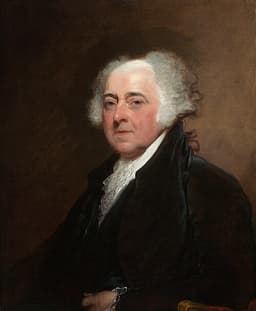
John Adams
Politician · Modern
64.7Total

Napoleon Bonaparte
General · Modern
70.9Total
Basic Information
Born
1735
1769
Died
1826
1821
Era
Modern
Modern
Nationality
United States
France
Occupation
Politician
General
Civilization
Western
Western
Score Comparison
Military (10%)
49.7
94.0
Political (20%)
70.0
72.0
Influence (20%)
82.0
40.0
Legacy (20%)
55.0
80.0
Leadership (15%)
72.0
78.0
Strategy (15%)
42.0
90.0
TOTAL
64.7
70.9
John Adams — Complete Timeline
1770 AD
Defense of the British Soldiers in the Boston Massacre TrialPolitical Action◆ Major
Adams defended British soldiers accused of murder in the Boston Massacre. He secured acquittals for most, arguing for fair trial rights. This action demonstrated his commitment to rule of law despite political pressure.
Boston MassacreLegal DefenseAmerican Revolution
1796 AD
Election as Second President of the United StatesPolitical Action◆ Major
Adams was elected as the second US president, defeating Thomas Jefferson. His presidency was marked by tensions with France, the XYZ Affair, and the passage of the Alien and Sedition Acts.
PresidencyUS PoliticsElection
Impact: national
1798 AD
Signing of the Alien and Sedition ActsPolitical Action◆ Major
Adams signed the Alien and Sedition Acts, which restricted immigration and criminalized criticism of the government. These acts were widely condemned as violations of free speech and led to the Kentucky and Virginia Resolutions.
Alien and Sedition ActsCivil LibertiesUS Politics
Impact: nationaldestructive
1801 AD
Appointment of John Marshall as Chief JusticePolitical Action◆ Major
Adams appointed John Marshall as Chief Justice of the Supreme Court in the final months of his presidency. Marshall's tenure established judicial review and shaped American constitutional law for decades.
Supreme CourtJudicial ReviewUS Constitution
Impact: nationalconstructive
Peaceful Transfer of Power to Thomas JeffersonPolitical Action
Adams peacefully transferred power to his political rival Thomas Jefferson after losing the 1800 election. This set a precedent for peaceful transitions of power in the United States.
Peaceful TransferUS PoliticsDemocracy
Impact: nationalconstructive
Napoleon Bonaparte — Complete Timeline
1799 AD
Coup of 18 BrumaireOther◆ Major
Napoleon Bonaparte, with support from his brother Lucien and key political figures, overthrew the Directory in a bloodless coup. He established the Consulate with himself as First Consul, effectively becoming the ruler of France. This event ended the French Revolution's most unstable period.
French RevolutionCoupRise to Power
Impact: regional
1804 AD
Promulgation of the Napoleonic CodeOther◆ Major
Napoleon enacted the Civil Code of the French, known as the Napoleonic Code, a comprehensive set of laws that replaced the fragmented feudal legal systems. The code established legal equality, protected property rights, and secularized law. It became the basis for legal systems in many European and world countries.
Legal ReformNapoleonic CodeCivil Law
Impact: globalconstructive
1805 AD
Battle of AusterlitzWar◆ Major
Napoleon's Grande Arm
Napoleonic WarsBattleDecisive Victory
Impact: global
1812 AD
Invasion of RussiaWar◆ Major
Napoleon led the Grande Arm
Napoleonic WarsInvasionDisaster
Impact: globaldestructive
1815 AD
Battle of WaterlooWar◆ Major
Napoleon's French army was defeated by the combined forces of the Duke of Wellington's Anglo-Allied army and Gebhard Leberecht von Bl
Napoleonic WarsBattleFinal Defeat
Impact: globaldestructive
Expert Analysis
john-adams-vs-napoleon-bonaparte
# The Corsican and the Puritan: Two Paths to Power in an Age of Revolution
On a December morning in 1803, in the newly built White House in Washington, D.C., a weary John Adams sat down to write a letter to a friend. Across the Atlantic, in the Tuileries Palace in Paris, Napoleon Bonaparte was reviewing his Grand Army, preparing to crown himself emperor. Neither man knew the other personally, yet their lives were intertwined by the great forces of their age: revolution, war, and the struggle to define what a modern nation should be. One would conquer Europe and lose everything. The other would lose an election and win immortality. Why?
Origins
Born in 1735 in Braintree, Massachusetts, John Adams grew up in a world of small farms, Puritan sermons, and the steady hum of colonial self-governance. His father was a farmer and shoemaker who valued education; young John devoured Cicero, Locke, and the classics. The American colonies were a distant fringe of the British Empire, and Adams’s world was one of law, debate, and the slow accumulation of political wisdom. He was, by temperament, a man of principle, suspicious of glory and wary of passion.
Napoleon Bonaparte, born in 1769 on the island of Corsica, came from a very different world. Corsica had just been conquered by France, and Napoleon’s family belonged to the minor nobility—impoverished, proud, and resentful. He spoke French with an Italian accent and was mocked at military school for his provincial origins. Where Adams learned from books, Napoleon learned from maps and battlefields. His era was the French Revolution, a cataclysm that destroyed the old order and opened the door for a young artillery officer with nothing to lose but his ambition.
Rise to Power
Adams rose through the written word. In 1770, when British soldiers fired into a crowd in Boston, killing five colonists, the city burned with rage. Yet Adams, a leading patriot, agreed to defend the soldiers in court. He argued that a fair trial was the foundation of liberty, and he secured acquittals for most of them. It was a deeply unpopular act, but it established his reputation as a man of law, not mob rule. He went on to serve in the Continental Congress, help draft the Declaration of Independence, and become a diplomat in France and the Netherlands.
Napoleon rose through fire. In 1793, at the Siege of Toulon, he devised a plan to capture a British-held fort, turning a rebel stronghold into a government victory. At 24, he became a brigadier general. In 1796, he took command of the French army in Italy and won a series of lightning victories that stunned Europe. He was not just a general; he was a phenomenon, a man who seemed to bend reality to his will. By 1799, he overthrew the government in a coup and made himself First Consul. Adams, by contrast, became president in 1796 by a narrow electoral victory over Thomas Jefferson, a man he respected and loathed in equal measure.
Leadership & Governance
As president, Adams inherited a nation divided between Federalists and Democratic-Republicans, with France and Britain at war and American ships caught in the crossfire. His signature achievement was avoiding war with France, a decision that cost him popularity but preserved his country’s fragile independence. Yet he also signed the Alien and Sedition Acts in 1798, laws that criminalized criticism of the government and allowed the deportation of foreigners. It was a dark moment, born of fear and partisan fury. Adams believed that a strong central government was necessary to prevent chaos, but he never fully trusted the people.
Napoleon governed as a dictator who understood the power of symbols. He centralized the French state, created the Bank of France, and in 1804, codified French law into the Napoleonic Code—a system that enshrined equality before the law but also restored slavery in the colonies and curtailed women’s rights. He built roads, schools, and a modern bureaucracy. He also crowned himself emperor in a lavish ceremony, taking the crown from the Pope’s hands and placing it on his own head. Where Adams governed through compromise and principle, Napoleon governed through will and spectacle.
Triumph & Tragedy
Napoleon’s greatest triumph came in 1805 at Austerlitz, where he crushed the combined armies of Austria and Russia. It was a masterpiece of military strategy—feigning weakness, then striking the enemy’s center with devastating force. For a few years, he was master of Europe. But his tragedy began in 1812, when he invaded Russia with 600,000 men. The Russian winter, the scorched earth, and the endless steppes destroyed his army. He returned to France with barely 100,000. Exiled to Elba in 1814, he escaped, raised another army, and met his final defeat at Waterloo in 1815.
Adams’s greatest triumph was the peaceful transfer of power in 1801. After losing the election to Jefferson, he left the White House without a fight, without a coup, without bloodshed. It was an act of profound political maturity. His tragedy was that he never fully appreciated what he had done. He spent his later years bitter, convinced that history would forget him. He was wrong.
Character & Destiny
Napoleon was driven by an insatiable hunger for glory. “I am not a man,” he once said. “I am a thing—a destiny.” He believed that power was the only reality and that history belonged to the bold. His personality—brilliant, restless, ruthless—led him to conquer half of Europe but also to overreach, to trust his own genius above all counsel. He died in exile on Saint Helena, a prisoner of the British, at age 51.
Adams was driven by a different hunger: the desire to be right. He was prickly, vain, and often insufferable, but he was also honest. He believed that power must be checked by law and that a republic could survive only if its leaders placed principle above popularity. His personality—stubborn, principled, insecure—led him to make unpopular decisions that saved his country, but also to alienate allies and brood over slights. He died on July 4, 1826, the same day as Jefferson, as the nation celebrated its 50th birthday.
Legacy
Napoleon’s legacy is vast and contradictory. He spread the ideals of the French Revolution—nationalism, legal equality, secular government—across Europe, but he also caused the deaths of millions. His name is synonymous with military genius and imperial ambition. His reforms shaped modern France, and his code influenced legal systems around the world.
Adams’s legacy is quieter but no less profound. He helped build the architecture of American democracy: the separation of powers, the rule of law, the peaceful transition of government. He appointed John Marshall as Chief Justice in 1801, a decision that shaped American law for generations. He is remembered not as a conqueror, but as a founder.
Conclusion
Two men, two revolutions, two destinies. Napoleon rose on the wings of conquest and fell into the abyss of his own ambition. Adams rose on the strength of his convictions and fell into the quiet dignity of retirement. One changed the map of the world. The other changed the way we think about power itself. In the end, the question is not which man was greater, but which kind of greatness our world still needs.
Rankings
🥇
Napoleon BonaparteLeader
Mil: 94.0Pol: 72.0Inf: 40.0
70.9
🥈
John Adams
Mil: 49.7Pol: 70.0Inf: 82.0
64.7
+6.2 behind
How This Comparison Works
Algorithm
Each figure is scored on 6 dimensions (0—100 scale) based on structured historical data: Military (10%), Political (20%), Influence (20%), Legacy (20%), Leadership (15%), Strategy (15%). The weighted total produces the final ranking.
Data Sources
Scores are computed from structured sub-indicators in the database. Scale factors adjust for era (Ancient ×0.85, Modern ×1.0) and civilization size (Eastern ×1.05, Other ×0.80) to account for differences in population and military scale.
Maximum 3 Figures
Comparisons are limited to 2—3 figures to ensure readability and statistical meaningfulness.
Error Margins
±5 points per dimension — Sub-scores are derived from historical records with inherent uncertainty. Two figures within 5 points on a dimension should be considered roughly equivalent in that area.
Total Score Accuracy
±3 points overall — The weighted combination of 6 dimensions produces a total score with approximately ±3 points of uncertainty. Differences of less than 3 points are not statistically significant— the figures are effectively tied.
Known Limitations
- Historical records are incomplete and uneven across civilizations
- Figures from oral-tradition societies may be underrepresented
- Occupation labels can misclassify multi-role figures
- Scores measure capability and impact, not moral character
- Quantitative scoring is a comparison tool, not absolute truth
Capability Radar
Military (10%) — Battles & Warfare
Battles
26
95
Win Rate
32
90
Expansion
38
95
Political (20%) — Governance & Reform
Reform
75
95
Diplomacy
85
80
Economy
55
85
Influence (20%) — Cultural & Global Reach
Cultural
65
85
Global
65
90
Legacy (20%) — Historical Impact
Historical
75
95
Longevity
70
90
Leadership (15%) — Power & Stability
Tenure
60
85
Stability
50
70
Strategy (15%) — Tactics & Innovation
Strategy
41
95
Tactics
38
98
Reform
42
92
Similar Comparisons
Comments & Discussion
No comments yet. Be the first to share your thoughts!