Loading...
John Adams vs Julius Caesar
Julius Caesar leads by 18.1 pts · 2 figures compared
…
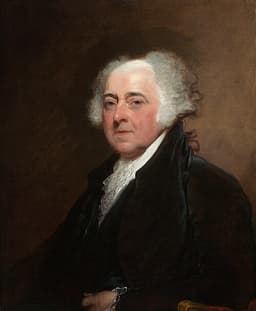
John Adams
Politician · Modern
64.7Total

Julius Caesar
General · Ancient
82.8Total
Basic Information
Born
1735
-100
Died
1826
-44
Era
Modern
Ancient
Nationality
United States
Roman Republic
Occupation
Politician
General
Civilization
Western
Western
Score Comparison
Military (10%)
49.7
88.0
Political (20%)
70.0
78.0
Influence (20%)
82.0
85.0
Legacy (20%)
55.0
82.0
Leadership (15%)
72.0
80.0
Strategy (15%)
42.0
85.0
TOTAL
64.7
82.8
John Adams — Complete Timeline
1770 AD
Defense of the British Soldiers in the Boston Massacre TrialPolitical Action◆ Major
Adams defended British soldiers accused of murder in the Boston Massacre. He secured acquittals for most, arguing for fair trial rights. This action demonstrated his commitment to rule of law despite political pressure.
Boston MassacreLegal DefenseAmerican Revolution
1796 AD
Election as Second President of the United StatesPolitical Action◆ Major
Adams was elected as the second US president, defeating Thomas Jefferson. His presidency was marked by tensions with France, the XYZ Affair, and the passage of the Alien and Sedition Acts.
PresidencyUS PoliticsElection
Impact: national
1798 AD
Signing of the Alien and Sedition ActsPolitical Action◆ Major
Adams signed the Alien and Sedition Acts, which restricted immigration and criminalized criticism of the government. These acts were widely condemned as violations of free speech and led to the Kentucky and Virginia Resolutions.
Alien and Sedition ActsCivil LibertiesUS Politics
Impact: nationaldestructive
1801 AD
Appointment of John Marshall as Chief JusticePolitical Action◆ Major
Adams appointed John Marshall as Chief Justice of the Supreme Court in the final months of his presidency. Marshall's tenure established judicial review and shaped American constitutional law for decades.
Supreme CourtJudicial ReviewUS Constitution
Impact: nationalconstructive
Peaceful Transfer of Power to Thomas JeffersonPolitical Action
Adams peacefully transferred power to his political rival Thomas Jefferson after losing the 1800 election. This set a precedent for peaceful transitions of power in the United States.
Peaceful TransferUS PoliticsDemocracy
Impact: nationalconstructive
Julius Caesar — Complete Timeline
58 BC
Gallic WarsWar◆ Major
Caesar, as proconsul of Gaul, launched a series of campaigns that conquered all of Gaul (modern France, Belgium, and parts of Switzerland). He fought numerous battles, including against the Helvetii, the Belgae, and the Gallic chieftain Vercingetorix. The wars brought immense wealth and a loyal army to Caesar.
Gallic WarsConquestRoman Expansion
Impact: regional
49 BC
Crossing the RubiconPolitical Action◆ Major
Caesar led Legio XIII across the Rubicon River into Italy, defying the Roman Senate's order to disband his army. This act triggered a civil war against Pompey and the Optimates, ultimately leading to Caesar's dictatorship and the end of the Roman Republic.
Roman Civil WarEnd of RepublicPower Struggle
Impact: global
48 BC
Battle of PharsalusWar◆ Major
Caesar's outnumbered army defeated the larger forces of Pompey the Great at Pharsalus in Greece. Caesar's tactical use of a reserve line to counter Pompey's cavalry charge proved decisive. Pompey fled to Egypt, where he was assassinated, leaving Caesar as the undisputed master of the Roman world.
Roman Civil WarBattleDecisive Victory
Impact: regional
44 BC
Appointment as Dictator for LifePolitical Action◆ Major
The Roman Senate appointed Caesar dictator perpetuo (dictator for life), granting him unprecedented personal power. This move concentrated military, legislative, and judicial authority in one person, effectively ending the Roman Republic's traditional system of checks and balances and alarming many senators.
DictatorshipEnd of RepublicPower Consolidation
Impact: regionaldestructive
Assassination on the Ides of MarchPolitical Action◆ Major
A group of Roman senators, led by Marcus Junius Brutus and Gaius Cassius Longinus, stabbed Caesar to death at a meeting of the Senate in the Theatre of Pompey. The assassination was intended to restore the Republic, but instead triggered another civil war that led to the rise of the Roman Empire.
AssassinationRoman PoliticsEnd of Republic
Impact: globaldestructive
Expert Analysis
john-adams-vs-julius-caesar
# The Rubicon and the Republic: Two Paths of Power
On a cold March morning in 44 BCE, Julius Caesar fell beneath twenty-three dagger blows in the Senate chamber, his blood pooling on the marble floor of the very institution he had conquered. Nearly eighteen centuries later, on a quiet January dawn in 1801, John Adams slipped out of Washington before dawn, avoiding the inauguration of his rival Thomas Jefferson, and began the long carriage ride home to Quincy. One death marked the end of a republic; one departure marked its survival. What drove these two men—both brilliant, both flawed, both shaped by revolutions—to such different destinations?
Origins
Caesar was born into the twilight of the Roman Republic, a world of senatorial intrigue, slave armies, and crumbling traditions. His patrician family claimed descent from Venus, but their fortunes had faded. The young Caesar learned early that in Rome, power belonged to those who could command armies and win glory. His uncle Marius had been a populist general; his father-in-law Cinna a radical reformer. From childhood, Caesar breathed the air of civil war and ambition.
John Adams emerged from a different soil entirely—the rocky farms of Braintree, Massachusetts, in 1735. His father was a farmer and shoemaker, a deacon in the Congregational church. Where Caesar learned to read the shifting loyalties of Roman factions, Adams learned to read the Bible and the law. The New England town meeting, not the Forum, shaped his understanding of governance. His world valued order, virtue, and the careful balance of competing interests—not the glory of conquest.
Rise to Power
Caesar’s path was forged in blood and gold. By his forties, he had conquered Gaul in eight years of relentless warfare (58–50 BCE), slaughtering perhaps a million people and enslaving another million. The Gallic Wars made him the richest man in Rome and gave him a veteran army loyal to him alone. When the Senate ordered him to disband his legions, Caesar crossed the Rubicon River in 49 BCE, a line that meant civil war. He gambled everything on the loyalty of his soldiers—and won.
Adams rose through words, not swords. He defended British soldiers after the Boston Massacre in 1770, arguing for their right to a fair trial even as his neighbors called for vengeance. It was a lawyer’s courage, not a general’s. He became the voice of independence in the Continental Congress, pushing through the Declaration while others hesitated. His rise was slow, earned through relentless work and a sharp tongue that made as many enemies as admirers.
Leadership & Governance
Caesar governed as he conquered: swiftly, absolutely, and with a vision that reshaped the world. As dictator, he reformed the calendar, granted citizenship to Gauls, launched public works, and centralized power in his own hands. His military genius was unmatched—the siege of Alesia (52 BCE) remains a masterpiece of strategy. But his political wisdom was brittle. He pardoned his enemies and packed the Senate with his supporters, yet he never understood that the Republic’s traditions were not just obstacles but the very fabric of Roman identity.
Adams governed in a different key. His presidency (1797–1801) was a study in restraint and principle. He inherited a nation torn between Federalists and Democratic-Republicans, and a war fever against France. Rather than seek glory, Adams sent peace commissioners to Paris in 1799, knowing it would split his own party. He signed the Alien and Sedition Acts in 1798—a terrible mistake that stained his reputation—but he never enforced them with the ruthlessness his supporters wanted. His greatest act was appointing John Marshall as Chief Justice in 1801, a decision that shaped American law for generations.
Triumph & Tragedy
Caesar’s triumph was the conquest of Gaul and the defeat of his rival Pompey at Pharsalus in 48 BCE. His tragedy was that he could not stop. He accepted dictatorship for life, let statues of himself be erected among the kings, and allowed his image to appear on coins while the Republic still breathed. The Ides of March was not an accident—it was the inevitable collision between his ambition and Rome’s ancient constitution.
Adams’s triumph was the peaceful transfer of power to Thomas Jefferson in 1801. After a bitter election that nearly tore the young republic apart, Adams stepped aside. He had lost to his greatest rival, but he refused to call out the army or challenge the result. His tragedy was that he lived to see his son John Quincy Adams also lose the presidency, and that his own reputation faded beside the towering figures of Washington and Jefferson. He died on July 4, 1826, the same day as Jefferson, but the world remembered the author of the Declaration, not the man who preserved it.
Character & Destiny
Caesar was audacity incarnate—he once told a sea captain during a storm, “You carry Caesar and his fortune.” He believed he was destiny’s instrument, and that belief drove him to remake the world. But it also blinded him to the limits of power. He could conquer Gaul, but he could not conquer the Senate’s fear. His generosity to enemies was genuine, but it was also a form of contempt: he believed no one could match him.
Adams was caution and pride in equal measure. He wrote that “power always thinks it has a great soul and vast views beyond the comprehension of the weak.” He understood the dangers of ambition because he felt it himself. His vanity was legendary—he once complained that statues of Washington showed too much leg—but so was his honesty. He knew that a republic required citizens who would sacrifice for the common good, and he lived that belief even when it cost him.
Legacy
Caesar’s legacy is the Roman Empire. His name became a title: Kaiser, Tsar. He destroyed the Republic, but he also created the framework that held the Mediterranean world together for five centuries. Every European leader who has dreamed of glory has looked to Caesar—and every republic has feared him.
Adams’s legacy is quieter but more profound. He proved that a republic could survive its own divisions. The peaceful transition of 1801 became the American precedent, a tradition that has outlasted wars, depressions, and insurrections. His appointment of Marshall created the independent judiciary that checks presidential power. He left no empire, only an example.
Conclusion
Standing on different sides of history’s great divide, Caesar and Adams each faced the same question: What does a leader owe to the institutions that raised him? Caesar answered with conquest, Adams with restraint. The Roman fell to daggers; the American fell to old age in his library. One ended a republic; one preserved it. In their different fates lies the eternal tension of power: the courage to act, and the wisdom to stop.
Rankings
🥇
Julius CaesarLeader
Mil: 88.0Pol: 78.0Inf: 85.0
82.8
🥈
John Adams
Mil: 49.7Pol: 70.0Inf: 82.0
64.7
+18.1 behind
How This Comparison Works
Algorithm
Each figure is scored on 6 dimensions (0—100 scale) based on structured historical data: Military (10%), Political (20%), Influence (20%), Legacy (20%), Leadership (15%), Strategy (15%). The weighted total produces the final ranking.
Data Sources
Scores are computed from structured sub-indicators in the database. Scale factors adjust for era (Ancient ×0.85, Modern ×1.0) and civilization size (Eastern ×1.05, Other ×0.80) to account for differences in population and military scale.
Maximum 3 Figures
Comparisons are limited to 2—3 figures to ensure readability and statistical meaningfulness.
Error Margins
±5 points per dimension — Sub-scores are derived from historical records with inherent uncertainty. Two figures within 5 points on a dimension should be considered roughly equivalent in that area.
Total Score Accuracy
±3 points overall — The weighted combination of 6 dimensions produces a total score with approximately ±3 points of uncertainty. Differences of less than 3 points are not statistically significant— the figures are effectively tied.
Known Limitations
- Historical records are incomplete and uneven across civilizations
- Figures from oral-tradition societies may be underrepresented
- Occupation labels can misclassify multi-role figures
- Scores measure capability and impact, not moral character
- Quantitative scoring is a comparison tool, not absolute truth
Capability Radar
Military (10%) — Battles & Warfare
Battles
26
95
Win Rate
32
92
Expansion
38
97
Political (20%) — Governance & Reform
Reform
75
90
Diplomacy
85
85
Economy
55
82
Influence (20%) — Cultural & Global Reach
Cultural
65
88
Global
65
94
Legacy (20%) — Historical Impact
Historical
75
95
Longevity
70
96
Leadership (15%) — Power & Stability
Tenure
60
75
Stability
50
60
Strategy (15%) — Tactics & Innovation
Strategy
41
94
Tactics
38
96
Reform
42
88
Similar Comparisons
Comments & Discussion
No comments yet. Be the first to share your thoughts!