Loading...
John Adams vs Rached Ghannouchi
John Adams leads by 8.3 pts · 2 figures compared
…
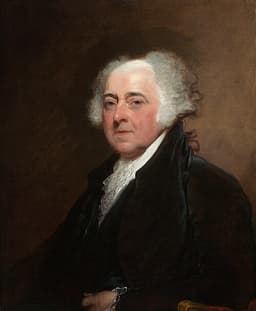
John Adams
Politician · Modern
64.7Total

Rached Ghannouchi
Politician · Modern
56.4Total
Basic Information
Born
1735
1941
Died
1826
—
Era
Modern
Modern
Nationality
United States
Tunisia
Occupation
Politician
Politician
Civilization
Western
Middle Eastern
Score Comparison
Military (10%)
49.7
27.3
Political (20%)
70.0
72.0
Influence (20%)
82.0
62.0
Legacy (20%)
55.0
49.2
Leadership (15%)
72.0
72.0
Strategy (15%)
42.0
43.0
TOTAL
64.7
56.4
John Adams — Complete Timeline
1770 AD
Defense of the British Soldiers in the Boston Massacre TrialPolitical Action◆ Major
Adams defended British soldiers accused of murder in the Boston Massacre. He secured acquittals for most, arguing for fair trial rights. This action demonstrated his commitment to rule of law despite political pressure.
Boston MassacreLegal DefenseAmerican Revolution
1796 AD
Election as Second President of the United StatesPolitical Action◆ Major
Adams was elected as the second US president, defeating Thomas Jefferson. His presidency was marked by tensions with France, the XYZ Affair, and the passage of the Alien and Sedition Acts.
PresidencyUS PoliticsElection
Impact: national
1798 AD
Signing of the Alien and Sedition ActsPolitical Action◆ Major
Adams signed the Alien and Sedition Acts, which restricted immigration and criminalized criticism of the government. These acts were widely condemned as violations of free speech and led to the Kentucky and Virginia Resolutions.
Alien and Sedition ActsCivil LibertiesUS Politics
Impact: nationaldestructive
1801 AD
Appointment of John Marshall as Chief JusticePolitical Action◆ Major
Adams appointed John Marshall as Chief Justice of the Supreme Court in the final months of his presidency. Marshall's tenure established judicial review and shaped American constitutional law for decades.
Supreme CourtJudicial ReviewUS Constitution
Impact: nationalconstructive
Peaceful Transfer of Power to Thomas JeffersonPolitical Action
Adams peacefully transferred power to his political rival Thomas Jefferson after losing the 1800 election. This set a precedent for peaceful transitions of power in the United States.
Peaceful TransferUS PoliticsDemocracy
Impact: nationalconstructive
Rached Ghannouchi — Complete Timeline
1981 AD
Founding of the Ennahda MovementPolitical Action◆ Major
Rached Ghannouchi co-founded the Islamic Tendency Movement (MTI), later renamed Ennahda, in Tunisia. The movement advocated for a democratic system with Islamic values, becoming the main opposition to the secular Ben Ali regime.
Islamist movementOpposition
Impact: nationalconstructive
1992 AD
Exile and Imprisonment Under Ben AliPolitical Action◆ Major
Ghannouchi was sentenced to life in prison in absentia by a Tunisian military court in 1992 for plotting against the state. He lived in exile in London for over two decades, continuing to lead Ennahda from abroad.
RepressionExile
Impact: nationaltragic
2011 AD
Return to Tunisia After the Arab SpringPolitical Action
Following the ouster of Ben Ali, Ghannouchi returned to Tunisia on January 30, 2011, after 22 years in exile. He led Ennahda to victory in the 2011 Constituent Assembly elections, becoming a key figure in Tunisia's democratic transition.
Arab SpringReturn from exile
Impact: nationalconstructive
2019 AD
Election as Speaker of the Assembly of the Representatives of the PeoplePolitical Action◆ Major
Ghannouchi was elected Speaker of the Tunisian parliament in November 2019, a position he held until 2022. This role made him the second-highest official in the state, reflecting Ennahda's continued political influence.
ParliamentPolitical power
Impact: nationalconstructive
Expert Analysis
Origins
John Adams was born on October 30, 1735, in Braintree, Massachusetts, into a modest farming family. His father was a deacon and farmer, and Adams was the eldest of three sons. He attended Harvard College at age 16, graduating in 1755, and then taught school before studying law. He was admitted to the bar in 1758 and quickly became a prominent lawyer in Boston.
Rached Ghannouchi was born on June 22, 1941, in El Hamma, Gabès, Tunisia, into a religious family. His father was a farmer and his mother a homemaker. He studied at the University of Tunis, earning a degree in philosophy in 1968, and later studied in Cairo and Damascus. He was influenced by the Muslim Brotherhood and Islamic revivalist movements during his time abroad.
Rise to Power
Adams rose to prominence through his opposition to the Stamp Act of 1765 and his defense of British soldiers after the Boston Massacre in 1770. He served in the Continental Congress (1774-1778) and was a key advocate for independence, serving on the committee to draft the Declaration of Independence. He negotiated the Treaty of Paris in 1783, which ended the Revolutionary War. He became the first Vice President under George Washington and was elected as the second President in 1796.
Ghannouchi co-founded the Islamic Tendency Movement (MTI) in 1981 in Tunisia, advocating for democracy and Islamic values. The movement was banned, and Ghannouchi faced multiple arrests and imprisonments under President Habib Bourguiba and later under Zine El Abidine Ben Ali. He was sentenced to life in prison in absentia in 1992 and lived in exile in London for 22 years. Following the Tunisian Revolution in January 2011, he returned to Tunisia on January 30, 2011, and led the Ennahda Movement to victory in the Constituent Assembly elections in October 2011, becoming the dominant political force in the country.
Leadership & Governance
Adams' leadership style was principled but confrontational. As president, he faced tensions with France, leading to the XYZ Affair (1797-1798) and an undeclared naval war. He prioritized national security over civil liberties, signing the Alien and Sedition Acts in 1798, which restricted immigration and criminalized criticism of the government. This move was widely criticized and damaged his popularity. However, he also avoided a full-scale war with France by sending a peace commission in 1799, a decision that cost him support within his own Federalist Party. His governance scored 72.0 overall, reflecting his political skill but also his strategic missteps (Strategy score 42.0).
Ghannouchi's leadership emphasized compromise and democratic transition. After Ennahda's victory in 2011, he formed a coalition government and oversaw the drafting of a new constitution, adopted in 2014. He advocated for a separation of mosque and state, positioning Ennahda as a 'Muslim democratic' party, similar to Christian democratic parties in Europe. He served as Speaker of the Assembly of the Representatives of the People from 2019 to 2022, making him the second-highest official in the country. His political score is 72.0, matching Adams', and his leadership score is also 72.0, but his strategy score is slightly higher at 43.0.
Triumph & Tragedy
Adams' greatest triumph was his role in securing American independence and establishing the peaceful transfer of power. After losing the 1800 election to Thomas Jefferson, Adams peacefully handed over the presidency, setting a crucial precedent for democratic governance. He also appointed John Marshall as Chief Justice in 1801, whose tenure established judicial review. However, his greatest failure was the Alien and Sedition Acts, which tarnished his legacy and allowed his opponents to paint him as a tyrant. His military score is 49.7, reflecting his lack of direct military involvement.
Ghannouchi's greatest triumph was leading Tunisia's democratic transition after the Arab Spring, a rare success in the region. He won the Nobel Peace Prize in 2015 as part of the National Dialogue Quartet for his role in building a pluralistic democracy. However, his failure includes the political instability and economic stagnation that plagued Tunisia after the revolution, leading to the rise of authoritarianism under President Kais Saied, who dissolved parliament in 2022 and sidelined Ghannouchi. Ghannouchi's military score is 27.3, reflecting his non-military background.
Character & Destiny
Adams was known for his intellect, integrity, and stubbornness. He was often vain and combative, which alienated allies and opponents alike. His decision to defend British soldiers after the Boston Massacre showed his commitment to the rule of law, but his signing of the Sedition Acts revealed a willingness to suppress dissent. His character contributed to his single-term presidency and his eventual isolation from the Federalist Party.
Ghannouchi is characterized by his pragmatism and willingness to compromise. He evolved from an Islamist ideologue to a pro-democracy reformer, often criticized by hardliners for abandoning Islamic principles. His exile shaped his worldview, and his return at age 70 marked a final chapter in his political career. His destiny was tied to the success and failure of Tunisia's democratic experiment.
Legacy
Adams' legacy is mixed. He is remembered as a founding father and advocate for independence, but his presidency is often overshadowed by Washington and Jefferson. The Alien and Sedition Acts remain a stain on his record. However, his appointment of John Marshall had a lasting impact on American jurisprudence, and his defense of the British soldiers reinforced the principle of fair trial. His total score is 64.7, with influence at 82.0 and legacy at 55.0.
Ghannouchi's legacy is still unfolding. He is seen as a key figure in the Arab Spring and a pioneer of Islamist democracy. His ability to transition from opposition to governance and his commitment to democratic norms have been praised. However, the failure of Tunisia's democracy under Saied has diminished his legacy. His total score is 56.4, with influence at 62.0 and legacy at 49.2.
Conclusion
John Adams had a greater overall impact than Rached Ghannouchi. Adams' actions shaped the foundational principles of the United States, including the peaceful transfer of power and the independence of the judiciary. While Ghannouchi's role in Tunisia's democratic transition was significant, it was ultimately less enduring. Adams' legacy, though imperfect, has persisted for over two centuries, while Ghannouchi's achievements are already being reversed. The score gap of 8.3 points reflects this difference in historical weight.
Rankings
🥇
John AdamsLeader
Mil: 49.7Pol: 70.0Inf: 82.0
64.7
🥈
Rached Ghannouchi
Mil: 27.3Pol: 72.0Inf: 62.0
56.4
+8.3 behind
How This Comparison Works
Algorithm
Each figure is scored on 6 dimensions (0—100 scale) based on structured historical data: Military (10%), Political (20%), Influence (20%), Legacy (20%), Leadership (15%), Strategy (15%). The weighted total produces the final ranking.
Data Sources
Scores are computed from structured sub-indicators in the database. Scale factors adjust for era (Ancient ×0.85, Modern ×1.0) and civilization size (Eastern ×1.05, Other ×0.80) to account for differences in population and military scale.
Maximum 3 Figures
Comparisons are limited to 2—3 figures to ensure readability and statistical meaningfulness.
Error Margins
±5 points per dimension — Sub-scores are derived from historical records with inherent uncertainty. Two figures within 5 points on a dimension should be considered roughly equivalent in that area.
Total Score Accuracy
±3 points overall — The weighted combination of 6 dimensions produces a total score with approximately ±3 points of uncertainty. Differences of less than 3 points are not statistically significant— the figures are effectively tied.
Known Limitations
- Historical records are incomplete and uneven across civilizations
- Figures from oral-tradition societies may be underrepresented
- Occupation labels can misclassify multi-role figures
- Scores measure capability and impact, not moral character
- Quantitative scoring is a comparison tool, not absolute truth
Capability Radar
Military (10%) — Battles & Warfare
Battles
26
21
Win Rate
32
25
Expansion
38
25
Political (20%) — Governance & Reform
Reform
75
60
Diplomacy
85
55
Economy
55
40
Influence (20%) — Cultural & Global Reach
Cultural
65
50
Global
65
50
Legacy (20%) — Historical Impact
Historical
75
55
Longevity
70
40
Leadership (15%) — Power & Stability
Tenure
60
65
Stability
50
35
Strategy (15%) — Tactics & Innovation
Strategy
41
30
Tactics
38
35
Reform
42
36
Similar Comparisons
Comments & Discussion
No comments yet. Be the first to share your thoughts!